
Tricolored Heron — History & Facts
The first thing that seizes the eye in Tricolored Heron is the bird’s impossible elegance—its neck drawn into a dramatic curve, the slate-blue feathers swept back like a flourish from a master calligrapher’s pen. Every detail is purposeful: the sharp yellow beak poised as if mid-hunt, the fine lines of the legs braced on a mossy log, the subtle play of blue, white, and lavender marking out each feather. The lush green foliage and distant palms set the stage, but the heron commands the scene, its gaze alert and self-contained.
Light falls across the bird’s back, catching the iridescence in the plumage and guiding the viewer’s attention from the slender neck down to the powerful talons. This is not just a portrait; it is a moment of tension and grace, the heron caught between stillness and sudden motion. Created between 1827 and 1838, this plate belongs to the era when natural history illustration was both science and spectacle. John James Audubon’s Birds of America was a monumental project, aiming to capture every bird in North America with a fidelity that was new to the age.
Such works were commissioned by wealthy patrons and institutions eager to catalogue the natural world’s wonders, and they were prized as much for their artistry as for their scientific value. The University of Pittsburgh now holds this particular example, a reminder that history has kept few traces of the individual journeys these prints made from artist’s studio to collector’s cabinet. Look again at the heron’s eye, and you see the ambition of an age that wanted to see—and possess—nature in all its living detail.
More Artworks by John James Audubon
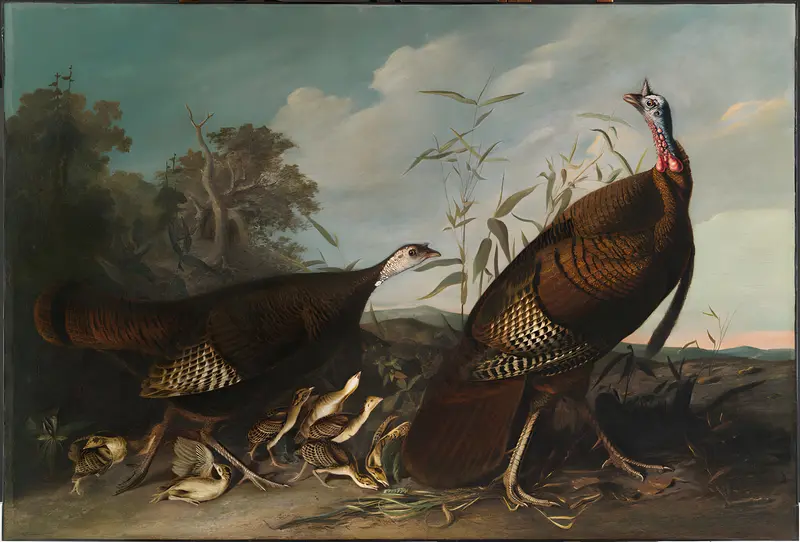
Wild Turkey Cock, Hen, and Chicks
John James Audubon
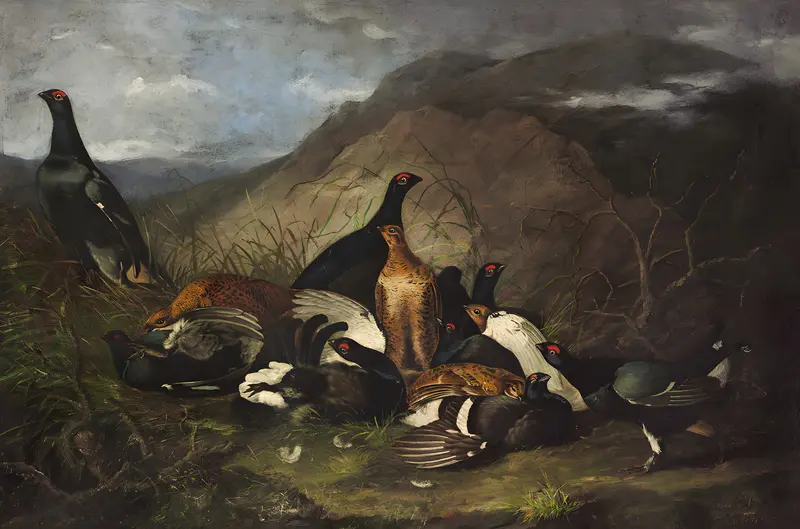
Scottish Black Grouse, Cocks and Hens
John James Audubon
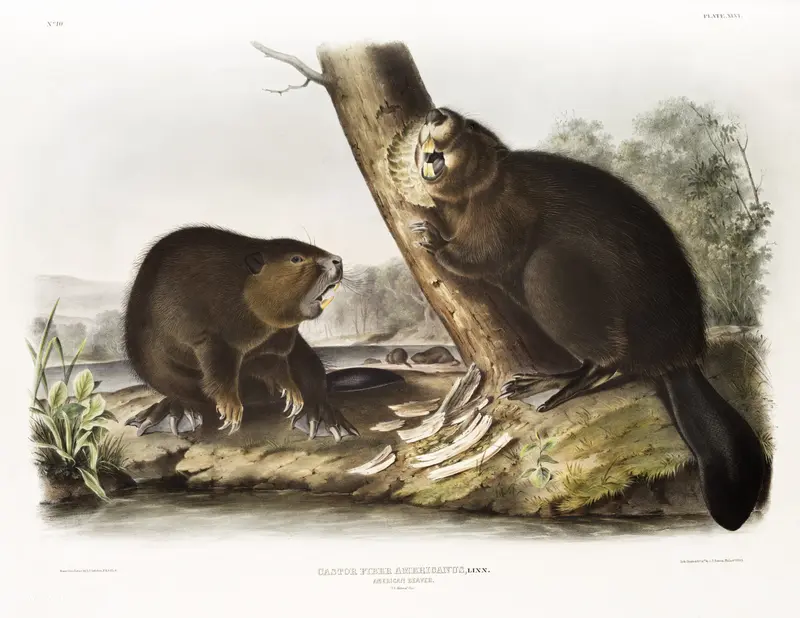
American Beaver
John James Audubon
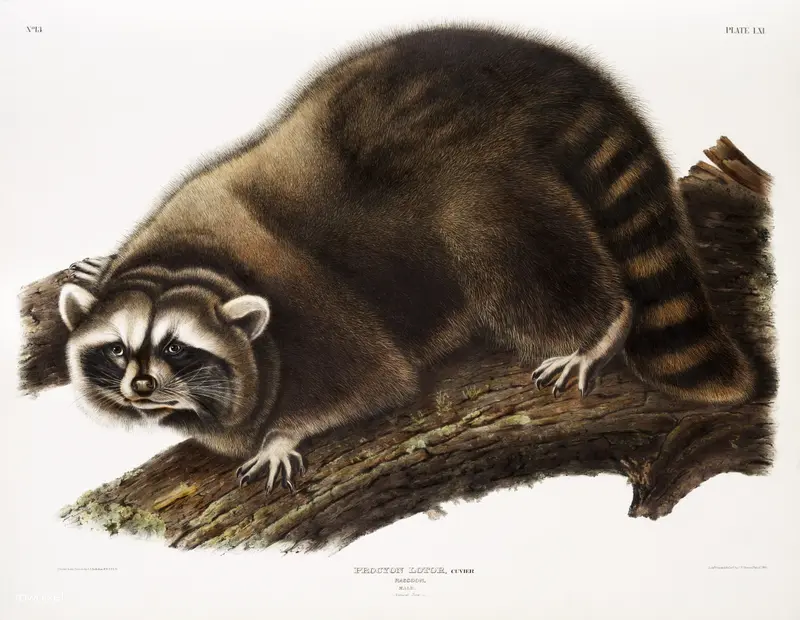
Raccoon
John James Audubon

Magnificent Frigatebird
John James Audubon
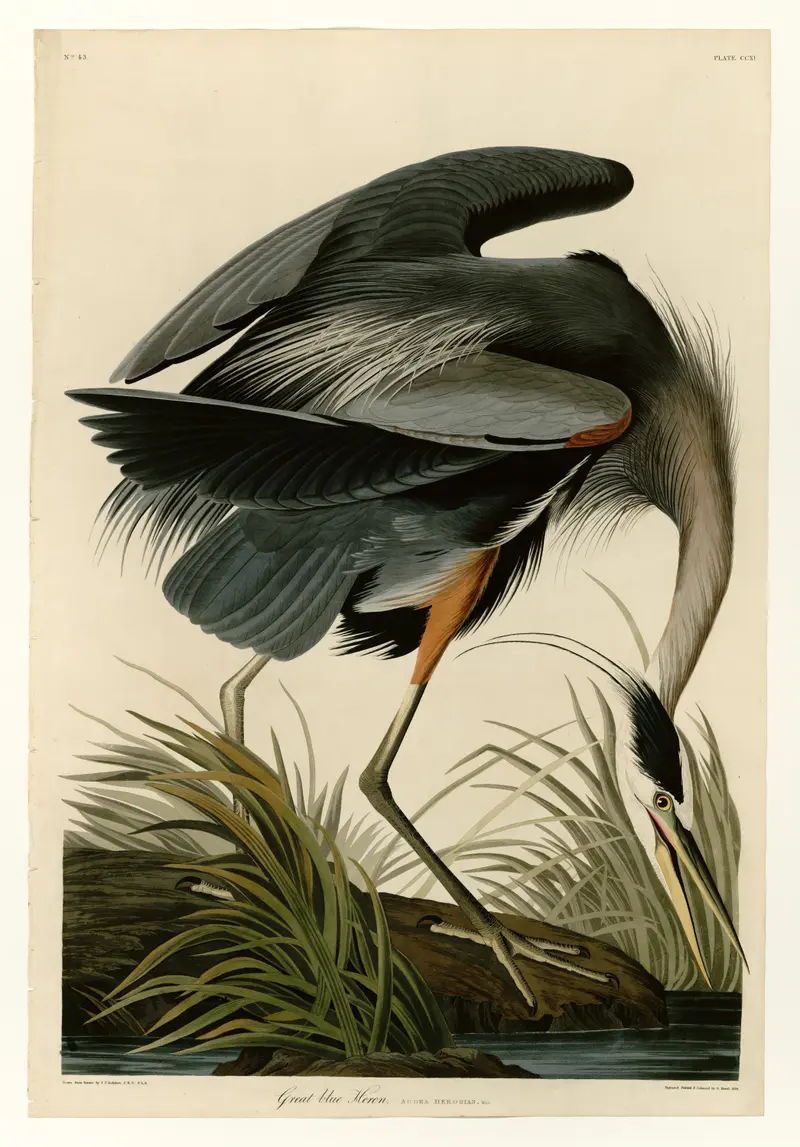
Great Blue Heron
John James Audubon
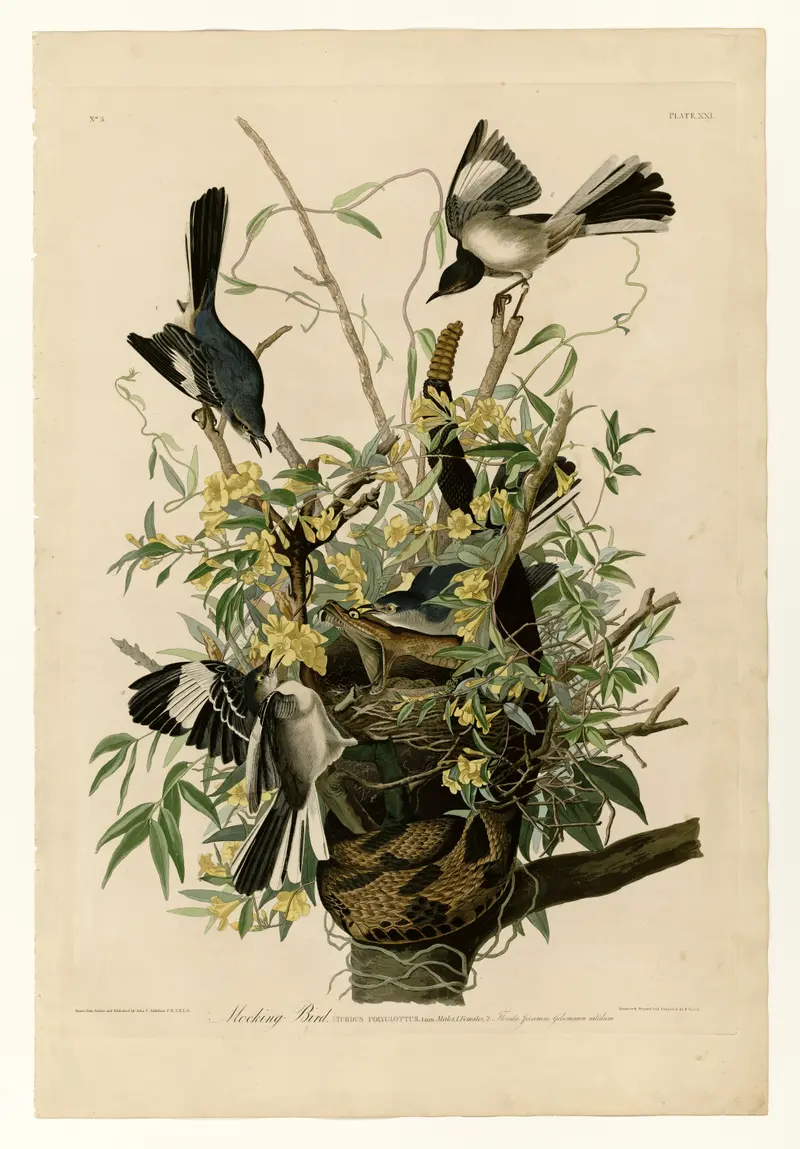
Northern Mockingbird
John James Audubon
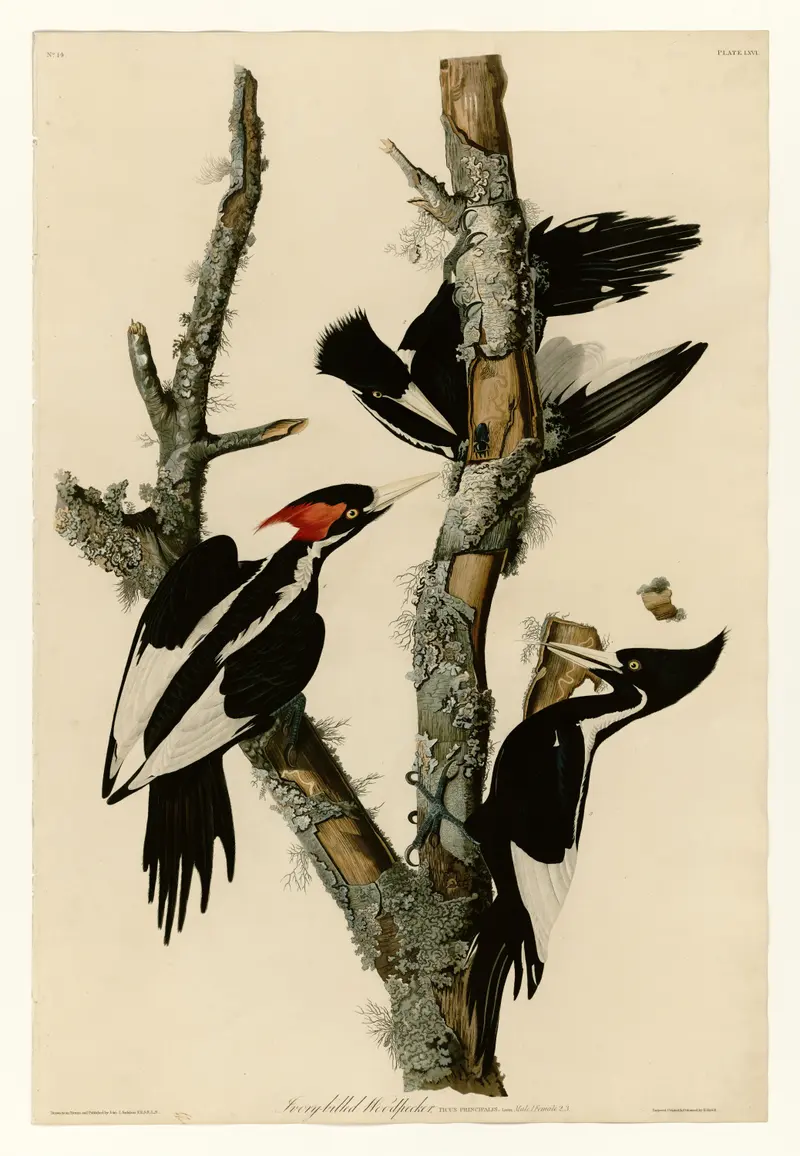
Ivory-billed Woodpecker
John James Audubon
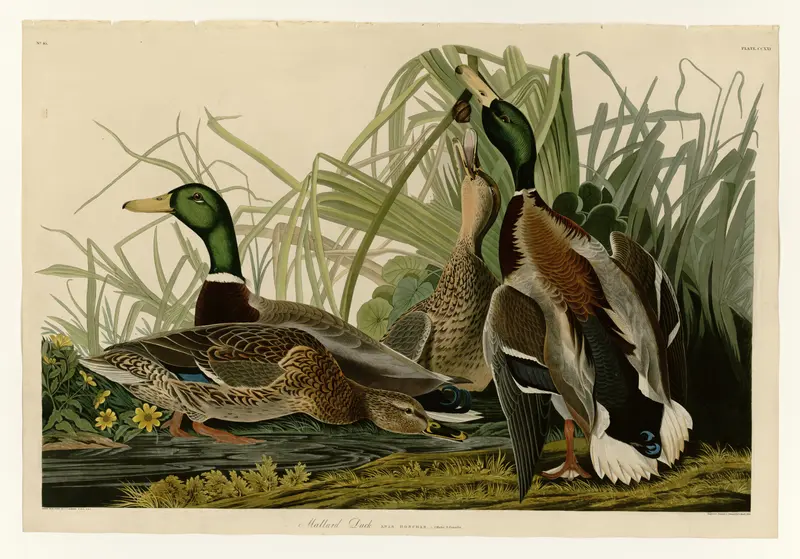
Mallard
John James Audubon
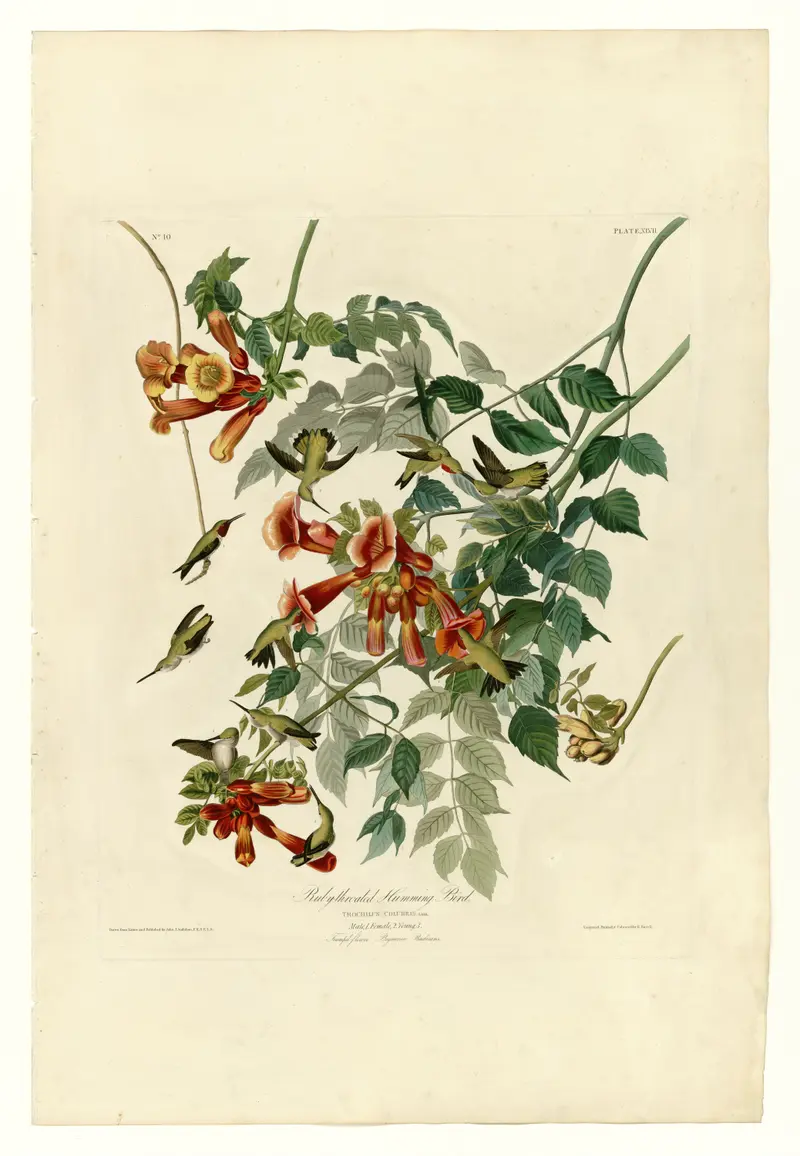
Ruby-throated Hummingbird
John James Audubon





