Triomf van de Tijd — History & Facts
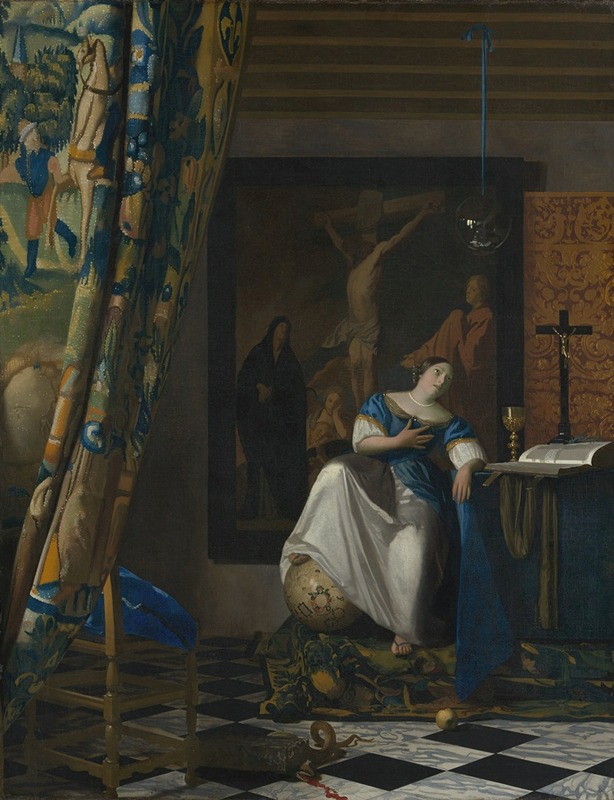
What echoes through Triomf van de Tijd is not just a celebration of time’s passage but a vivid testament to the revolutions that stir within its depths. Look to the center where Time, elegantly draped in flowing fabric, commands attention. The meticulous detail in her attire invites you to trace the intricate patterns that seem to flow like water, suggesting the fluidity of existence. Surrounding her are allegorical figures, each rendered with a level of depth that draws you into their vivid expressions.
Notice how the warm palette of golds and browns creates a striking contrast to the cooler blues and greens in the background, underscoring the eternal battle between light and shadow. As you delve deeper, consider the figures that encircle Time: their expressions reveal a spectrum of emotions—anticipation, fear, and joy. The juxtaposition of youth and age suggests the transient nature of life, while the presence of mortality looms in the shadows, reminding us that every fleeting moment holds significance. In this intricate dance of figures, the artist captures a potent dichotomy: the triumphs of life against the inevitability of its end, suggesting that revolution is not only an external force but an internal one as well. Georg Pencz painted this work between 1537 and 1541 during a time of significant artistic transition in Germany, marked by the influence of the Northern Renaissance.
As Pencz was involved with the Nuremberg school of artists, his style evolved from a reliance on detailed realism to a more expressive representation, reflecting the changing tides of both his personal journey and the broader cultural shifts of the era.
More Artworks by Georg Pencz
Browse all →
Parabel van de zaaier
Georg Pencz

Parabel van de arbeiders in de wijngaard
Georg Pencz
Discipelen wekken slapende Christus tijdens storm op Meer van Galilea
Georg Pencz

Afgunst (Invidia)
Georg Pencz
Jozef wordt verkocht aan kooplieden op weg naar Egypte
Georg Pencz

Aanbidding der koningen
Georg Pencz
Petrus protesteert als Christus zijn voeten wast
Georg Pencz
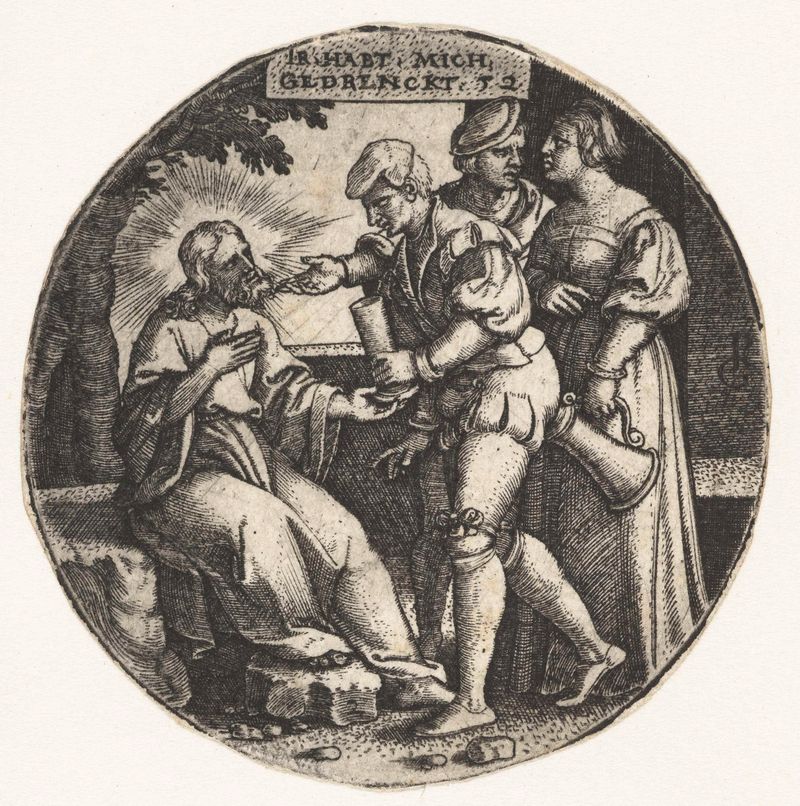
Christus heeft dorst en krijgt drinken aangeboden
Georg Pencz
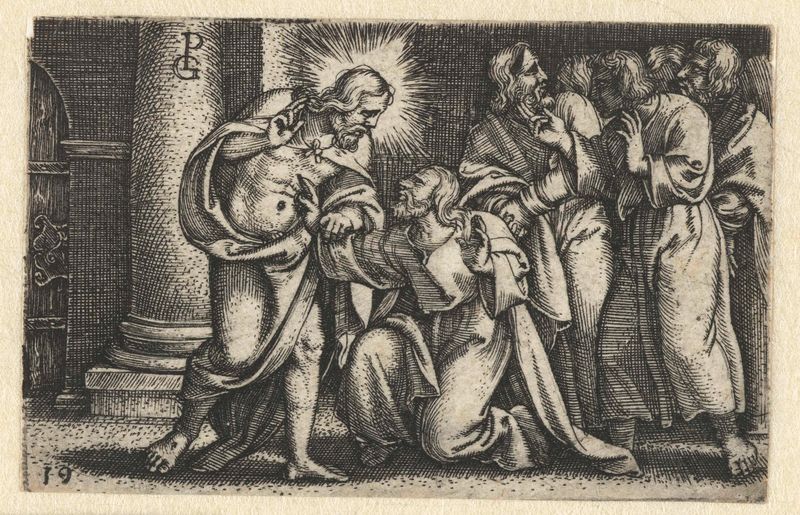
Ongelovige Thomas raakt wonden Christus aan
Georg Pencz

Offer van Abraham van Isaak
Georg Pencz