
Triptych Madonna Enthroned with music-making angels — History & Facts
What first draws the eye in this triptych is the hush that seems to settle over the entire scene, as if the music played by the angels has stilled time itself. At the center, the Madonna sits enthroned, her gaze lowered in quiet contemplation, while the Christ Child reclines across her lap, one hand raised in a gentle, almost playful gesture. The two flanking panels are alive with angels, their instruments poised mid-performance: a lute-like stringed instrument on the left, a harp on the right.
Above, two more angels sweep in, one in vibrant red, the other in blue, holding aloft a delicate crown just above the Virgin’s head. The dark, patterned background and the careful fall of light on the Madonna’s face and hands create a sense of intimate reverence, drawing the viewer into the sacred music and the private world of mother and child. Painted in 1530, this work by Adriaen Isenbrant belongs to a tradition of devotional images that flourished in the Low Countries during the early sixteenth century. Such triptychs were often commissioned for private chapels or as altarpieces, intended to focus the viewer’s prayers and meditations.
The presence of music-making angels was not merely decorative; in the religious imagination of the time, angelic music was believed to bridge the earthly and the divine, making the sacred mysteries more immediate. The careful attention to textures—the gleam of the Madonna’s cloak, the intricate carpet beneath her feet, the cool stone floor—reflects the Northern Renaissance’s fascination with the tangible world, even in scenes of heavenly grace. Though history has kept few traces of this particular painting’s journey, its quiet grandeur invites us to linger, listening for the music that once filled its imagined chapel.
More Artworks by Adriaen Isenbrant
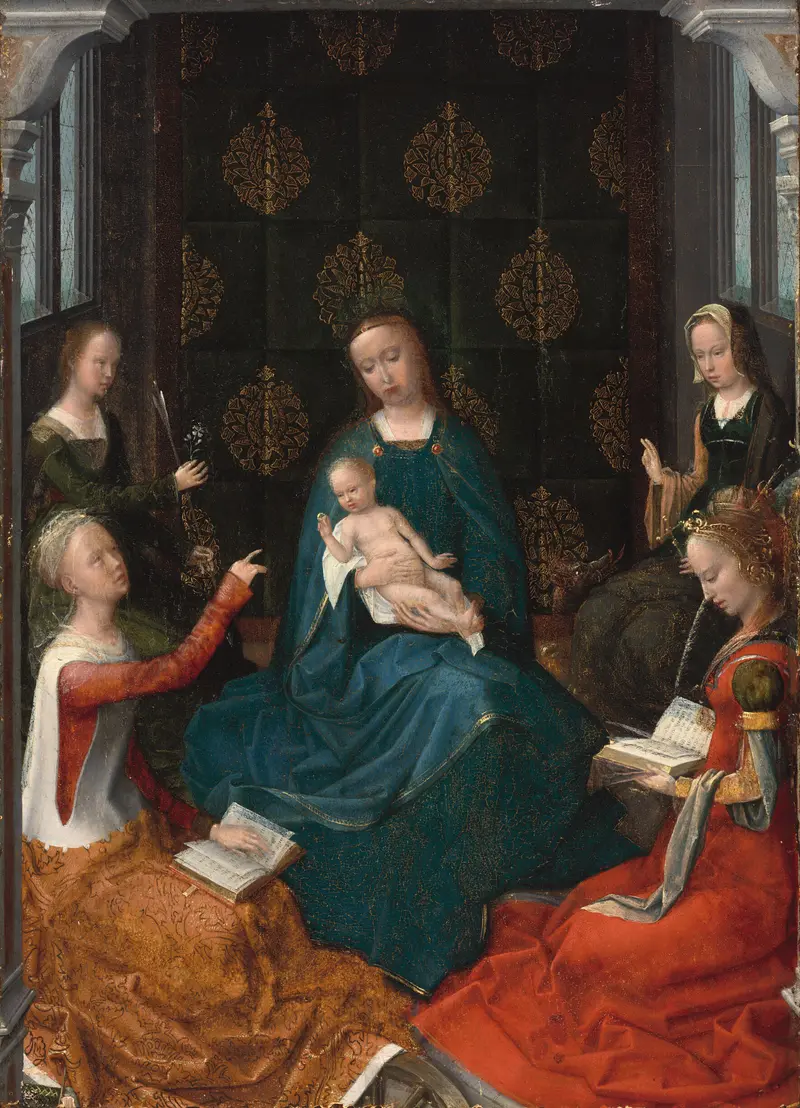
The Mystic Marriage of Saint Catherine of Alexandria with Three Female Saints: Ursula, Margaret of Antioch, and an Unidentified Martyr
Adriaen Isenbrant
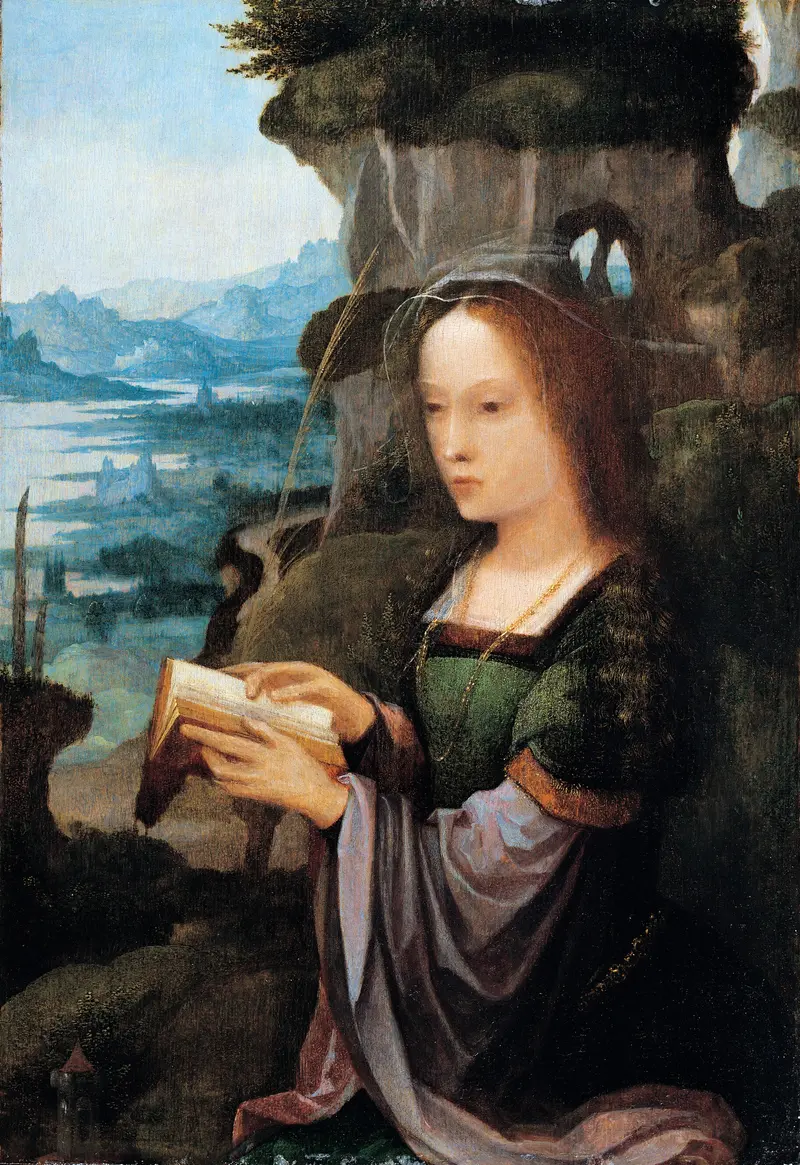
Saint Barbara
Adriaen Isenbrant
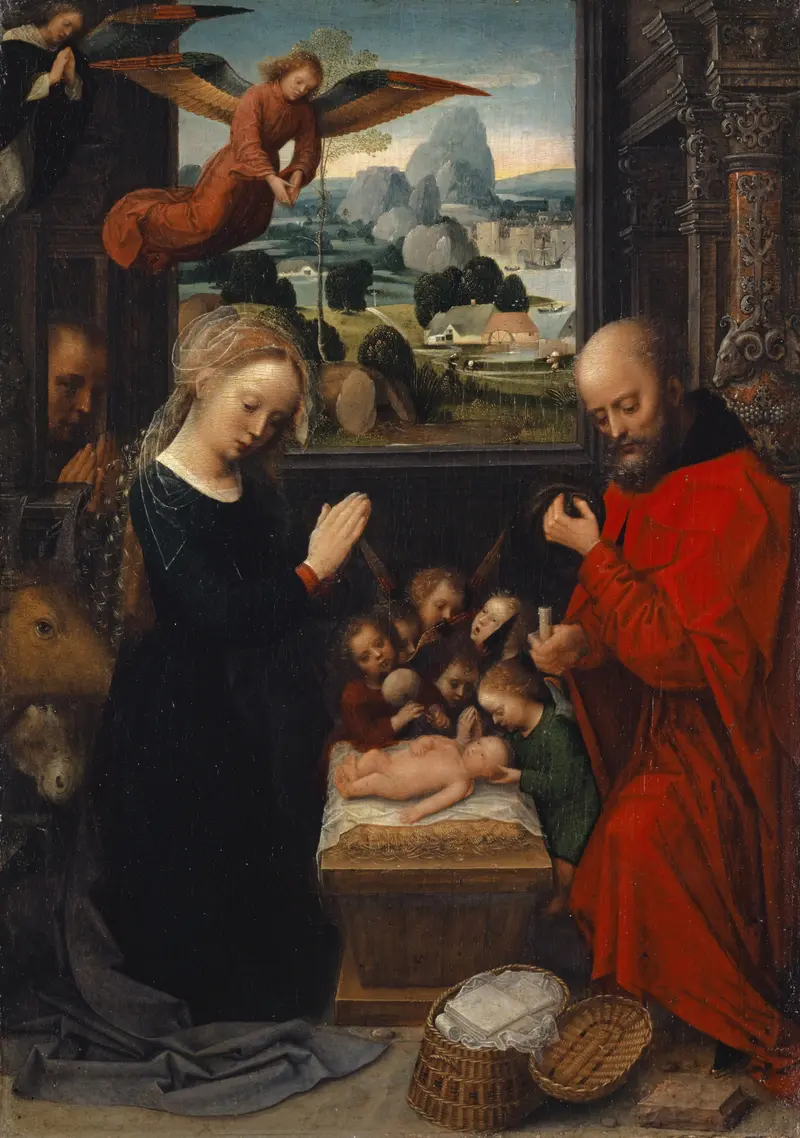
The Nativity
Adriaen Isenbrant
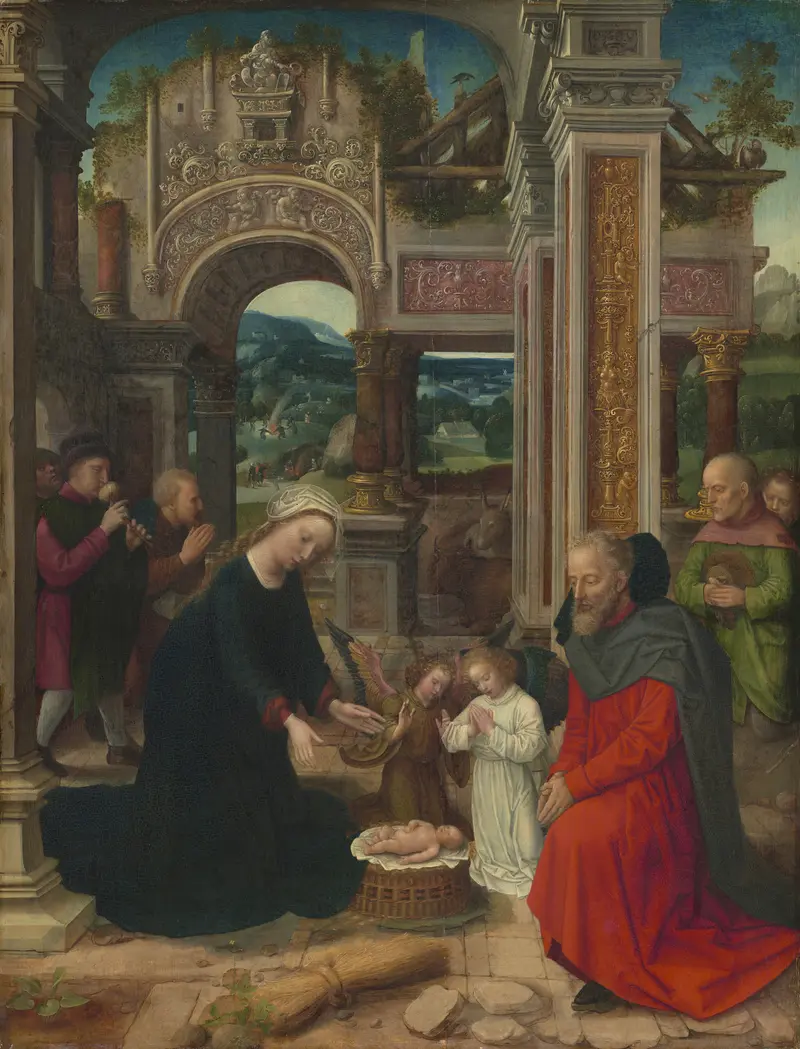
The Adoration of the Shepherds
Adriaen Isenbrant
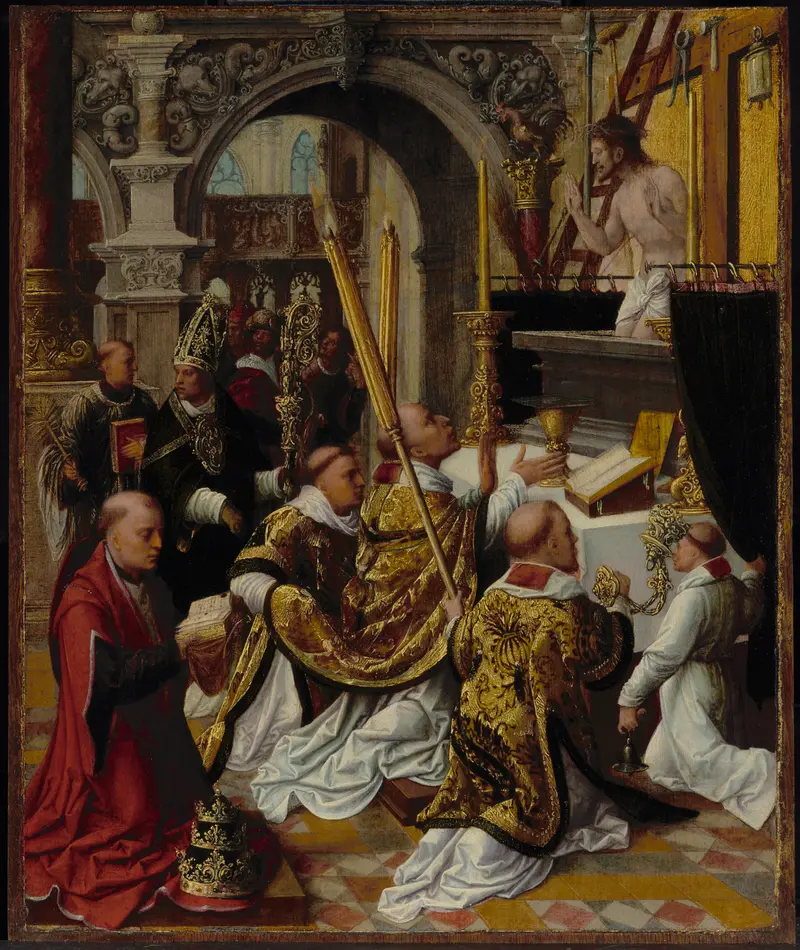
The Mass of Saint Gregory the Great
Adriaen Isenbrant
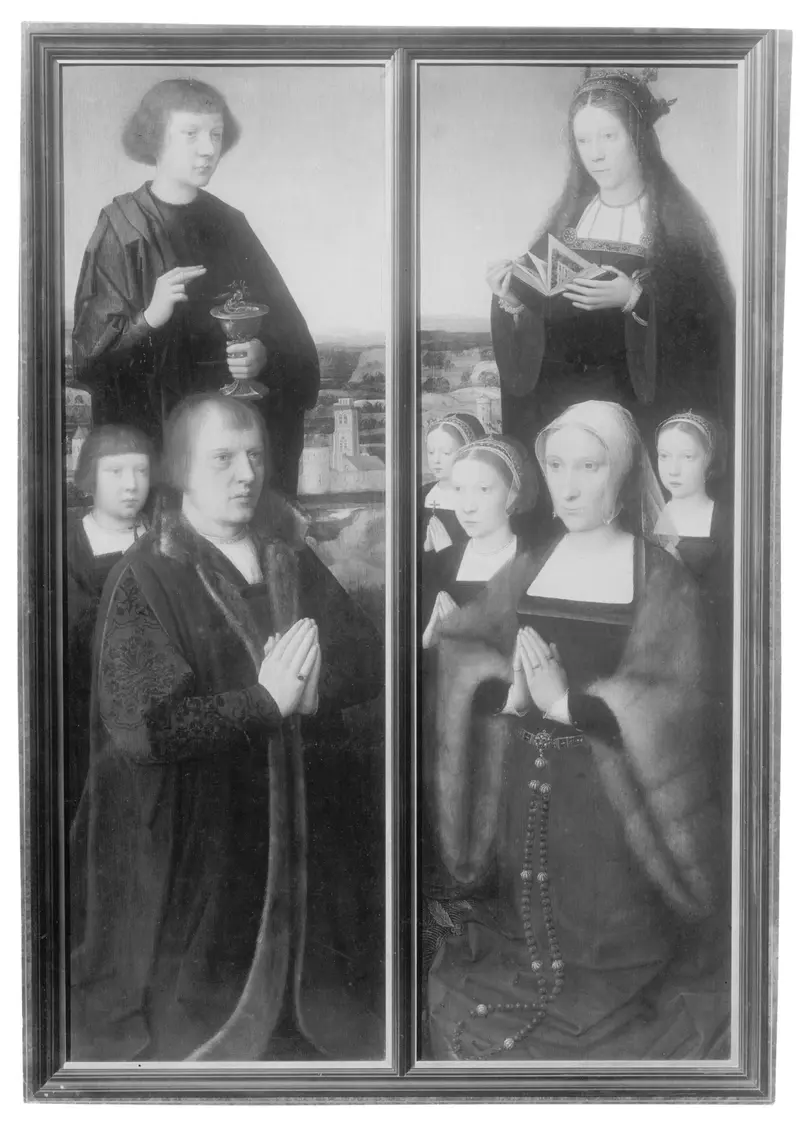
Wings of a polyptych with donors -Man with son and Saint, Woman with daughters and Saint (burned)
Adriaen Isenbrant
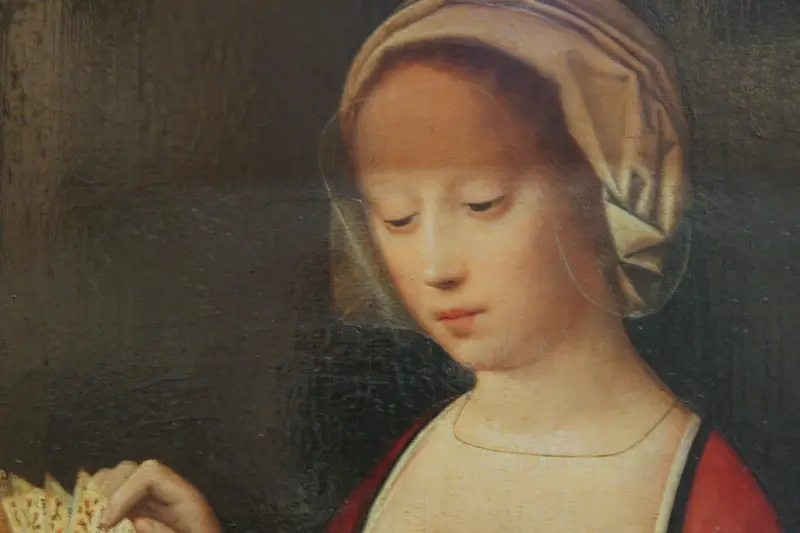
Mary Magdalene Reading
Adriaen Isenbrant
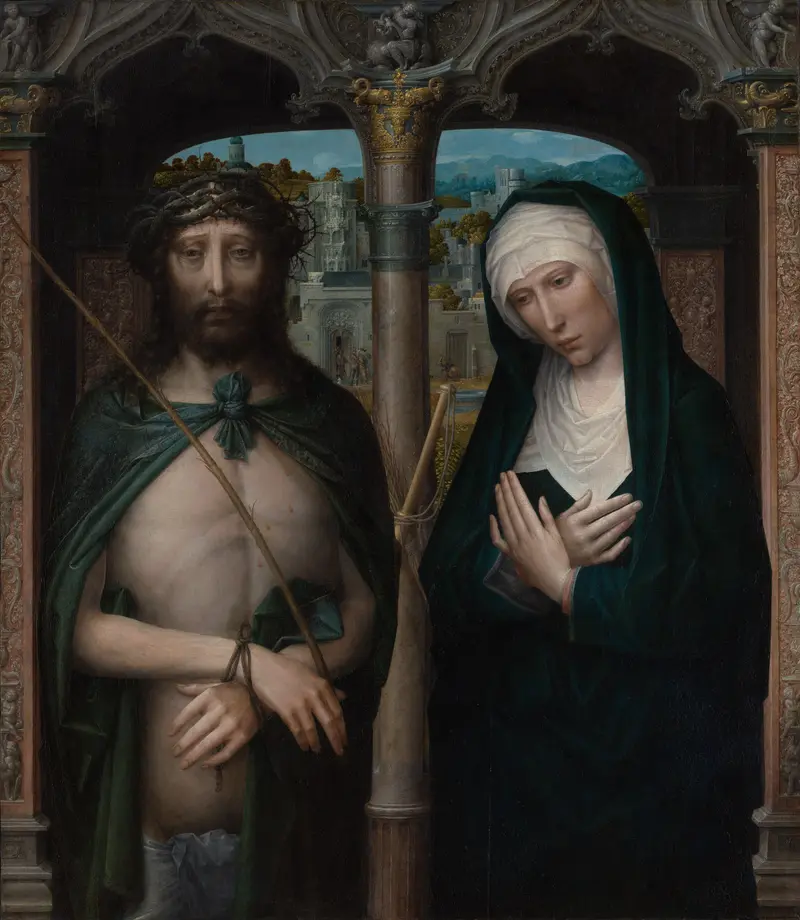
Christ Crowned with Thorns (Ecce Homo), and the Mourning Virgin
Adriaen Isenbrant
Madonna and Child
Adriaen Isenbrant
The 12-Year-Old Jesus in the Temple
Adriaen Isenbrant





