
Trois-mats devant Anvers — History & Facts
When did color learn to lie? The depths of hue can whisper truths, yet they also veil the heart’s perceptions. Look to the center of the canvas, where the three-masted ships loom majestically against a backdrop of shimmering water. The mariners, distant silhouettes, are mere whispers of humanity amidst a vast expanse of blues and grays. Notice how the sky merges seamlessly with the sea, each stroke of paint mirroring the other in a dance of light and shadow, creating a harmonious yet restless atmosphere. The interplay of color and light holds deeper significance.
The vessels, while regal, seem to float in a world that blurs the line between reality and dream. The sun’s reflection on the water invites contemplation, evoking a sense of transience and the fleeting nature of time. Meanwhile, the muted tones convey a calmness, yet the dynamic winds allude to the unseen forces shaping the journey ahead.
This tension between stillness and motion resonates within the viewer, suggesting both awe and introspection. Created in 1872, this piece was born during a pivotal moment for the artist, who found himself deeply enamored with the coastal scenes of his native Normandy. At this time, Boudin was establishing himself alongside the early Impressionists, experimenting with capturing natural light and atmosphere. The world of art was awakening to new perspectives, and he sought to encapsulate the fleeting beauty of maritime life, paving the way for future explorations in the realm of color and form.
More Artworks by Eugène Boudin
Browse all →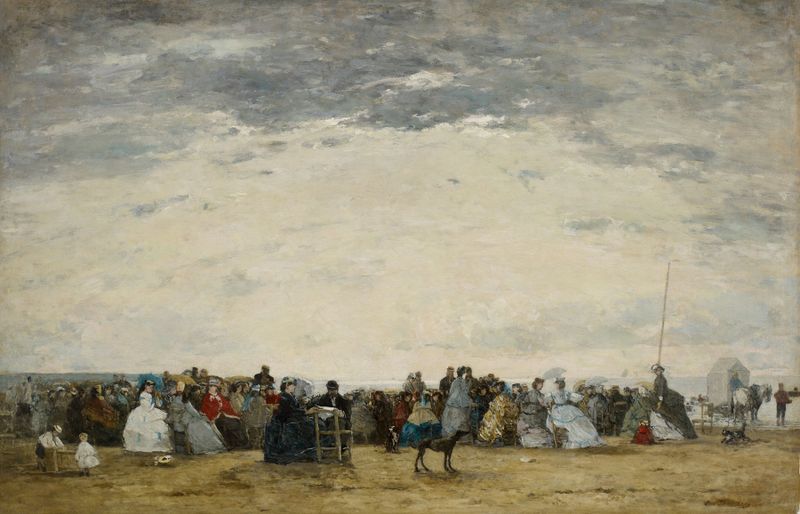
Vacationers on the Beach at Trouville
Eugène Boudin

Washerwoman near Trouville
Eugène Boudin
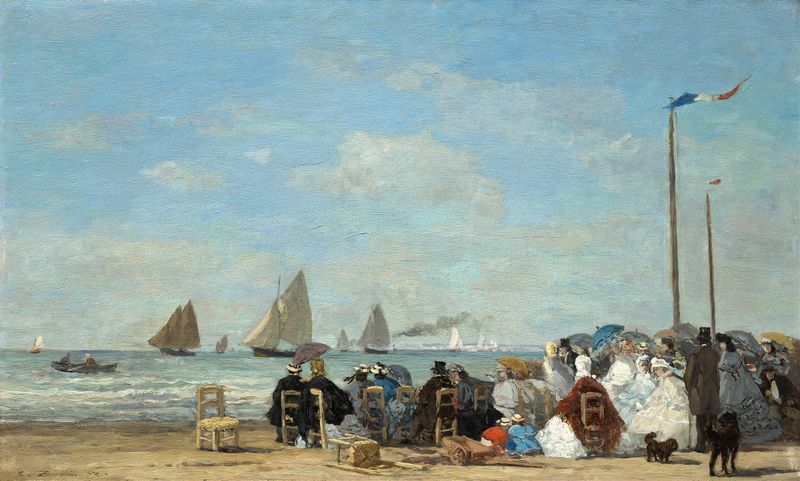
Beach Scene at Trouville
Eugène Boudin

Port aux environs d’Honfleur
Eugène Boudin

Le Faou, un coin du village
Eugène Boudin
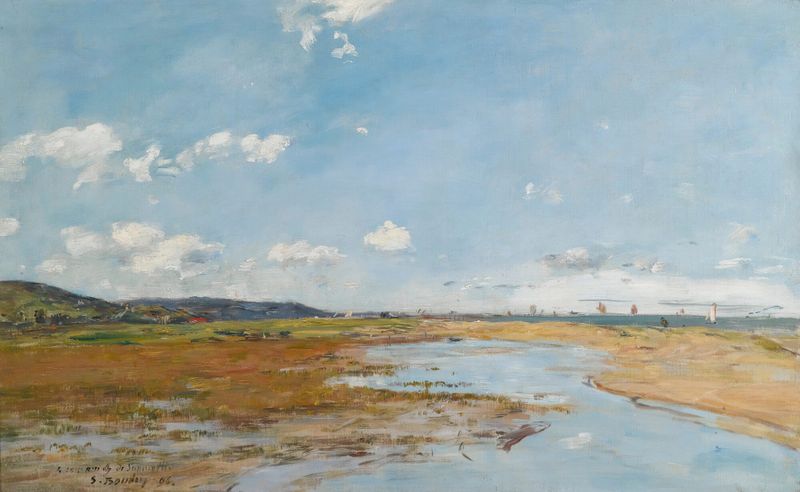
Deauville. Le Rivage
Eugène Boudin
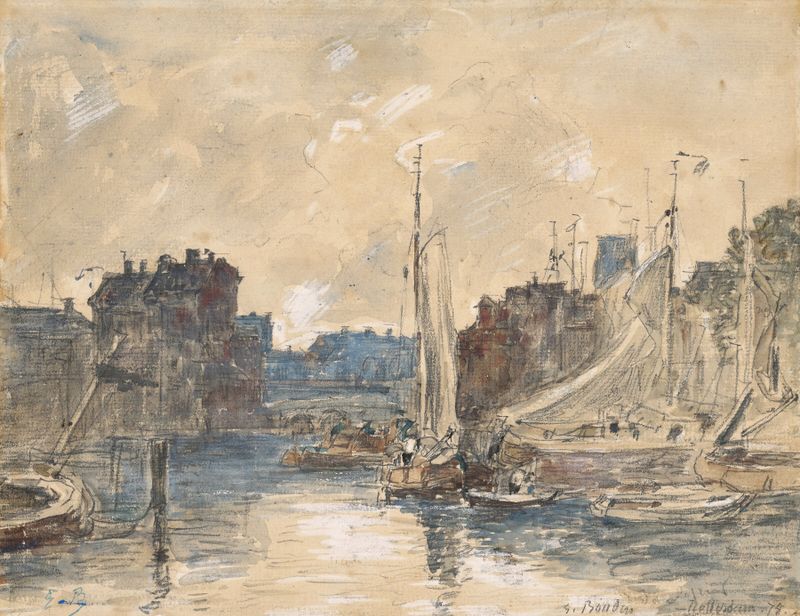
Port de Rotterdam
Eugène Boudin

View of Bordeaux, from the Quai des Chartrons
Eugène Boudin

Trouville, Scène De Plage
Eugène Boudin

Trouville, Le Port
Eugène Boudin





