
Trois-Mats À L’ancre — History & Facts
This notion reverberates through the serene yet haunting composition of Trois-Mats À L’ancre. The work encapsulates a moment where tranquility meets an underlying void, inviting reflection on the transitory nature of beauty and existence. Look to the center where the majestic three-masted ships rest, their outlines softened by the gentle haze of late afternoon light. Notice how Boudin captures the play of reflections on the water, each wave a whisper of movement, contrasting against the stillness of the vessels.
The muted color palette of blues and grays, punctuated by delicate hints of golden sunlight, evokes a deep sense of nostalgia and longing, drawing the viewer into the scene with a compelling magnetism. As you delve deeper, examine the space surrounding the ships. The expansive sky looms overhead, imbued with a sense of both freedom and emptiness, suggesting the vast possibilities that lie beyond this fleeting moment. The interplay between light and shadow holds emotional tension, hinting at the ephemerality of life itself.
It is in this balance of beauty and void that Boudin eloquently presents a silent narrative of longing and the quiet acceptance of what is lost. Created between 1894 and 1897, the work emerged during a significant period in Boudin's life, marked by his growing recognition within the Impressionist movement. Living in France, he was influenced by the changing landscapes and maritime culture of the era, often focusing on the sea and its ephemeral beauty. This painting reflects not only his technical prowess but also a contemplative observation of life’s fleeting moments against the backdrop of an ever-shifting world.
More Artworks by Eugène Boudin
Browse all →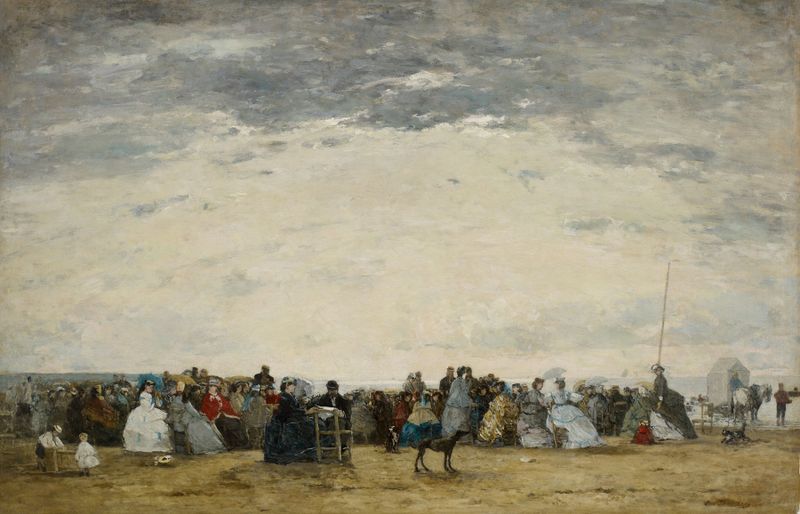
Vacationers on the Beach at Trouville
Eugène Boudin

Washerwoman near Trouville
Eugène Boudin
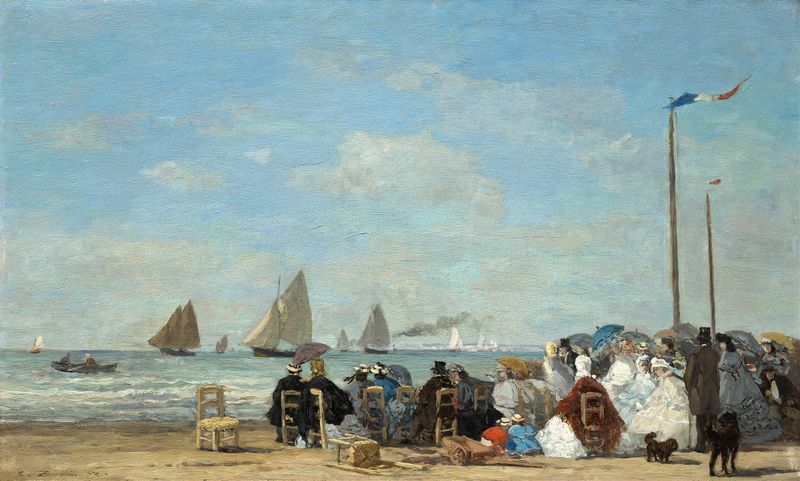
Beach Scene at Trouville
Eugène Boudin

Port aux environs d’Honfleur
Eugène Boudin

Le Faou, un coin du village
Eugène Boudin
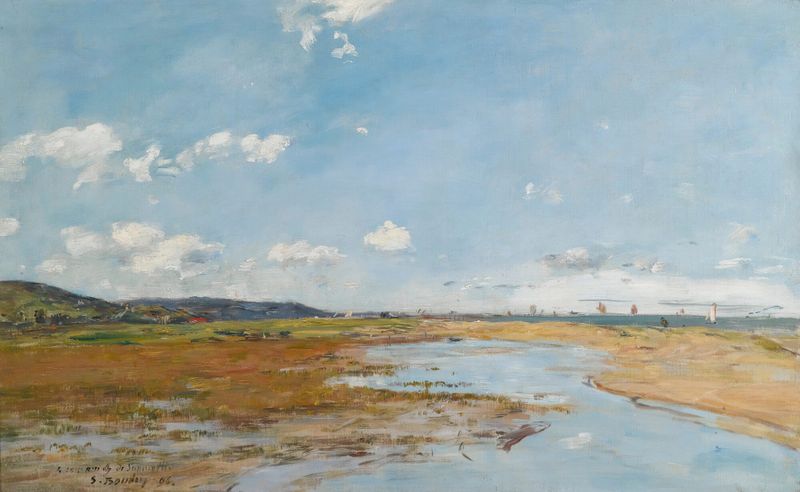
Deauville. Le Rivage
Eugène Boudin
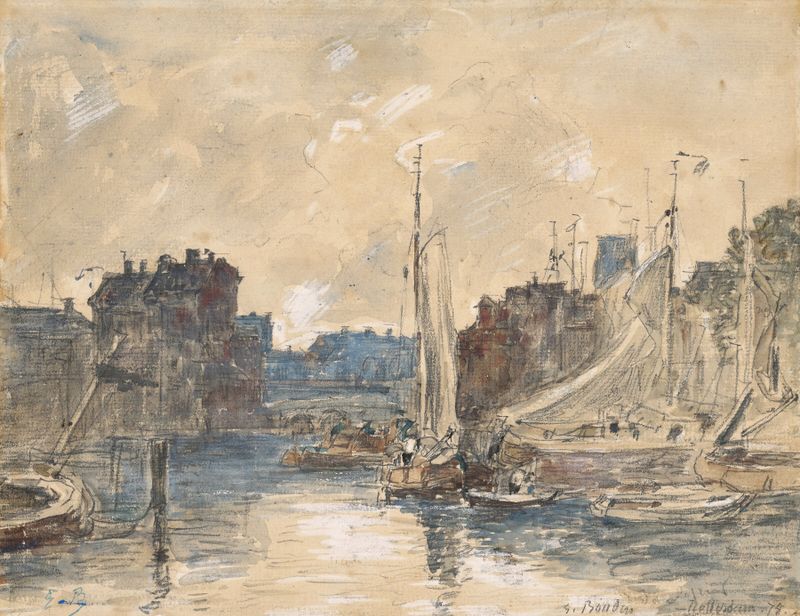
Port de Rotterdam
Eugène Boudin

View of Bordeaux, from the Quai des Chartrons
Eugène Boudin

Trouville, Scène De Plage
Eugène Boudin

Trouville, Le Port
Eugène Boudin





