
Trottin sous la pluie — History & Facts
A single figure strides forward, head down, as if bracing herself against a world that offers little shelter. The slanting lines of rain all but slice the scene in two, yet the woman’s umbrella—battered, but determinedly held—creates a pocket of fragile safety. Her green shawl clings to her shoulders, the pattern echoing the restless motion of the weather, while her boots splash through a shallow puddle, hinting at the daily endurance of those who work and walk the city streets.
The parcel she carries is no mere prop: it anchors her, a sign of labor and necessity, and the artist’s careful rendering of its weight and awkwardness draws us into her struggle. The palette is muted, almost monochrome, yet the flash of red at her ankle and the copper of her hair bring warmth and individuality to an otherwise gray day. Created in 1898, Trottin sous la pluie belongs to a world on the cusp of modernity, when Paris was both a stage for fashion and a crucible for working women. The “trottin”—a young female shop assistant or errand girl—became a familiar sight in the city’s visual culture, embodying both the promise and precarity of urban life at the turn of the century.
Théophile Alexandre Steinlen, known for his sympathetic portrayals of everyday Parisians, captures here not a moment of drama, but the steady, unremarked heroism of making one’s way through the rain. Preserved today in the Bibliothèque nationale de France, this print is a rare survivor of its kind, inviting us to look closer—not only at the face beneath the umbrella, but at the world that shaped her journey.
More Artworks by Théophile Alexandre Steinlen

Village et charrette
Théophile Alexandre Steinlen
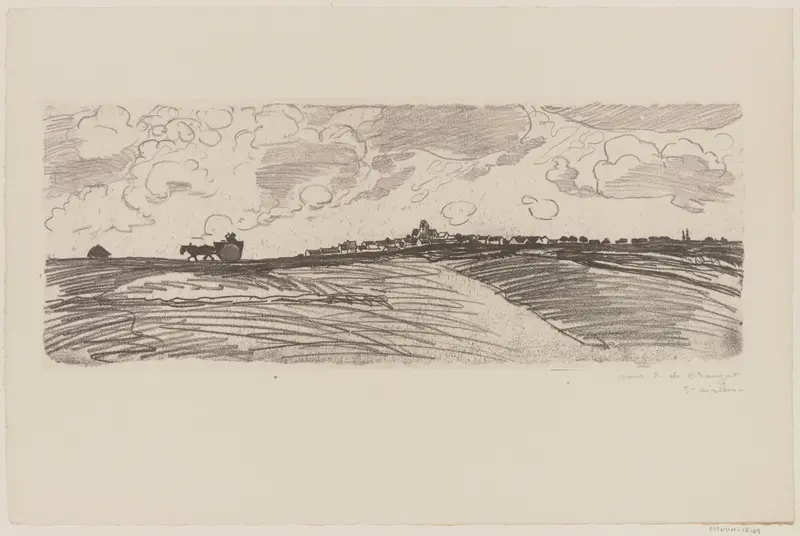
Village et charrette
Théophile Alexandre Steinlen
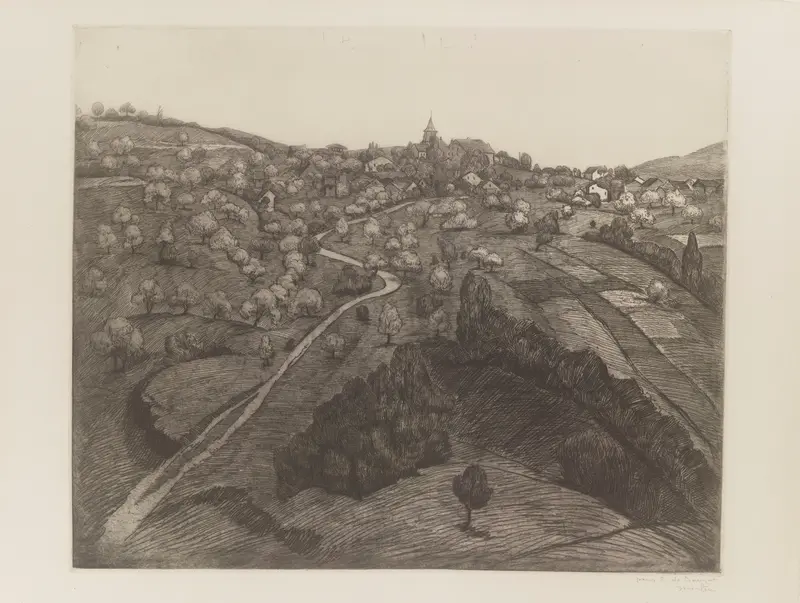
Vue de Belmont, près de Lausanne
Théophile Alexandre Steinlen
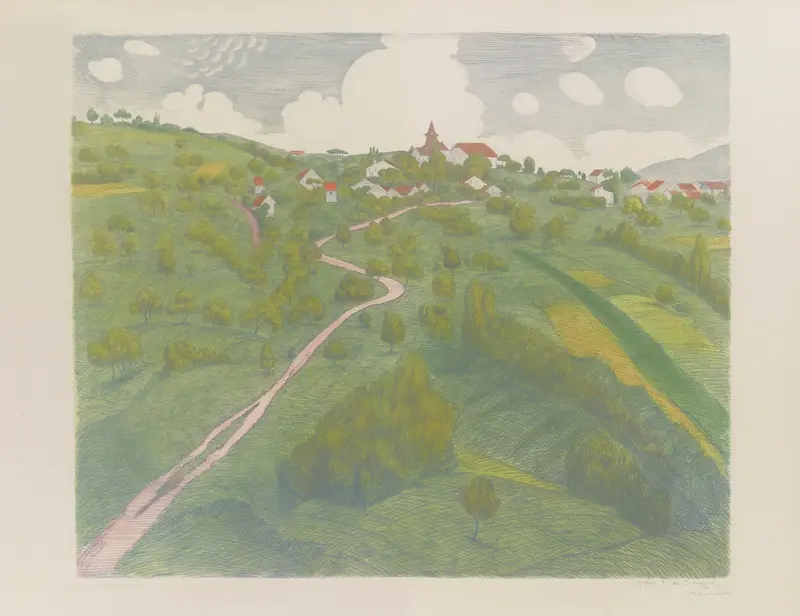
Vue de Belmont, près de Lausanne
Théophile Alexandre Steinlen
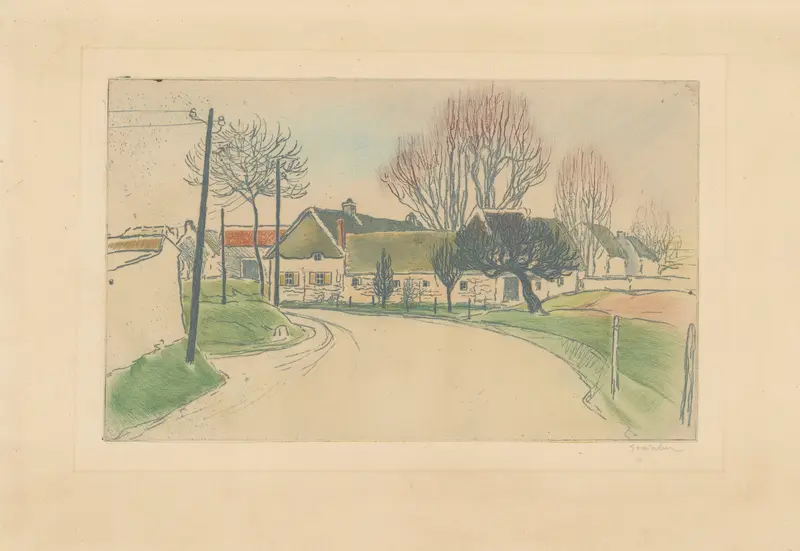
La maison à l’entrée du village
Théophile Alexandre Steinlen
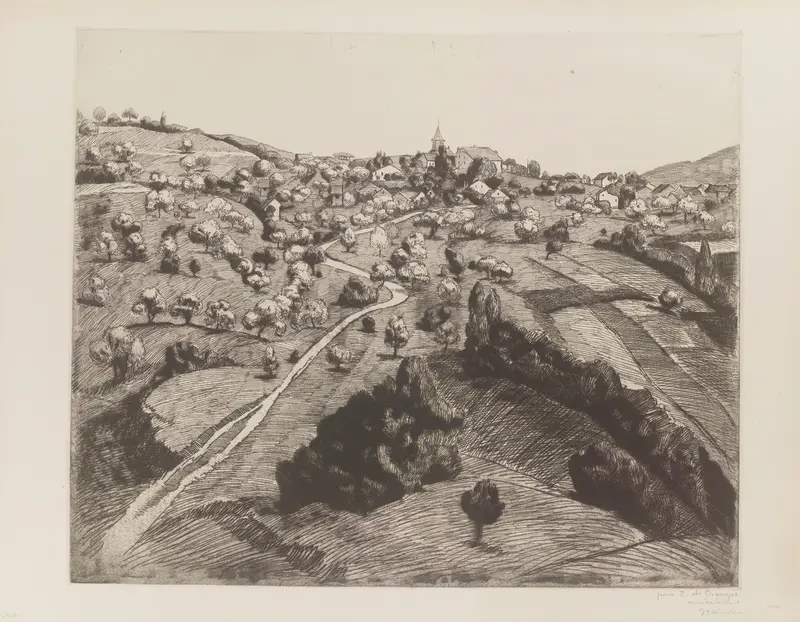
Vue de Belmont, près de Lausanne
Théophile Alexandre Steinlen
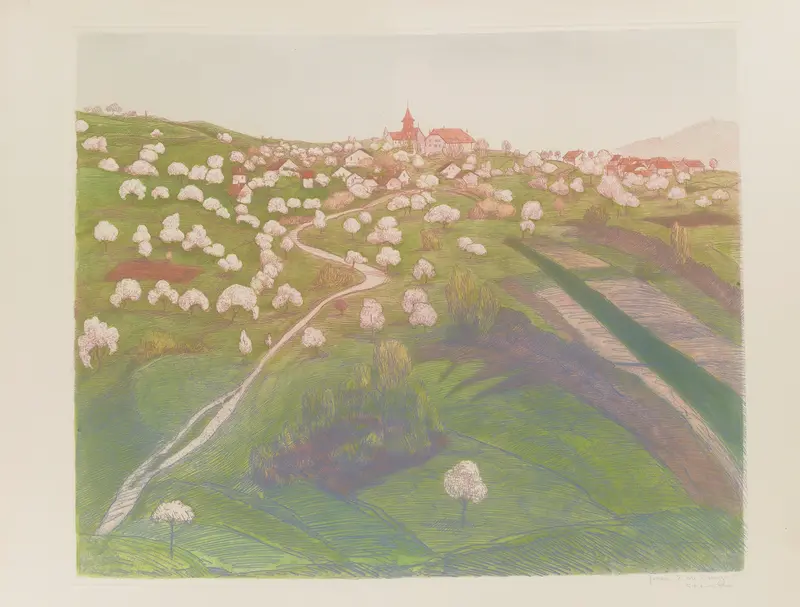
Vue de Belmont, près de Lausanne, n° 2
Théophile Alexandre Steinlen
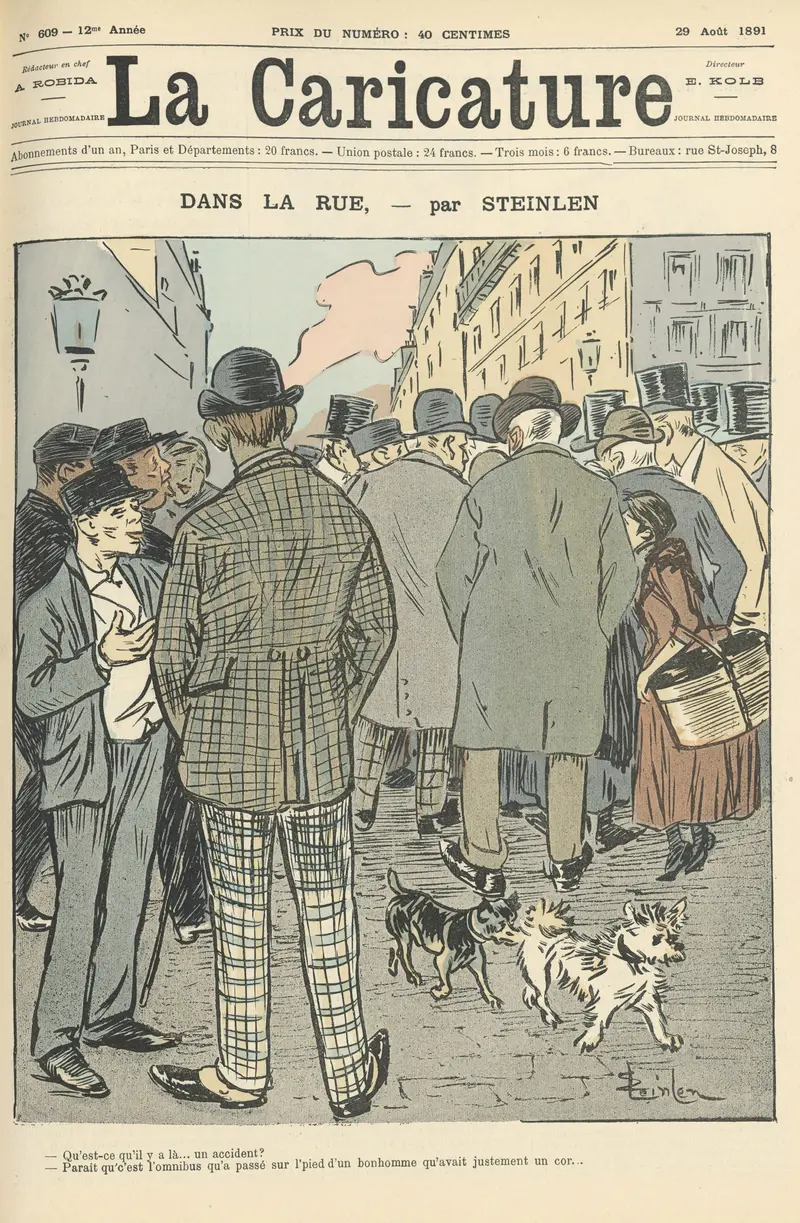
Dans la rue (La Caricature, 29 août 1891)
Théophile Alexandre Steinlen
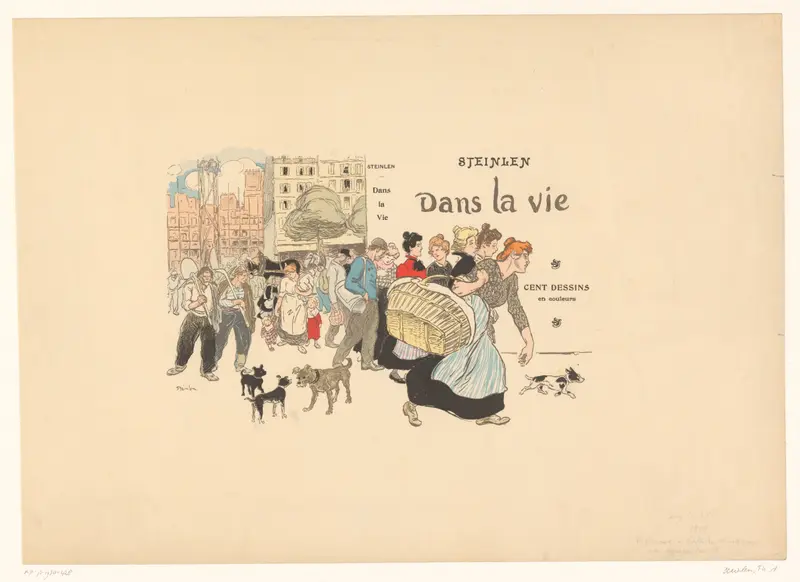
Dans la vie
Théophile Alexandre Steinlen
The Laundresses
Théophile Alexandre Steinlen
More Genre Scene Art

Banquet of the Officers of the St George Civic Guard
Frans Hals

Rembrandt and Saskia in the Scene of the Prodigal Son
Rembrandt van Rijn

Bal du moulin de la Galette
Pierre-Auguste Renoir

Quadrille at the Moulin Rouge
Henri de Toulouse-Lautrec

A Burial at Ornans
Gustave Courbet

When Will You Marry?
Paul Gauguin