
Trouville, barques échouées — History & Facts
Can beauty exist without sorrow? In Trouville, barques échouées, the fleeting essence of a coastal scene whispers of abandonment and longing, exploring the delicate balance between desolation and allure. Look to the foreground, where the stranded boats lie helplessly upon the sandy shore, their hulls weathered and paint chipped. The artist employs a muted palette of grays and browns, evoking the somber mood of the scene, while gentle strokes of white suggest the caress of the surf. Notice how the horizon, a soft line separating the earth from an expansive sky, draws the eye into the distance, beckoning contemplation of the unseen.
The composition creates a sense of stillness, as if time has paused, waiting for the tide to return. Amidst the sorrowful beauty lies a poignant tension—the contrast between the vitality of the sea and the lifelessness of the boats. The emptiness of the scene emphasizes the transient nature of life; boats once full of adventure now sit idle, echoing the passage of time and the inevitability of change. Shadows dance playfully along the sand, hinting at the laughter and life that once thrived here, reminding the viewer that joy is often intertwined with loss. During the years 1885 to 1890, Boudin created this work along the picturesque coasts of Normandy, where he was deeply influenced by the shifting light and moods of the sea.
At this time, he was gaining recognition for his ability to capture atmospheric conditions, often finding himself on the periphery of the Impressionist movement, which was beginning to reshape the art world. The juxtaposition of serenity and sorrow in this piece reflects his keen observation of the human experience, anchoring it in a moment that resonates beyond the canvas.
More Artworks by Eugène Boudin
Browse all →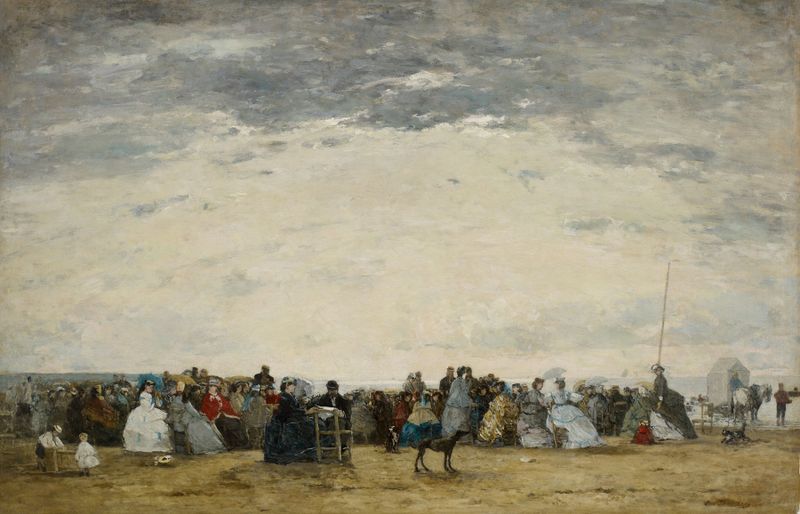
Vacationers on the Beach at Trouville
Eugène Boudin

Washerwoman near Trouville
Eugène Boudin
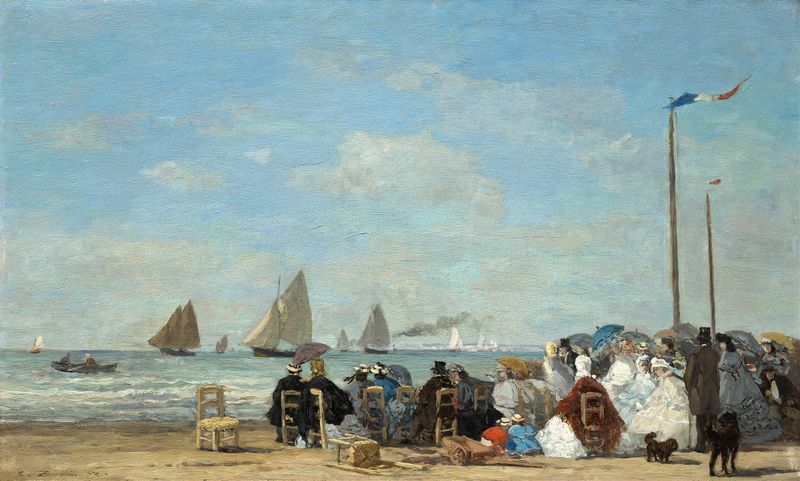
Beach Scene at Trouville
Eugène Boudin

Port aux environs d’Honfleur
Eugène Boudin

Le Faou, un coin du village
Eugène Boudin
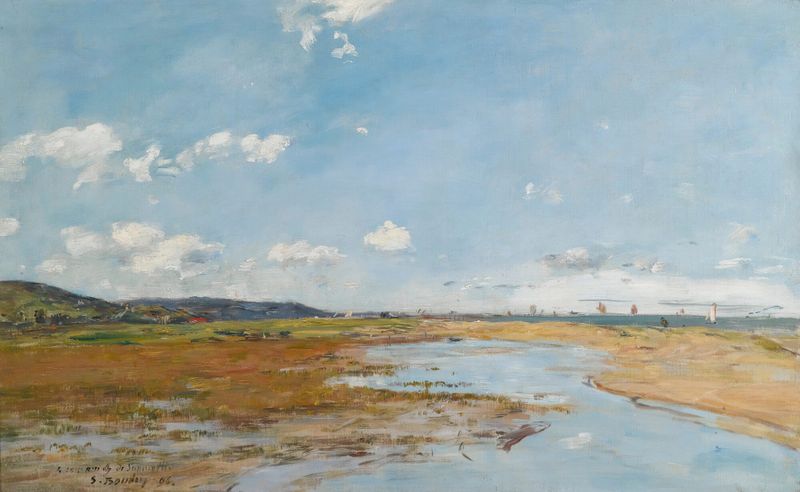
Deauville. Le Rivage
Eugène Boudin
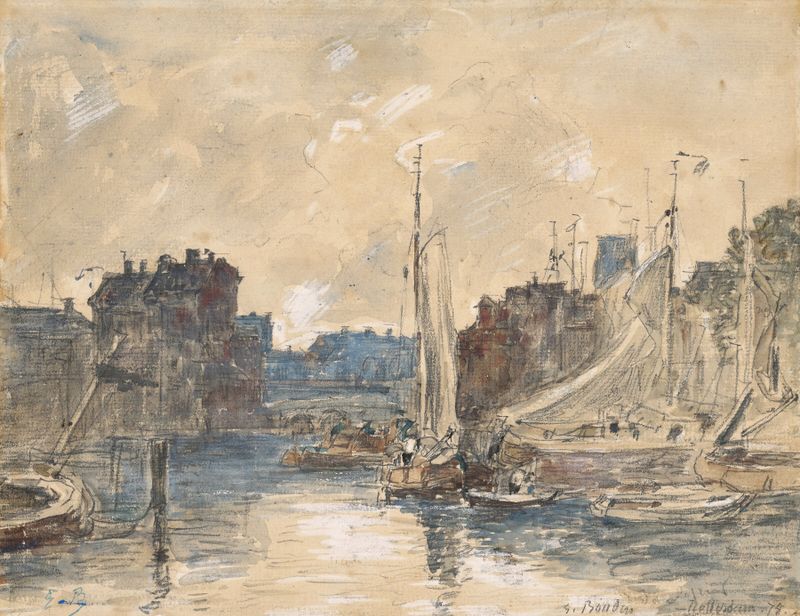
Port de Rotterdam
Eugène Boudin

View of Bordeaux, from the Quai des Chartrons
Eugène Boudin

Trouville, Scène De Plage
Eugène Boudin

Trouville, Le Port
Eugène Boudin





