
Trouville. Barques échouées entre les jetées — History & Facts
Can paint confess what words never could? In the delicate brushstrokes of the late 19th century, a moment captured on canvas reveals the silent dialogue between man and nature, a testament to unwavering faith amid the transience of life. Look to the left at the beached boats, their hulls kissed by the soft tides of Trouville. Notice how the muted palette of blues and earthy browns evokes a sense of melancholy, while the gentle play of light dances across the water's surface, hinting at the day’s end. The composition draws the eye towards the horizon, where the sky blushes with the warmth of a setting sun, inviting contemplation.
The masterful technique reveals not just the physical landscape but the emotional weight of the scene, suggesting stories shared and lives intertwined within this coastal embrace. Within the canvas lies a juxtaposition of stillness and movement. The stranded boats, though at rest, whisper tales of the restless sea, symbolizing both refuge and abandonment. The distant figures on the shore appear almost ghostly, embodying the fleeting nature of human endeavors against the unyielding backdrop of the ocean.
This moment of quiet holds within it the struggles and aspirations of those who navigate life’s unpredictable tides, reinforcing an unspoken faith in the promise of return and renewal. Eugène Boudin created this work in 1877 while living in Normandy, where he found inspiration in the coastal landscapes. At the time, he was gaining recognition for his innovative approach to light and atmosphere, paving the way for Impressionism. The art world was evolving, and Boudin's explorations in capturing the beauty and transience of nature reflected not just his personal journey but the broader artistic movement of his era.
More Artworks by Eugène Boudin
Browse all →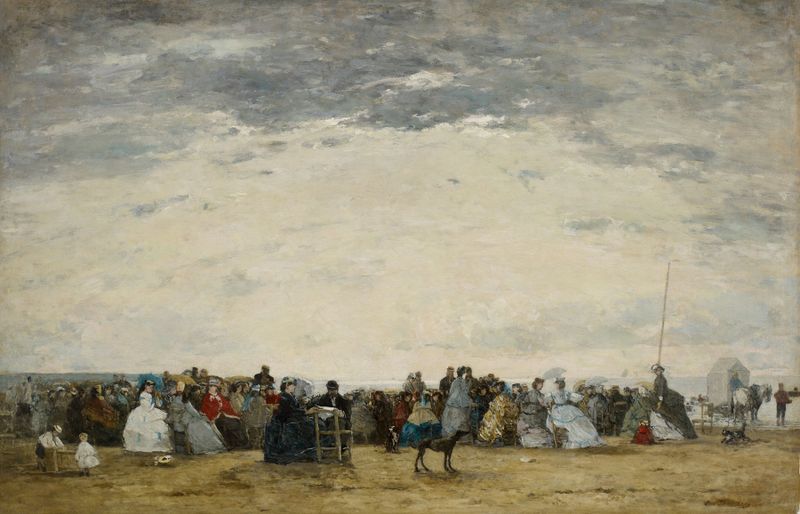
Vacationers on the Beach at Trouville
Eugène Boudin

Washerwoman near Trouville
Eugène Boudin
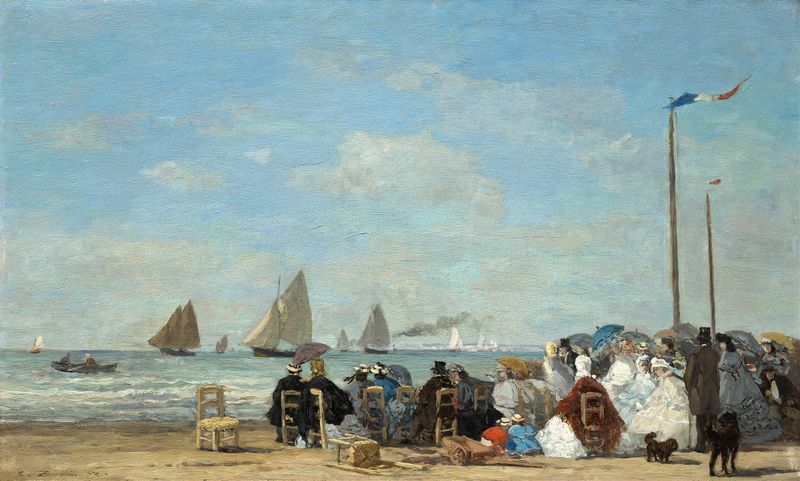
Beach Scene at Trouville
Eugène Boudin

Port aux environs d’Honfleur
Eugène Boudin

Le Faou, un coin du village
Eugène Boudin
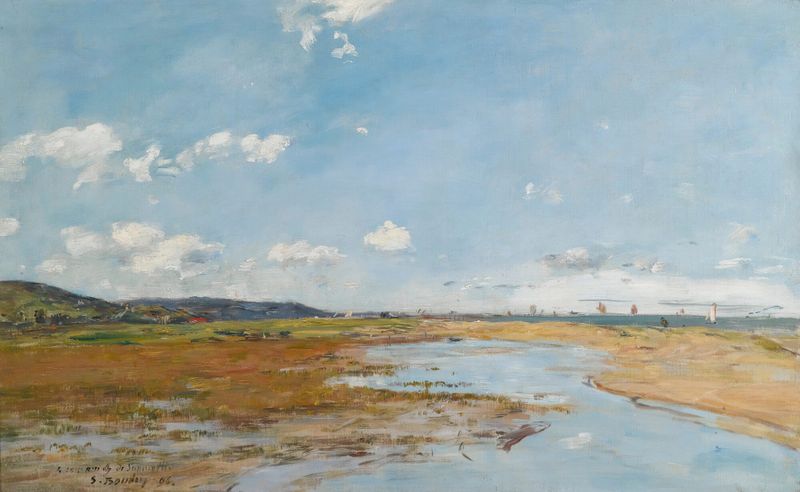
Deauville. Le Rivage
Eugène Boudin
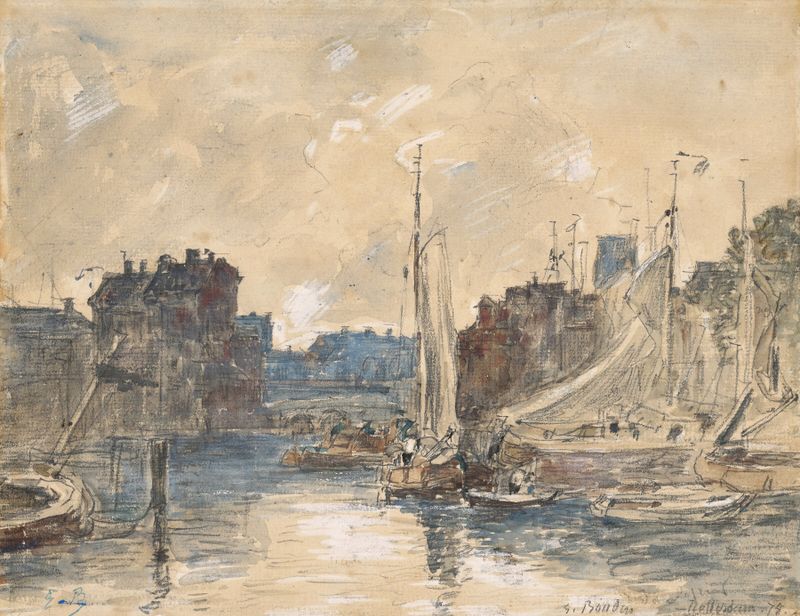
Port de Rotterdam
Eugène Boudin

View of Bordeaux, from the Quai des Chartrons
Eugène Boudin

Trouville, Scène De Plage
Eugène Boudin

Trouville, Le Port
Eugène Boudin





