
Trouville, barques à marée basse — History & Facts
Is this a mirror — or a memory? The canvas invites us to step into a world where water meets sky, and the ephemeral essence of life is captured in brushstrokes. Look to the left at the gentle swells of the tide receding, revealing soft sands that cradle the hulls of anchored boats. The muted palette of blues and browns draws the eye toward the horizon, where the pastel sky mingles with the sea. Notice how the artist's loose brushwork captures not only the physical elements but also the fleeting quality of time — the moment before the tide turns, where tranquility and anticipation coexist. Boudin weaves contrast throughout the scene: the stillness of the boats sharply juxtaposes the dynamic dance of the clouds above.
The serene, almost meditative mood is tinged with an undercurrent of longing, as if the viewer is caught between present reality and distant dreams. Each boat, a vessel of memory, invites reflection on transience — the impermanence of both nature and our experiences. In 1890, during a period when Impressionism was blossoming, the artist worked in the coastal town of Trouville, France. Known for his en plein air painting, he sought to capture the fleeting effects of light and atmosphere, often focusing on the interplay between the sea and sky.
This work reflects his deep connection to the maritime landscape and his growing influence in the art world as a precursor to the modern artists who followed.
More Artworks by Eugène Boudin
Browse all →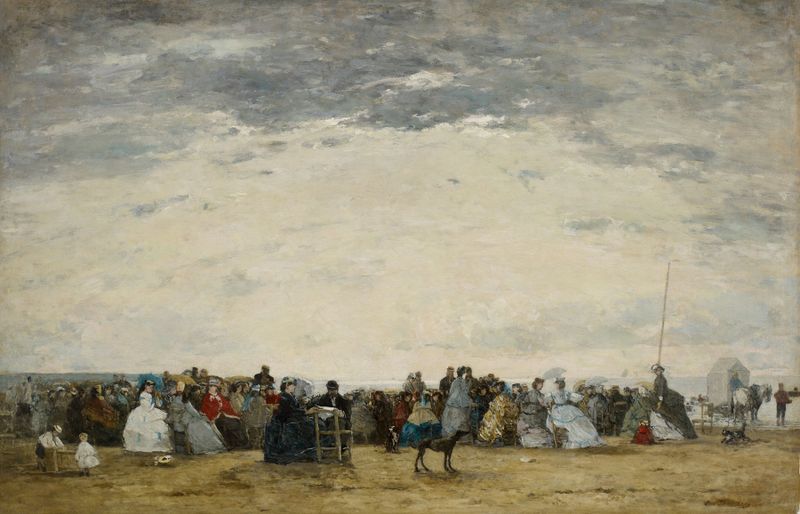
Vacationers on the Beach at Trouville
Eugène Boudin

Washerwoman near Trouville
Eugène Boudin
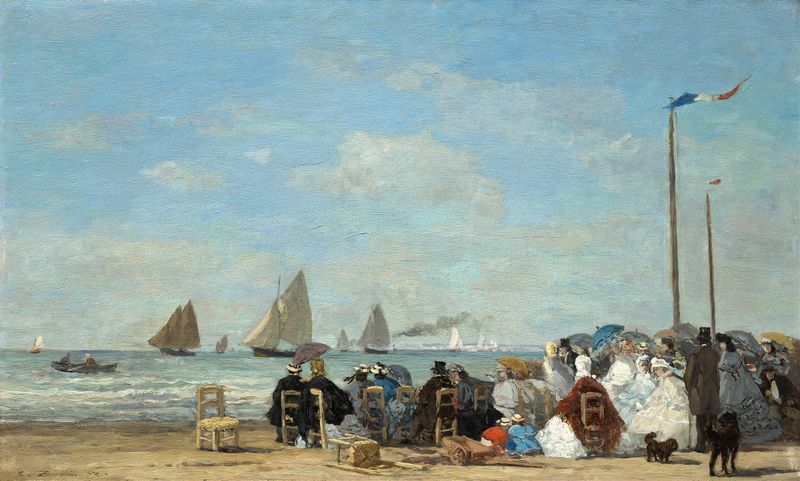
Beach Scene at Trouville
Eugène Boudin

Port aux environs d’Honfleur
Eugène Boudin

Le Faou, un coin du village
Eugène Boudin
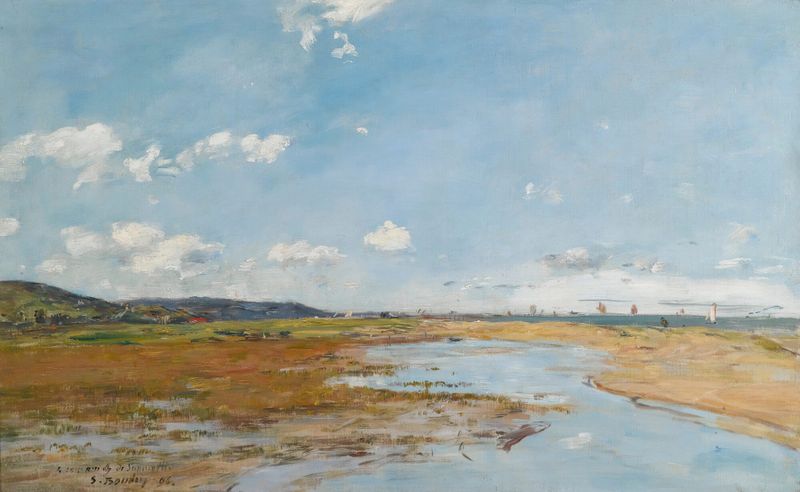
Deauville. Le Rivage
Eugène Boudin
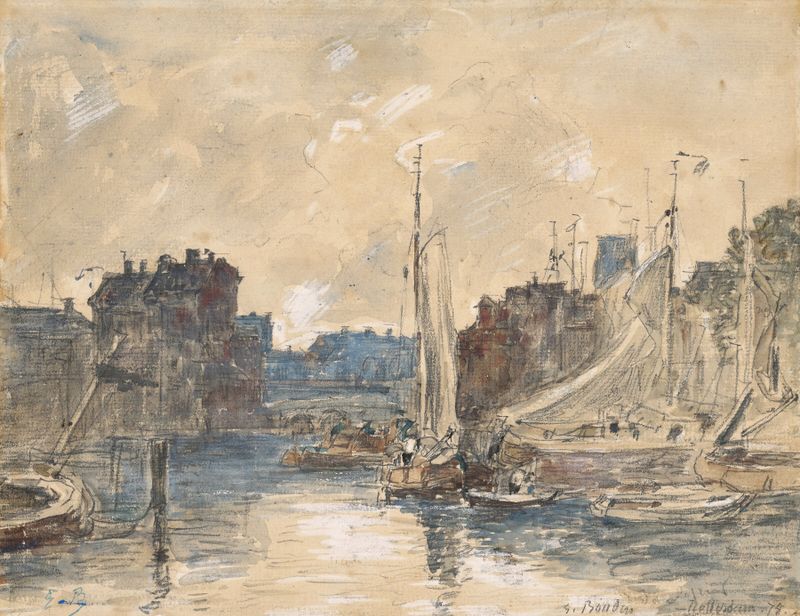
Port de Rotterdam
Eugène Boudin

View of Bordeaux, from the Quai des Chartrons
Eugène Boudin

Trouville, Scène De Plage
Eugène Boudin

Trouville, Le Port
Eugène Boudin





