
Trouville, l’appareillage des sardiniers — History & Facts
This idea encapsulates the essence of coastal life, where the beauty of the sea masks the struggles of those who depend on it. In Trouville, l’appareillage des sardiniers, the viewer is invited into a moment of awakening, where the colors of the dawn set the stage for both labor and nature. Focus on the shimmering light that dances over the water, creating a golden sheen that feels almost ethereal. Look to the fishermen, their figures painted with delicate strokes, engaged in the ritual of preparing their boats.
Notice how the soft hues of blue and gray contrast with the vibrant yellows and oranges, suggesting a world alive with possibility yet tinged with the burden of work. The composition draws the eye from the bustling shore to the tranquil waters, where each element plays its part in this maritime ballet. Within this scene lies a duality: the beauty of the dawn juxtaposed against the strenuous labor of the fishermen. The longing for prosperity is palpable, as each wave that licks the shore whispers of both hope and uncertainty.
The sky, with its soft pinks, suggests a new day filled with potential, while the swift movements of the men portray a relentless pursuit, reminding us of the sacrifices made for sustenance and survival. In 1894, the artist was immersed in the vibrant life of Trouville, a popular seaside resort in France. Boudin, known for his innovative exploration of light and color, captured this moment amidst a thriving art scene that celebrated Impressionism. During this period, France was transforming artistically and socially, and the painter's focus on everyday life reflected both personal and collective experiences in a changing world.
More Artworks by Eugène Boudin
Browse all →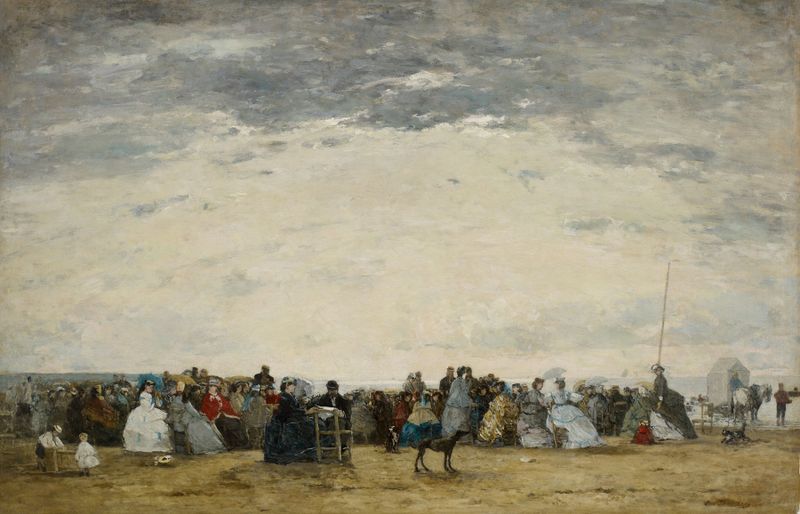
Vacationers on the Beach at Trouville
Eugène Boudin

Washerwoman near Trouville
Eugène Boudin
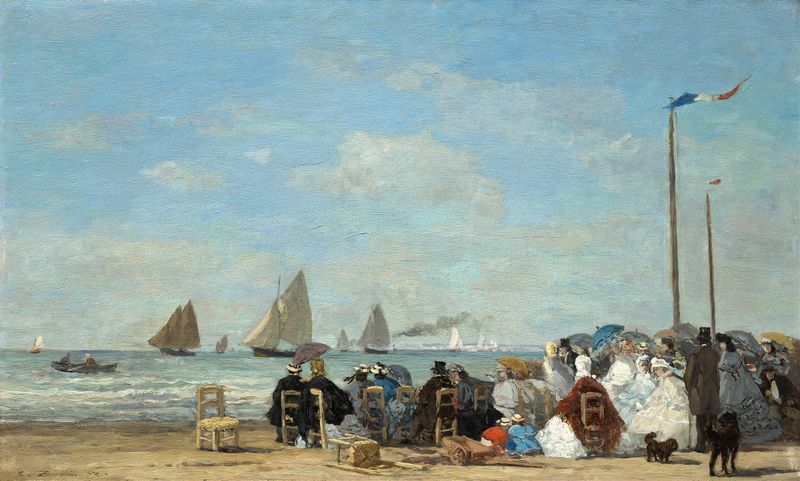
Beach Scene at Trouville
Eugène Boudin

Port aux environs d’Honfleur
Eugène Boudin

Le Faou, un coin du village
Eugène Boudin
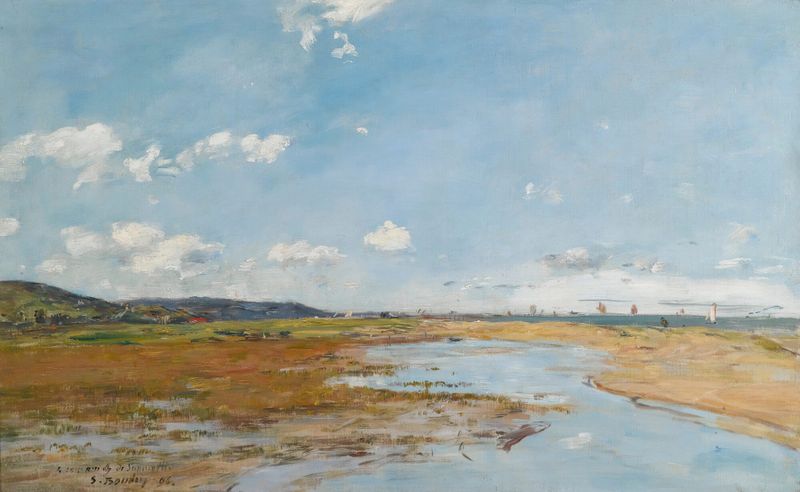
Deauville. Le Rivage
Eugène Boudin
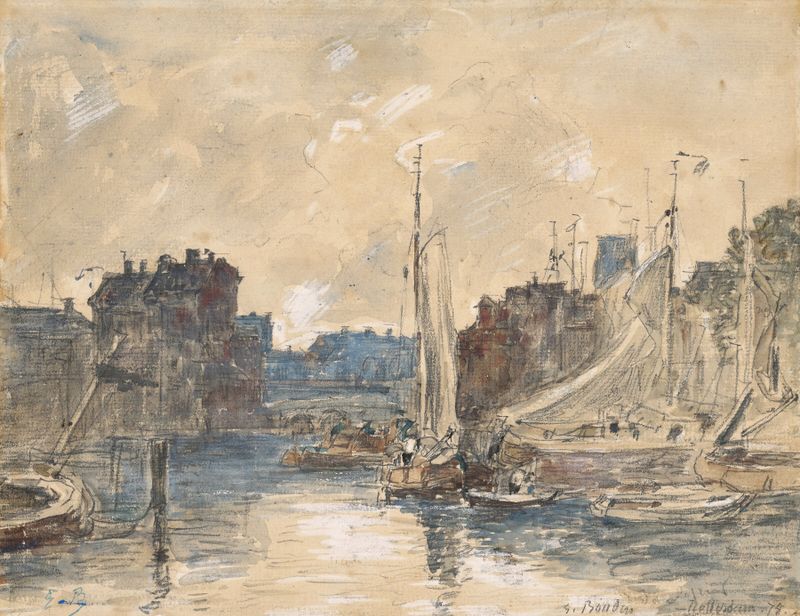
Port de Rotterdam
Eugène Boudin

View of Bordeaux, from the Quai des Chartrons
Eugène Boudin

Trouville, Scène De Plage
Eugène Boudin

Trouville, Le Port
Eugène Boudin





