
Trouville, le lougre échoué — History & Facts
What if silence could speak through light? In Trouville, le lougre échoué, decay whispers through the soft palette, inviting contemplation on the passage of time. Look to the lower left, where the remnants of a grounded vessel rest upon the shore, its hull softened by the embrace of sand and surf. Notice how the golden hues reflect the warmth of the setting sun, contrasting with the chilling blues of the sky, creating a delicate tension between warmth and cold. The brushstrokes, both loose and deliberate, breathe life into the scene, capturing the fleeting moment before the light fades completely. In this composition, Boudin explores the interplay between nature and human endeavor; the ship, once a proud vessel, now succumbs to the elements as a poignant reminder of impermanence.
The gathering clouds overhead hint at impending storms, echoing the inevitability of change. This juxtaposition of beauty and decay resonates deeply, inviting viewers to reflect on the fragility of existence and the remnants of dreams once realized. The artist painted this work during the late 19th century, a time when he was at the forefront of the Impressionist movement in France. This period was marked by a burgeoning interest in capturing light and atmosphere, with Boudin often turning his focus to coastal scenes.
While he chiefly worked in Trouville, this painting reflects both his mastery of capturing ephemeral moments and the broader dialogue of artists grappling with the relationship between humanity and the natural world.
More Artworks by Eugène Boudin
Browse all →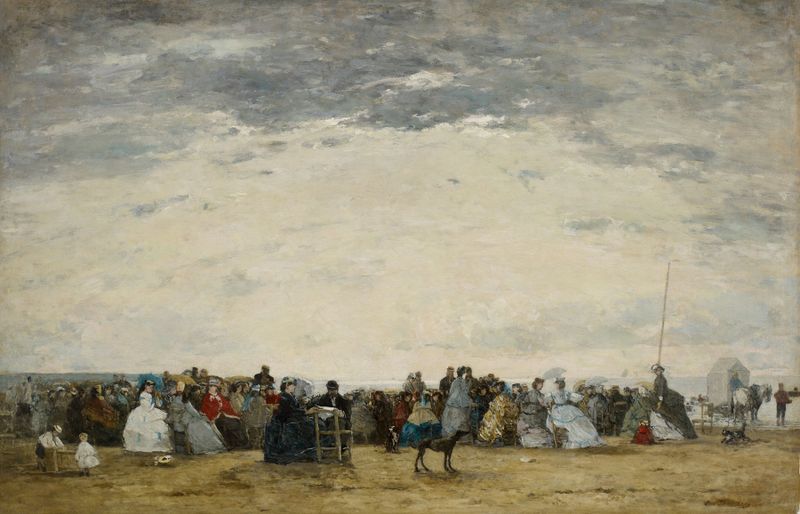
Vacationers on the Beach at Trouville
Eugène Boudin

Washerwoman near Trouville
Eugène Boudin
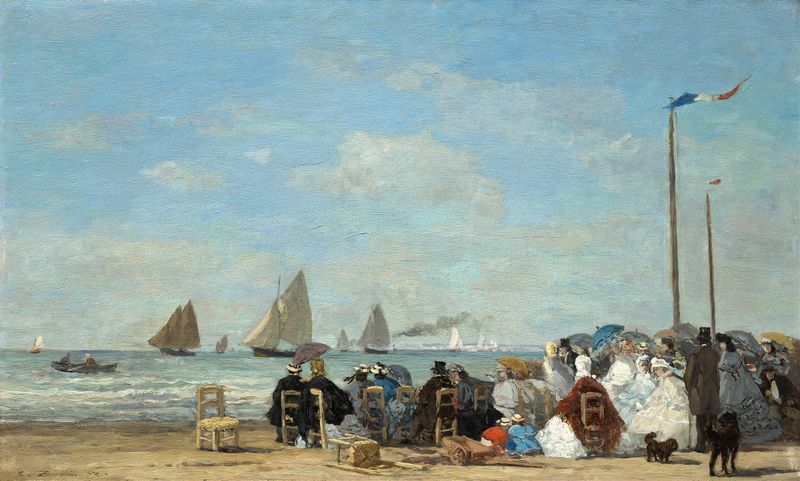
Beach Scene at Trouville
Eugène Boudin

Port aux environs d’Honfleur
Eugène Boudin

Le Faou, un coin du village
Eugène Boudin
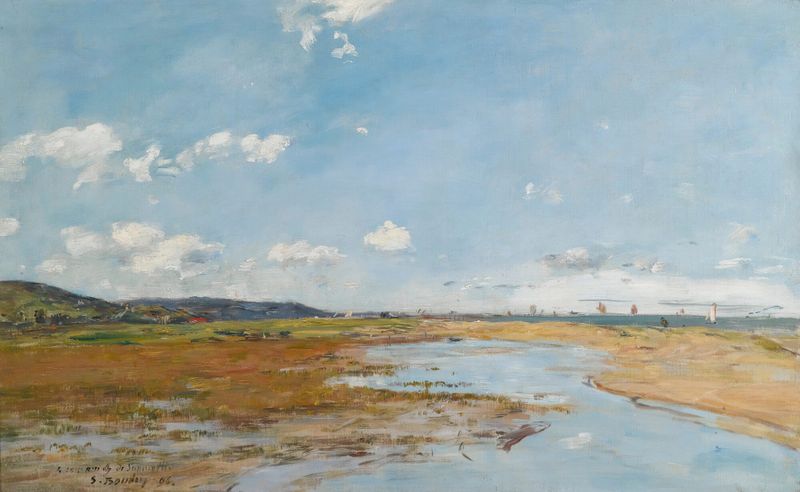
Deauville. Le Rivage
Eugène Boudin
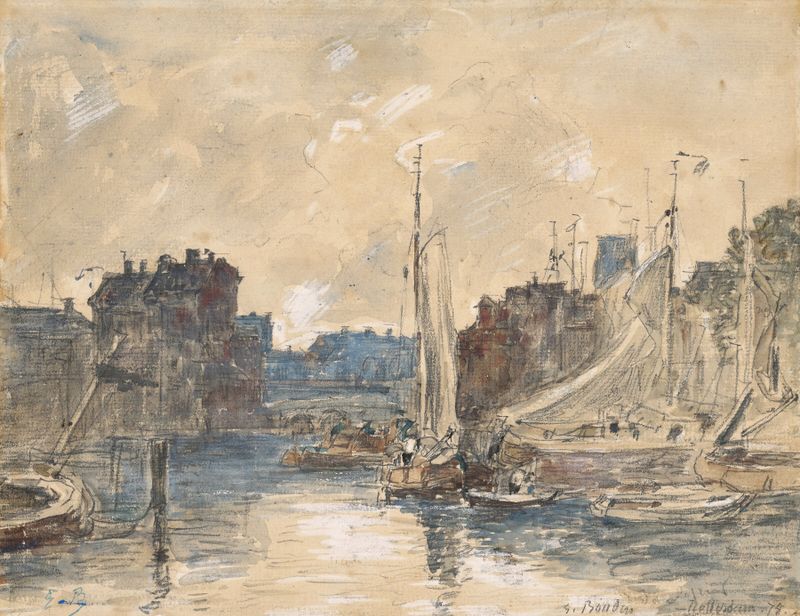
Port de Rotterdam
Eugène Boudin

View of Bordeaux, from the Quai des Chartrons
Eugène Boudin

Trouville, Scène De Plage
Eugène Boudin

Trouville, Le Port
Eugène Boudin





