
Trouville, Le Port, Marée Basse — History & Facts
In the quietude of a coastal town, the emptiness of the scene reveals a deeper narrative, echoing with the unspoken stories of countless lives touched by the sea. Look to the left at the gentle curve of the shoreline, where the muted hues of sand, washed in soft pastels, create an inviting yet solemn backdrop. Notice how the fading light of dusk casts long shadows over the water, giving it a reflective quality that draws the eye. The delicate brushwork captures the ebbing tide, while the sparse presence of boats and figures invokes a haunting stillness, inviting contemplation and introspection. The interplay between the vibrant sky and the subdued earth emphasizes a contrast of emotions—hope and loneliness intertwine.
Each solitary figure, barely discernible against the expansive backdrop, embodies a sense of solitude amidst the tranquil chaos of nature. The open space of the canvas mirrors the vastness of the human experience, suggesting that even in emptiness, there exists a profound connection to a shared existence. In 1894, as Boudin painted this piece on the French coast, he was deeply influenced by the Impressionist movement, which sought to capture light and atmosphere. At this time, he was establishing his reputation as a pioneer of plein air painting, focusing on the beauty of everyday scenes.
The world around him was changing rapidly, yet he chose to encapsulate the simplicity of a port at low tide, reflecting both his artistic vision and the broader human experience of solitude amid modernity.
More Artworks by Eugène Boudin
Browse all →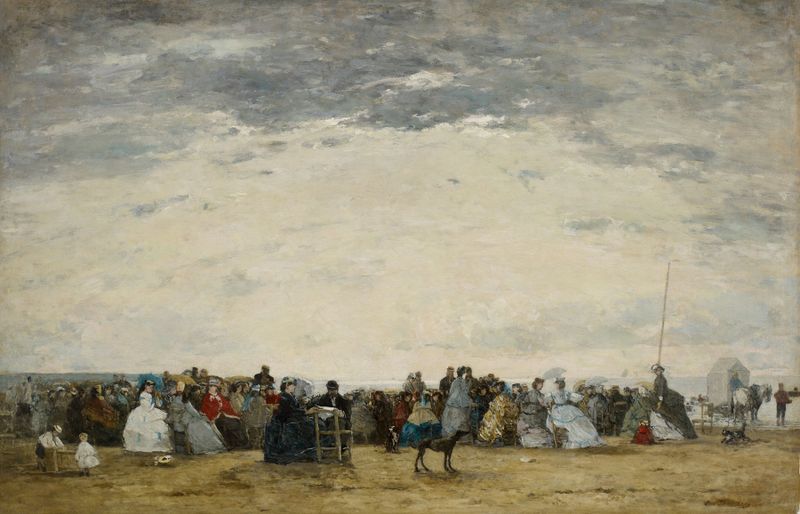
Vacationers on the Beach at Trouville
Eugène Boudin

Washerwoman near Trouville
Eugène Boudin
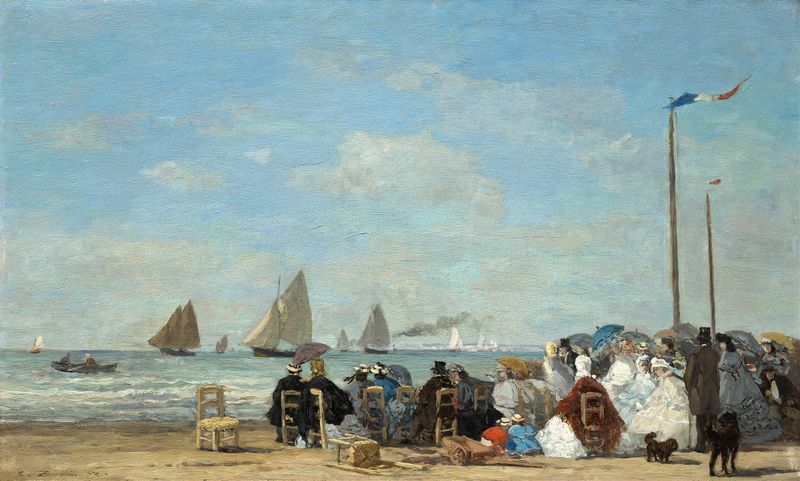
Beach Scene at Trouville
Eugène Boudin

Port aux environs d’Honfleur
Eugène Boudin

Le Faou, un coin du village
Eugène Boudin
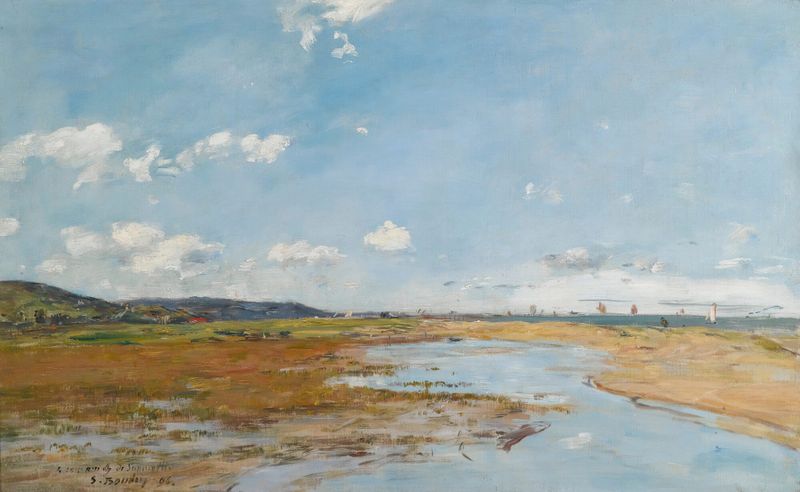
Deauville. Le Rivage
Eugène Boudin
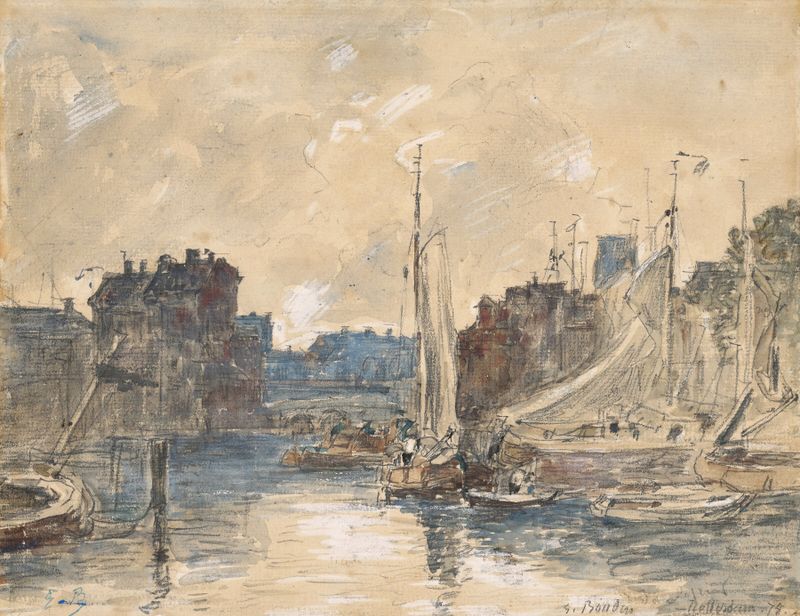
Port de Rotterdam
Eugène Boudin

View of Bordeaux, from the Quai des Chartrons
Eugène Boudin

Trouville, Scène De Plage
Eugène Boudin

Trouville, Le Port
Eugène Boudin





