
Trouville, le port, voiliers échoués — History & Facts
What secret hides in the quiet of the canvas? A lingering fragility, wrapped in the soft hues of a coastal scene, whispers through the brushstrokes of an artist who cherished the ephemeral beauty of nature. Look to the center, where the delicate masts of stranded sailboats rise like skeletal fingers against the muted sky. The artist’s mastery of light is palpable; notice how it dances across the water, reflecting the silvery tones of the clouds above. The palette is soothing yet melancholic, a blend of blues and grays that evokes both serenity and longing.
Each stroke breathes life into the boats, hinting at their past journeys now interrupted, inviting the viewer to contemplate the transience of existence. There’s an emotional tension in the juxtaposition of the vibrant sails against their stillness on the shore. Look closely at the details—the gentle ripples of the water, the worn textures of the boats that suggest stories untold. This moment captures the fragility of life, the fleeting nature of time, and the interplay between human endeavor and nature’s indifference.
Each element serves as a reminder of impermanence, encouraging reflection on what lies beneath the surface of our own journeys. Created in 1890, this piece was painted during a pivotal time for Boudin, who was increasingly recognized as a precursor to Impressionism. Working in Trouville, a vibrant seaside town, he captured the essence of marine life while navigating a world that was rapidly changing due to industrialization. At this juncture, the artist found solace in the quiet beauty of the landscape, marking a significant chapter in his exploration of light and atmosphere.
More Artworks by Eugène Boudin
Browse all →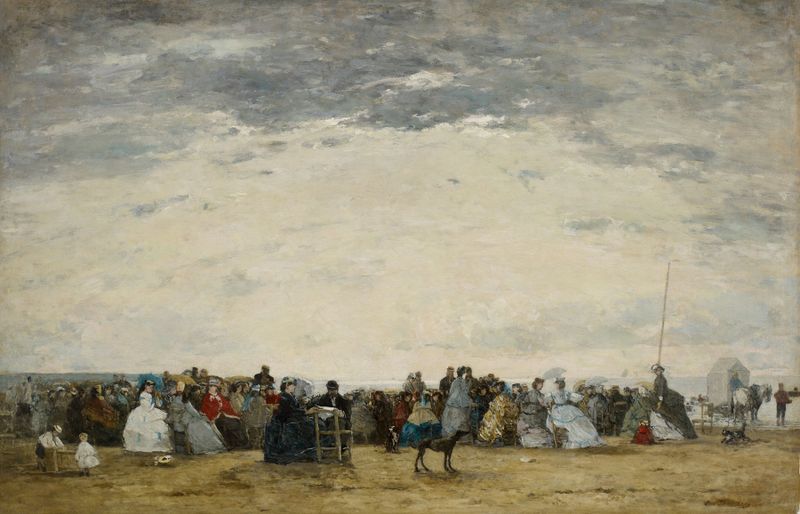
Vacationers on the Beach at Trouville
Eugène Boudin

Washerwoman near Trouville
Eugène Boudin
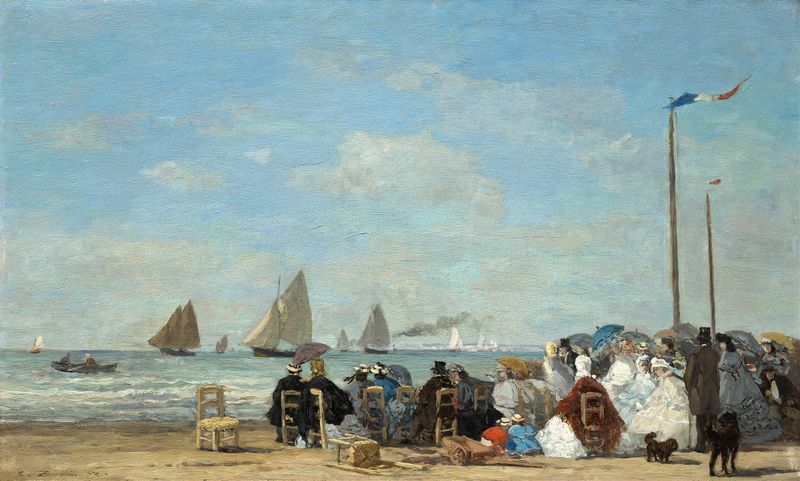
Beach Scene at Trouville
Eugène Boudin

Port aux environs d’Honfleur
Eugène Boudin

Le Faou, un coin du village
Eugène Boudin
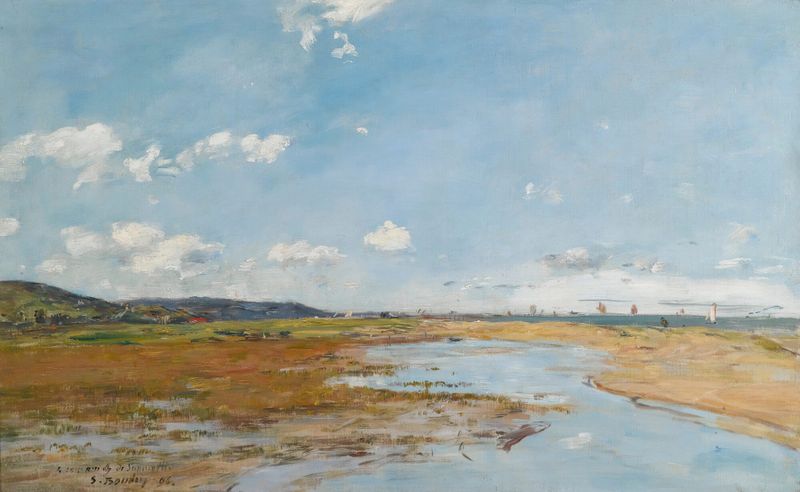
Deauville. Le Rivage
Eugène Boudin
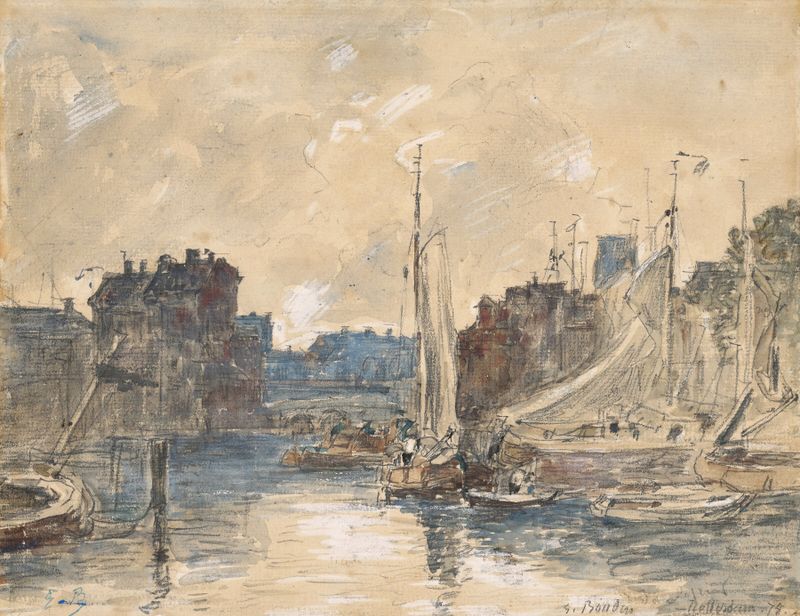
Port de Rotterdam
Eugène Boudin

View of Bordeaux, from the Quai des Chartrons
Eugène Boudin

Trouville, Scène De Plage
Eugène Boudin

Trouville, Le Port
Eugène Boudin





