
Trouville, les jetées, marée basse — History & Facts
Each brushstroke in this work beckons the viewer to dive into a world where the air is thick with the scent of salt and the horizon whispers secrets of the sea. Look to the center of the composition, where the soft, pastel hues blend seamlessly into one another. The sandy beach stretches out, illuminated by a gentle afternoon light that dances on the water’s surface, inviting one to explore the intimate relationship between land and sea. Notice how the figures, small and humble against the vastness of the scene, are bathed in sunlight, their forms defined by the delicate interplay of light and shadow. Boudin captures a fleeting moment, yet underneath the serenity lies a pulse of life.
The ebbing tide reveals hidden treasures of the ocean floor, suggesting a sense of discovery and hope. The juxtaposition between the calmness of the water and the bustling activity of daytrippers evokes a bittersweet tension — joy mingled with the ephemeral nature of time. Each cluster of figures, with their varied gestures, hints at personal stories, emphasizing the longing for connection in an ever-changing world. Painted in 1885, the artist found inspiration in the coastal town of Trouville, a popular destination for Parisians seeking escape.
At this time, Boudin was deeply immersed in the Impressionist movement, yet he remained distinct, capturing the essence of nature and leisure with a unique sensitivity. The work reflects the emergence of a modern lifestyle, where moments of ecstasy are embraced at the water’s edge, forever preserved on canvas.
More Artworks by Eugène Boudin
Browse all →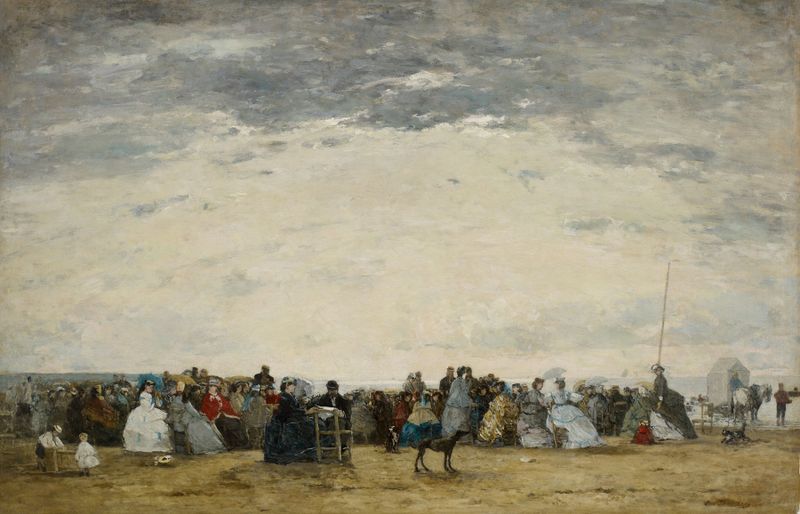
Vacationers on the Beach at Trouville
Eugène Boudin

Washerwoman near Trouville
Eugène Boudin
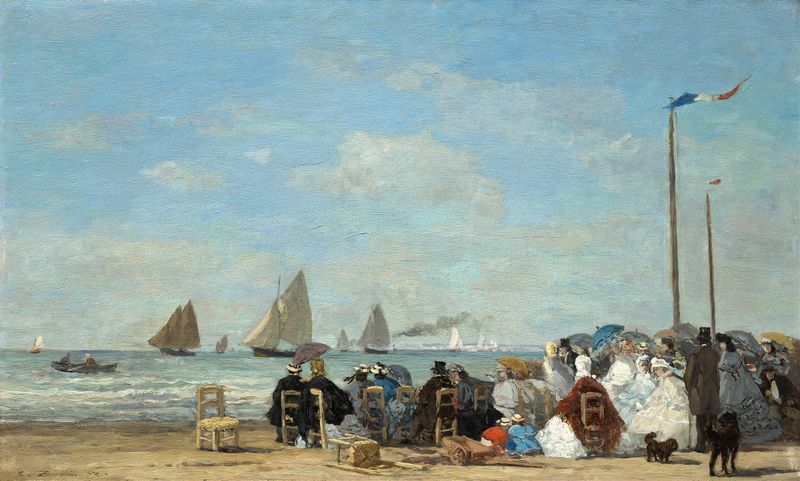
Beach Scene at Trouville
Eugène Boudin

Port aux environs d’Honfleur
Eugène Boudin

Le Faou, un coin du village
Eugène Boudin
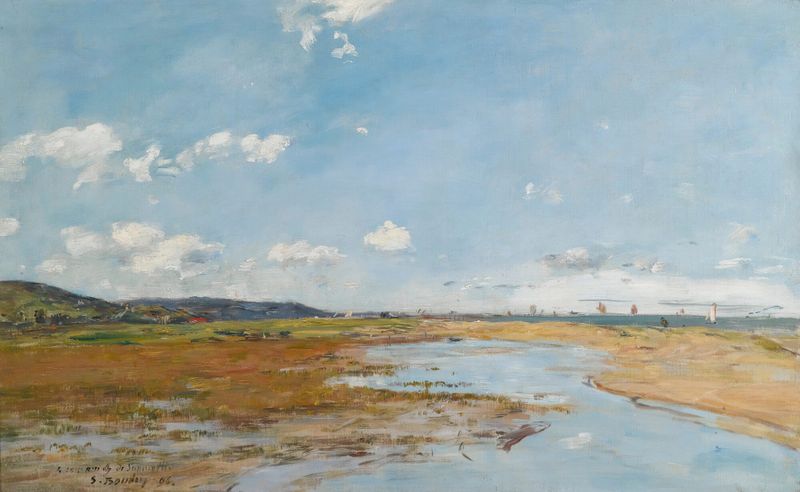
Deauville. Le Rivage
Eugène Boudin
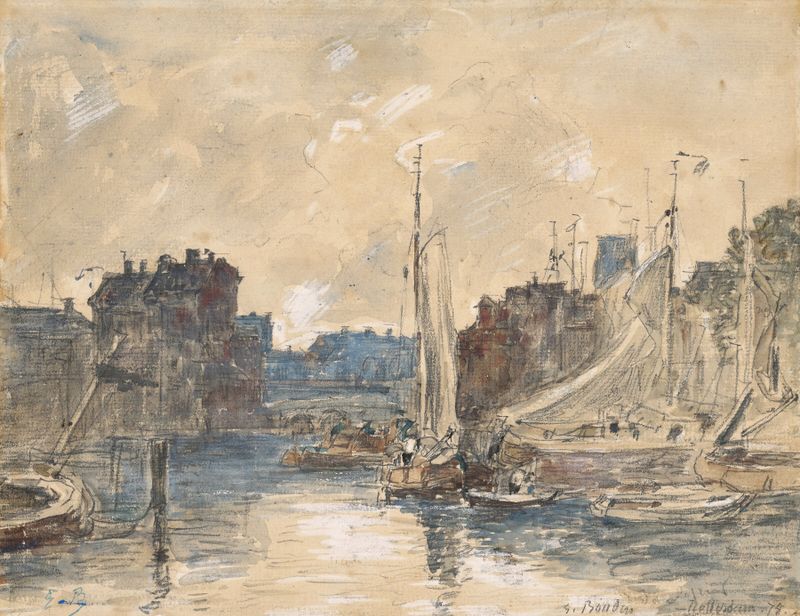
Port de Rotterdam
Eugène Boudin

View of Bordeaux, from the Quai des Chartrons
Eugène Boudin

Trouville, Scène De Plage
Eugène Boudin

Trouville, Le Port
Eugène Boudin





