
Trouville, Les jetées marée haute — History & Facts
The canvas doesn’t lie — it simply waits. In the gentle ebb and flow of waves against the jetty, the illusion of a fleeting moment is masterfully captured. Here, the interplay of light and shadow bridges reality and artistry, inviting us into a world that exists beyond the tangible. Look to the left at the soft, rolling clouds, their hues of gray and lavender merging seamlessly with the tranquil sky.
In the foreground, the intricate detail of the wooden pier beckons, inviting our gaze to follow the rhythmic dance of the sea. Notice how the vibrant blues of the water contrast with the warm sandy tones, creating a dynamic tension that pulls us deeper into the scene. Boudin's brushstrokes are both precise and fluid, revealing the artist’s intimate connection to the coastal landscape, where each wave appears alive with possibility. Beneath the surface, a dialogue emerges between nature and humanity.
The solitary figure standing at the pier suggests contemplation, perhaps longing, while the bustling activity of the beachgoers hints at fleeting moments of joy and communal connection. The juxtaposition of serenity and movement encapsulates the transient nature of life itself. Each detail, from the glint of sunlight on the water to the distant silhouettes on the horizon, speaks to our own experiences of time and memory. In 1885, while painting Trouville, Les jetées marée haute, the artist found himself in the vibrant atmosphere of the French seaside.
Boudin was a pivotal figure in the Impressionist movement, often celebrated for his ability to blend nature with human presence. During this period, he was increasingly recognized for his contributions to capturing the ephemeral beauty of coastal landscapes, solidifying his role as a precursor to the more renowned Impressionists who would follow.
More Artworks by Eugène Boudin
Browse all →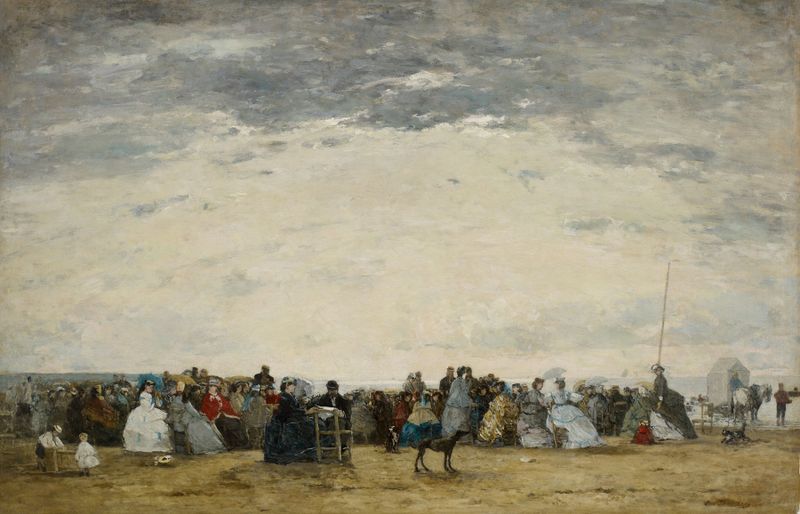
Vacationers on the Beach at Trouville
Eugène Boudin

Washerwoman near Trouville
Eugène Boudin
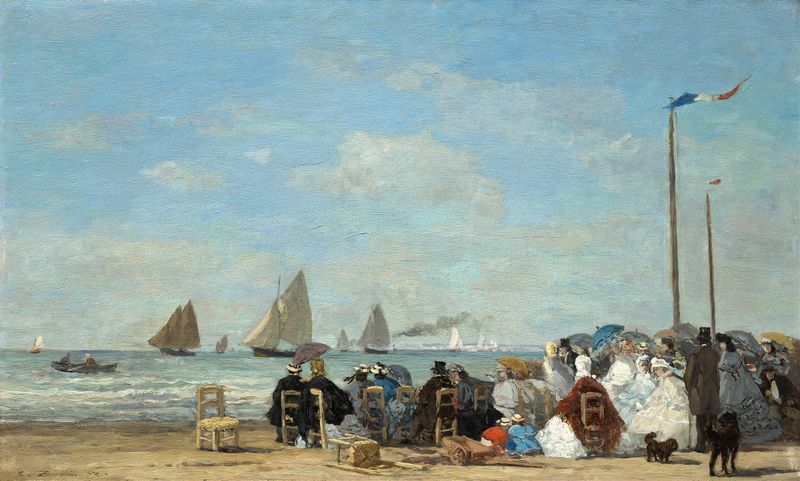
Beach Scene at Trouville
Eugène Boudin

Port aux environs d’Honfleur
Eugène Boudin

Le Faou, un coin du village
Eugène Boudin
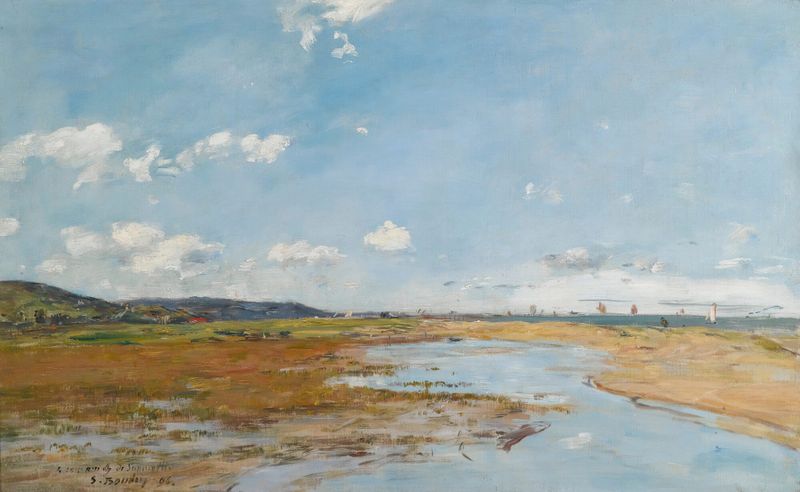
Deauville. Le Rivage
Eugène Boudin
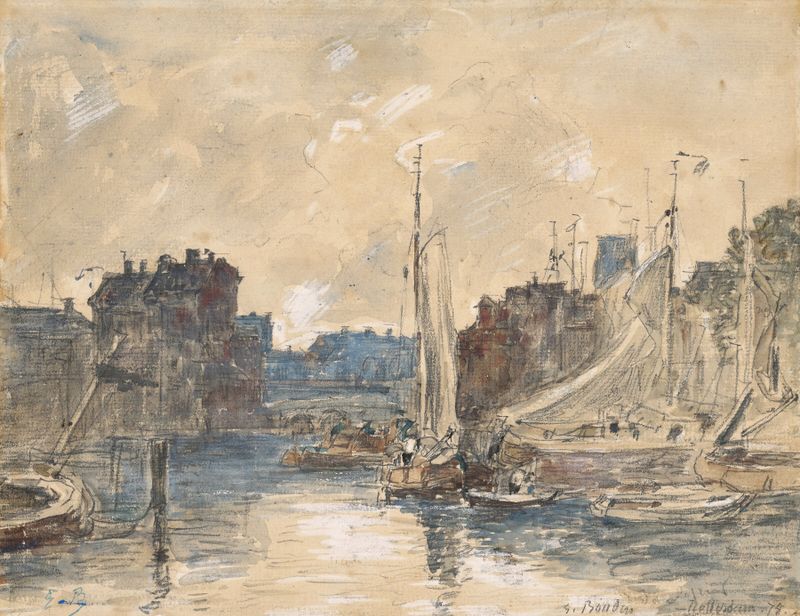
Port de Rotterdam
Eugène Boudin

View of Bordeaux, from the Quai des Chartrons
Eugène Boudin

Trouville, Scène De Plage
Eugène Boudin

Trouville, Le Port
Eugène Boudin





