
Trouville, Les jetées, marée haute — History & Facts
Where does light end, and longing begin? In the delicate interplay of shadows and reflections, the illusion of a seaside escape unfolds, beckoning the viewer to step into a world of gentle waves and muted whispers. Look to the left at the horizon where the cerulean sky meets the glistening surface of the water. The pastel hues wash over the canvas, a soft gradient that mimics the fleeting moments of dawn. Notice how the brushstrokes dance lightly across the surface, imbuing the scene with a sense of movement, as if the ocean breathes in rhythm with the soft light.
The piers rise majestically, their wooden structures leading the eye into the distance, inviting contemplation of the vast expanse beyond. The juxtaposition of the shimmering water and the sturdy piers speaks to the tension between nature's transience and human endeavor. Each wave appears to echo the longing for connection, a reminder of the ever-changing tide of life. Meanwhile, the soft glow of the sunlight creates an ephemeral quality, blurring the line between reality and dreams, suggesting that what we see is but a fleeting illusion of a perfect moment. In 1896, when this piece was completed, Boudin stood at the forefront of the Impressionist movement, painting in Trouville, a location he deeply cherished.
His works often explored the beauty of the French coastline, reflecting a time in which the leisure of seaside life became increasingly popular. Boudin, known for his ability to capture the nuances of light, was dedicated to painting en plein air, a practice that allowed him to translate the vibrancy of nature onto canvas while showcasing the transformations in art during that era.
More Artworks by Eugène Boudin
Browse all →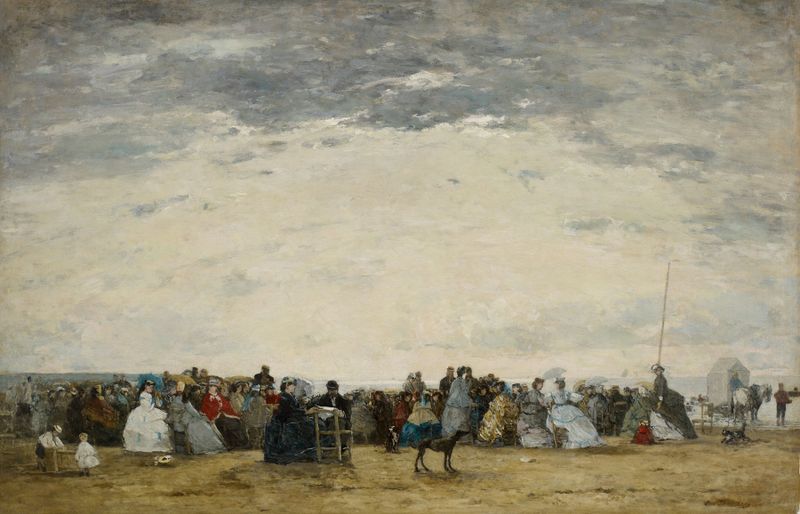
Vacationers on the Beach at Trouville
Eugène Boudin

Washerwoman near Trouville
Eugène Boudin
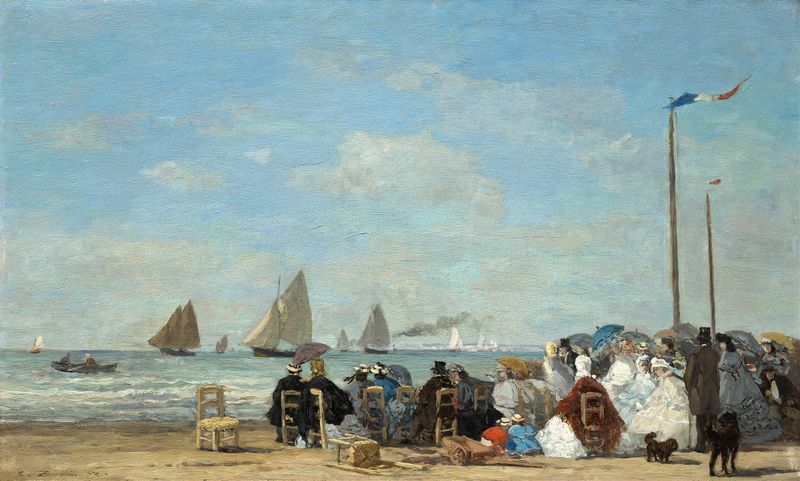
Beach Scene at Trouville
Eugène Boudin

Port aux environs d’Honfleur
Eugène Boudin

Le Faou, un coin du village
Eugène Boudin
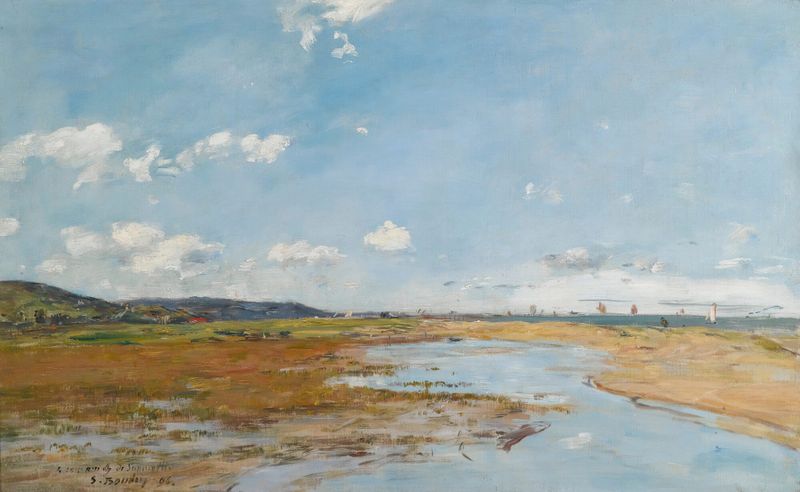
Deauville. Le Rivage
Eugène Boudin
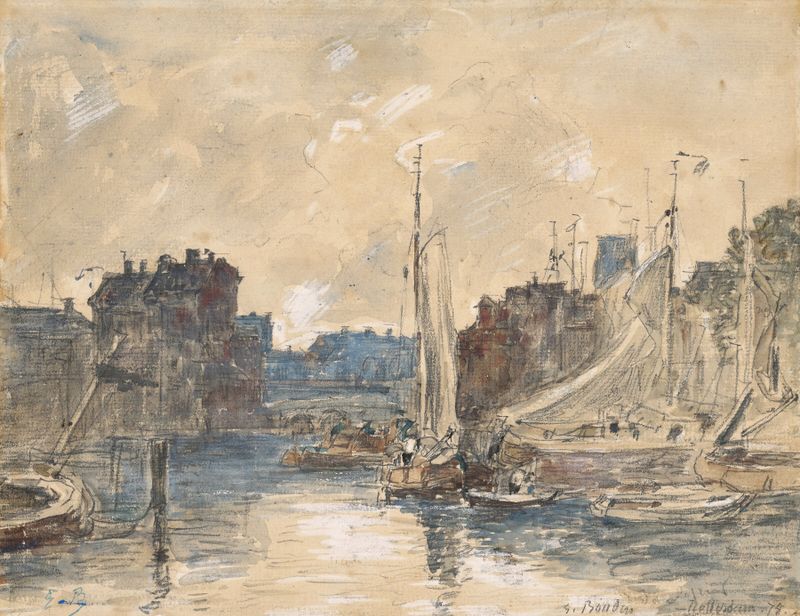
Port de Rotterdam
Eugène Boudin

View of Bordeaux, from the Quai des Chartrons
Eugène Boudin

Trouville, Scène De Plage
Eugène Boudin

Trouville, Le Port
Eugène Boudin





