
Trouville, Scène de plage — History & Facts
What if beauty was never meant to be finished? In Trouville, Scène de plage, the artist captures a fleeting moment, a whisper from the past where the essence of life dances along the shoreline, teetering between reality and memory. Look to the left at the delicate figures dotting the sandy expanse, their silhouettes softened by the gentle embrace of the sunlight. Notice how the light falls upon the waves, shimmering like diamonds scattered upon the surface, while clouds drift lazily overhead, evoking a sense of tranquility. The palette of soft blues and warm yellows invites the viewer to immerse themselves in the vibrant yet serene atmosphere of a summer day.
Each brushstroke conveys movement—people basking in the sun, children playing, and the distant horizon, all poised in a harmonious balance. Delve deeper into the composition, and you will uncover the contrast between stillness and activity. The vibrant beachgoers are juxtaposed against the expansive sea, hinting at the complexity of human experience amidst nature's vastness. The interplay of light and shadow speaks to the ephemeral quality of joy, as if the scene is suspended in time, inviting contemplation of the void between moments of happiness.
This delicate tension resonates with the viewer, suggesting that beauty is not about permanence but about the ephemeral treasures we capture. In 1874, Boudin created this work while living in Trouville, a coastal resort that attracted the Parisian elite. The artist was a pivotal figure in the development of plein air painting, capturing the natural environment with an immediacy that was revolutionary at the time. This period marked a shift in the art world, as artists began to embrace spontaneity and the beauty of everyday life, moving away from the constraints of academic traditions.
More Artworks by Eugène Boudin
Browse all →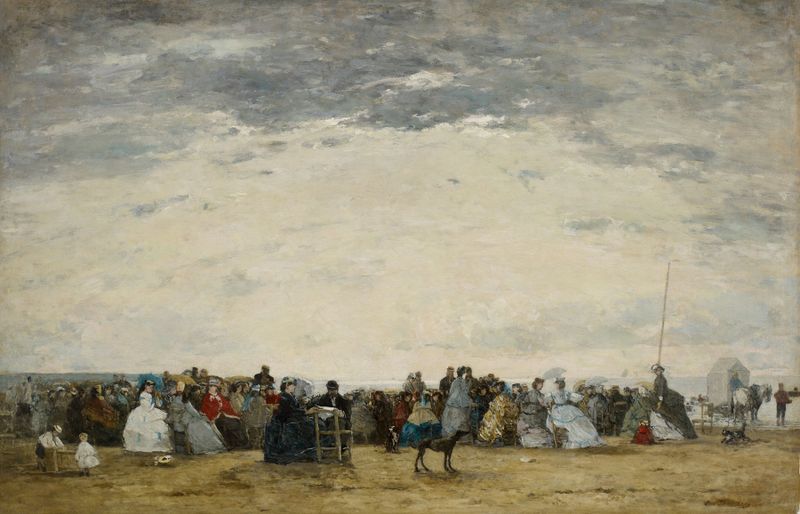
Vacationers on the Beach at Trouville
Eugène Boudin

Washerwoman near Trouville
Eugène Boudin
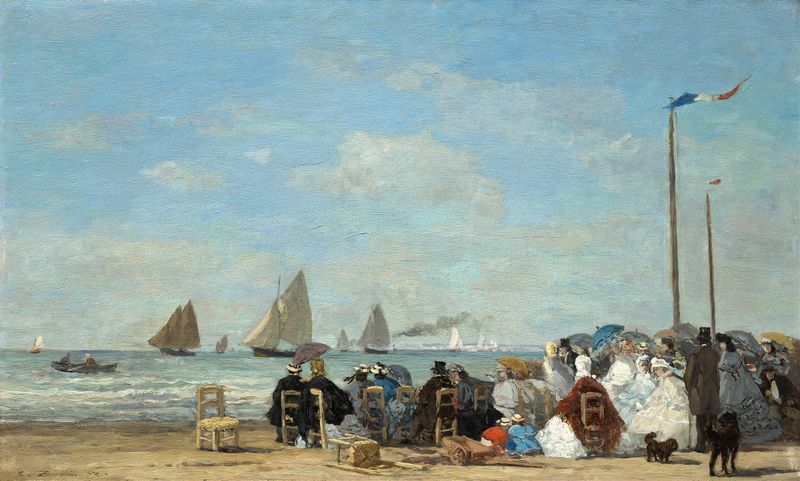
Beach Scene at Trouville
Eugène Boudin

Port aux environs d’Honfleur
Eugène Boudin

Le Faou, un coin du village
Eugène Boudin
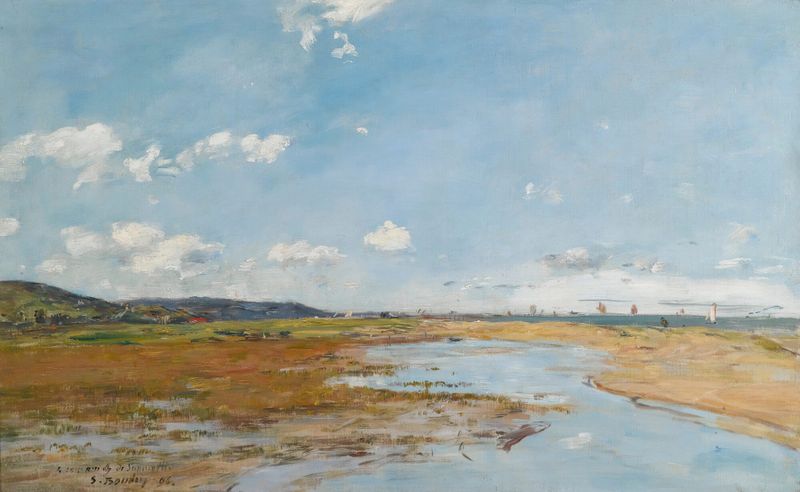
Deauville. Le Rivage
Eugène Boudin
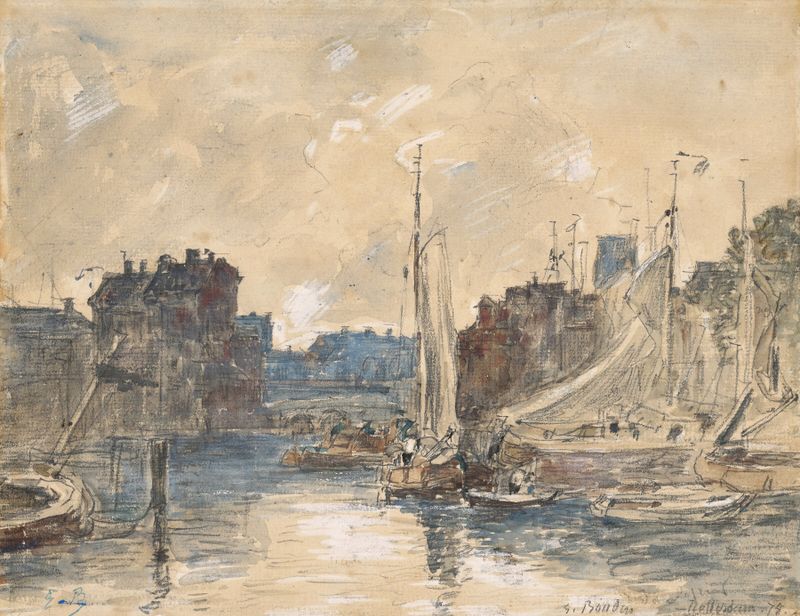
Port de Rotterdam
Eugène Boudin

View of Bordeaux, from the Quai des Chartrons
Eugène Boudin

Trouville, Scène De Plage
Eugène Boudin

Trouville, Le Port
Eugène Boudin





