
Trouville, voiliers échoués — History & Facts
What if silence could speak through light? In the delicate interplay of hue and shadow, the stillness of a moment transcends time, inviting contemplation of both nature and the human spirit. Focus on the canvas where a tranquil shoreline stretches before you. Look closely at the sails of the grounded boats, their muted colors—faded reds, soft creams, and gentle blues—evoking a sense of longing. Notice how the light dances on the water’s surface, creating a delicate shimmer that contrasts with the weighty stillness of the vessels.
The composition is masterfully balanced, with the horizon line gently dividing sea and sky, suggesting an endless expanse yet confined within the frame. Amidst this serene setting lies a tension between the vibrancy of life and the weight of inactivity. The boats, usually symbols of adventure, rest abandoned, capturing a moment of pause. This juxtaposition speaks to the fragility of human ambition against the relentless ebb and flow of nature.
A solitary figure in the background hints at the human presence, yet their subdued posture reflects a quiet acceptance of their surroundings, evoking feelings of nostalgia and reflection. Eugène Boudin created Trouville, voiliers échoués between 1883 and 1887 while painting in his beloved Normandy. During this period, he was deeply influenced by the evolving Impressionist movement, bringing forth a unique ability to capture the atmospheric qualities of light and color. The late 19th century was a time of great change in the art world, and Boudin's exploration of coastal landscapes positioned him as a precursor to modern plein air painting, emphasizing nature’s transitory beauty.
More Artworks by Eugène Boudin
Browse all →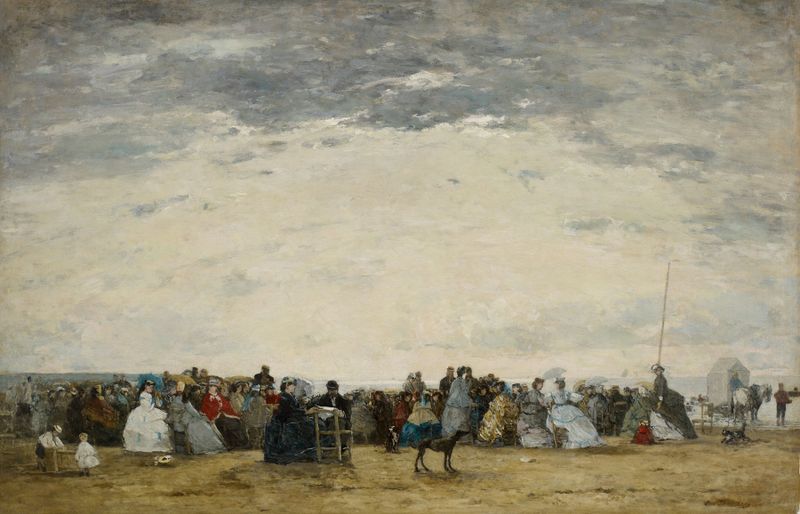
Vacationers on the Beach at Trouville
Eugène Boudin

Washerwoman near Trouville
Eugène Boudin
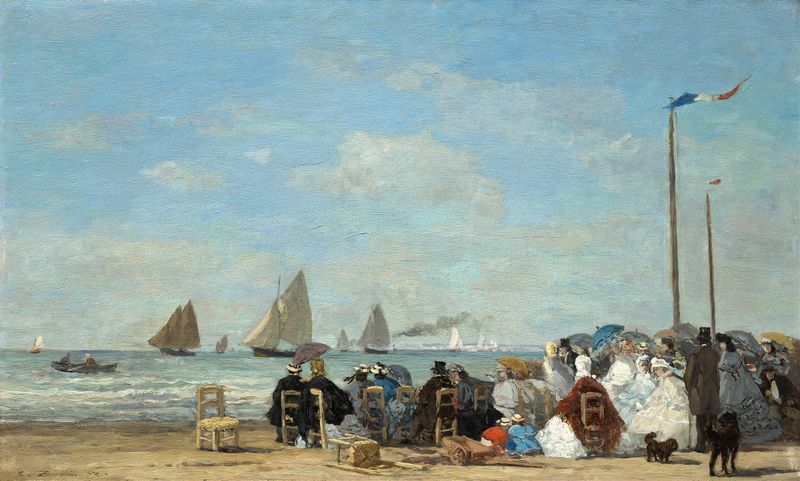
Beach Scene at Trouville
Eugène Boudin

Port aux environs d’Honfleur
Eugène Boudin

Le Faou, un coin du village
Eugène Boudin
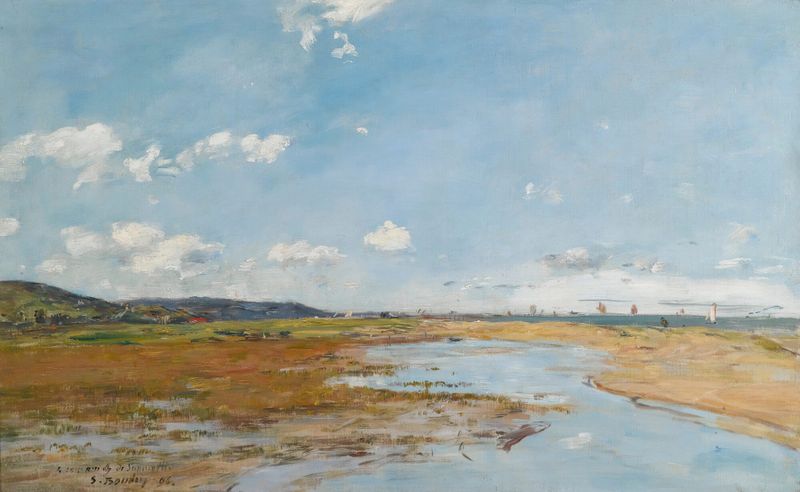
Deauville. Le Rivage
Eugène Boudin
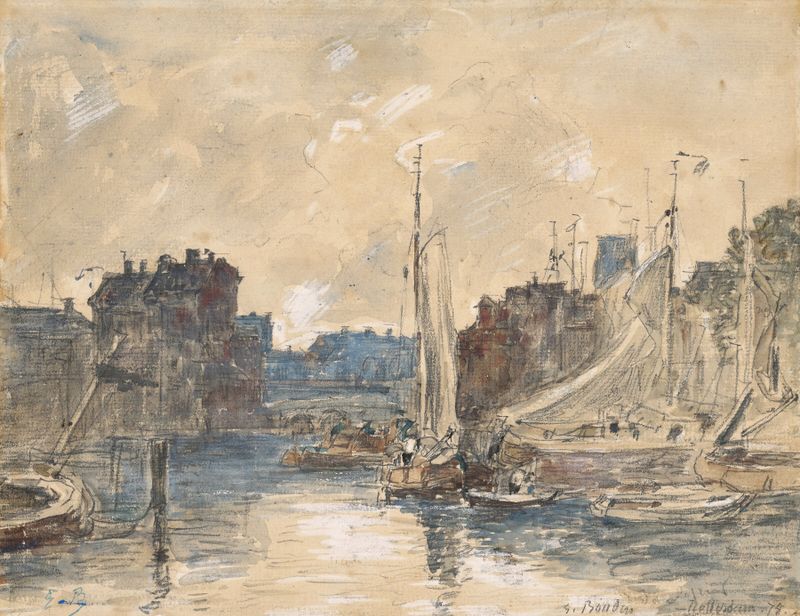
Port de Rotterdam
Eugène Boudin

View of Bordeaux, from the Quai des Chartrons
Eugène Boudin

Trouville, Scène De Plage
Eugène Boudin

Trouville, Le Port
Eugène Boudin





