
Twilight Walk, Morocco — History & Facts
A shaft of evening light catches the white veils of three women as they move quietly along a shaded path, the hush of the forest deepening the sense of secrecy and pause. The eye is drawn first to the solitary figure in the foreground, her gaze direct, her hands hidden except for a single red flower she cradles at her chest—a mark of individuality and perhaps longing amid the enveloping dusk. Behind her, two companions confer in half-profile, their faces turned toward each other, their presence both protective and distant.
The dense greenery presses in, but the soft folds of the women’s garments break the darkness, guiding the viewer along the winding track and into the silent conversation between light and shadow. Painted by Theodoros Ralli between 1873 and 1903, Twilight Walk, Morocco belongs to a period when European artists were fascinated by North Africa’s landscapes and daily rituals, often seeking out scenes that balanced documentary curiosity with a taste for the exotic. Works like this were collected by travelers and cosmopolitan patrons eager for a glimpse of distant worlds, yet the artist’s careful attention to posture and gesture suggests a deeper engagement with the rhythms of local life. The era’s Orientalist painters, including Ralli, were both chroniclers and interpreters, shaping their subjects for Western eyes while capturing moments of genuine intimacy and stillness.
History has kept few traces of this specific painting’s journey, but its quiet mood and precise detail invite us to linger, imagining the world just beyond the path’s bend.
More Artworks by Theodoros Ralli

The Sleeping Concubine
Theodoros Ralli
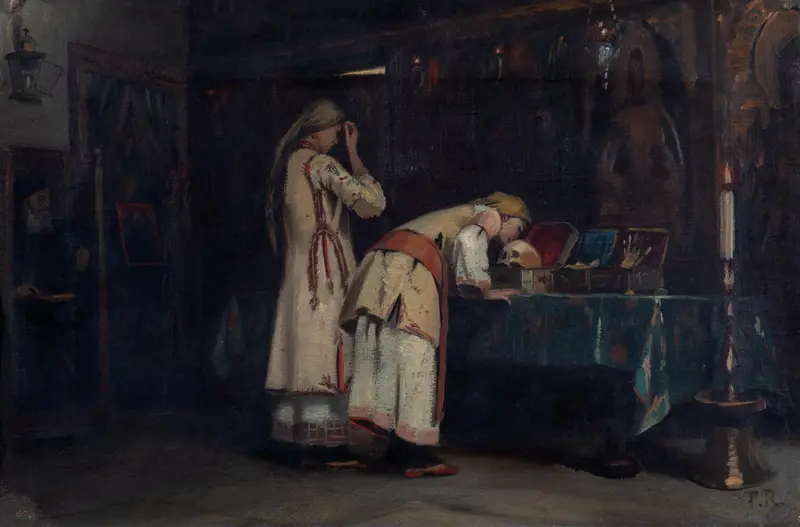
Holy Relics
Theodoros Ralli
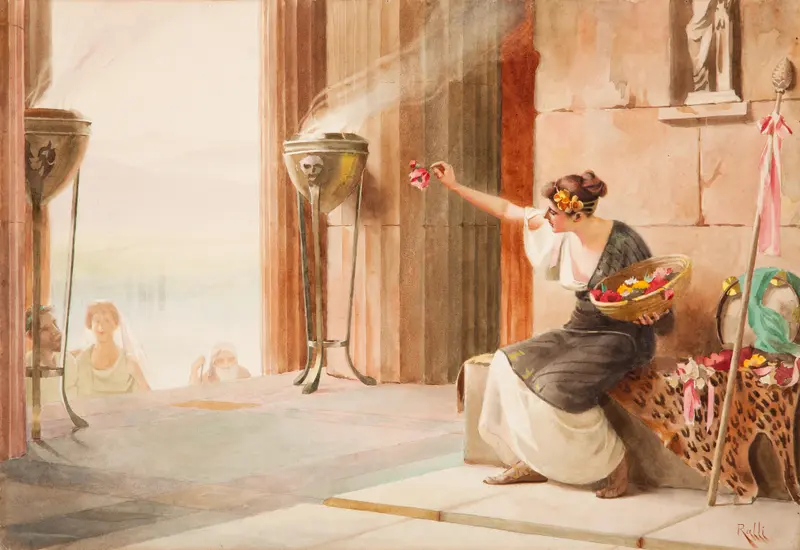
Flower Seller at the Parthenon
Theodoros Ralli
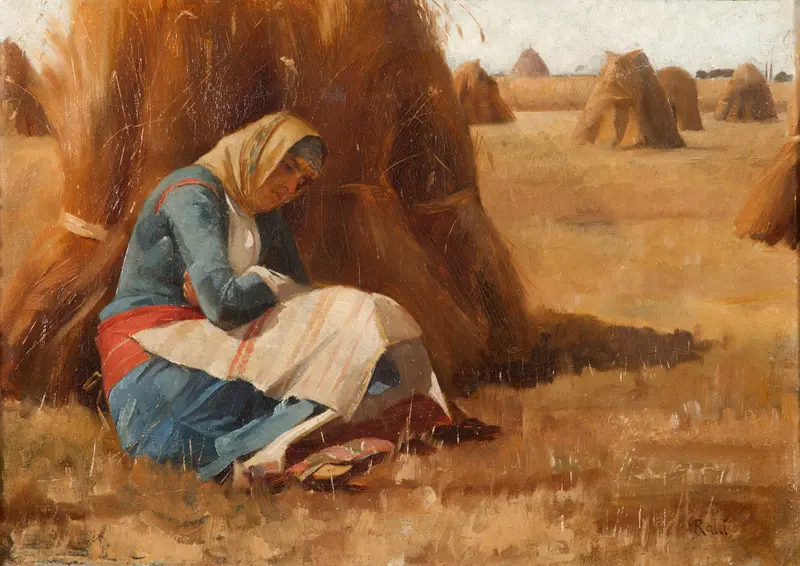
Resting by a Haystack
Theodoros Ralli
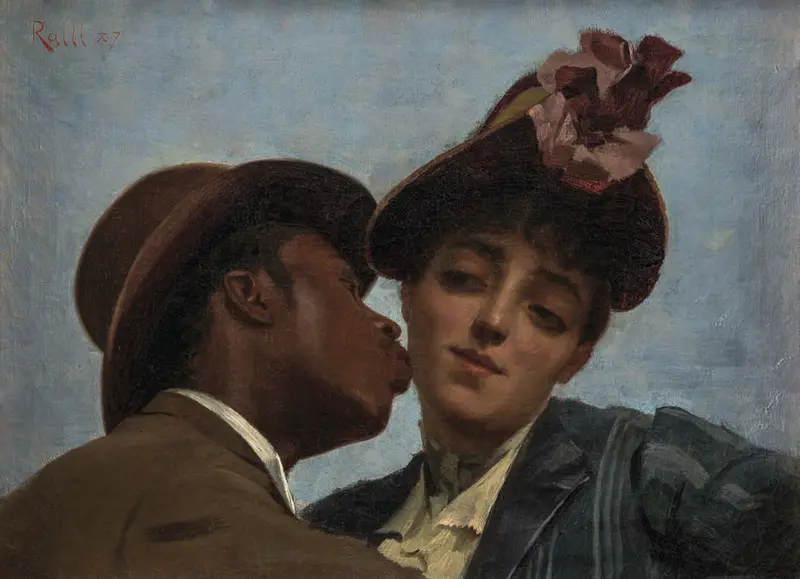
The Kiss (Ralli)
Theodoros Ralli
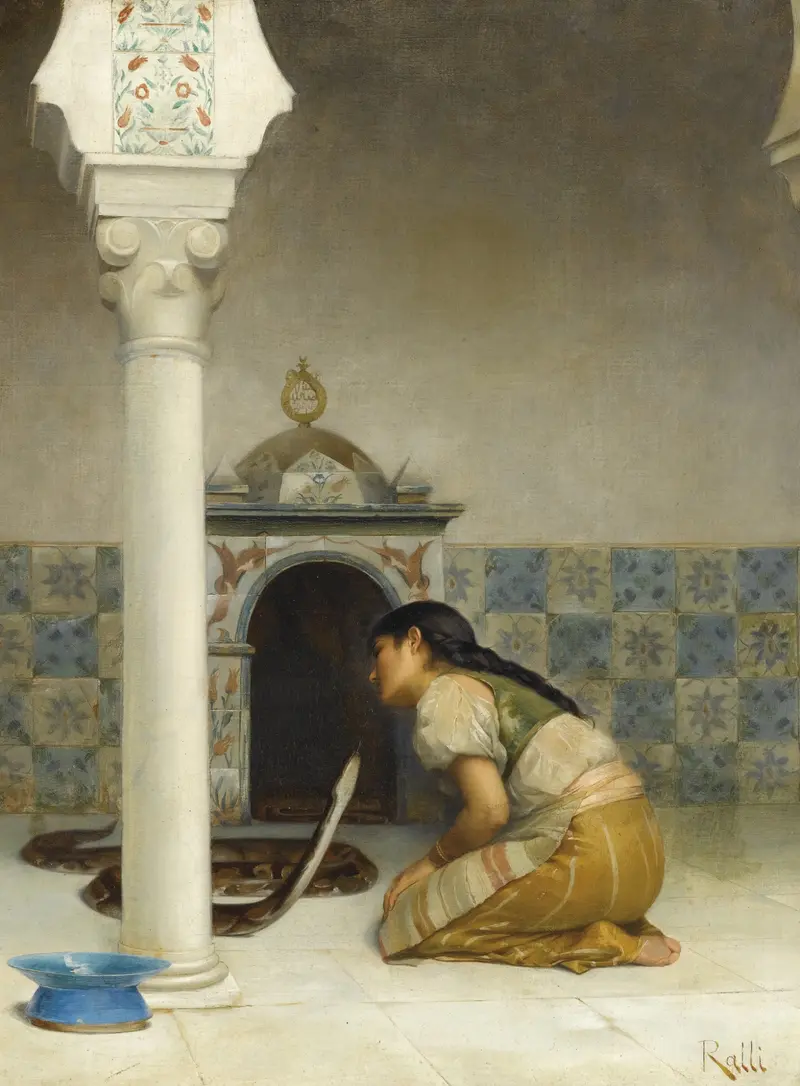
The Sacred Serpent
Theodoros Ralli
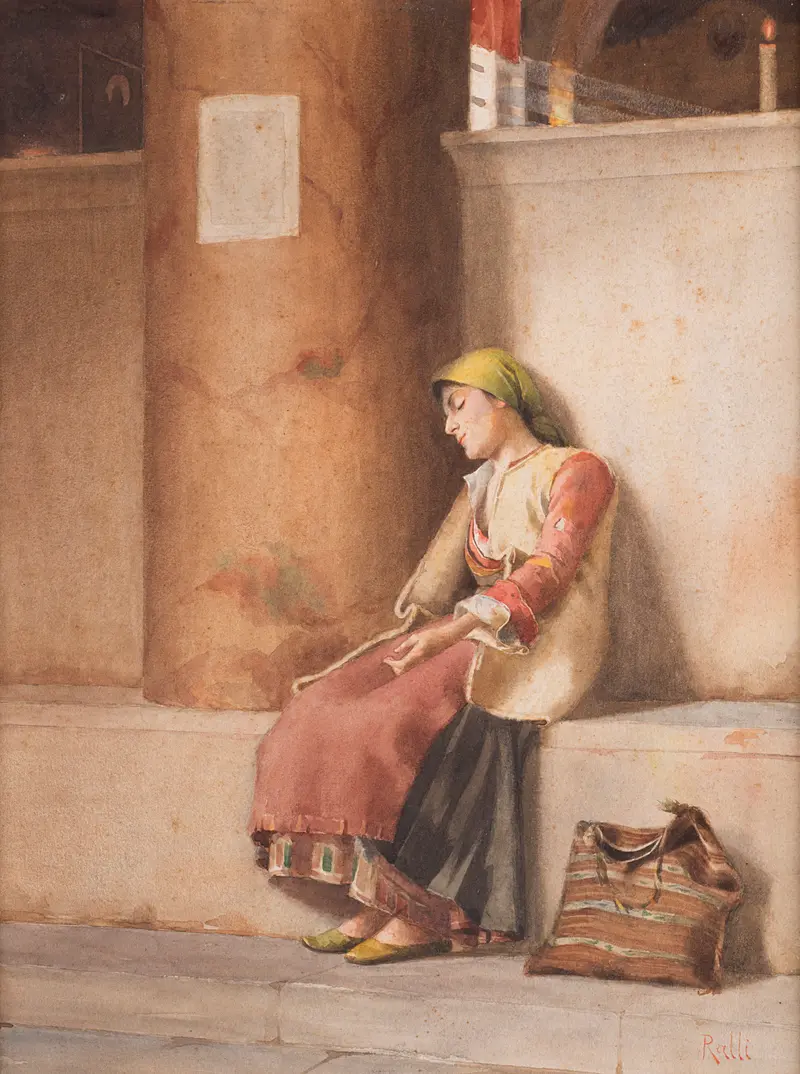
A Moment of Reflection
Theodoros Ralli
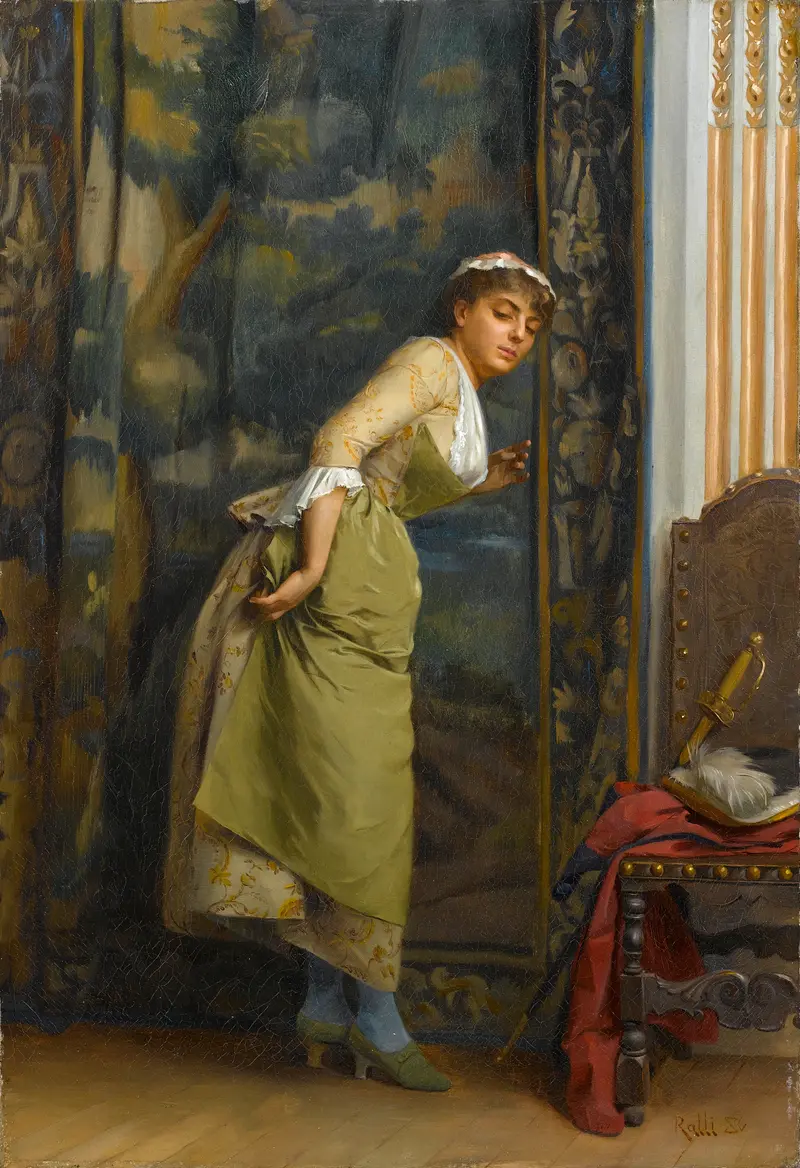
Eavesdropping (Ralli)
Theodoros Ralli
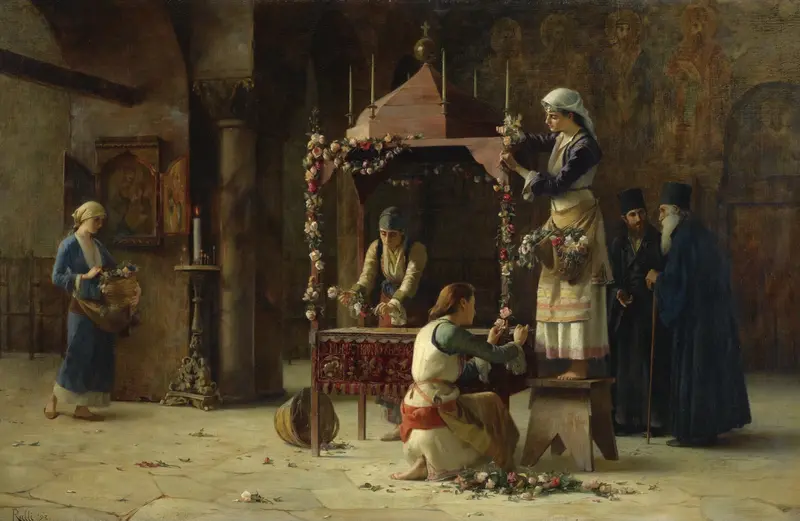
Holy Friday, Greece
Theodoros Ralli
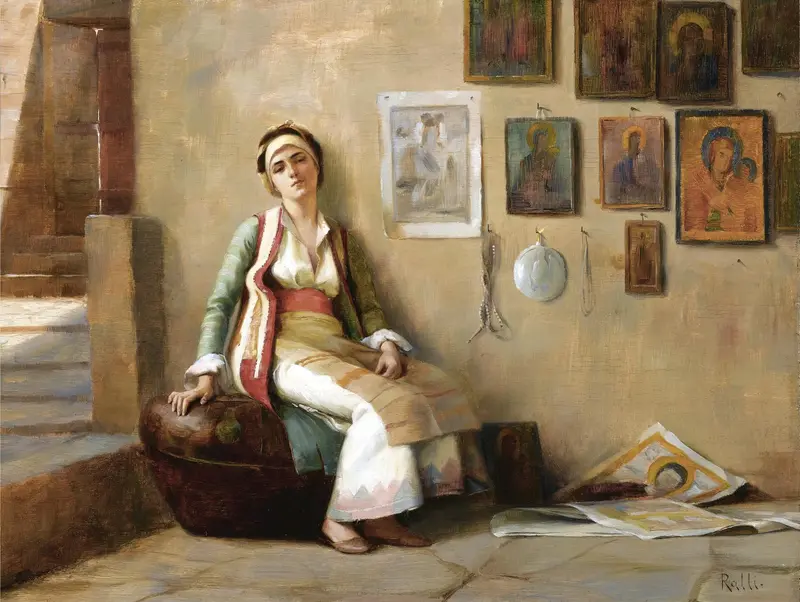
A Moment's Rest
Theodoros Ralli
More Genre Scene Art

Banquet of the Officers of the St George Civic Guard
Frans Hals

Rembrandt and Saskia in the Scene of the Prodigal Son
Rembrandt van Rijn

Bal du moulin de la Galette
Pierre-Auguste Renoir

Quadrille at the Moulin Rouge
Henri de Toulouse-Lautrec

A Burial at Ornans
Gustave Courbet

When Will You Marry?
Paul Gauguin