
Two Discs in the City — History & Facts
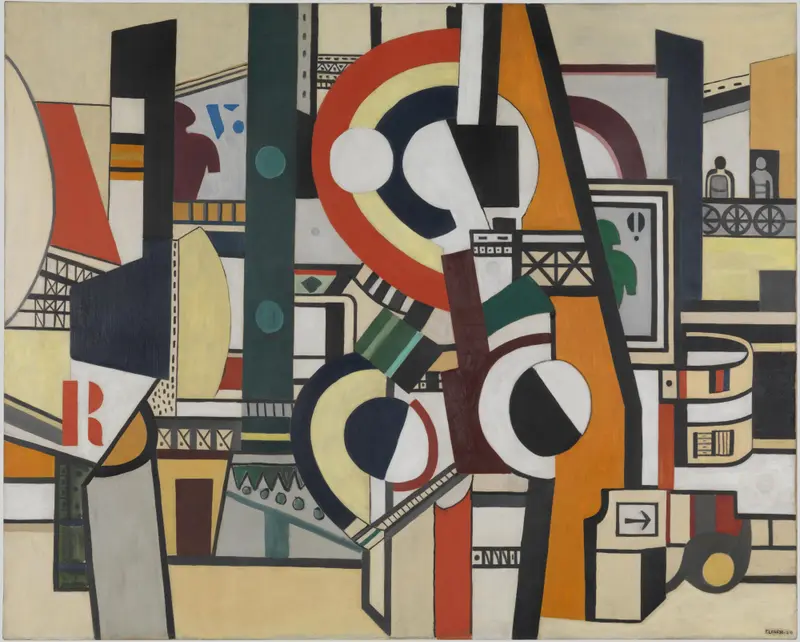
The eye is caught first by the bold, target-like discs—red, white, and concentric—hovering in a cityscape that seems to pulse with the energy of machinery. Fernand Léger’s Two Discs in the City is a painting that turns the chaos of urban life into a kind of visual music, where cylinders and cones cut through space like the pipes and pistons of an engine. The discs do not merely float; they anchor the composition, drawing the viewer into a world where geometry replaces narrative and color becomes the language of movement.
The palette is industrial—primary reds, yellows, and blues, interrupted by the monochrome of steel and concrete—yet there is a sense of play in the way forms overlap and collide. Painted in 1919, this work belongs to a moment when artists like Léger were fascinated by the new rhythms of the modern city. The painting’s figures, reduced to silhouettes and outlines, seem almost incidental beside the mechanical forms that dominate the canvas. A bowler-hatted figure peers from a window, dwarfed by the looming discs and pipes, while a lone pedestrian is rendered as a shadow in the lower left.
The city here is not a backdrop but a protagonist, its architecture and machinery woven into a dense tapestry of forms. Léger’s vision is not unlike that of his contemporaries in the Cubist and Purist movements, but his city is more animated—less an abstraction than a living, breathing organism. History has kept few traces of the specific journey of Two Discs in the City, but its place in the Gabriele and Werner Merzbacher Collection at Kunsthaus Zürich ensures its ongoing dialogue with viewers. Léger, a veteran of the First World War, brought a machinist’s eye to painting, seeing beauty in the mechanics of daily life.
In 1919, as Europe rebuilt and reimagined itself, such works captured the optimism and anxiety of a world in flux. The painting’s energy invites us to look again, to find new harmonies in the clangor of the city.
More Artworks by Fernand Léger

The Tugboat Bridge
Fernand Léger
The Wheels
Fernand Léger

Le Cirque Médrano
Fernand Léger
The Disks in the City
Fernand Léger
Le Jongleur et les acrobates
Fernand Léger
Three Women and Still Life (Déjeuner)
Fernand Léger
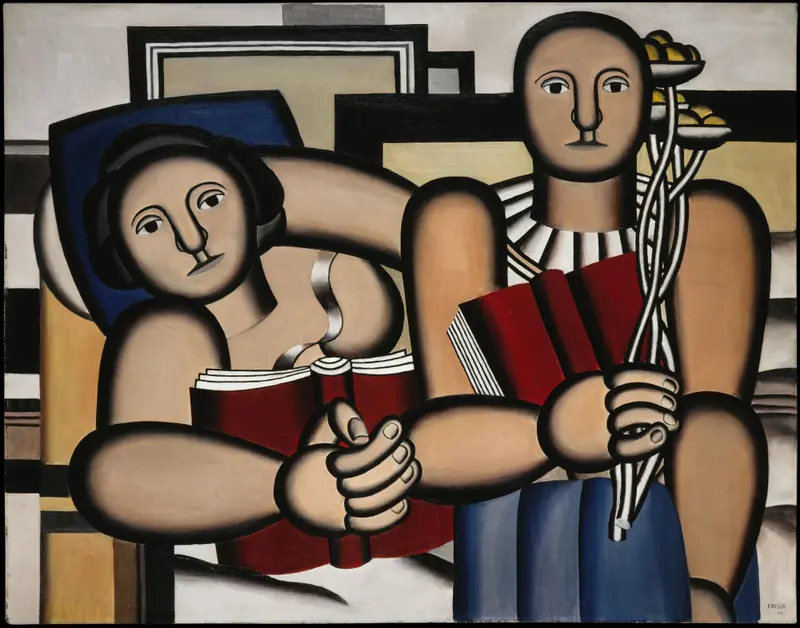
Reading
Fernand Léger
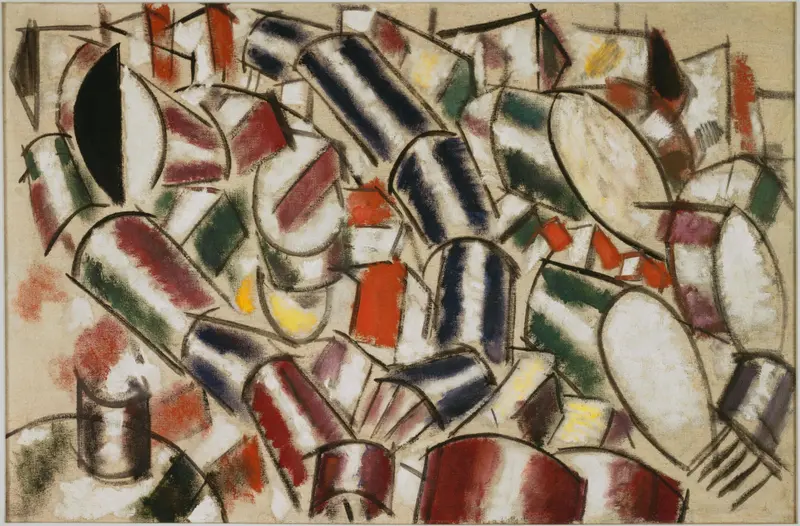
Femme couchée
Fernand Léger
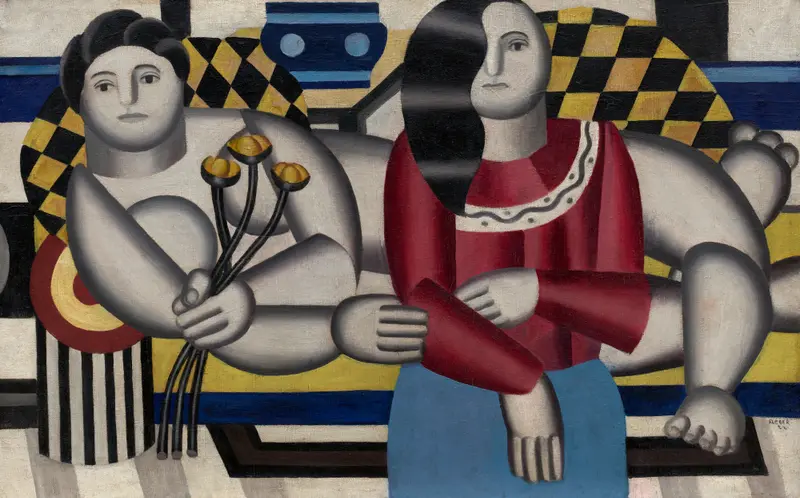
Woman holding flowers
Fernand Léger
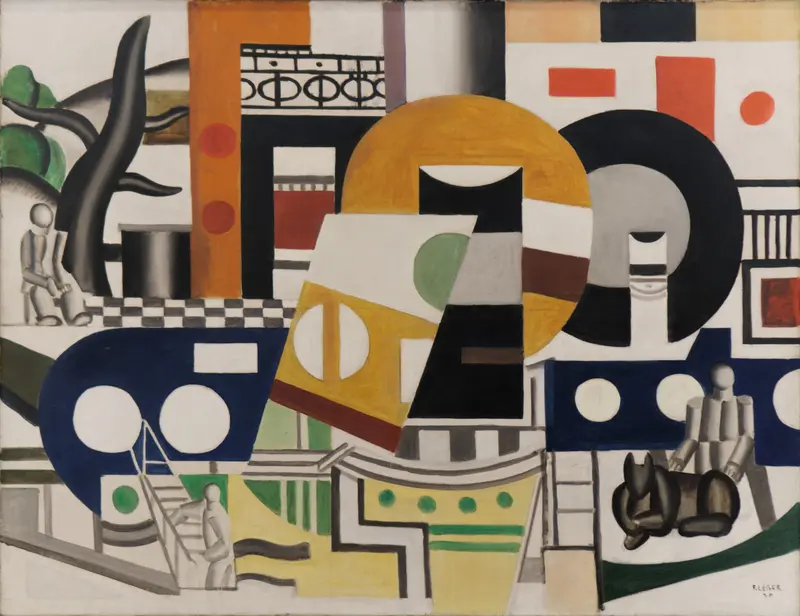
The Tug
Fernand Léger





