
Two Horse — History & Facts
The first thing to catch the eye in Two Horse is the quiet tension between stillness and readiness. One horse stands in profile, its chestnut coat glowing where the sunlight breaks through the leaves, reins slack and body poised as if waiting for a signal. The second, a pale gray, is half-shaded, its head lowered toward a figure in a red cap whose gesture is gentle, almost secretive.
The tree that divides them is both shelter and boundary, its branches casting a delicate web of shadow and light that draws the viewer’s gaze from the open landscape on the left to the more intimate, shaded world on the right. Every detail—the polished tack, the careful modeling of muscle and hide—speaks to the painter’s fascination with the living presence of these animals. Works like this, created before 1722 by Abraham van Calraet, belong to a Dutch tradition that prized the horse as a symbol of wealth, status, and rural life. In the late seventeenth and early eighteenth centuries, such images were often commissioned by prosperous landowners or merchants, eager to display their taste and their prized animals.
The genre thrived on a balance between portraiture and landscape, capturing not just the animal’s form but its temperament and place in the world. While history has kept few traces of this particular painting’s journey, its survival in the collection documented at lgGL0Nj9rF_weQ is a reminder of the enduring appeal of the Dutch Golden Age’s quiet, observational art. Look again at the horses’ alert ears and the dappled light: they invite us into a world where patience and attention are their own rewards.
More Artworks by Abraham Van Calraet
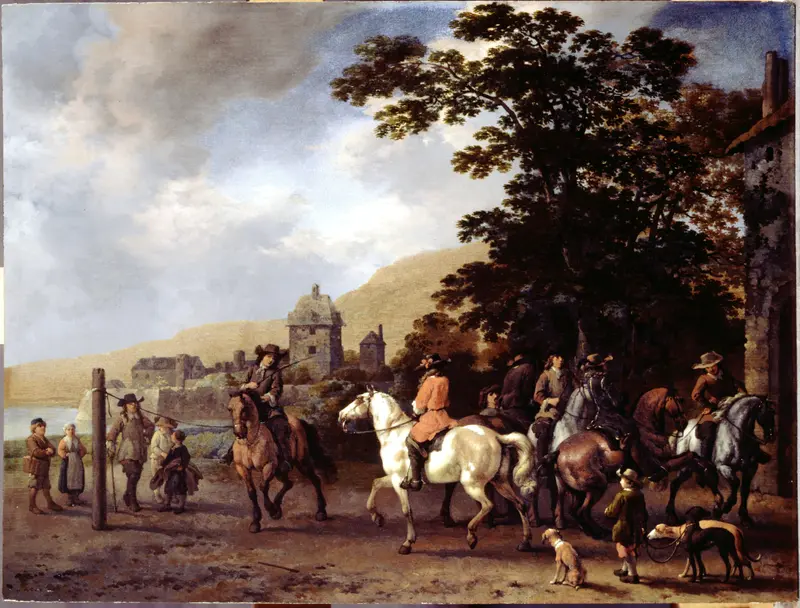
A Riding School in the Open Air
Abraham Van Calraet
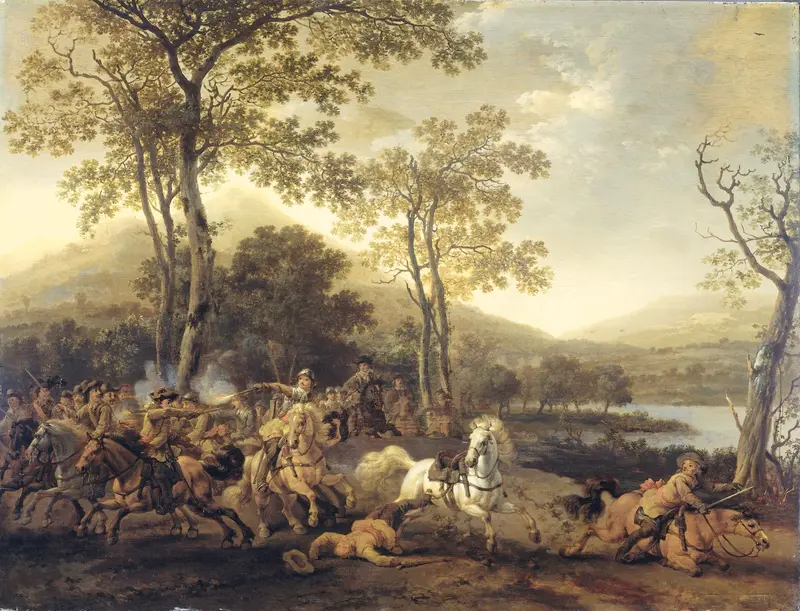
Cavalry Skirmish
Abraham Van Calraet
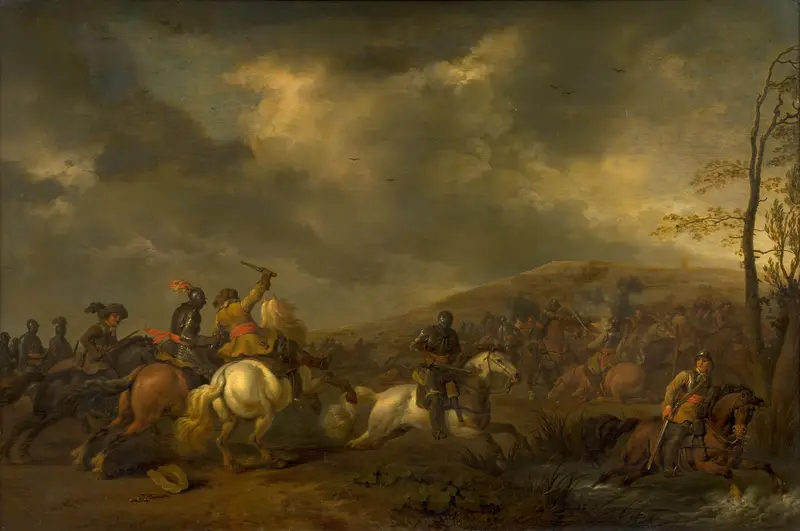
Choc de cavalerie
Abraham Van Calraet
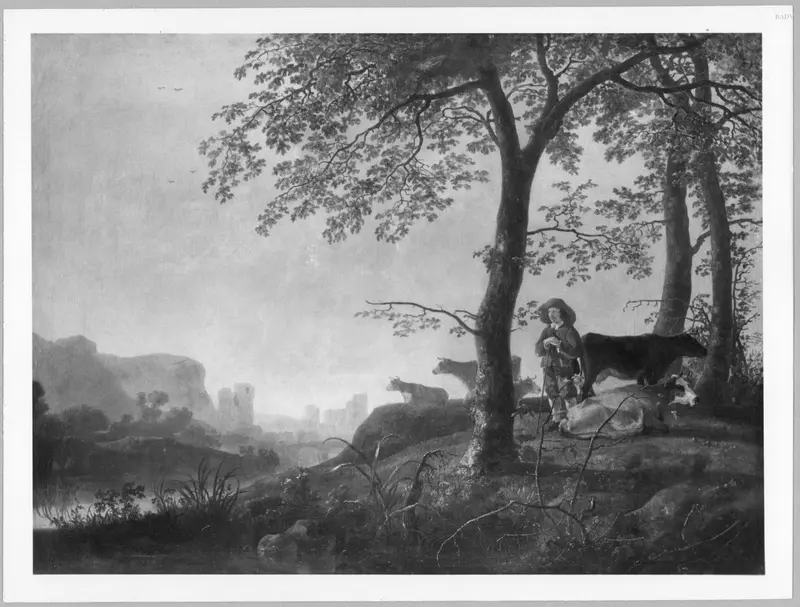
Herder and Cattle under Trees
Abraham Van Calraet
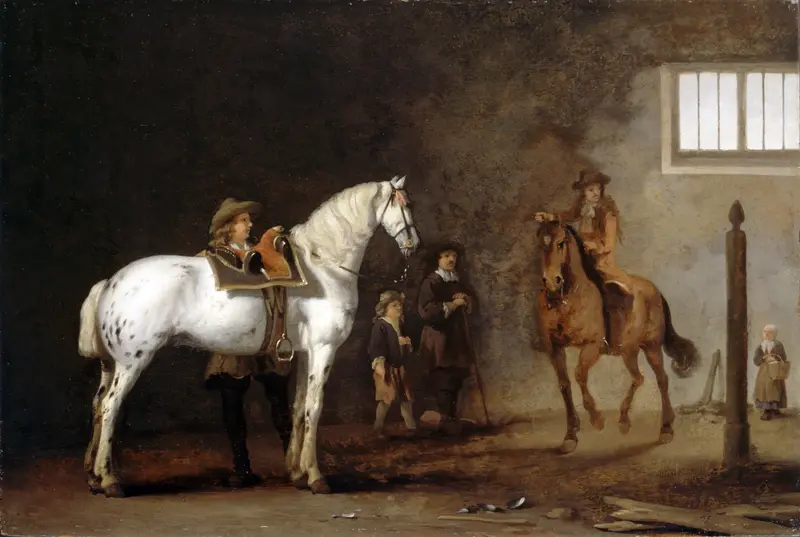
White Horse in a Riding School
Abraham Van Calraet
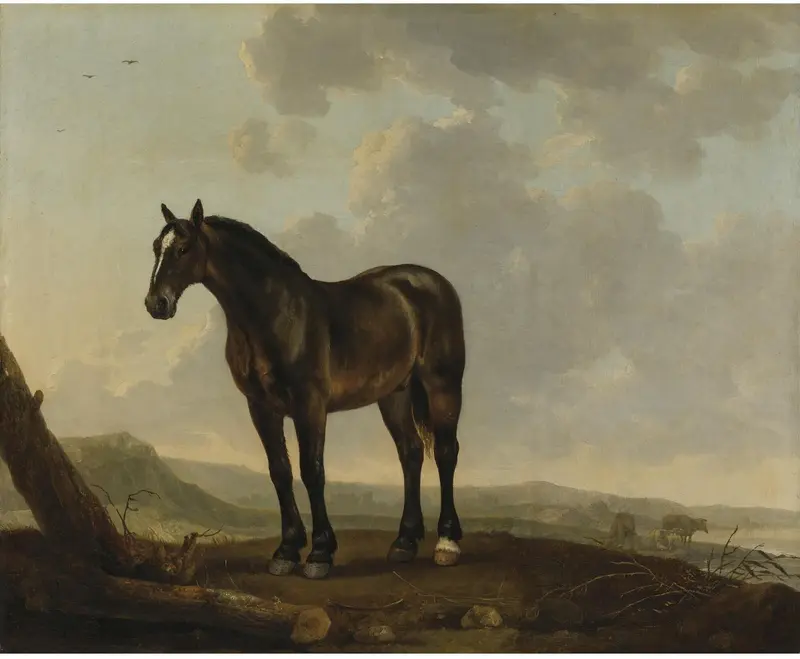
Landscape with a brown horse
Abraham Van Calraet
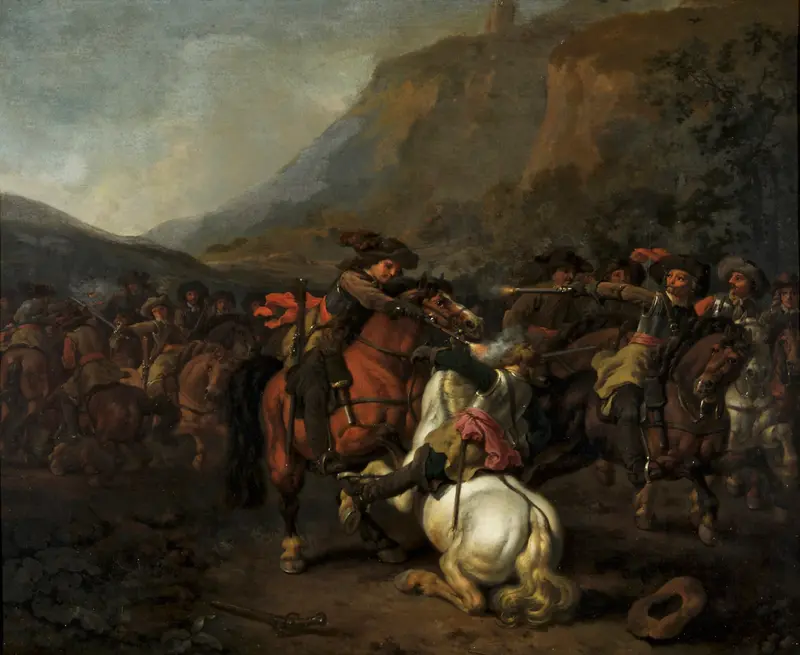
Ruitergevecht DM 016 1163 Dordrechts Museum
Abraham Van Calraet
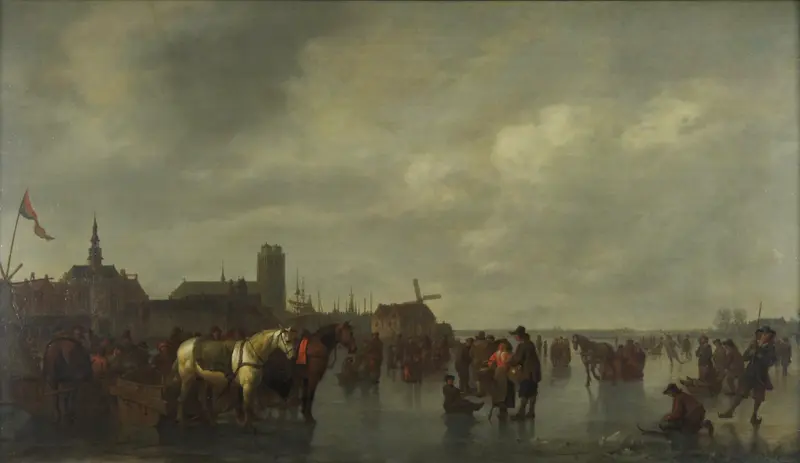
Scene on the Ice outside Dordrecht
Abraham Van Calraet
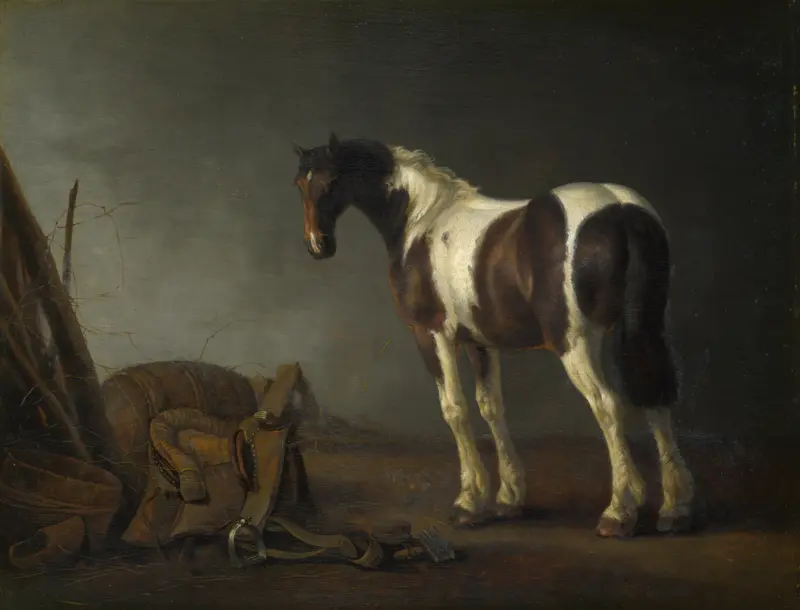
A Horse with a Saddle Beside it
Abraham Van Calraet
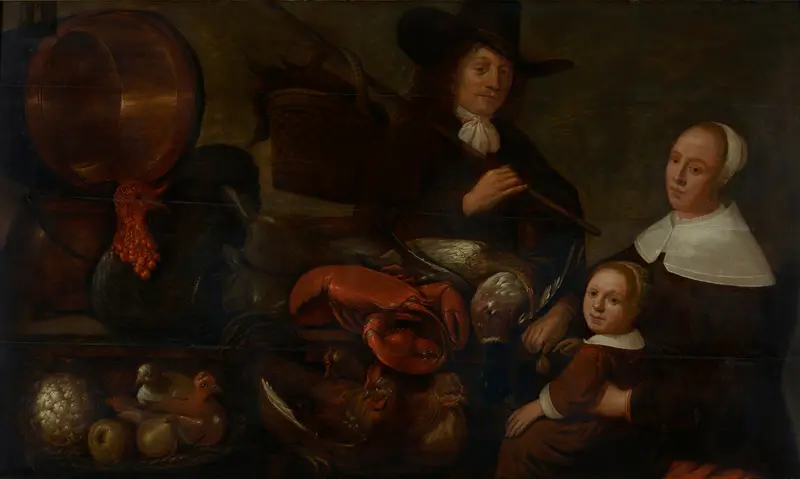
Portrait of a family
Abraham Van Calraet





