
Two Seated Women — History & Facts
The most intriguing fact about Two Seated Women is its place within the brief, luminous career of Jules Schmalzigaug, a Belgian artist who became a passionate advocate for the Futurist movement after encountering its energy in Italy. While the exact date and medium of this work remain uncertain, it offers a rare glimpse into Schmalzigaug’s transition from his early, more representational style to the dynamic abstraction that would later define his art. This painting stands as a testament to a period when Schmalzigaug was absorbing and transforming the radical ideas swirling through early twentieth-century Europe, before his life was cut tragically short in 1917. The scene captures two women seated in close proximity, their forms rendered with a rhythmic interplay of color and line that hints at both intimacy and introspection.
Schmalzigaug chooses a moment suspended between conversation and contemplation: the women’s postures suggest a quiet dialogue, their bodies outlined in vibrant, almost vibrating hues. The background dissolves into abstract shapes, a technique reminiscent of Umberto Boccioni’s Materia, where figures merge with their environment to express movement and emotion. Here, however, the energy is contained, focused inward rather than outward, emphasizing the psychological space between the sitters. Little is known about the painting’s early history, and no documented commission or patron has been identified.
Two Seated Women is believed to have remained in private hands for much of the twentieth century, surfacing only occasionally in exhibitions dedicated to Belgian modernism. Its attribution to Jules Schmalzigaug has never been seriously challenged, as its stylistic hallmarks align closely with his known works from the 1910s. Today, the painting is valued not only as a rare surviving example of Schmalzigaug’s figurative period but also as a window into the crosscurrents of Futurism and early modern art in Belgium.
More Artworks by Jules Schmalzigaug

A View of Scheveningen
Jules Schmalzigaug
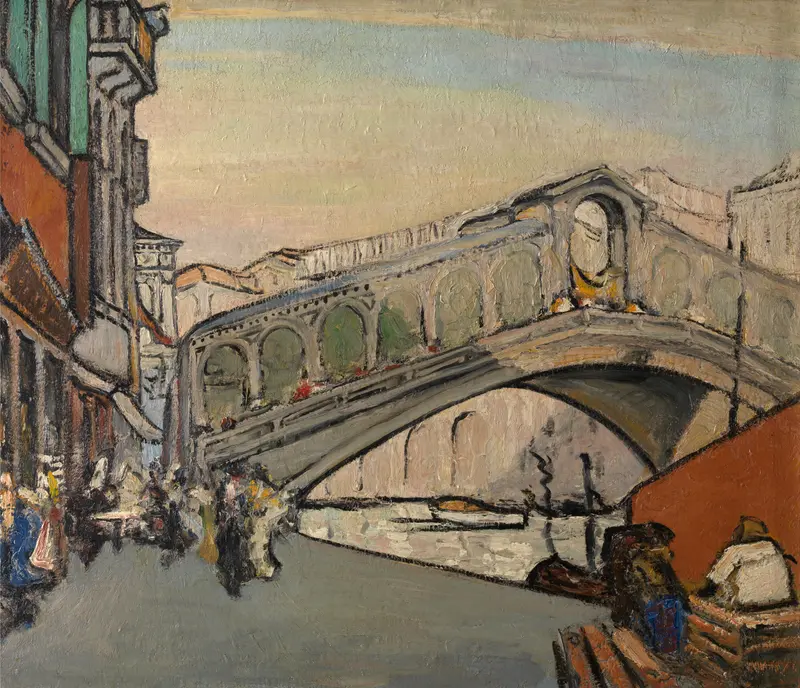
The Rialto Bridge in Venice
Jules Schmalzigaug

Abstract Bouquet
Jules Schmalzigaug
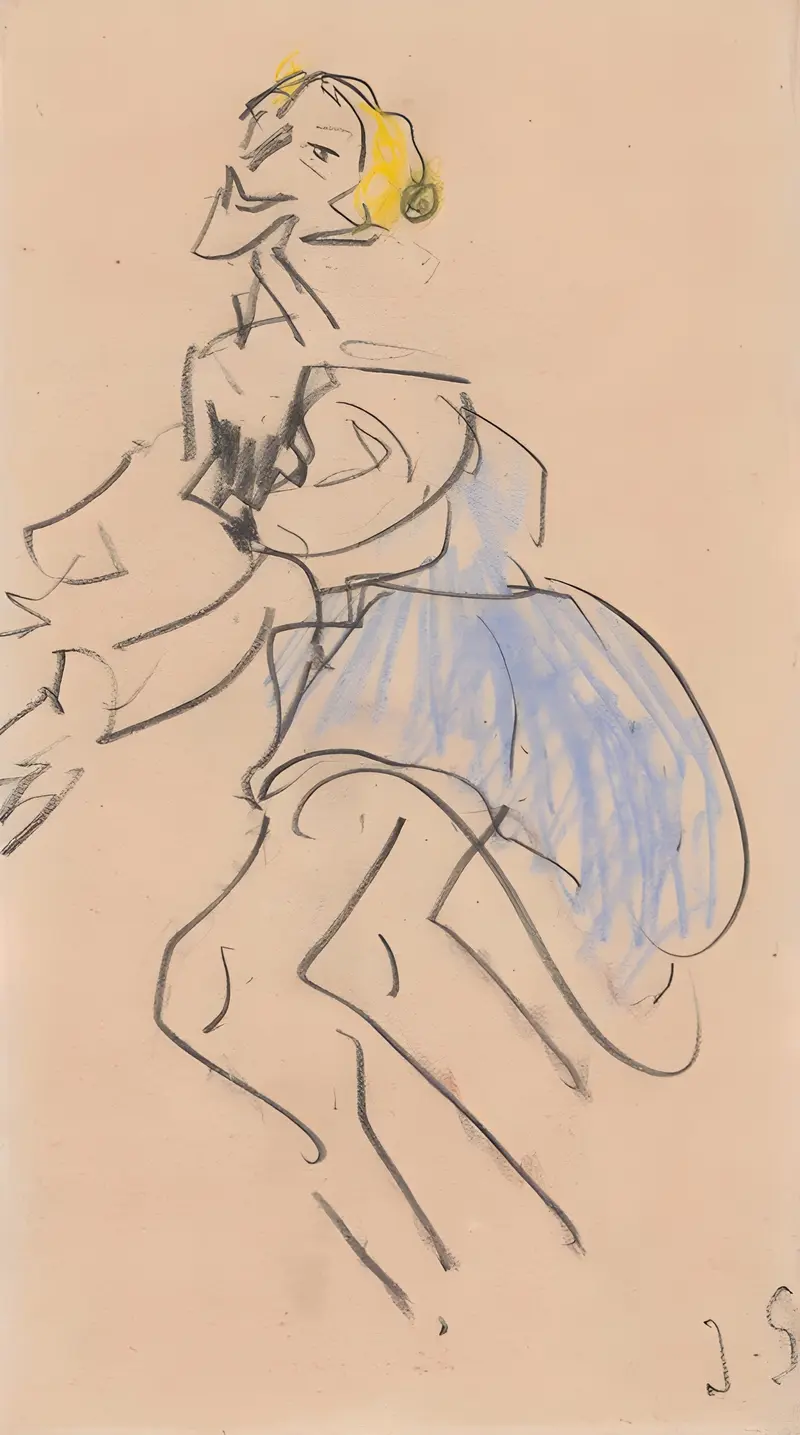
Dancer
Jules Schmalzigaug
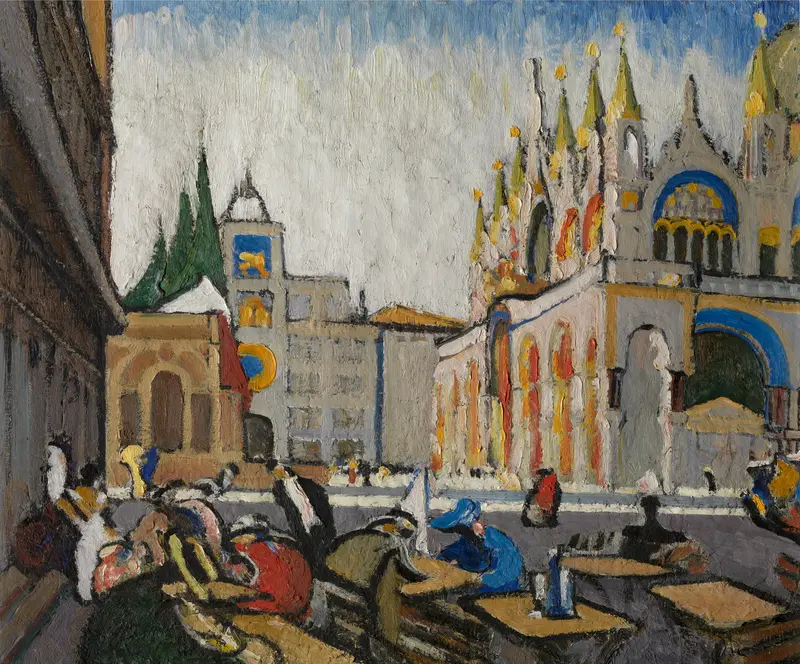
San Marco from the Piazetta
Jules Schmalzigaug
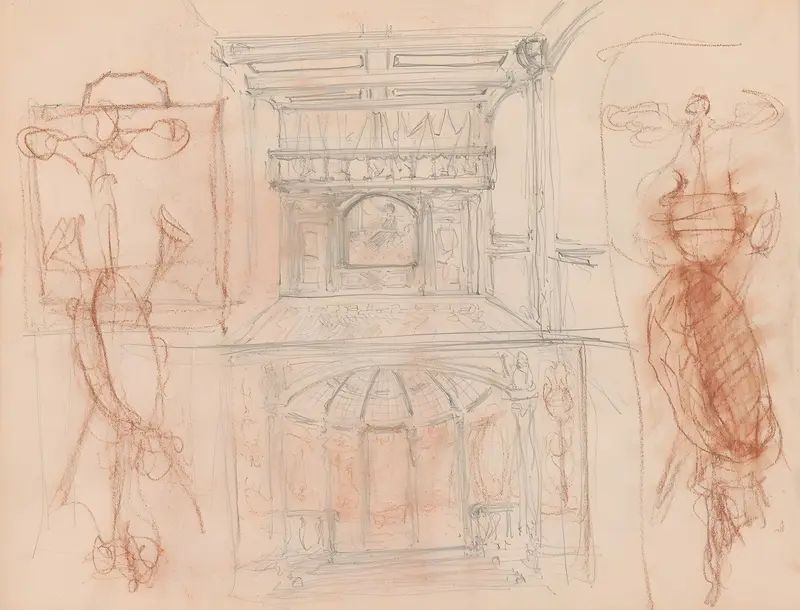
Architectural Elements
Jules Schmalzigaug
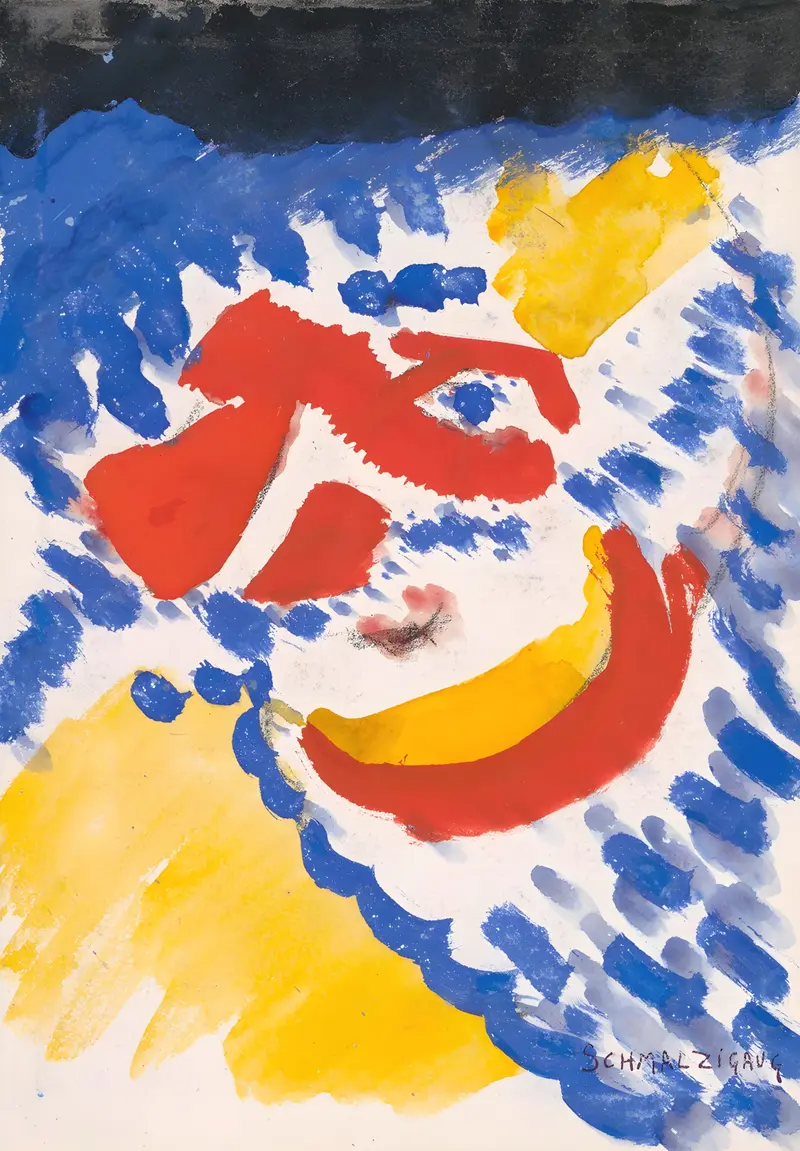
Blue, Red and Yellow Figures
Jules Schmalzigaug
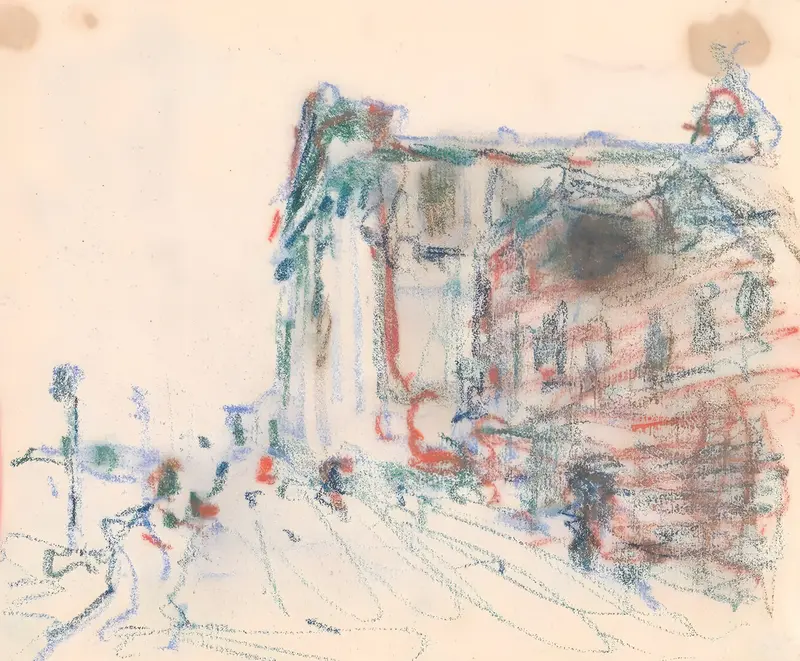
Chiesa dei Gesuati in Venice
Jules Schmalzigaug
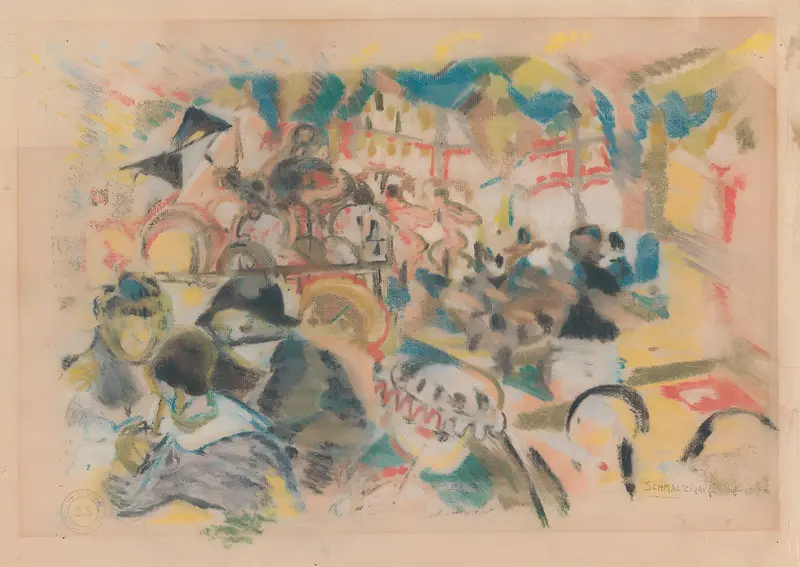
Café-chantant
Jules Schmalzigaug
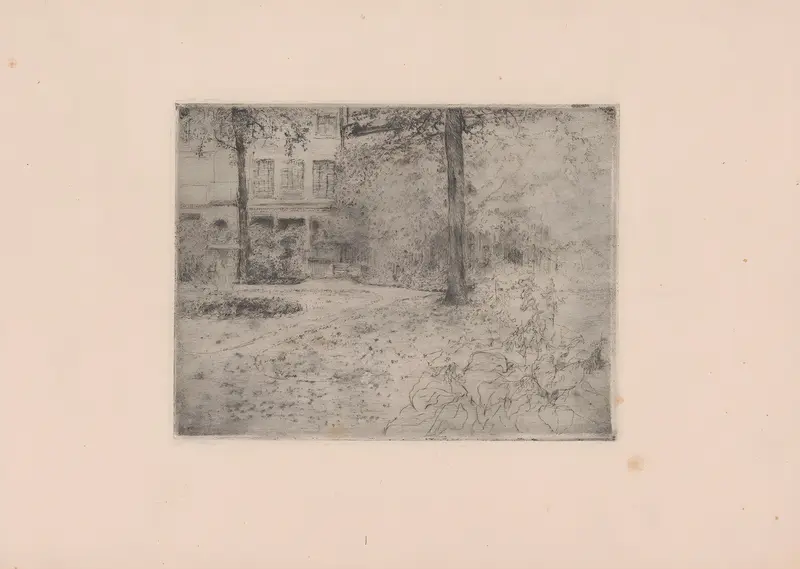
Backyard
Jules Schmalzigaug



