
Two Sketches: One of a Turtle, the Other of Two Unidentified Objects — History & Facts
No one can say for certain what prompted Katsushika Hokusai to create Two Sketches: One of a Turtle, the Other of Two Unidentified Objects in 1804, but it stands as a rare glimpse into the artist’s restless experimentation during the early years of his career. Unlike his famous prints of waterfalls and Mount Fuji, this work survives as a fragment of process—a page that may have once belonged to a sketchbook, or perhaps served as a study for a larger, now-lost composition. The identity of the two mysterious objects beside the turtle has puzzled viewers and scholars alike, fueling debate about whether they are natural forms, tools, or simply products of Hokusai’s imagination. Hokusai’s turtle, rendered with swift, sure lines, seems to crawl across the page, its shell and limbs captured in a moment of quiet observation.
The artist’s attention to the creature’s anatomy suggests a fascination with the natural world, a theme that recurs throughout his career. The two unidentified forms beside the turtle, drawn with equal care, resist easy identification—some see shells or stones, others hint at fruits or seeds. This ambiguity invites the viewer to linger, to compare shapes and textures, much as Hokusai himself might have done.
Unlike the elaborate, narrative-driven scenes of his contemporaries, such as Utagawa Kuniyoshi’s bustling animal studies, Hokusai here pares his subject down to its essentials, focusing on form and gesture rather than story. The physical history of this work is largely undocumented, typical for sketches and studies from early nineteenth-century Japan, which often circulated among students or were kept in the artist’s studio. While the medium remains unknown, the delicate, fluid lines suggest brush and ink, a favored tool of Hokusai and his circle. Today, this sheet stands as a testament to the artist’s insatiable curiosity and his ability to find beauty in the everyday.
Though not as celebrated as his later woodblock prints, works like this reveal the foundations of his style and the quiet moments of observation that shaped his vision.
More Artworks by Katsushika Hokusai

The Great Wave off Kanagawa
Katsushika Hokusai
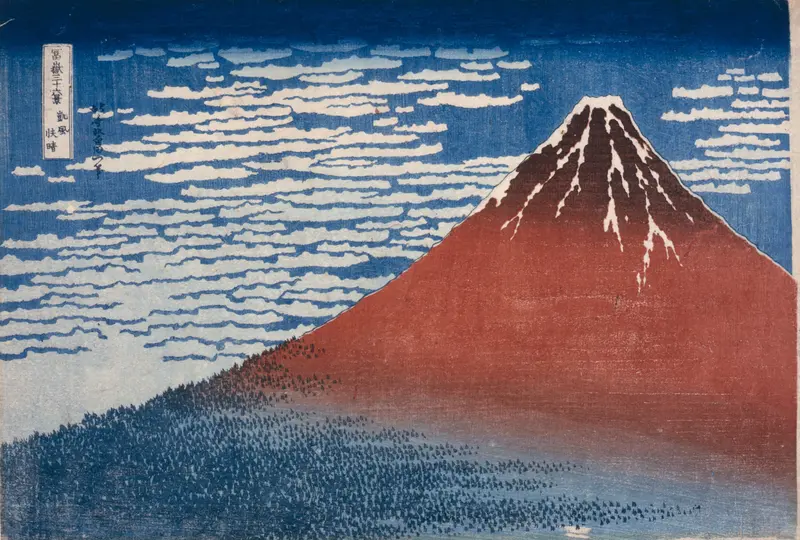
Fine Wind, Clear Morning (Red Fuji)
Katsushika Hokusai
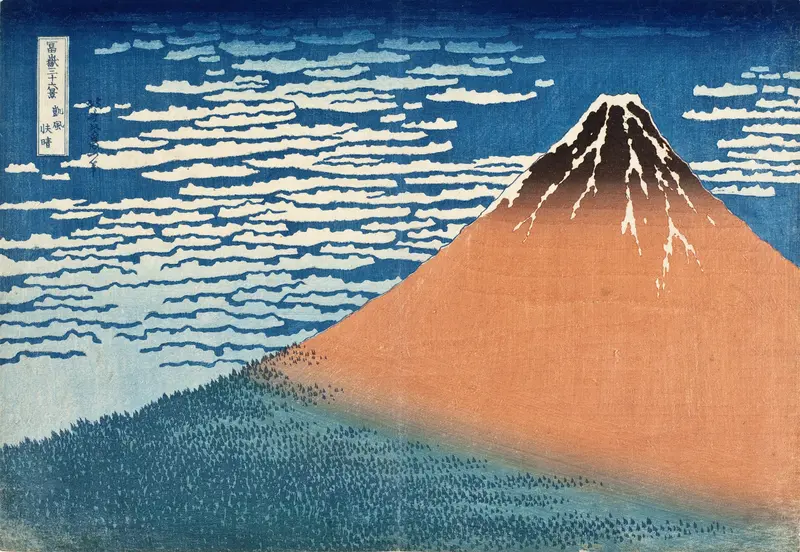
South Wind, Clear Dawn
Katsushika Hokusai
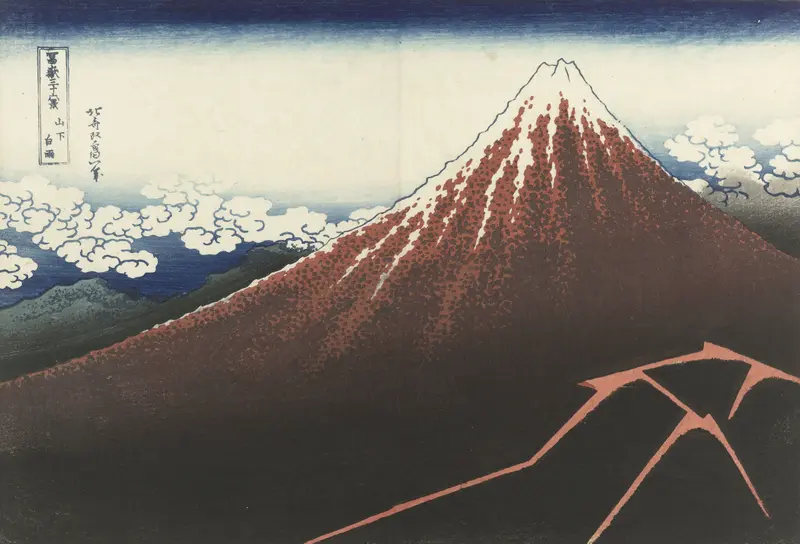
Rainstorm Beneath the Summit
Katsushika Hokusai
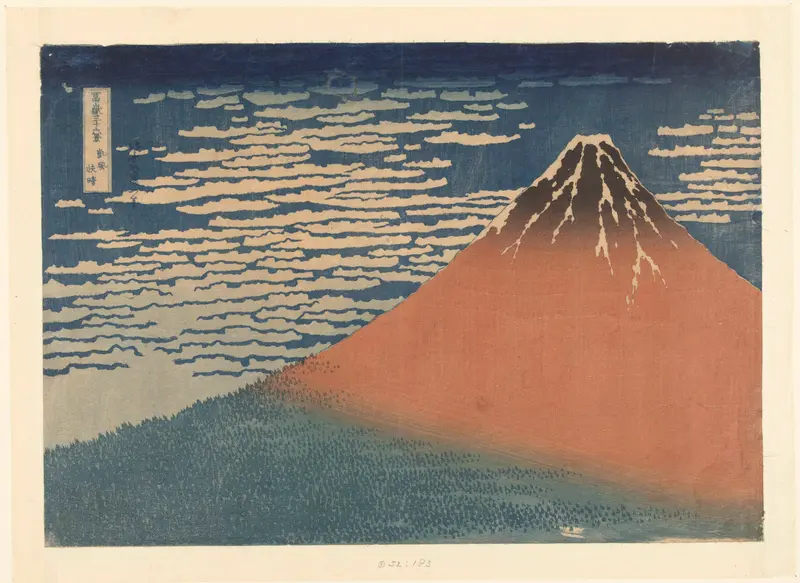
Clear Weather with a Southerly Wind
Katsushika Hokusai
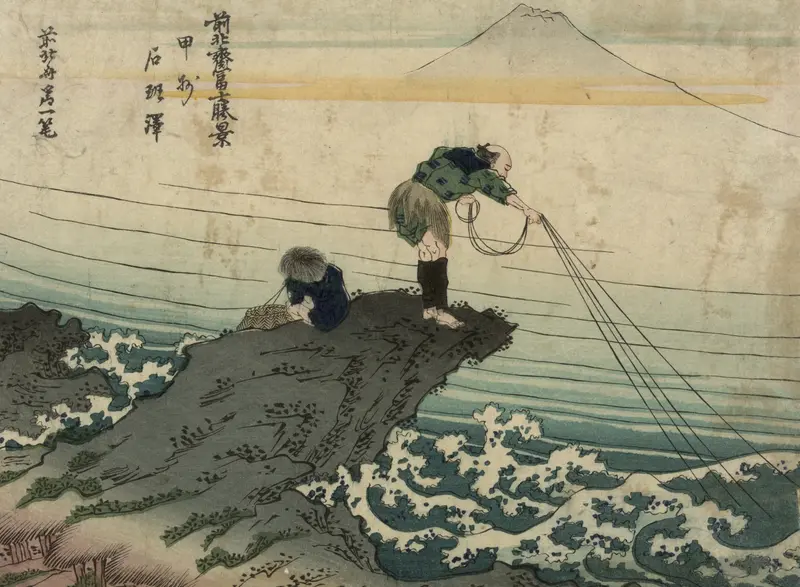
Kōshū kajikazawa
Katsushika Hokusai
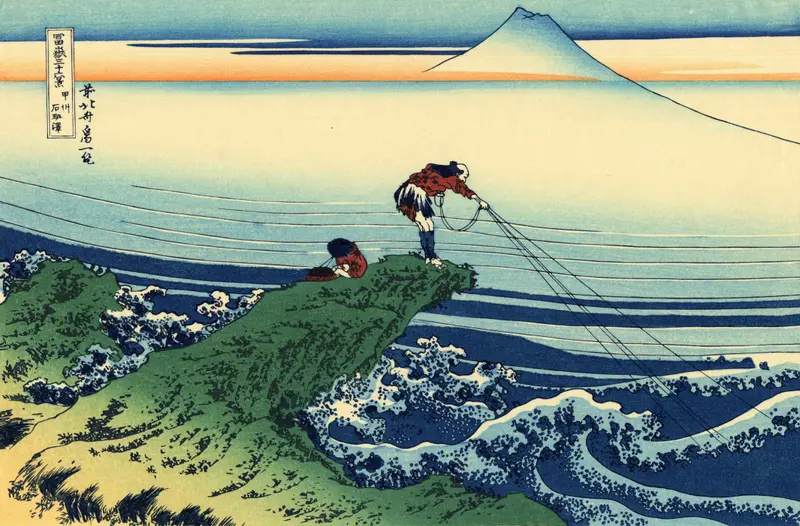
Kōshū kajikazawa 2
Katsushika Hokusai
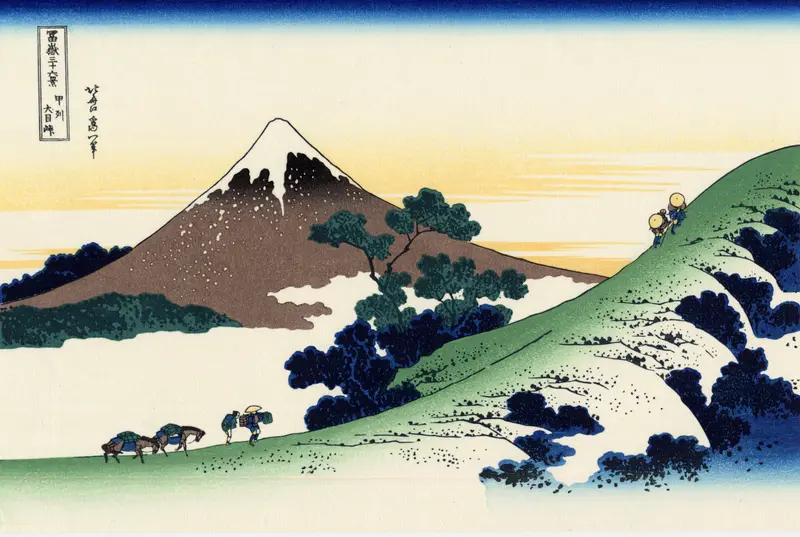
Inume Pass in Kai Province (Kôshû inume-tôge)
Katsushika Hokusai

Yoro Falls in Mino Province (Mino no Yoro no taki), from the series "A Tour of Waterfalls in Various Provinces (Shokoku taki meguri)"
Katsushika Hokusai
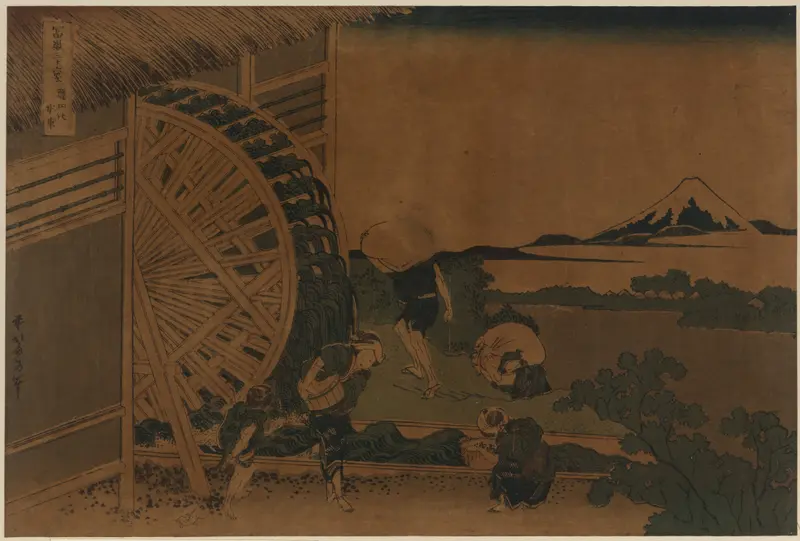
Onden no suisha
Katsushika Hokusai





