
Two Young Women Picking Grapes — History & Facts
When Two Young Women Picking Grapes was first exhibited in 1862, it was praised for its honest depiction of rural labor, a subject that had only recently gained respect in French academic circles. Jules Breton was already known for championing the dignity of peasant life, but this painting drew particular attention for its focus on women, capturing a moment of harvest without sentimentality or idealization. Critics noted how Breton’s approach contrasted sharply with the more romanticized visions of country life popular at the time.
The painting’s reception marked a turning point, affirming that scenes of everyday toil could be worthy of serious artistic treatment. The scene unfolds in the vineyards of northern France, where two young women, baskets slung over their arms, reach up among the tangled vines to pluck ripe grapes. The sun falls softly on their faces and hands, highlighting the physical effort of their work and the quiet concentration in their expressions. Breton’s careful rendering of their clothing—the practical kerchiefs and sturdy skirts—emphasizes both their femininity and their resilience.
The composition draws the viewer’s gaze along the line of the vines, inviting us to share in the rhythm of the harvest. Unlike the idyllic grape-pickers of Jean-François Millet, whose figures often appear monumental and isolated, Breton’s women are integrated into their landscape, part of the living cycle of rural labor. The precise early history of Two Young Women Picking Grapes is not fully documented, but it is typical of the works Breton produced during his mature period, when he was celebrated for his scenes of rural life. Breton’s paintings were widely collected in both France and Britain, and this canvas likely passed through private hands before entering a public collection.
Today, it is recognized as an important example of the Realist movement’s commitment to depicting contemporary life with honesty and respect. The painting stands as a testament to Breton’s belief in the nobility of ordinary people, and continues to resonate with viewers for its quiet, attentive observation of daily work.
More Artworks by Jules Breton

The Song of the Lark
Jules Breton
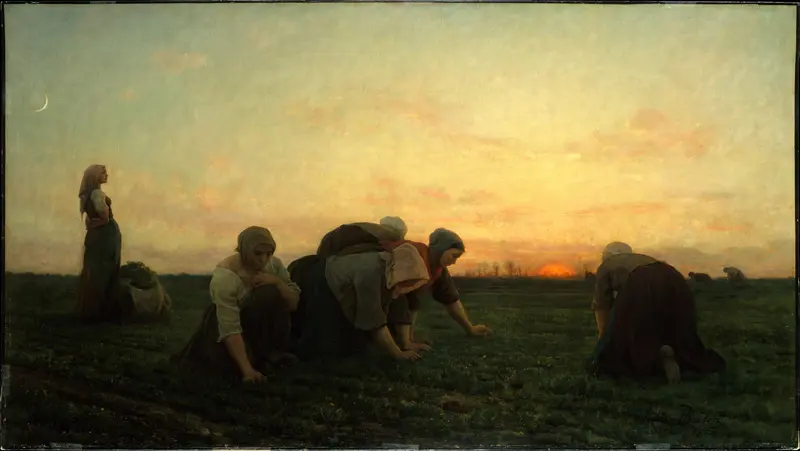
The Weeders
Jules Breton
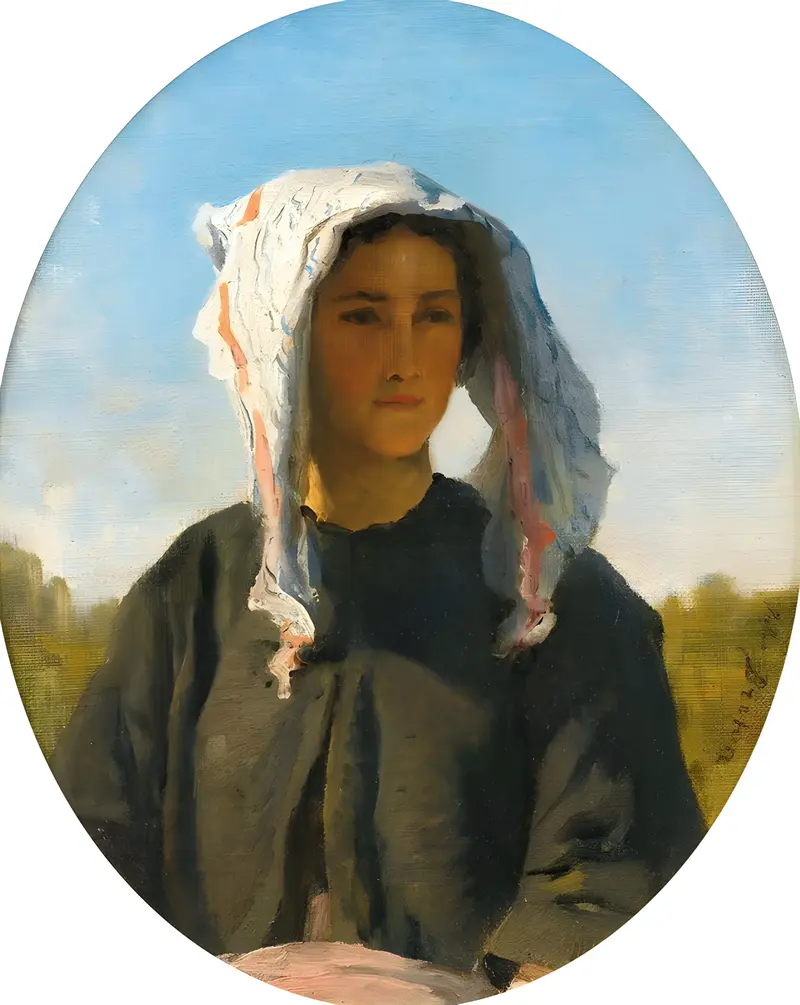
Portrait de jeune Paysanne Bordelaise
Jules Breton
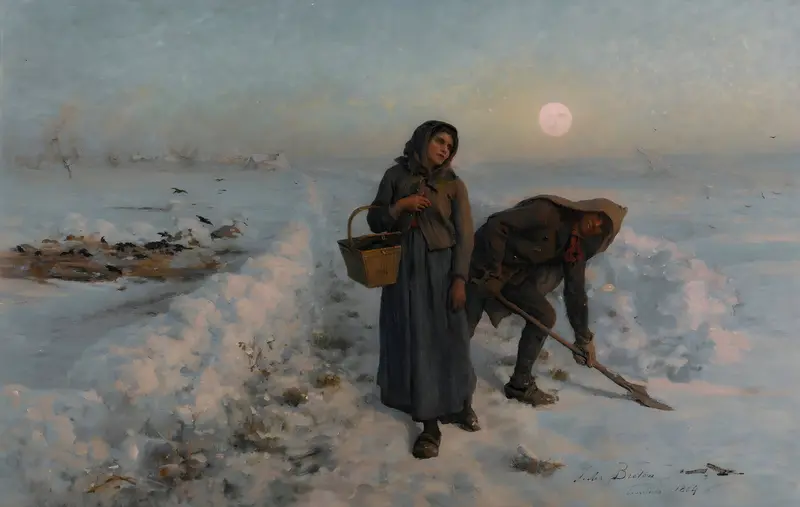
Sur la route en hiver; artois
Jules Breton
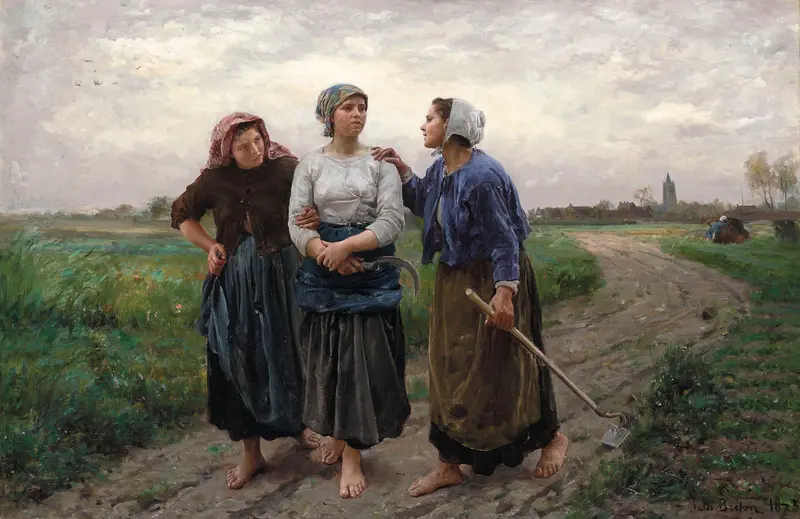
Les amies
Jules Breton
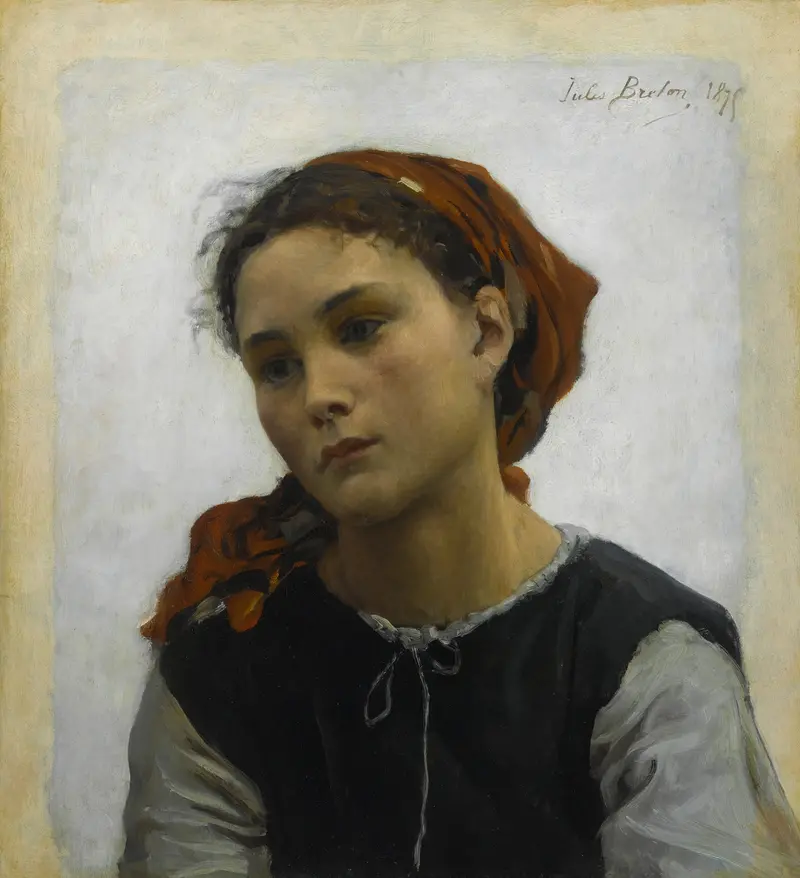
Innocente
Jules Breton
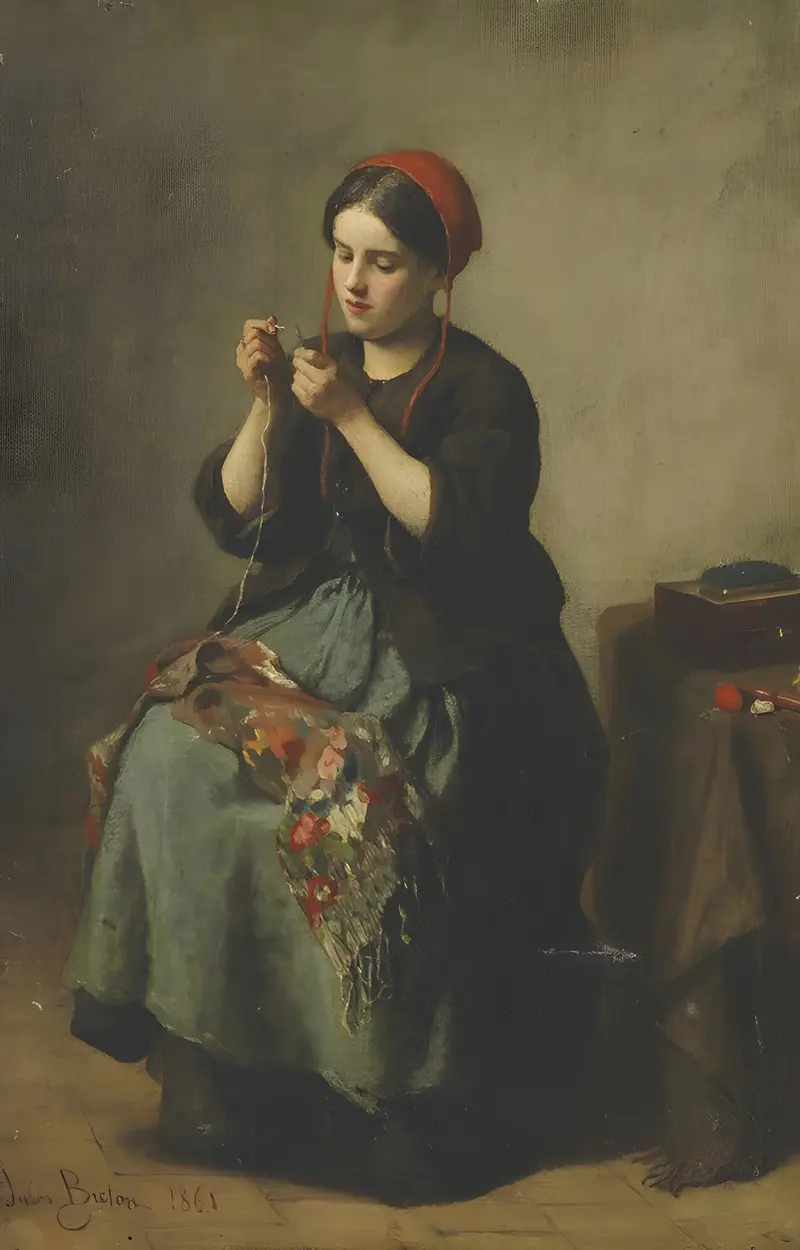
Peasant woman threading a needle
Jules Breton
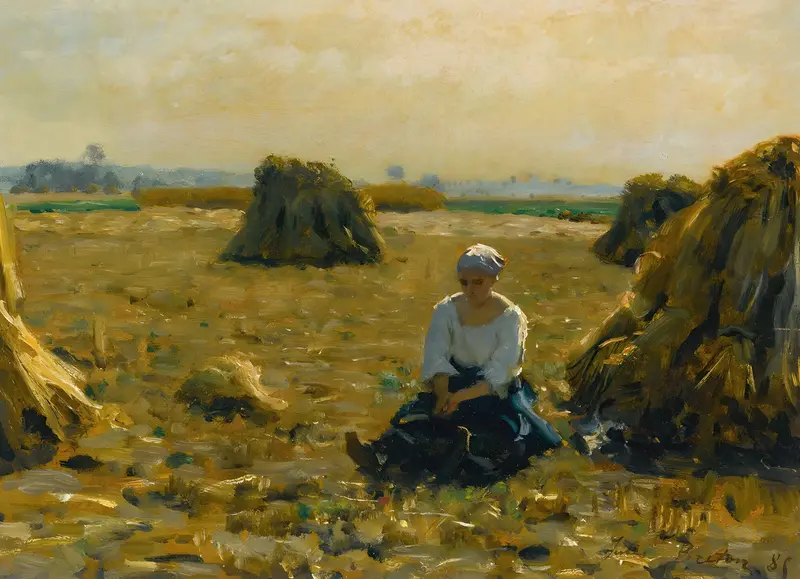
Jeune femme dans les champs
Jules Breton
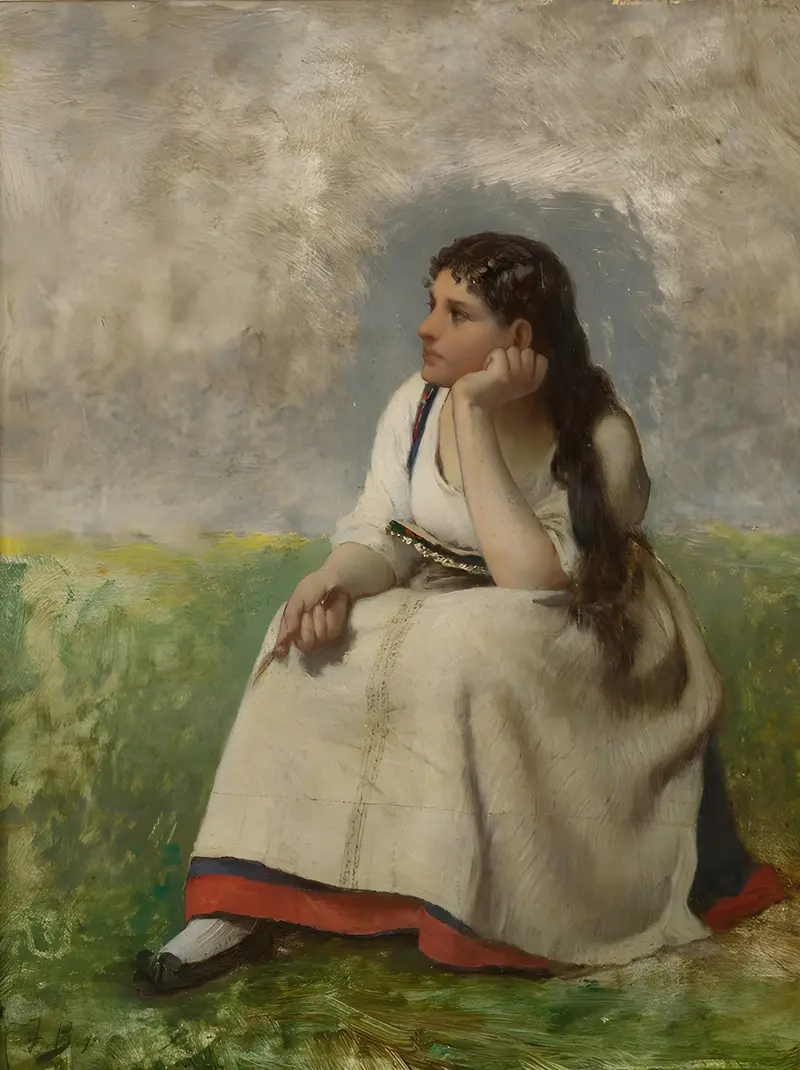
Jeune Fille Pensive
Jules Breton
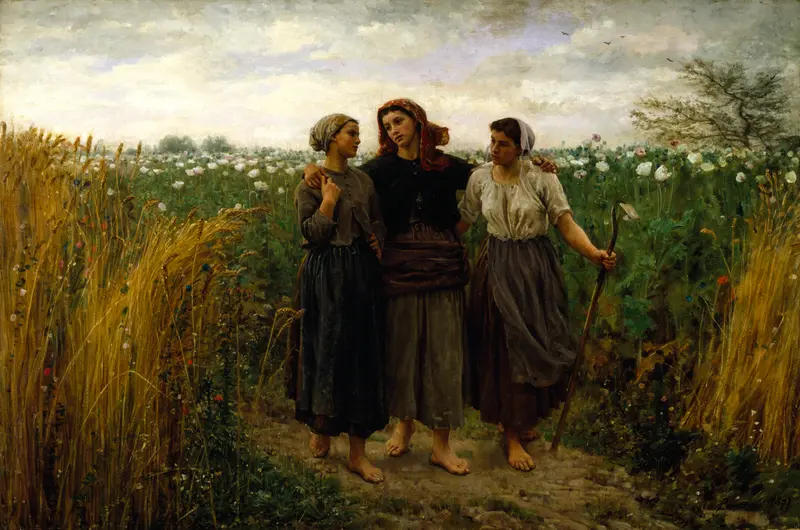
Returning from the Fields
Jules Breton
More Genre Scene Art

Banquet of the Officers of the St George Civic Guard
Frans Hals

Rembrandt and Saskia in the Scene of the Prodigal Son
Rembrandt van Rijn

Bal du moulin de la Galette
Pierre-Auguste Renoir

Quadrille at the Moulin Rouge
Henri de Toulouse-Lautrec

A Burial at Ornans
Gustave Courbet

When Will You Marry?
Paul Gauguin