
Venise, Le Quai de la Giudecca — History & Facts
Did the painter know this moment would outlive them? In the stillness of the harbor, a soft light bathes the scene in a melancholic glow, highlighting the emptiness that lingers on the quiet quay. Shadows dance upon the water, and the absence of bustling life evokes a haunting sense of solitude amidst the vibrant backdrop of Venice. Look to the left where delicate boats sway gently on the placid surface, their reflections shimmering like whispers of forgotten stories. Notice how the muted palette of blues, grays, and ochers merges seamlessly, creating a dreamlike atmosphere that pulls viewers into the essence of the moment.
The brushstrokes are fluid and loose, lending an impressionistic quality that enhances the feeling of transience, as if the scene might fade into memory at any moment. Here, the absence of people speaks volumes. The emptiness on the quay contrasts with the lavish architecture that looms in the background, suggesting a once-bustling life now fallen silent. It invites contemplation on the passage of time and the inevitability of change—an eternal dance between presence and absence, echoing the impermanence of Venice itself.
The stillness, punctuated by the gentle lapping of the water, evokes both serenity and sadness, blurring the line between nostalgia and longing. Eugène Boudin painted Venise, Le Quai de la Giudecca in 1895, during a period marked by his deep fascination with capturing the play of light and atmosphere. Working in his native France, he found inspiration in the coastal landscapes and urban scenes, often portraying the fleeting moments of everyday life. At this time, the art world was embracing Impressionism, and Boudin was a key figure, influencing many of the movement’s major artists, including Claude Monet.
More Artworks by Eugène Boudin
Browse all →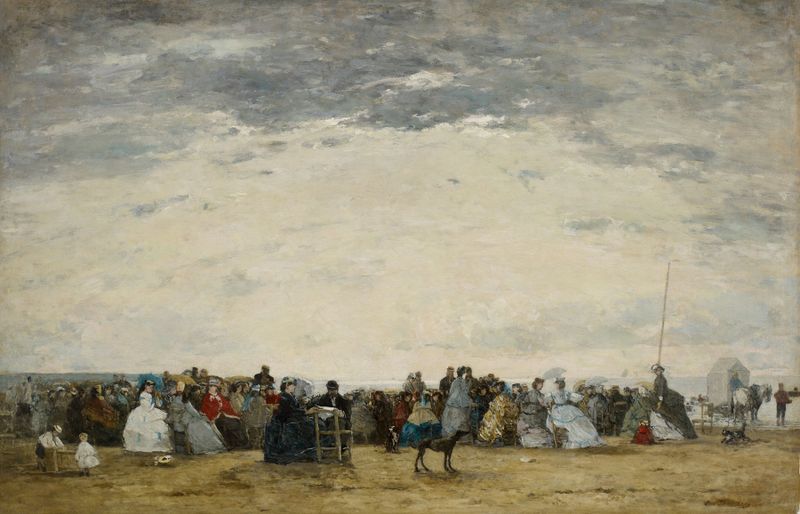
Vacationers on the Beach at Trouville
Eugène Boudin

Washerwoman near Trouville
Eugène Boudin
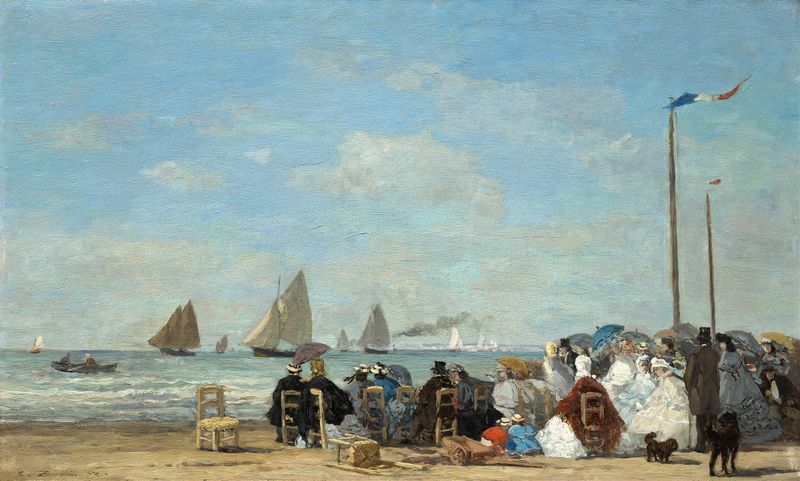
Beach Scene at Trouville
Eugène Boudin

Port aux environs d’Honfleur
Eugène Boudin

Le Faou, un coin du village
Eugène Boudin
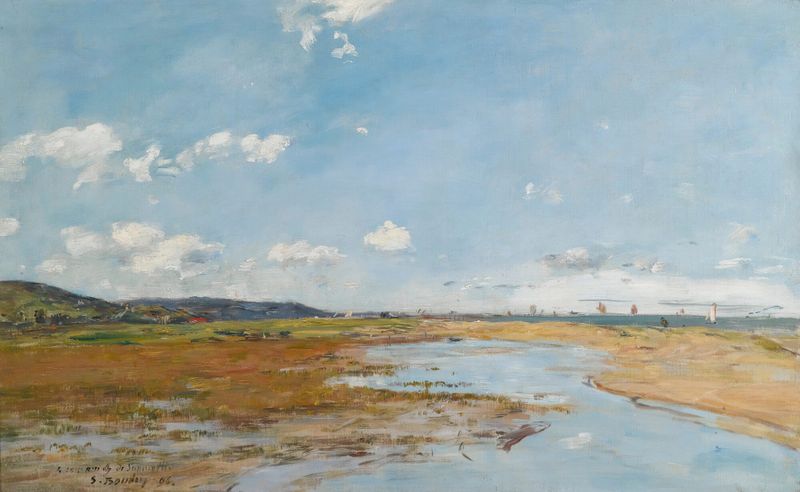
Deauville. Le Rivage
Eugène Boudin
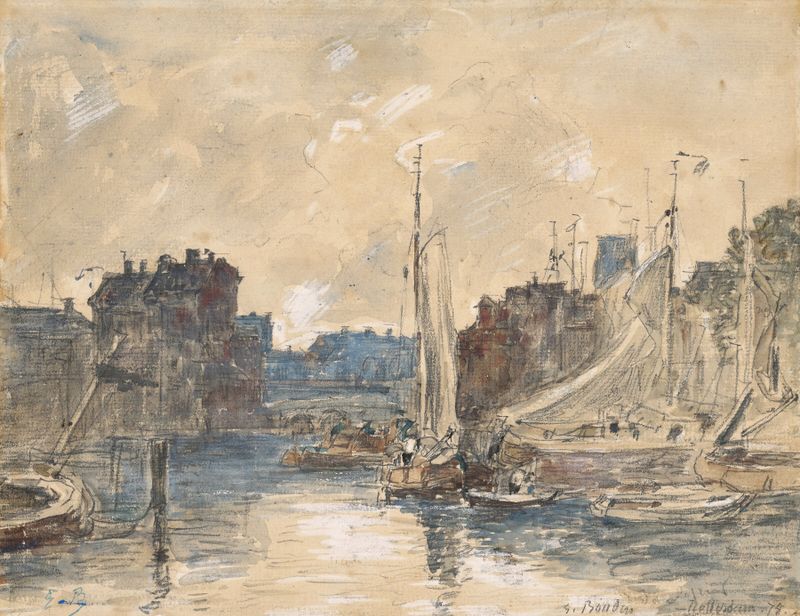
Port de Rotterdam
Eugène Boudin

View of Bordeaux, from the Quai des Chartrons
Eugène Boudin

Trouville, Scène De Plage
Eugène Boudin

Trouville, Le Port
Eugène Boudin





