
Venise. San Giorgio — History & Facts
Can paint confess what words never could? In Venise. San Giorgio, silence hangs over the scene, a delicate whisper that bridges the gap between sight and emotion. Look to the left, where the soft greenish hues of the water reflect the gentle light of a waning day, creating a serene backdrop for the scene. Notice how the brushstrokes convey both fluidity and stillness, the boats resting almost as if in contemplation.
The muted tones of sky and water blend seamlessly, drawing the eye toward the iconic silhouette of the San Giorgio Maggiore, its steeple standing tall yet ephemeral against the twilight horizon. In this artwork, a subtle tension unfolds between vibrancy and tranquility. While the boats suggest a world of activity, they are anchored in a moment of quietude, evoking a sense of time suspended. The interplay of light and shadow reveals layers of meaning; the gentle waves reflect a distant yearning or nostalgia, hinting at stories left unspoken. Eugène Boudin created this piece around 1897, during his time in Venice, a city that had long captivated artists with its unique charm.
At this juncture in his life, he was increasingly recognized as a master of capturing light and atmosphere, influencing the Impressionist movement. This moment in his career reflected a shift in the art world, where capturing the transitory nature of life became paramount.
More Artworks by Eugène Boudin
Browse all →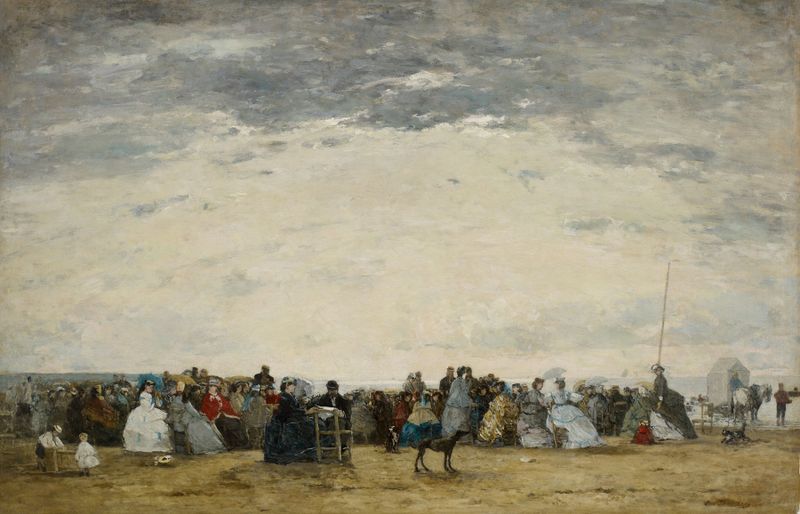
Vacationers on the Beach at Trouville
Eugène Boudin

Washerwoman near Trouville
Eugène Boudin
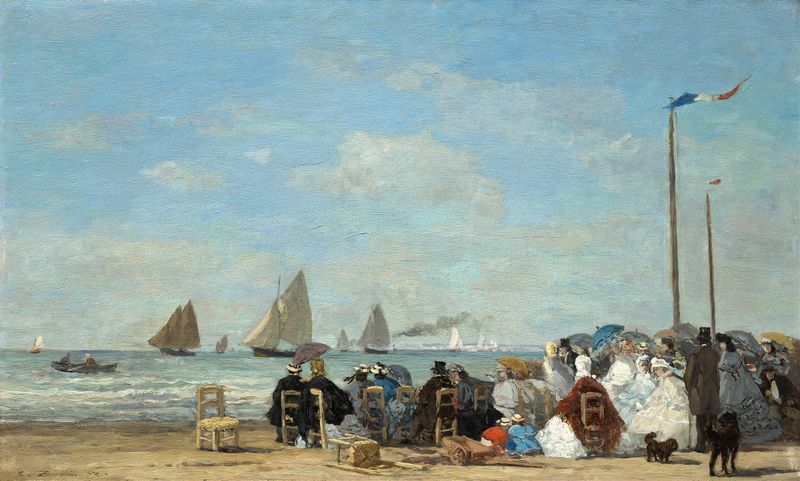
Beach Scene at Trouville
Eugène Boudin

Port aux environs d’Honfleur
Eugène Boudin

Le Faou, un coin du village
Eugène Boudin
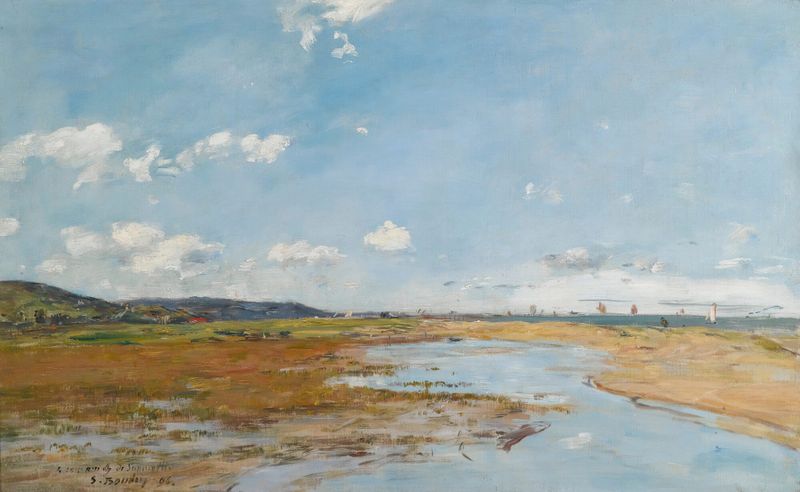
Deauville. Le Rivage
Eugène Boudin
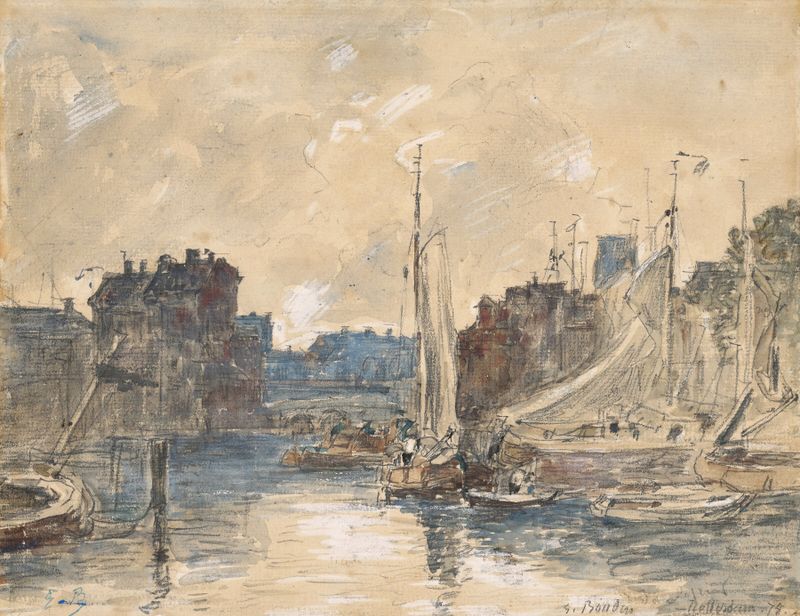
Port de Rotterdam
Eugène Boudin

View of Bordeaux, from the Quai des Chartrons
Eugène Boudin

Trouville, Scène De Plage
Eugène Boudin

Trouville, Le Port
Eugène Boudin





