
Ventriloquist and Crier in the Moor — History & Facts
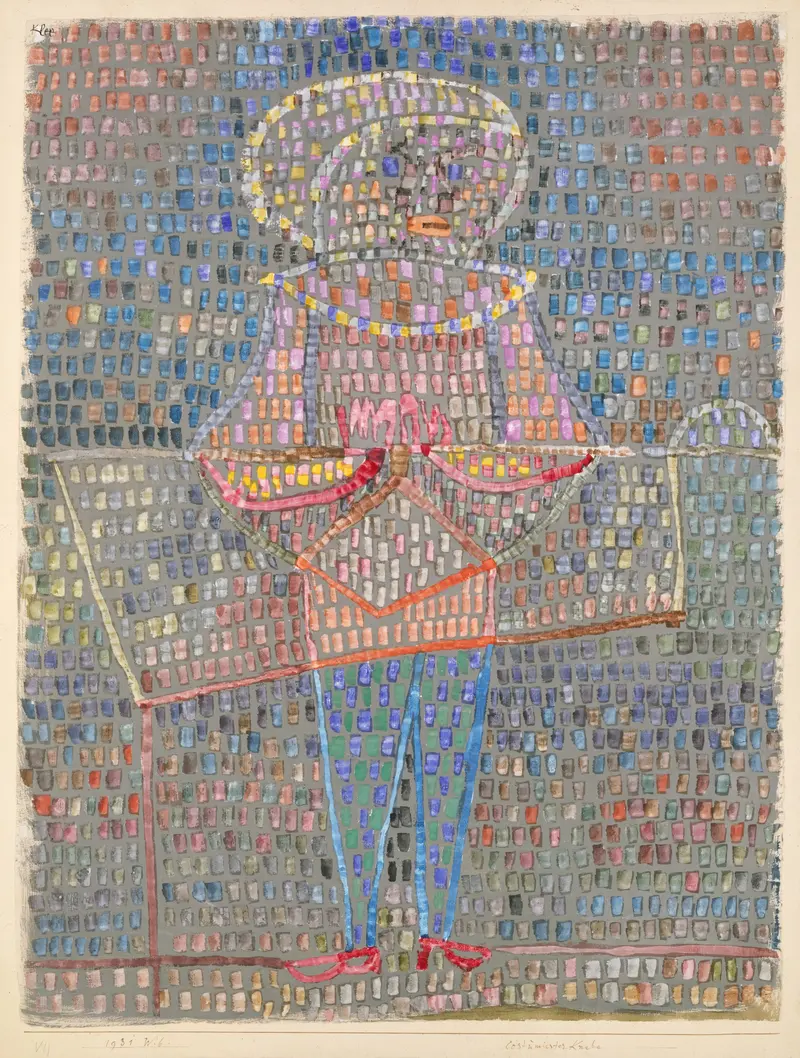
In Ventriloquist and Crier in the Moor, Paul Klee presents a whimsical scene filled with vibrant colors. The painting features a ventriloquist, whose puppet seems to engage with a crier in a moor setting. The background is characterized by earthy tones and abstract shapes that suggest a natural landscape.
Klee's use of color creates a playful yet mysterious atmosphere. The painting showcases Klee's signature style, blending abstraction with figurative elements. The figures are simplified and stylized, emphasizing their roles rather than realistic details. Klee often used oil on canvas, allowing for rich textures and layering of colors.
This work exemplifies his exploration of the relationship between figures and their environment. Paul Klee, a Swiss artist, was a key figure in the Expressionist movement. Ventriloquist and Crier in the Moor reflects his interest in storytelling and the interplay of characters. An interesting fact about this work is that it showcases Klee's fascination with the theatrical, as the ventriloquist and crier suggest a narrative beyond the canvas.
Klee's unique approach to color and form continues to influence modern art.
More Artworks by Paul Klee

More Genre Scene Art

Banquet of the Officers of the St George Civic Guard
Frans Hals

Rembrandt and Saskia in the Scene of the Prodigal Son
Rembrandt van Rijn

Bal du moulin de la Galette
Pierre-Auguste Renoir

Quadrille at the Moulin Rouge
Henri de Toulouse-Lautrec

A Burial at Ornans
Gustave Courbet

When Will You Marry?
Paul Gauguin