
Vervallen huis — History & Facts
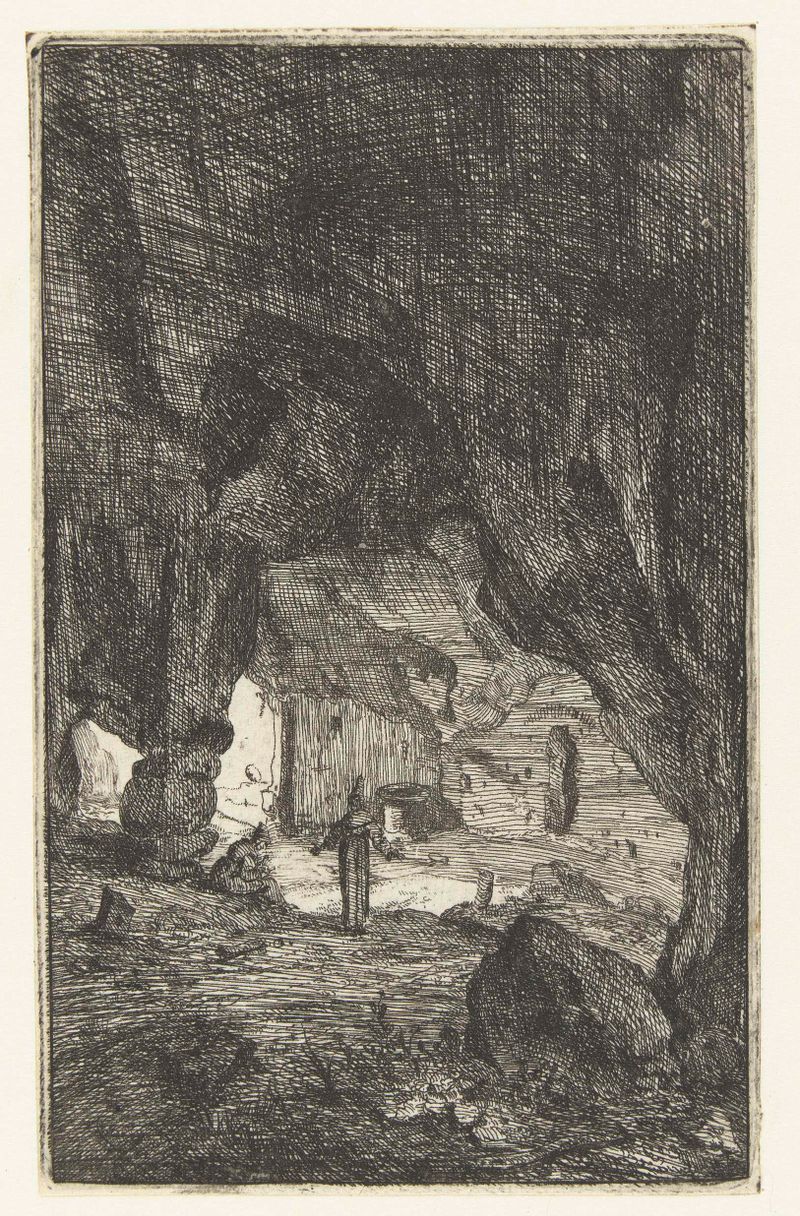
Could beauty survive in a century of chaos? In Vervallen huis, Bartholomeus Breenbergh presents a haunting reflection on the fragility of human creations against the relentless march of time. Look to the center of the composition, where the dilapidated house stands in stark contrast to the lush landscape that surrounds it. The muted earth tones of the structure evoke a sense of decay, while vibrant greens and blues breathe life into the scene, creating a tension between nature and neglect. Notice how the sunlight filters through the clouds, casting an ethereal glow that highlights the textures of the crumbling walls, inviting contemplation of the stories once held within. As you explore the details, consider the juxtaposition of the vibrant flora with the lifeless building.
The wild growth encroaches on the house, symbolizing nature's unfaltering dominance over human endeavors. Hidden among the foliage, you may find symbols of past inhabitants—a discarded shoe or a broken window—whispering tales of hope and despair interwoven into the fabric of the landscape. This visual narrative speaks to an existential fear: despite our efforts to build, time ultimately claims all, leaving only memory in its wake. Breenbergh painted Vervallen huis between 1639 and 1640, during a period of great tumult in the Netherlands marked by political strife and social upheaval.
The artist, known for his landscapes infused with melancholy and introspection, sought to capture the fleeting nature of existence against the backdrop of a changing world. In this work, he reflects not only on the decline of architectural beauty but also on the precariousness intrinsic to life itself.
More Artworks by Bartholomeus Breenbergh
Browse all →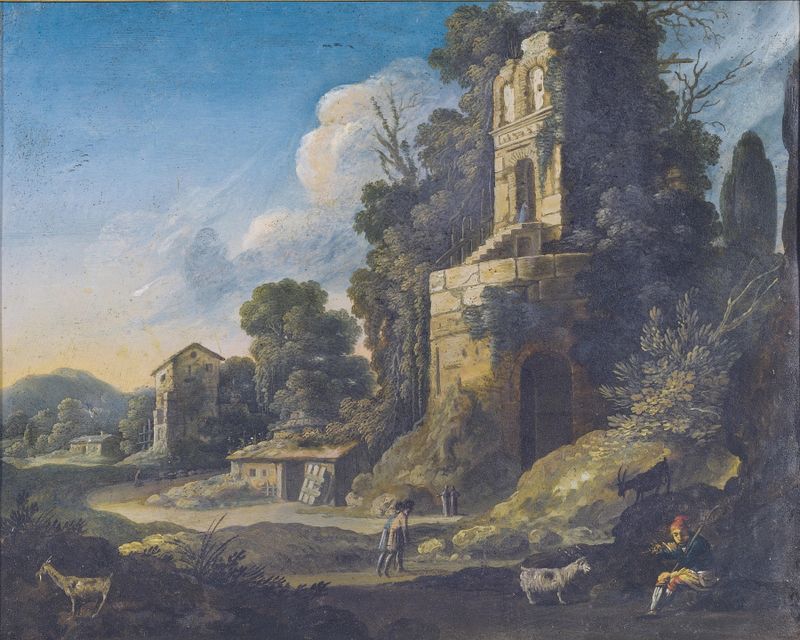
Italianate landscape with buildings and a herdsman playing pipes
Bartholomeus Breenbergh

Arcadian Landscape
Bartholomeus Breenbergh

Ruïnes van keizerlijk paleis te Rome
Bartholomeus Breenbergh

Ruïne van het Colosseum
Bartholomeus Breenbergh
Ruïnes van de stadsmuren van Rome
Bartholomeus Breenbergh
Ruïnes van een paleis te Tivoli
Bartholomeus Breenbergh

Figures Among Ruins By The Tiber
Bartholomeus Breenbergh

Italian Landscape with the Aurelian Wall
Bartholomeus Breenbergh
Ruïnes van de thermen van Caracalla
Bartholomeus Breenbergh
Interieur van een grot
Bartholomeus Breenbergh
More Architecture Art
Browse all →
The statue of Liberty
Frédéric Auguste Bartholdi

View of Houses in Delft, Known as ‘The Little Street’
Johannes Vermeer

View of Houses in Delft, Known as ‘The Little Street’
Johannes Vermeer

The Cathedral in Rouen. The portal, Grey Weather
Claude Monet

The yellow house
Vincent van Gogh

The Church in Auvers-sur-Oise, View from the Chevet
Vincent van Gogh