View between Jalta and Hursuf — History & Facts
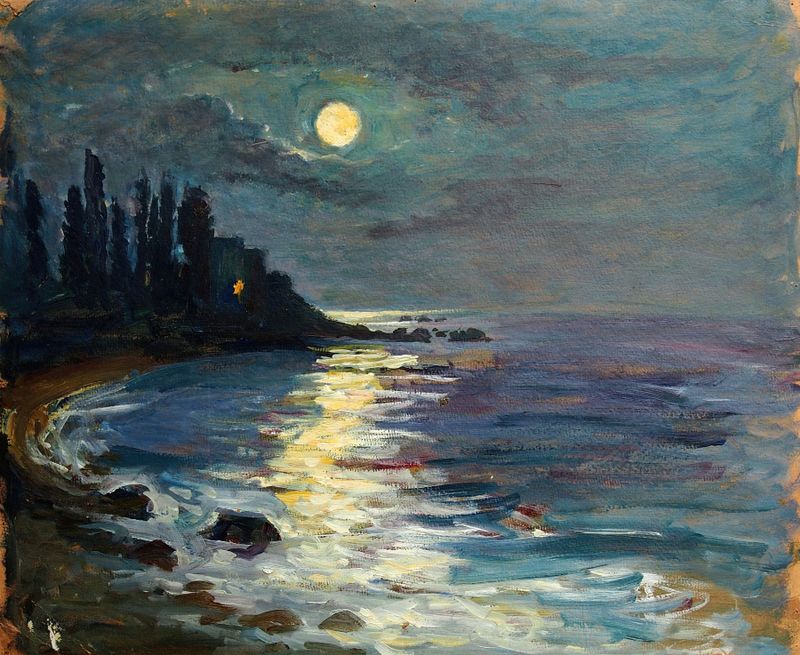
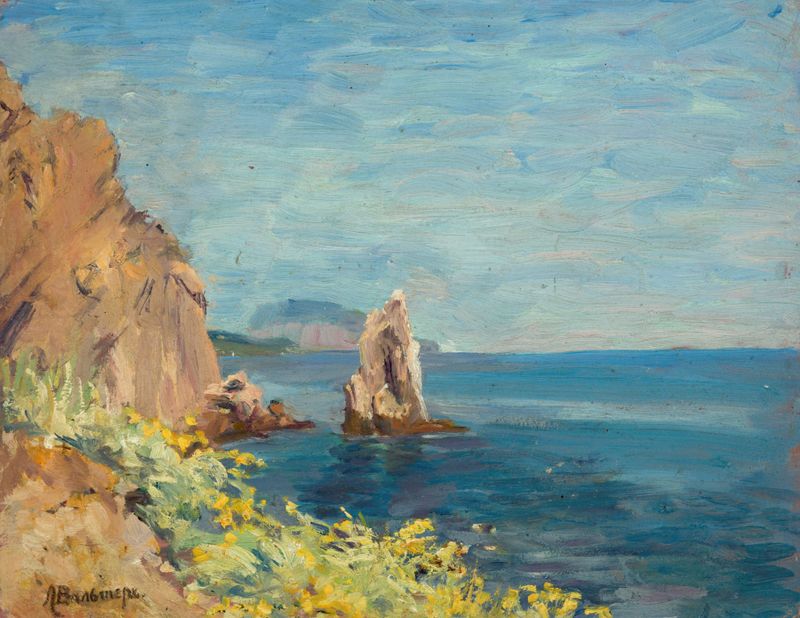
What if silence could speak through light? In View between Jalta and Hursuf, the interplay of shadow and illumination conveys a profound dialogue between tranquility and turmoil. Each brushstroke invites contemplation, revealing a world where time pauses, allowing the viewer to explore the depths of unspoken narratives. Look to the lower left, where a soft, muted glow illuminates the undulating hills, drawing your gaze along the horizon. Notice how the deep shadows cling to the contours of the landscape, creating a striking contrast that heightens the sense of depth.
The palette—comprised of rich greens interspersed with gentle earth tones—imbues the scene with a somber beauty, evoking both an emotional resonance and a sense of nostalgia. Within this serene vista, the tension between light and shadow suggests a deeper commentary on presence and absence. The shadows lurking behind the hills may symbolize unseen forces or memories, while the light breaking through bears witness to fleeting moments of hope. This delicate balance reflects the artist's intent to capture not just a landscape, but the emotional landscapes that inhabit our lives—complex, layered, and often unresolved. Created in 1918, View between Jalta and Hursuf emerged during a tumultuous period in European history, marked by the aftermath of World War I.
Lilly Walther was in Germany as the country grappled with a shifting cultural identity and the scars of conflict. This painting represents a moment of personal introspection amidst societal upheaval, as she sought to convey the beauty and complexity of the world around her through her unique lens.