
View of York — History & Facts
When did color learn to lie? Beneath the vibrant hues of a landscape lies a fragile truth, one that beckons the viewer to question reality itself. Focus on the foreground, where the lush greens of the fields meet the delicate strokes of gold in the sunlight. The sweeping sky overhead is alive with rolling clouds, blending cerulean and white, creating a dynamic contrast that draws the eye upward. Varley masterfully employs a palette that dances between soft pastels and bold contrasts, inviting an exploration of both serenity and tension within the composition. Hidden within the layers of color and brushwork are echoes of nostalgia and transience.
The gentle curvature of the hills suggests a sense of motion, as if nature is in a perpetual state of change, whispering secrets of time’s passage. The shimmering river reflects the sky, a metaphor for fleeting moments captured yet always shifting. This duality highlights the fragility of beauty, as the viewer becomes acutely aware of their own temporality within the scene. John Varley created this landscape during a time when Romanticism was shaping the British art scene, and nature was seen as a source of inspiration and reflection.
Working in the early 19th century, he sought to transcend mere representation, aiming instead to evoke emotional resonance. This period was marked by a growing appreciation for the sublime in nature, a movement that Varley embraced as he painted his visions of the English countryside.
More Artworks by John Varley
Browse all →
Knaresborough on the River Nidd, Yorkshire
John Varley

Kirkstall Abbey near Leeds
John Varley

Bamborough Castle from the Northeast, with Holy Island in the Distance, Northumberland
John Varley
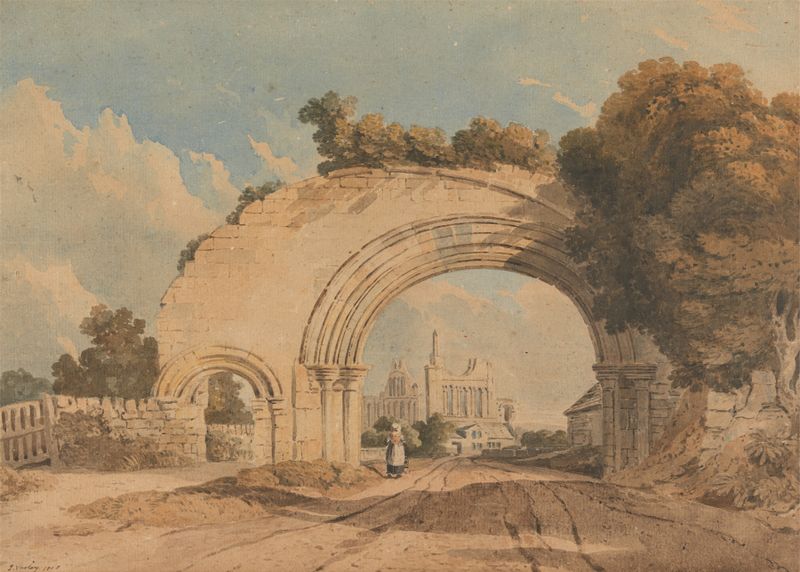
Byland Abbey, Yorkshire
John Varley

View of Conwy Castle, North Wales
John Varley
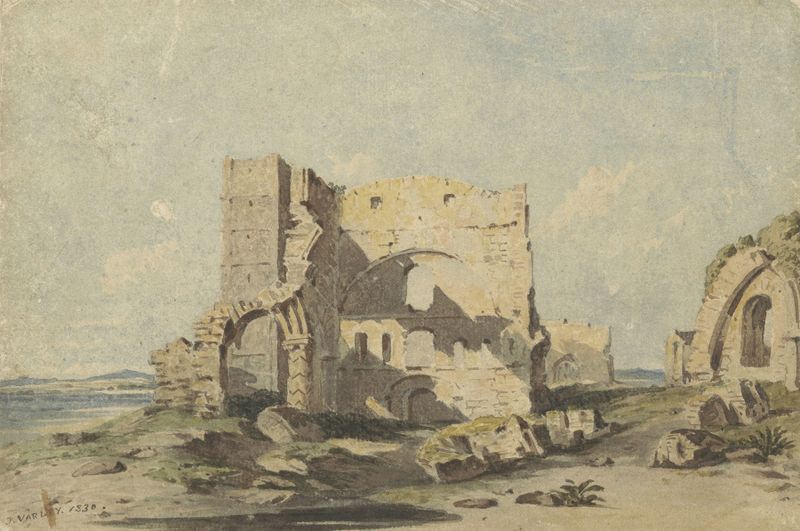
Lindisfarne Abbey op Holy Island, Northumberland
John Varley
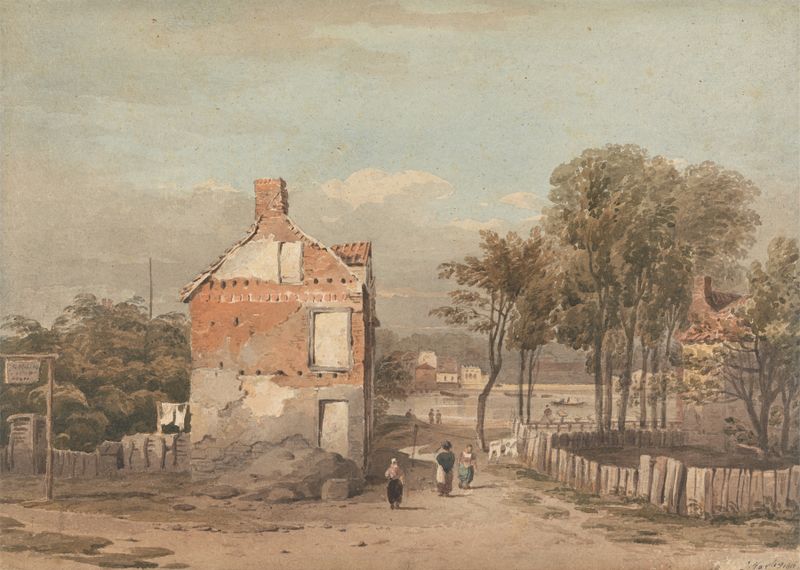
The Thames Near the Penitentiary, Millbank, London
John Varley

Vale of Clwyd, Wales
John Varley

A View along the Thames towards Chelsea Old Church
John Varley

The Thames at Windsor
John Varley





