
View Over The Elbe And The Barracks — History & Facts
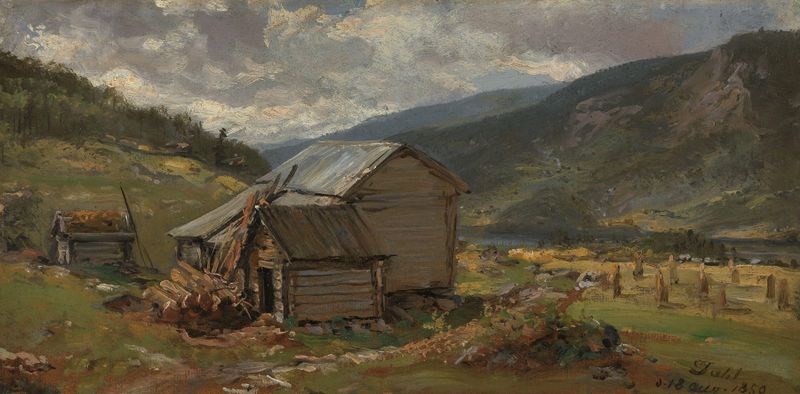
Could beauty survive in a century of chaos? In an ever-changing world, where turmoil coexists with tranquility, art becomes a sanctuary—a testament to resilience and creation. Look to the left at the cascading hills that cradle the Elbe River, their soft greens and browns weaving a tapestry of nature’s bounty. As your gaze travels, notice the meticulously painted barracks nestled into the landscape, their stark architectural lines juxtaposing the organic curves of the terrain. The play of light on water creates shimmering reflections, inviting contemplation and drawing the eye towards the horizon, where the sky breathes life into the scene with hues of dawn and dusk. Delve deeper into the contrasts present in this work.
The serenity of the idyllic landscape starkly opposes the looming structure of the barracks—a reminder of human intervention amid nature’s beauty. The uneven balance between light and shadow reflects emotional tensions; the viewer senses both peace and a subtle unease, as if the tranquility of the scene is a fragile veil over an uncertain future. Each element speaks to a duality, embodying a dialogue between the beauty of creation and the weight of existence. At the time this piece was crafted, Dahl found himself in a period of personal and artistic development.
Working in the early 19th century, he was deeply influenced by Romanticism, which sought to evoke emotions through nature. His travels across Norway and Germany informed his rich landscapes, establishing him as a key figure in establishing a national identity through art during a time when Europe was grappling with political and social upheaval.
More Artworks by Johan Christian Dahl
Browse all →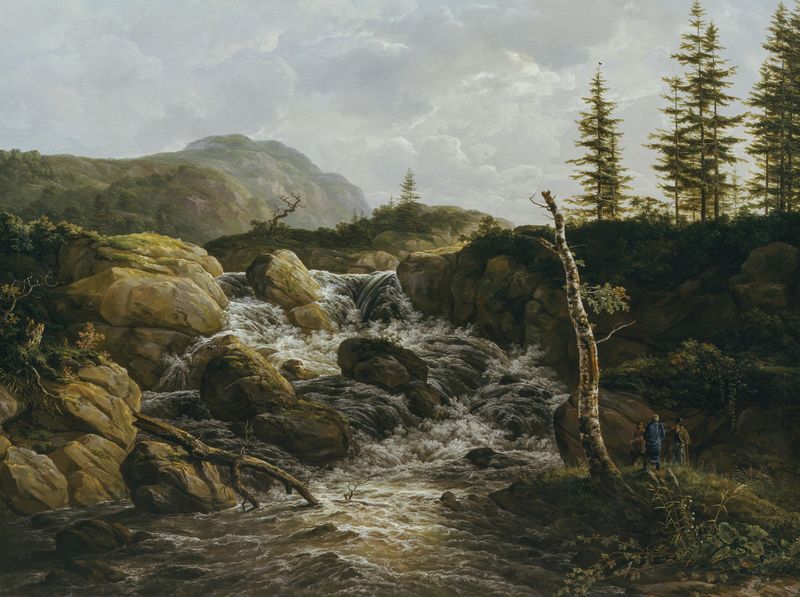
Mountainous Landscape with a Waterfall, Norway
Johan Christian Dahl
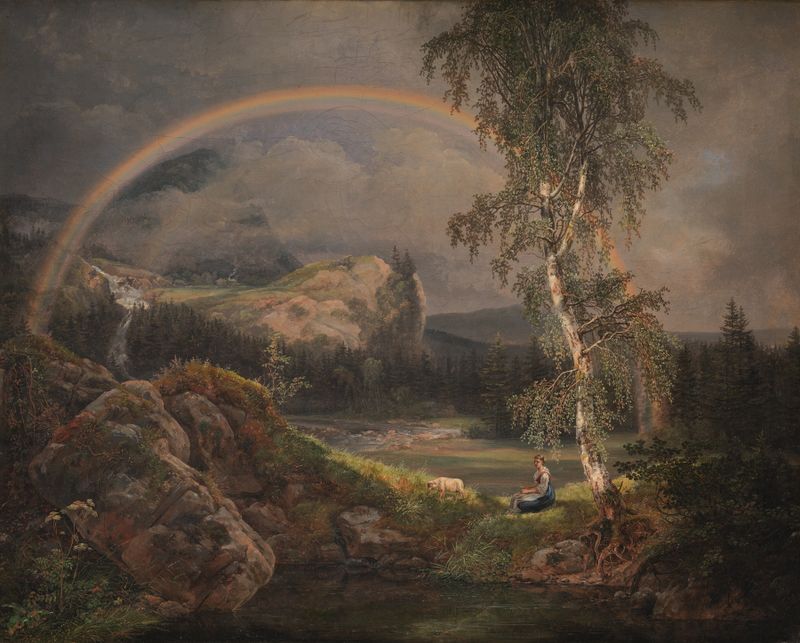
Norwegian Landscape with a Rainbow
Johan Christian Dahl
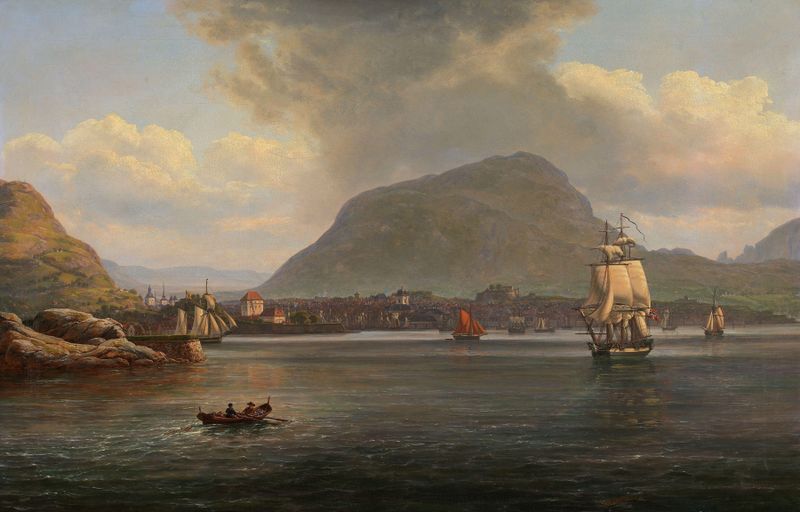
Bergen seen from the northern Inlet
Johan Christian Dahl
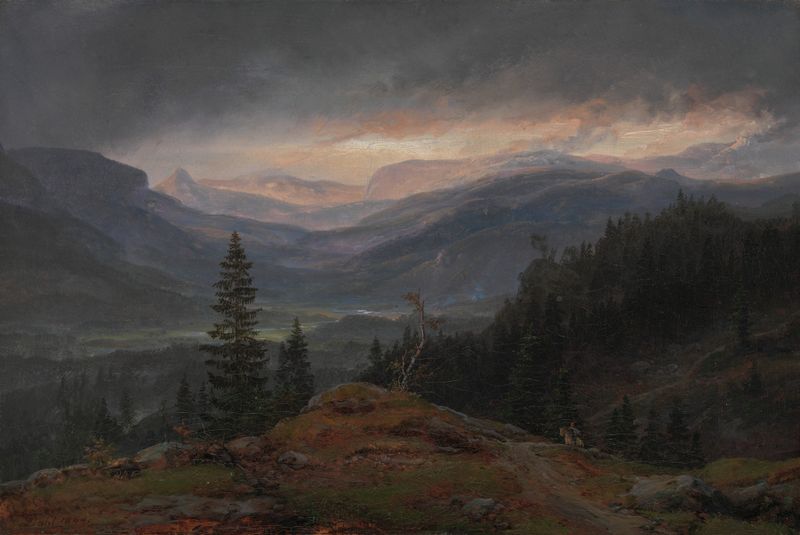
View over Hallingdal
Johan Christian Dahl
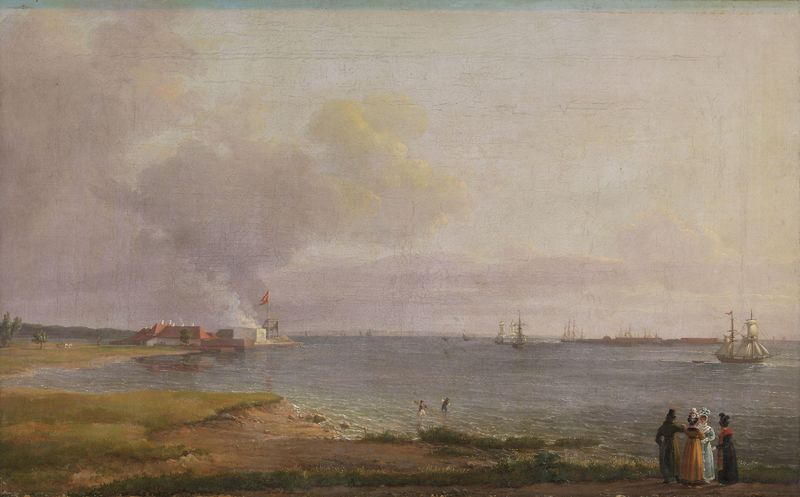
View over Øresund near the Lime Works
Johan Christian Dahl
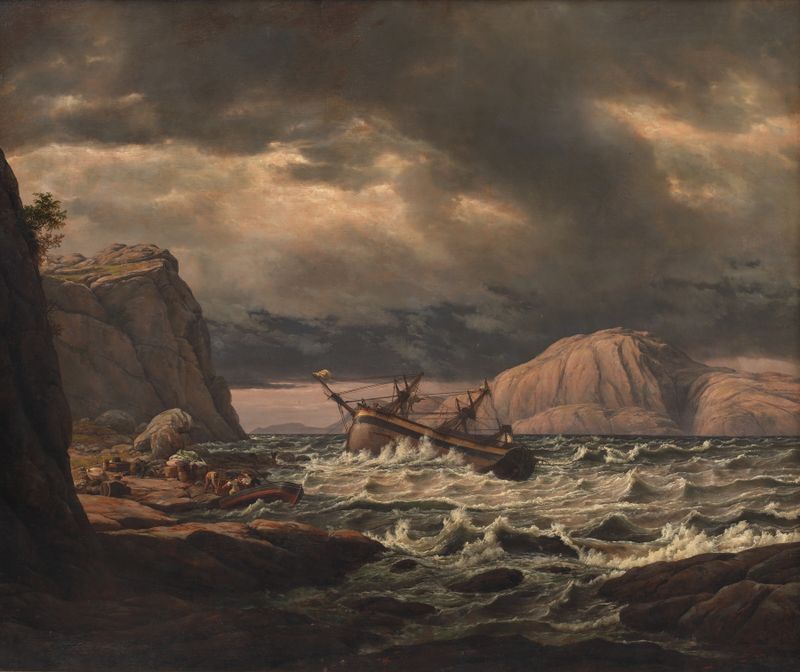
A Shipwreck on the Coast of Norway
Johan Christian Dahl
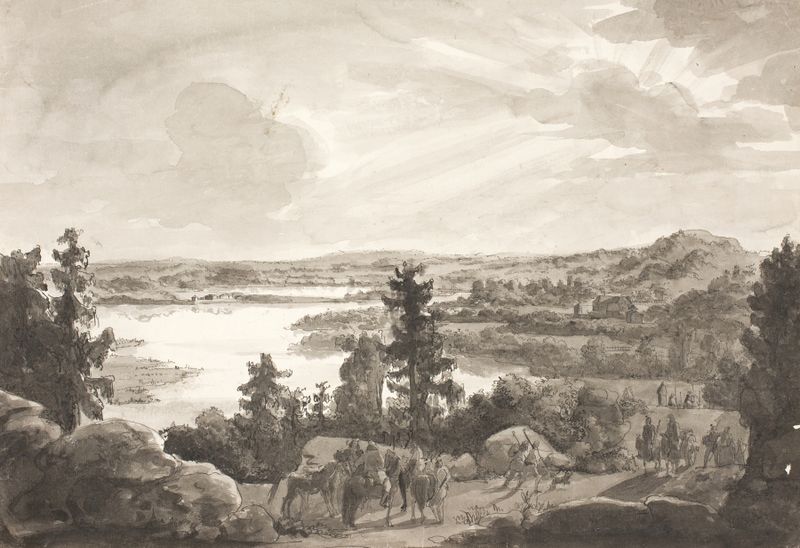
View of a Lake, Norway
Johan Christian Dahl
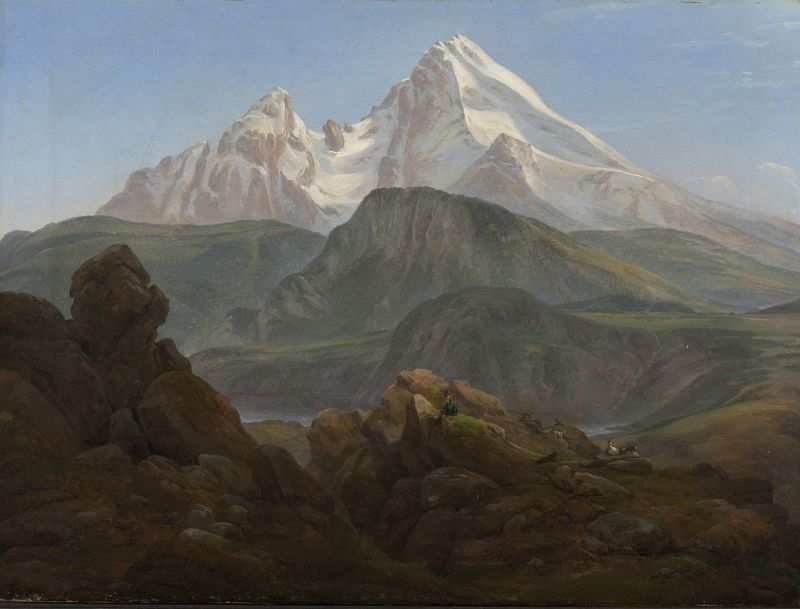
The Watzmann
Johan Christian Dahl
View of Hjelle in Valdres
Johan Christian Dahl

View At Skjolden In Lyster
Johan Christian Dahl





