
Villa van de keizers te Rome — History & Facts
In the stillness of a villa, reflections of a world both grand and intimate converge, inviting introspection and contemplation. Look to the foreground where the lush greenery frames the tranquil waters, creating a mirror that blurs the boundary between reality and illusion. The artist employs a palette of vibrant greens and soft blues, harmoniously juxtaposed against the warm hues of the villa's stone facade. Notice how the light dances across the surface of the water, casting ripples that entice the eye and suggest a gentle breeze, while the careful brushwork breathes life into the architecture, inviting viewers to wander through its silent corridors. There’s an underlying tension in the contrast between nature and human creation, a dialogue that Breenbergh masterfully orchestrates.
The calmness of the scene is punctuated by the reflections that hint at the transience of beauty, echoing the notion that all things, both natural and man-made, are subject to time’s relentless flow. The viewer is left to ponder the impermanence of tranquility, evoking a sense of nostalgia that lingers long after glancing away. In 1640, the artist painted this piece amid a flourishing art scene in Italy, a period marked by the Baroque movement's emphasis on emotion and drama. Living in Rome, Breenbergh found inspiration in the interplay of light and landscape, capturing architectural wonders with a sensitivity that mirrored both personal and societal transitions of his time.
His work reflects a moment when the classical ideals of beauty were being reinterpreted, embracing a deeper connection between the viewer and the natural world.
More Artworks by Bartholomeus Breenbergh
Browse all →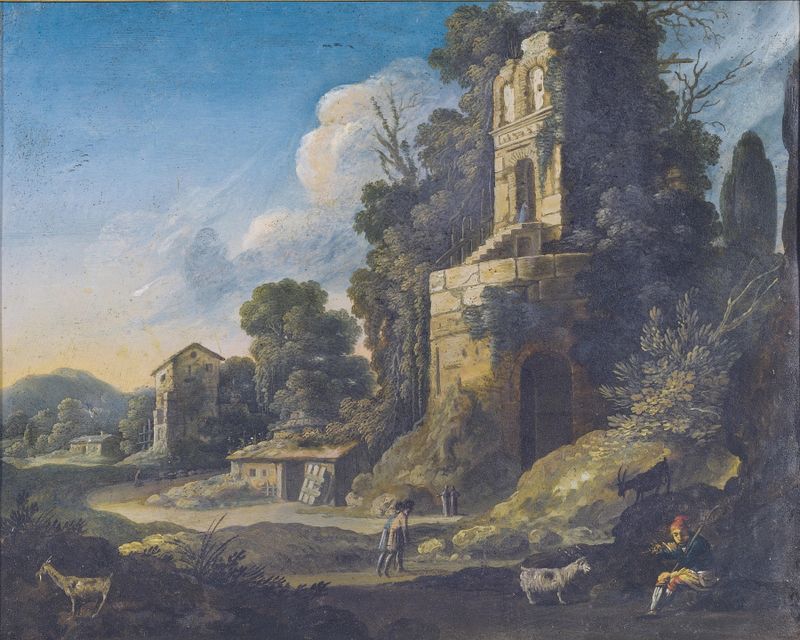
Italianate landscape with buildings and a herdsman playing pipes
Bartholomeus Breenbergh

Arcadian Landscape
Bartholomeus Breenbergh

Ruïnes van keizerlijk paleis te Rome
Bartholomeus Breenbergh

Ruïne van het Colosseum
Bartholomeus Breenbergh
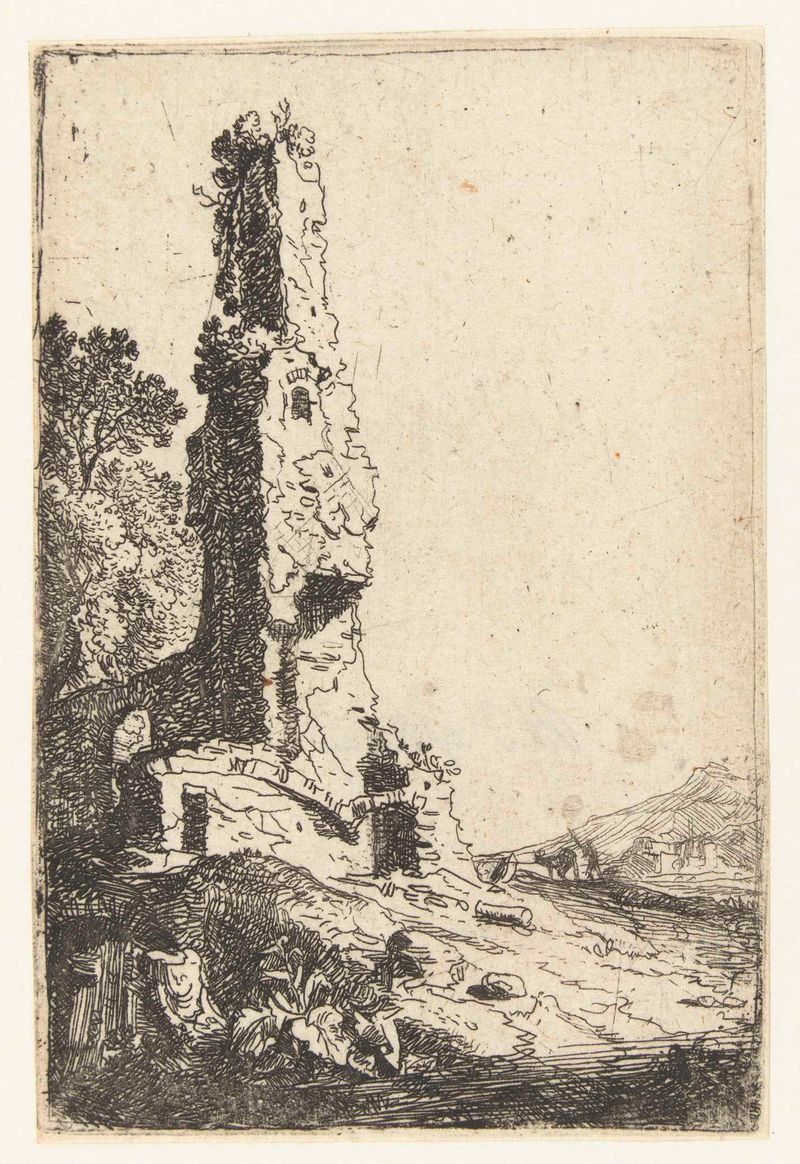
Ruïnes van de stadsmuren van Rome
Bartholomeus Breenbergh
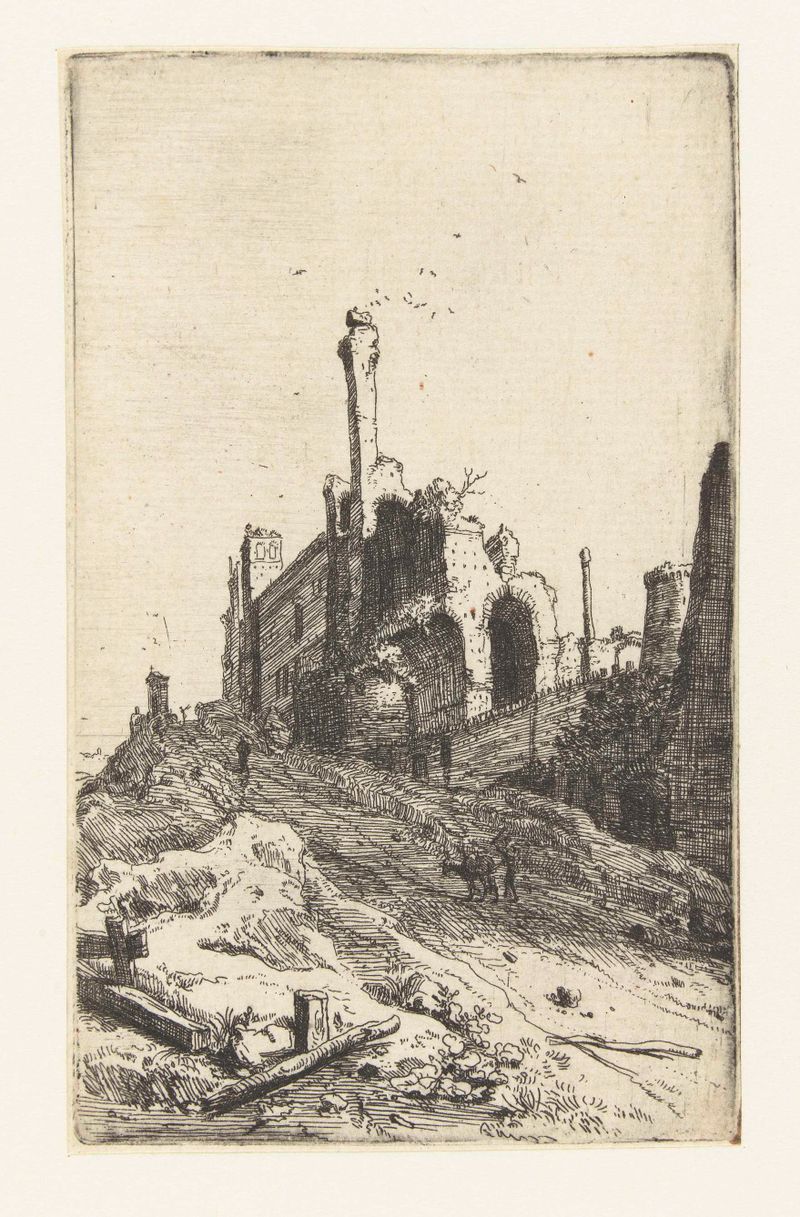
Ruïnes van een paleis te Tivoli
Bartholomeus Breenbergh

Figures Among Ruins By The Tiber
Bartholomeus Breenbergh

Italian Landscape with the Aurelian Wall
Bartholomeus Breenbergh
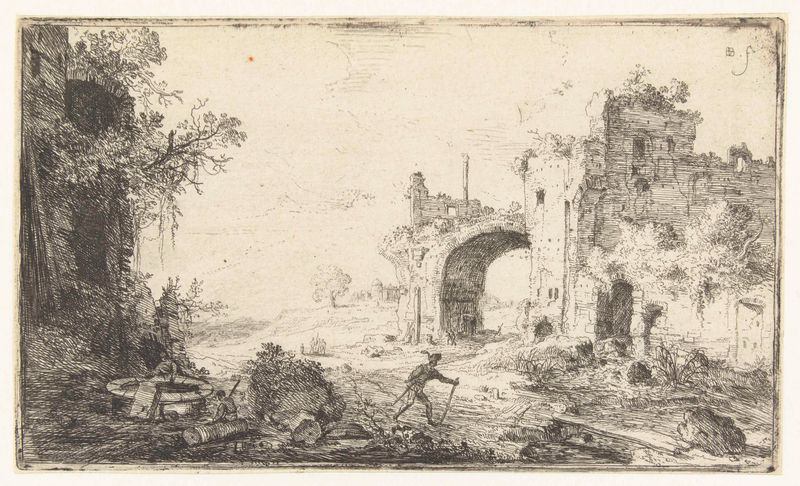
Ruïnes van de thermen van Caracalla
Bartholomeus Breenbergh
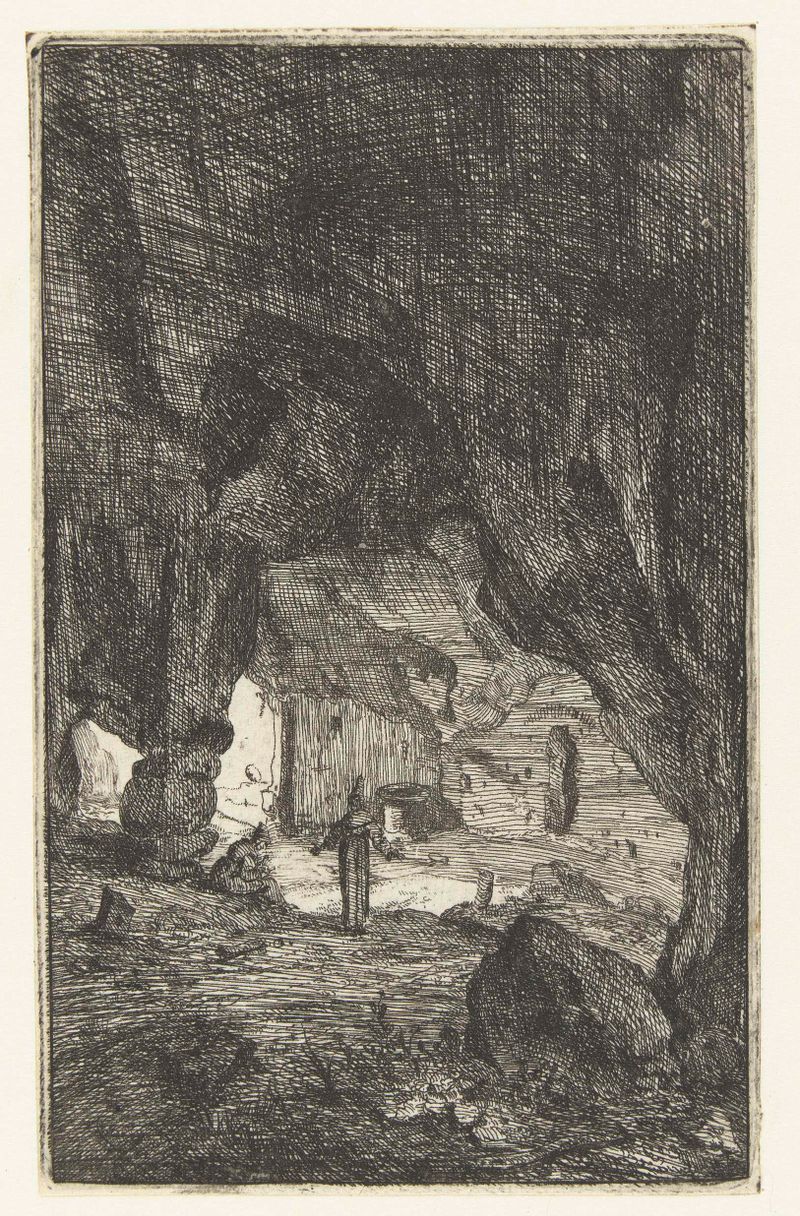
Interieur van een grot
Bartholomeus Breenbergh





