
Village Festival with Dancing Peasant Couple — History & Facts
A swirl of music and laughter seems to spill from the center of Village Festival with Dancing Peasant Couple, pulling the viewer into the heart of a rural celebration. The painter, Adriaen van Ostade, chooses a moment when the joy of the dancers is infectious: a man and woman, hands clasped, feet mid-step, become the axis of a world briefly unburdened by labor. Around them, faces beam with delight or focus on the spectacle, while a pink cloth flutters from a window above, echoing the movement below.
The light, soft yet clear, pours over the scene, illuminating the dancers and drawing the eye outward to the bustling crowd, the church spire, and the open sky. Every detail—the scattered jugs, the crouched cat, the children tugging at skirts—serves to anchor the festival in the ordinary pleasures of village life. Works like this, painted between 1660 and 1670, belong to a tradition that flourished in the Dutch Republic: scenes of everyday merriment, painted not for the nobility but for townsfolk who delighted in seeing themselves reflected on their walls. Adriaen van Ostade was celebrated for capturing the rough warmth of peasant gatherings, a genre prized for its humor and humanity as much as its technical skill.
Such paintings often hung in the homes of prosperous burghers, reminders of both the pleasures and follies of common life. Today, this particular scene is part of the collection of the Staatliche Museen zu Berlin, its origins and early journey largely unrecorded—yet its energy remains undimmed, inviting every viewer to join the dance.
More Artworks by Adriaen van Ostade

Dans in de herberg
Adriaen van Ostade
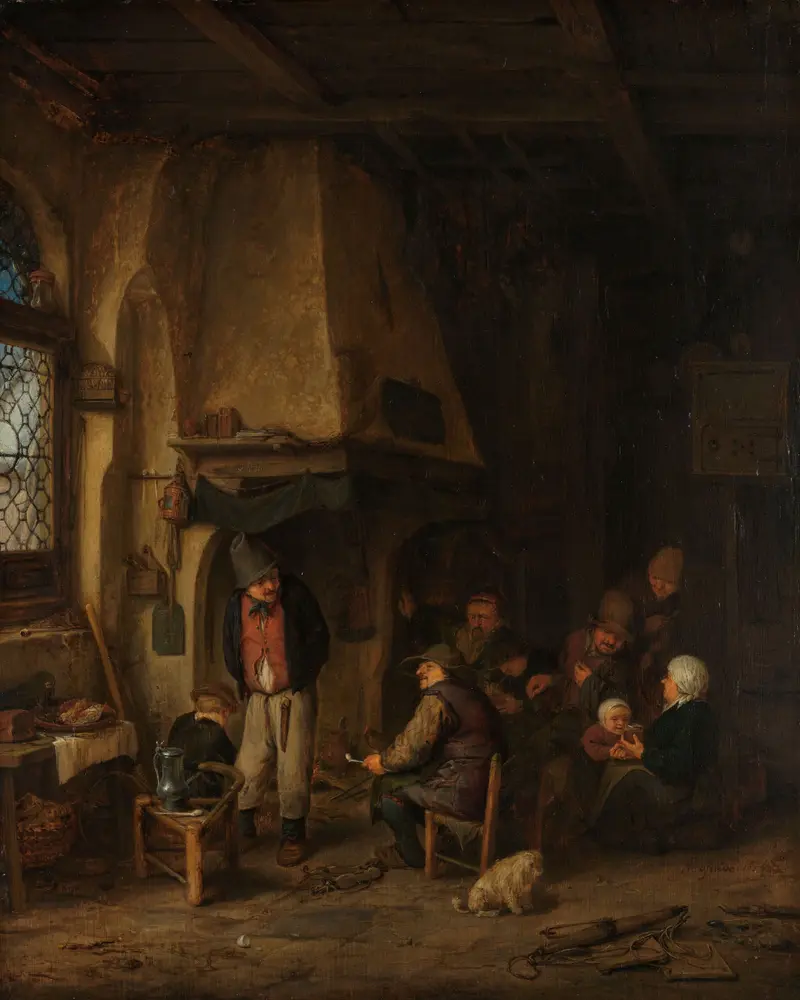
‘The Skaters’: Peasants in an Interior
Adriaen van Ostade
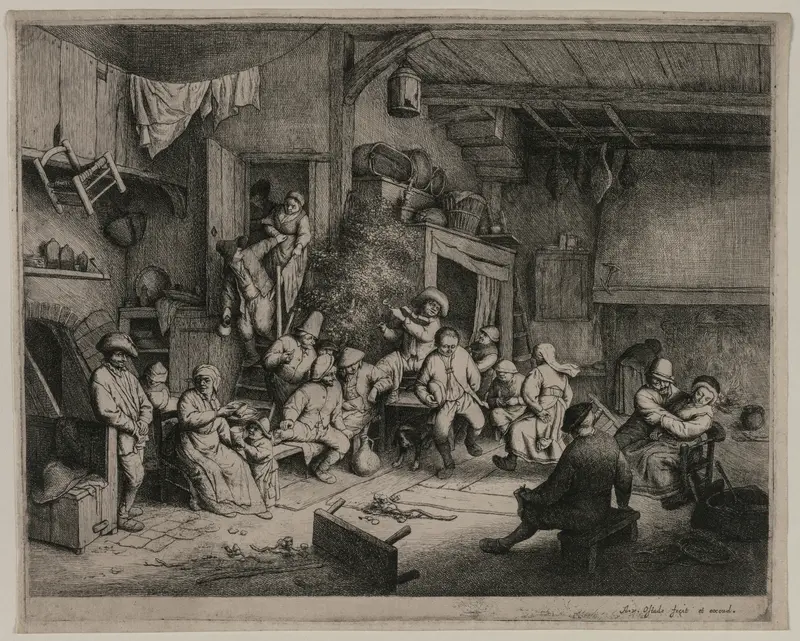
Dance at the Inn
Adriaen van Ostade
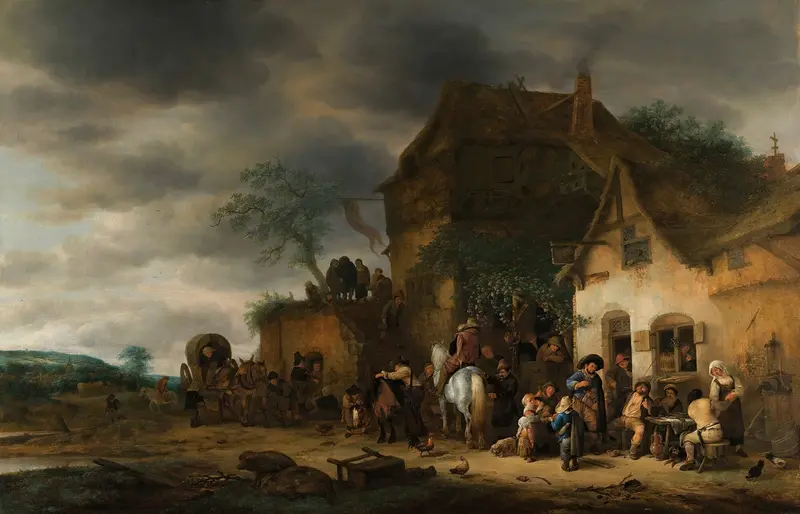
Travellers Halted At A Country Inn
Adriaen van Ostade
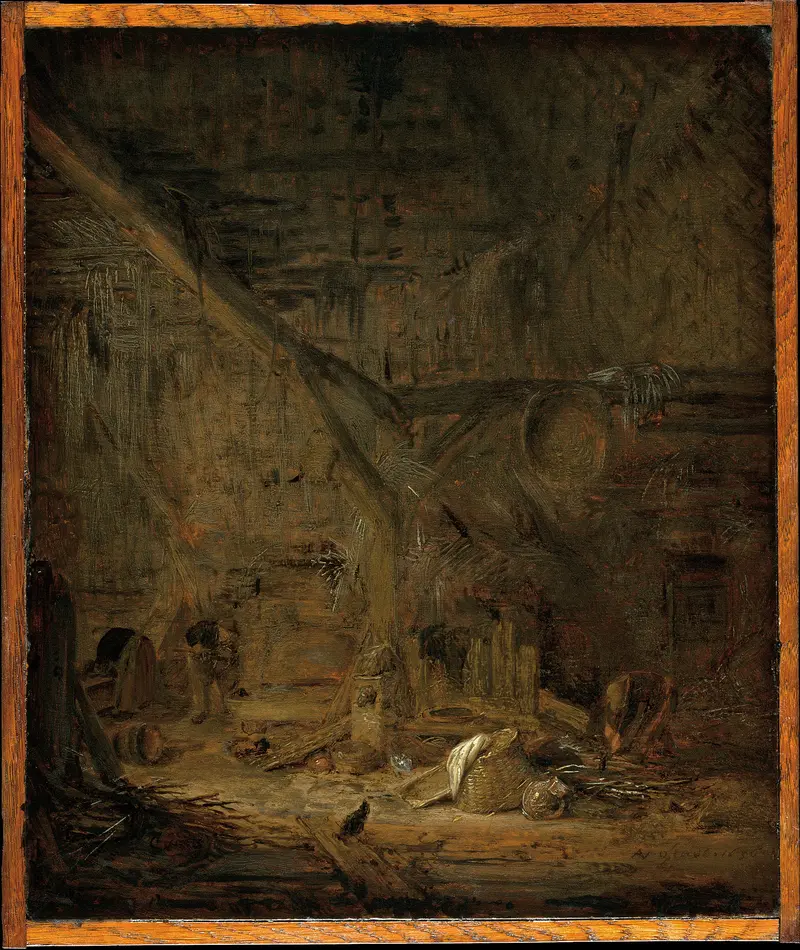
Interior of a Barn
Adriaen van Ostade
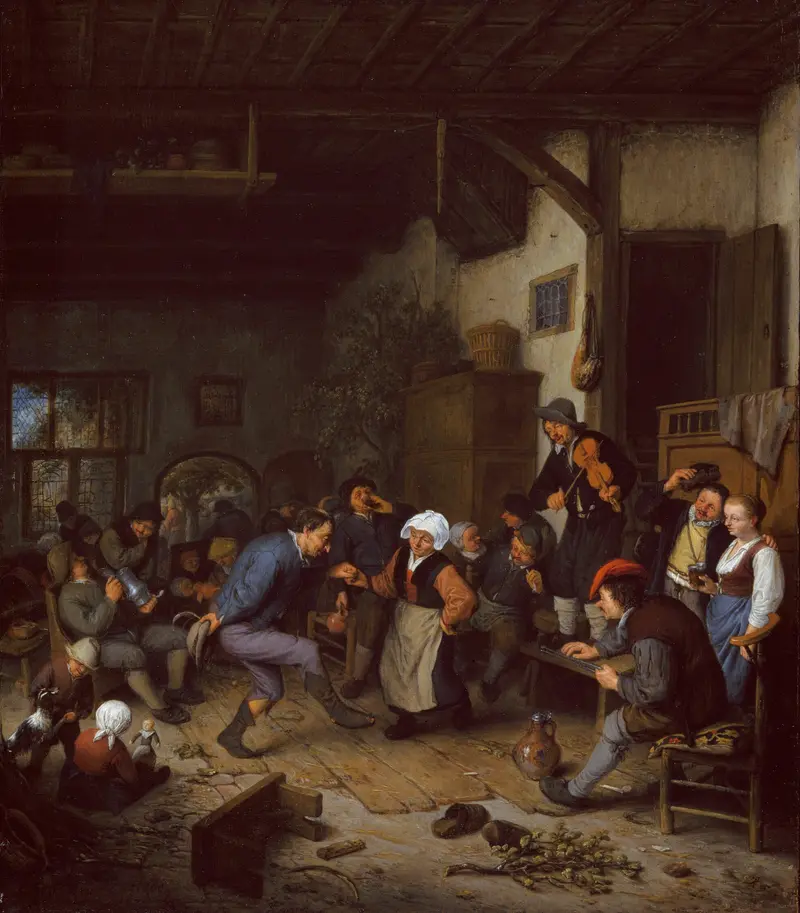
Merrymakers in an Inn
Adriaen van Ostade
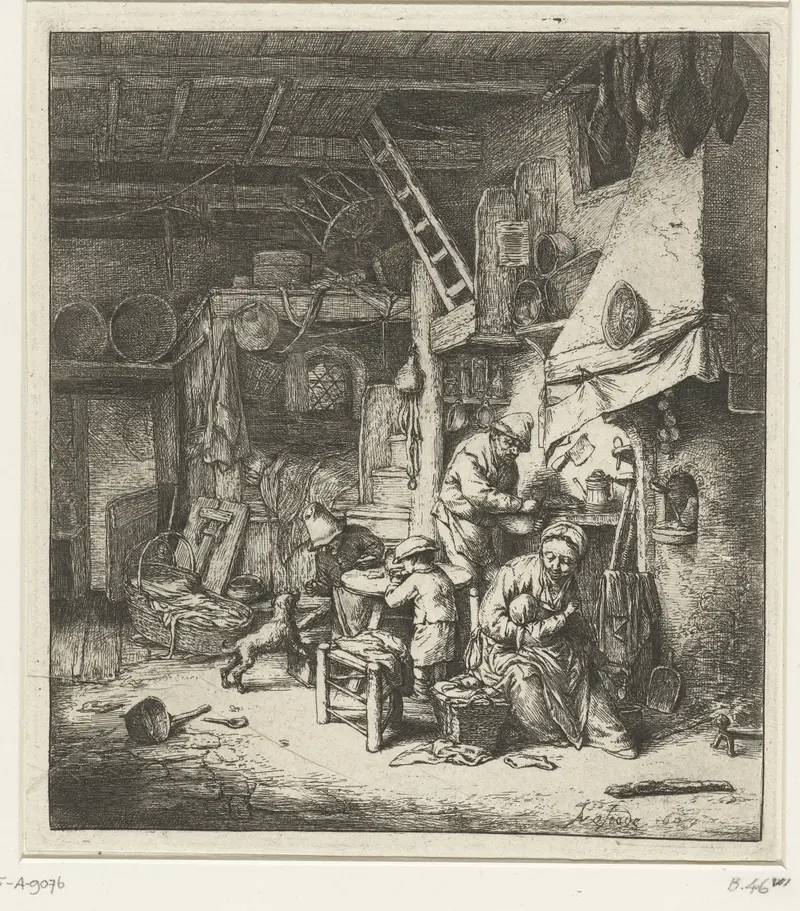
Boerengezin in interieur
Adriaen van Ostade
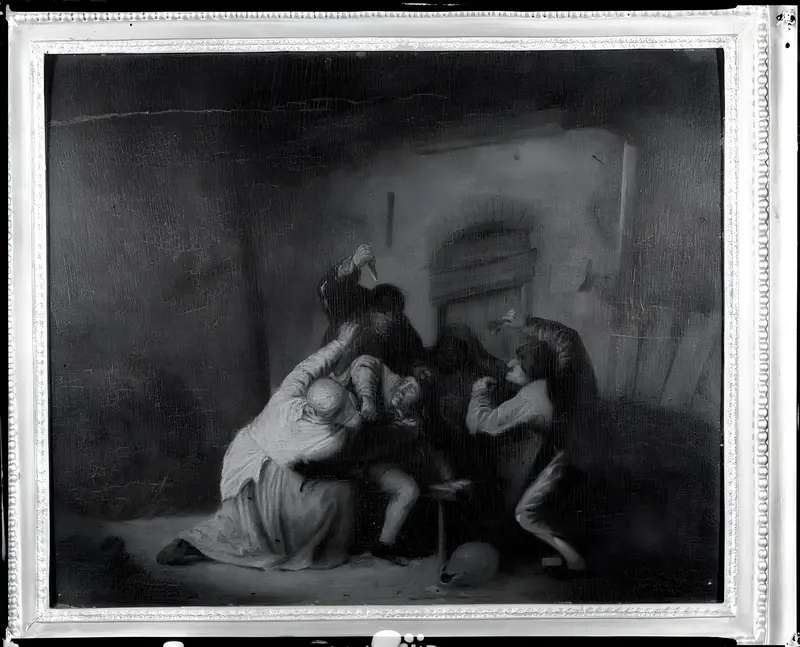
Peasants Brawling in a Tavern
Adriaen van Ostade
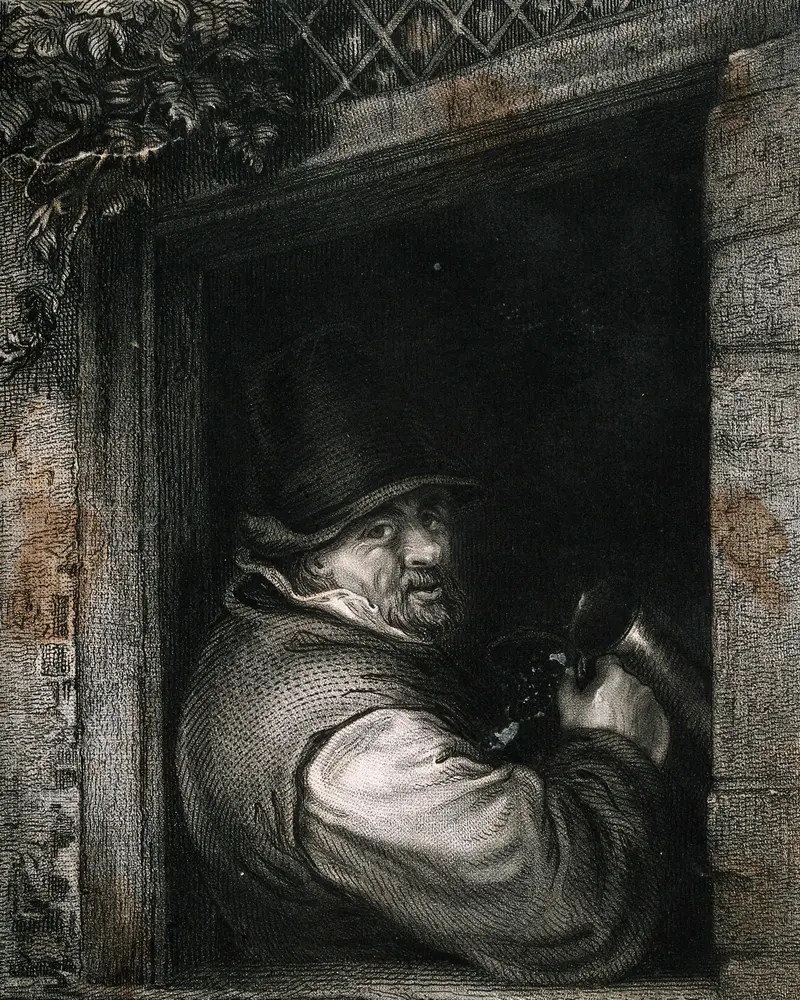
Man with a Tankard at a Window
Adriaen van Ostade
Dans in de herberg
Adriaen van Ostade
More Genre Scene Art

Banquet of the Officers of the St George Civic Guard
Frans Hals

Rembrandt and Saskia in the Scene of the Prodigal Son
Rembrandt van Rijn

Bal du moulin de la Galette
Pierre-Auguste Renoir

Quadrille at the Moulin Rouge
Henri de Toulouse-Lautrec

A Burial at Ornans
Gustave Courbet

When Will You Marry?
Paul Gauguin