
Village in Brittany — History & Facts
Who listens when art speaks of silence? Here, in the gentle folds of Village in Brittany, the whispers of rebirth are painted with a tender hand. Look to the left where the thatched rooftops rise gently against the horizon, their earthy tones harmonizing with the pale sky. The brushwork feels alive, each stroke a pulse of the village's quiet rhythm. Notice how the light dances upon the fields, illuminating patches of green and gold, coaxing the viewer's eye across the canvas.
The composition is balanced, yet dynamic, leading us through the serene environment, inviting a sense of calm and contemplation. Delve deeper into the canvas, and you’ll find a paradox of stillness and vitality. The distant hills cradle the village, evoking a sense of security, yet the vibrant colors suggest an awakening—nature's cycle of renewal. In the foreground, the slight movement of the foliage could symbolize the unseen lives bustling within the village, capturing the essence of a community in harmony with its landscape.
This tension between presence and absence embodies both the quiet solitude of rural life and the promise of growth. In 1844, while painting this idyllic scene, Daubigny was immersed in the burgeoning Barbizon School, a movement that rejected the confines of traditional academic painting in favor of a more direct engagement with nature. Living in France during a time of social and political shifts, he sought solace in the landscape, emphasizing the importance of capturing the simple beauty of peasant life and nature. This work reflects a pivotal moment in art history, where the appreciation of rural life began to blossom anew.
More Artworks by Charles François Daubigny
Browse all →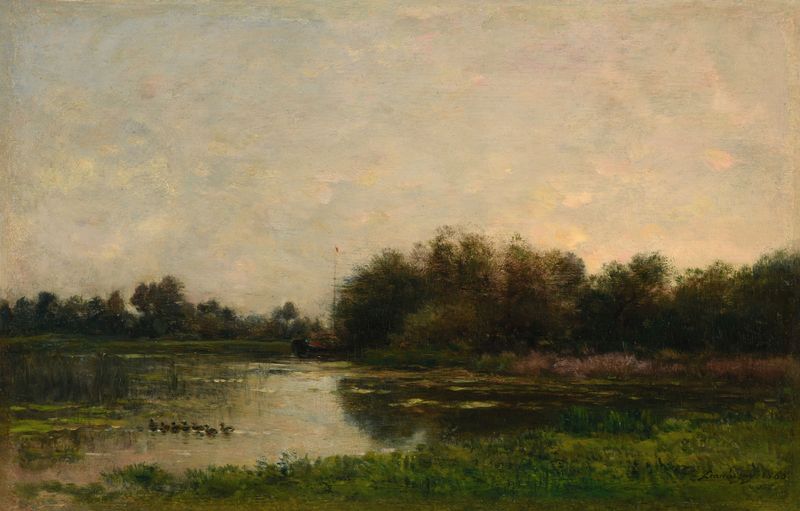
Bords de l’Oise
Charles François Daubigny
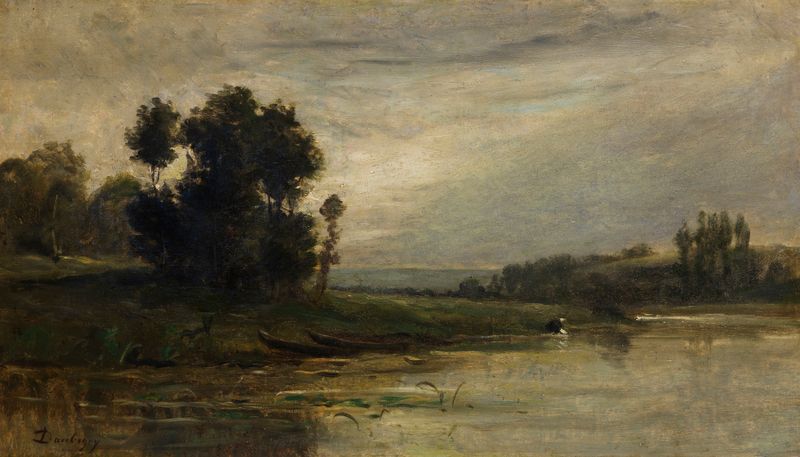
Bords de l’Oise
Charles François Daubigny
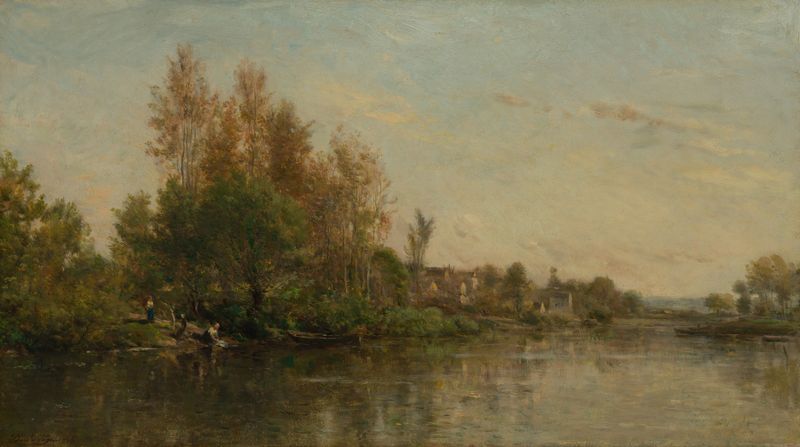
The Banks of the Oise
Charles François Daubigny
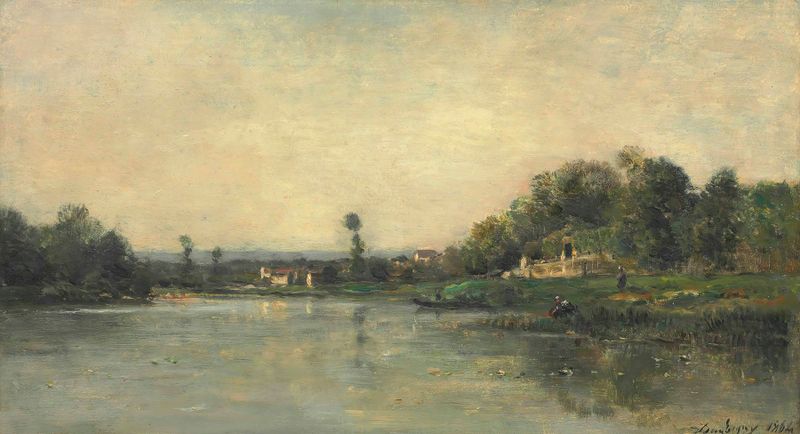
Les Bords De L’oise
Charles François Daubigny
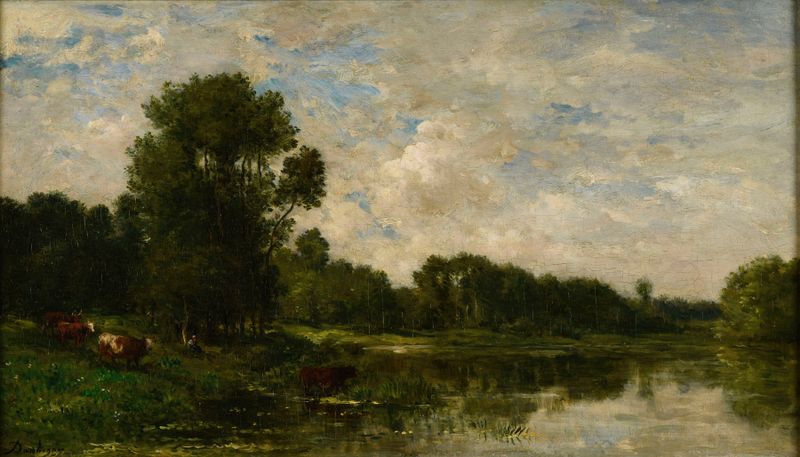
Bords de l’Oise
Charles François Daubigny
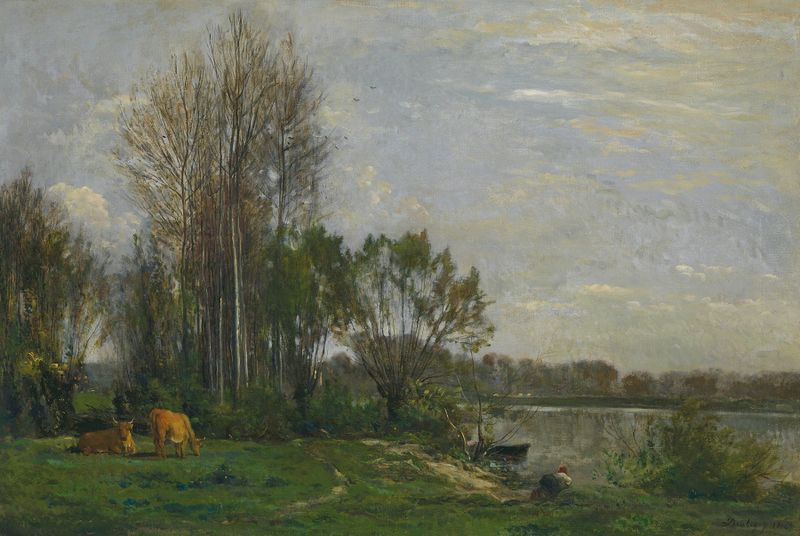
Les Bord De L’oise
Charles François Daubigny
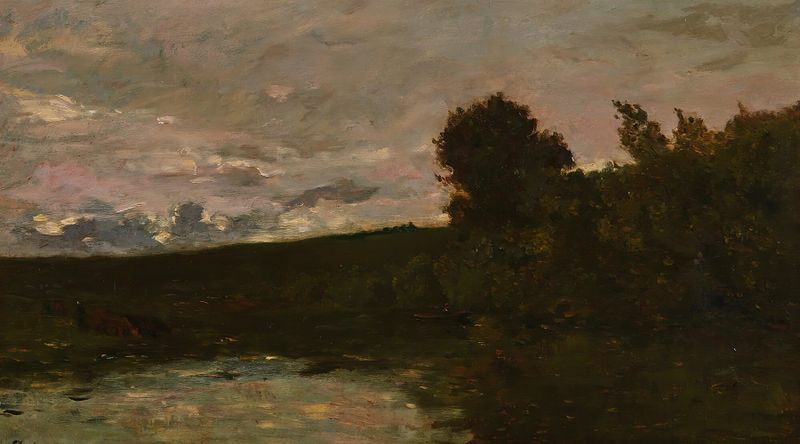
Bord De Riviére
Charles François Daubigny
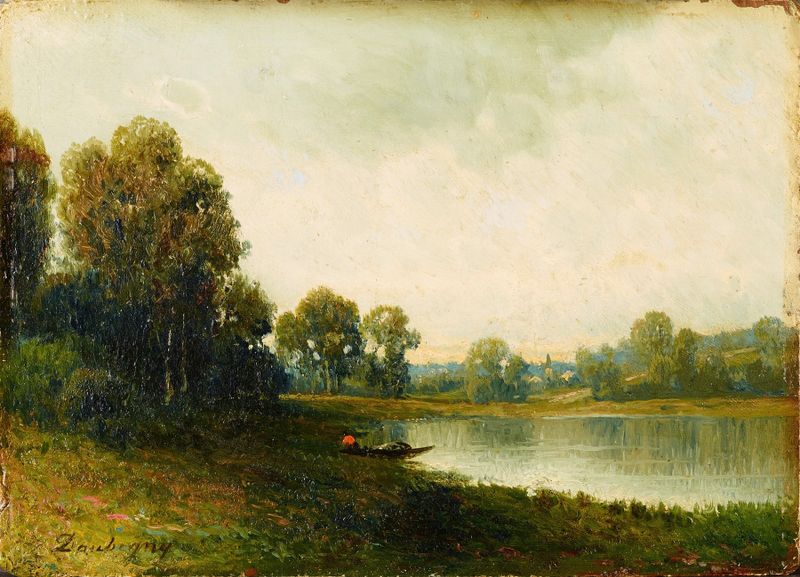
Landscape
Charles François Daubigny
Herbstliche Aulandschaft Abendstimmung
Charles François Daubigny
Landscape near Crémieu
Charles François Daubigny





