
Villagers Merrymaking at an Inn — History & Facts
A riot of laughter and rough music bursts from the shadows of this low-beamed tavern, where every inch of the scene seems alive with the business of pleasure. At the heart of the gathering, a man throws his head back in a tipsy jig, his flushed face caught in a shaft of golden light that picks out the flushed cheeks and eager gestures all around him. A woman with a white cap, her face illuminated against the gloom, pauses in her meal to watch the spectacle, while a child tugs at her apron, hungry for attention or perhaps a taste of her bread.
The clutter of daily life—baskets, stools, drying herbs—frames the revelers, grounding their merriment in the ordinary mess of rural existence. The warm, earthy palette and the play of light and shadow draw the viewer’s eye from one vignette to the next, inviting us to linger over each character’s private joke or secret longing. Painted in 1652, Villagers Merrymaking at an Inn by Adriaen van Ostade belongs to the world of seventeenth-century Dutch genre painting, a tradition that delighted in turning everyday life into theater. Such scenes were prized by the burgeoning middle class, who saw in them both a reflection of their own pleasures and a cautionary tale about excess.
Works like this were rarely grand commissions; instead, they found their way into the homes of merchants and artisans, offering both amusement and a touch of moral reflection. Today, this lively gathering hangs in the Toledo Museum of Art, a vivid reminder of a time when painters found drama not in palaces or battlefields, but in the smoky corners of the village inn. Let your eye wander back to the painting—there is always another story unfolding in the shadows.
More Artworks by Adriaen van Ostade

Dans in de herberg
Adriaen van Ostade
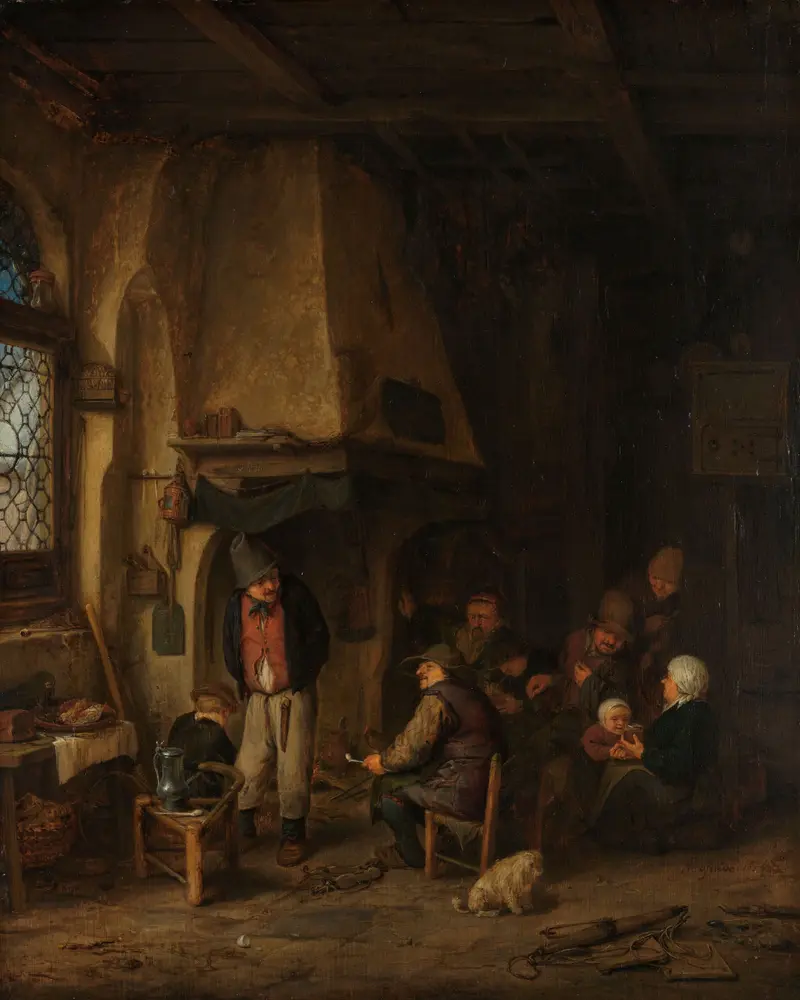
‘The Skaters’: Peasants in an Interior
Adriaen van Ostade
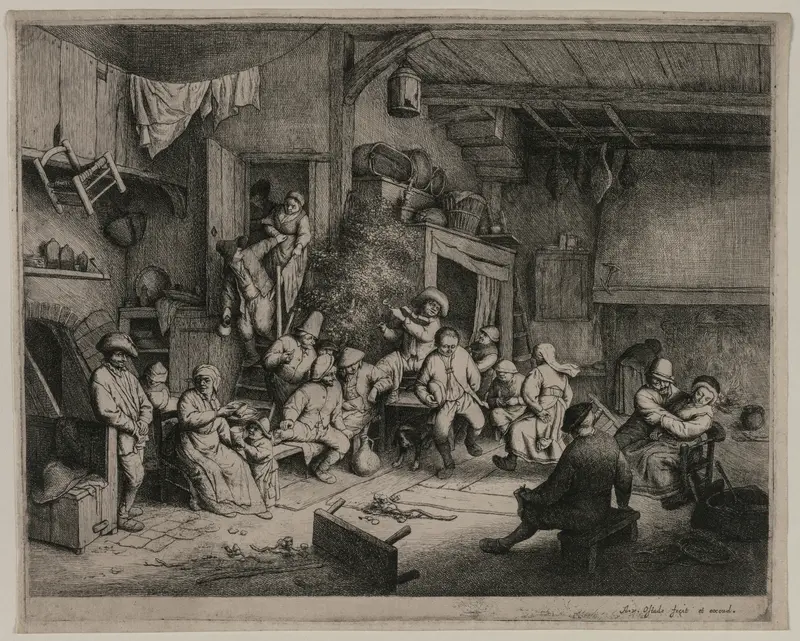
Dance at the Inn
Adriaen van Ostade
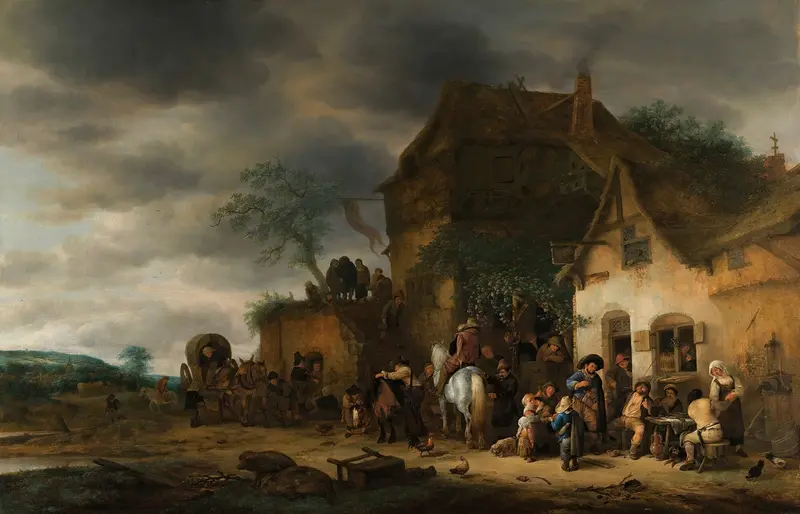
Travellers Halted At A Country Inn
Adriaen van Ostade
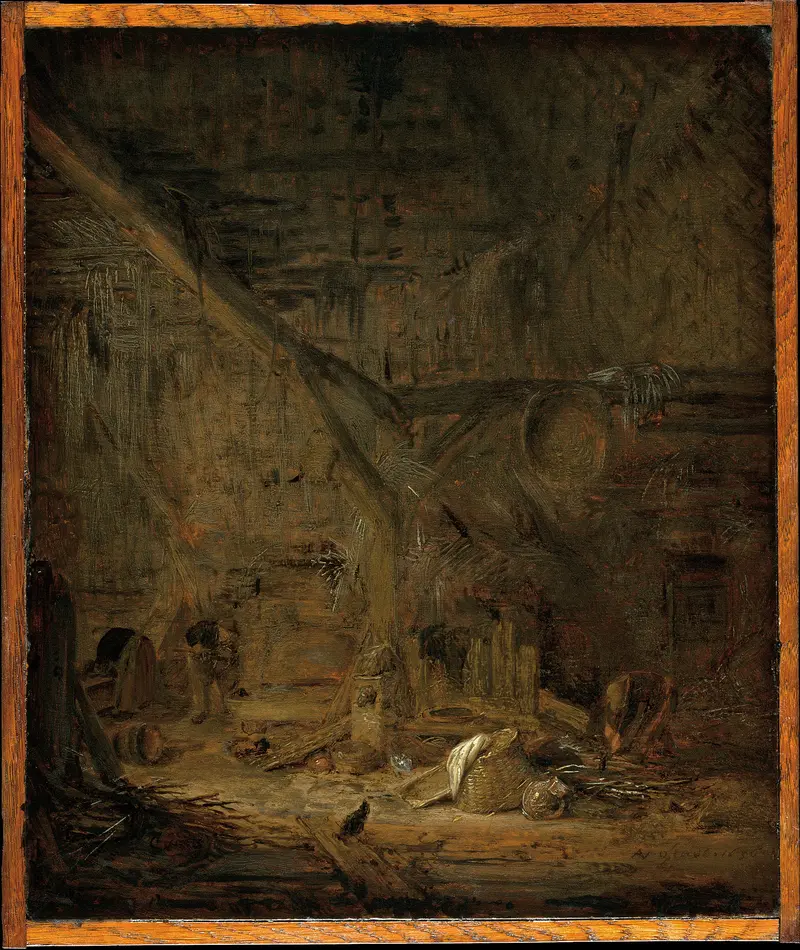
Interior of a Barn
Adriaen van Ostade
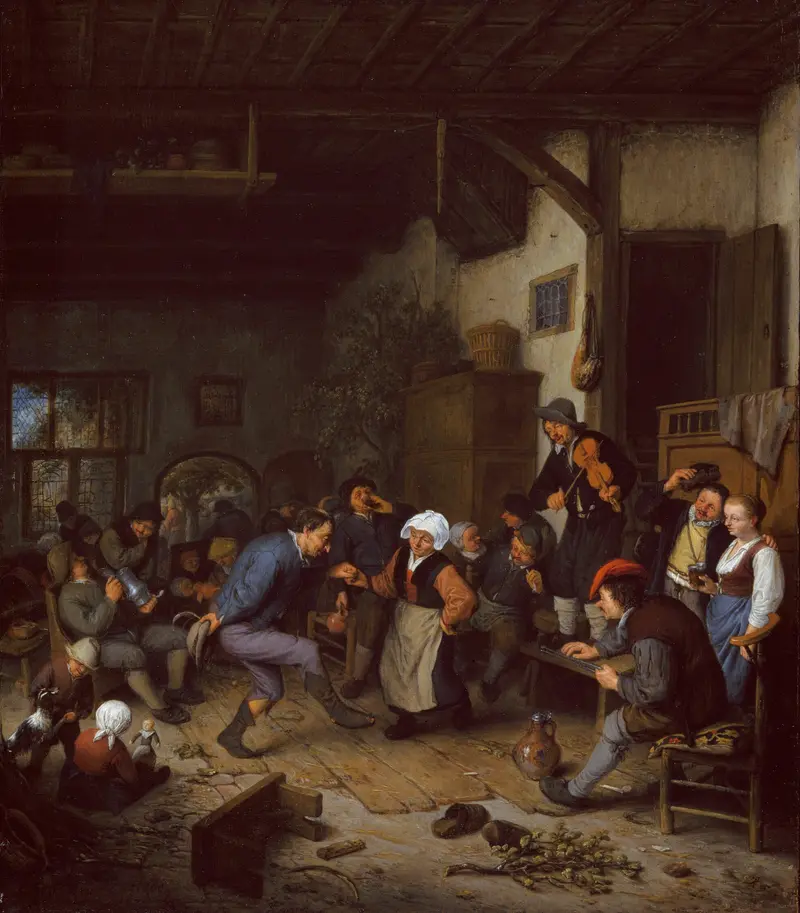
Merrymakers in an Inn
Adriaen van Ostade
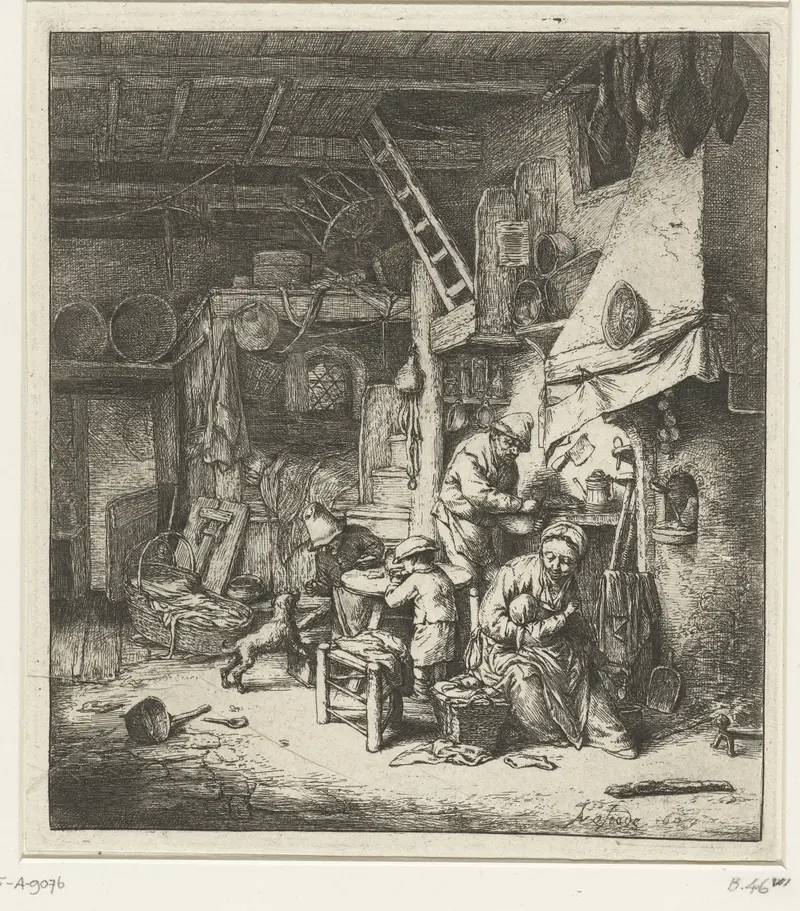
Boerengezin in interieur
Adriaen van Ostade
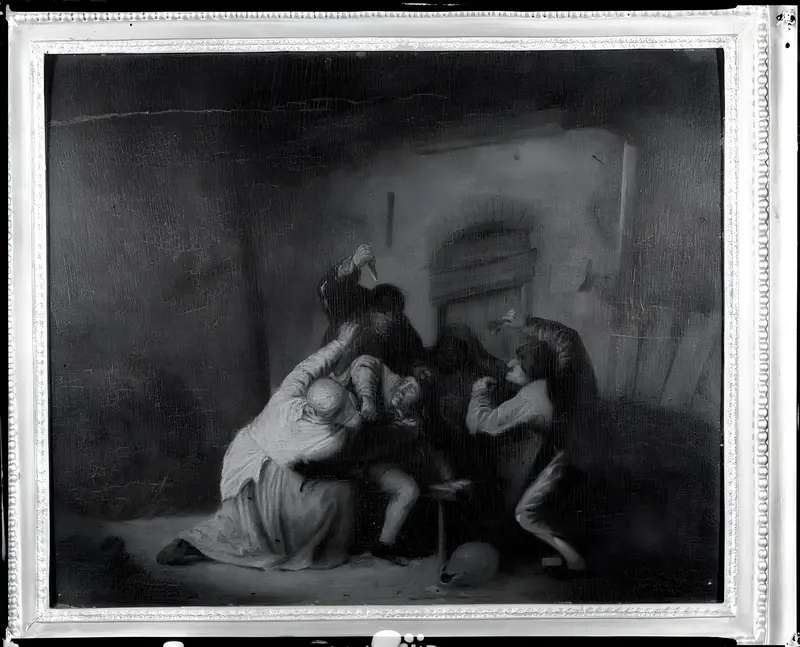
Peasants Brawling in a Tavern
Adriaen van Ostade
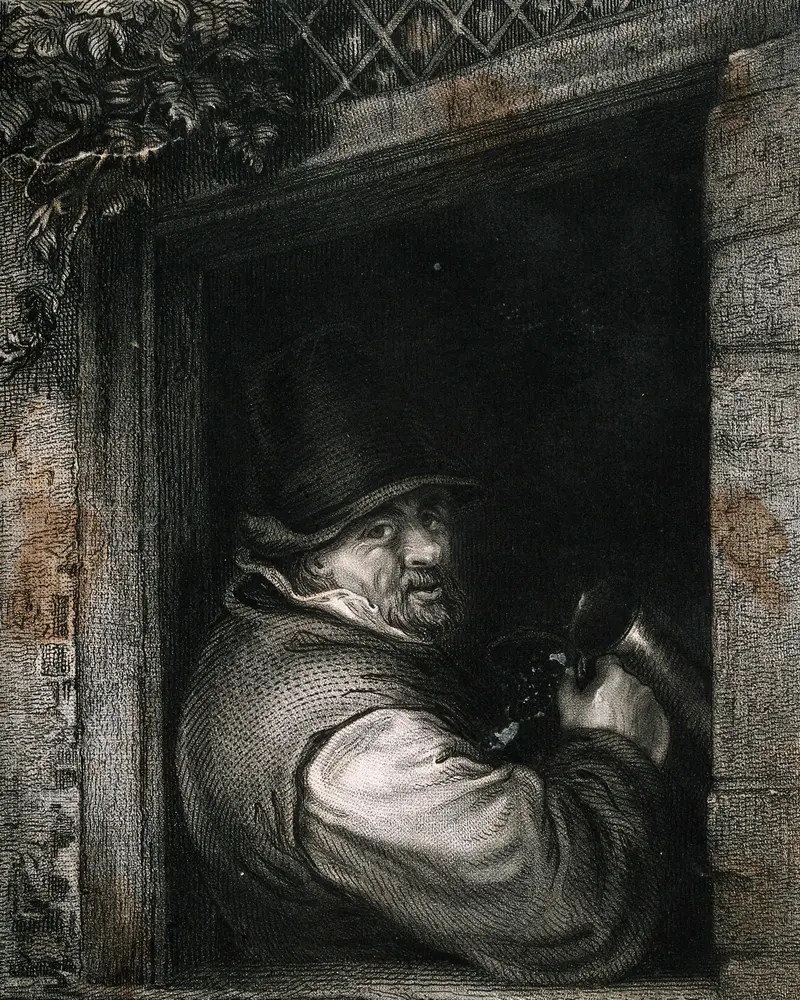
Man with a Tankard at a Window
Adriaen van Ostade
Dans in de herberg
Adriaen van Ostade
More Genre Scene Art

Banquet of the Officers of the St George Civic Guard
Frans Hals

Rembrandt and Saskia in the Scene of the Prodigal Son
Rembrandt van Rijn

Bal du moulin de la Galette
Pierre-Auguste Renoir

Quadrille at the Moulin Rouge
Henri de Toulouse-Lautrec

A Burial at Ornans
Gustave Courbet

When Will You Marry?
Paul Gauguin