
Virgin Mary with Child and Angels — History & Facts
In the late 1490s, Sandro Botticelli painted several images of the Virgin and Child, but Virgin Mary with Child and Angels stands apart for its uncertain origins: no surviving record names its first owner, and scholars still debate whether it was meant for private devotion or a chapel. What is certain is that, by this date, Botticelli was working in Florence at the height of his fame, just after the death of Lorenzo de’ Medici and amid the city’s religious upheavals. The painting’s gentle intimacy and the tender interaction between figures suggest a commission for personal reflection, rather than public display.
Yet, the presence of angels and the careful attention to their gestures hint at a more complex intention, perhaps as a gift or a devotional image for a wealthy patron’s private oratory. Botticelli chooses the moment when the Virgin, seated serenely, gazes at the infant Christ, who reaches up to her with a trusting gesture. Two angels flank the pair, one offering a garland of flowers—symbols of purity and the Passion—while the other looks directly at the viewer, drawing us into the sacred scene. The Virgin’s blue mantle, rendered in delicate folds, signals her role as Queen of Heaven, while the soft, golden light bathes the faces, uniting the group in a gentle harmony.
This intimate arrangement contrasts with the grandeur of Leonardo da Vinci’s Virgin of the Rocks, where the figures are set in a dramatic landscape; Botticelli instead brings the holy family close, emphasizing human tenderness over divine distance. The exact journey of Virgin Mary with Child and Angels through the centuries is not fully documented, a fate shared by many of Botticelli’s smaller devotional works. While some paintings from this period were dispersed during the turmoil following the fall of the Medici, others remained in Florentine collections for generations before entering public museums. Today, the painting stands as a testament to Botticelli’s late style, marked by softer contours and a contemplative mood, reflecting the spiritual currents of Florence in the wake of Savonarola’s sermons.
Though the medium is uncertain, the work’s luminous quality and delicate handling place it firmly among the artist’s most cherished images of the Madonna.
More Artworks by Sandro Botticelli
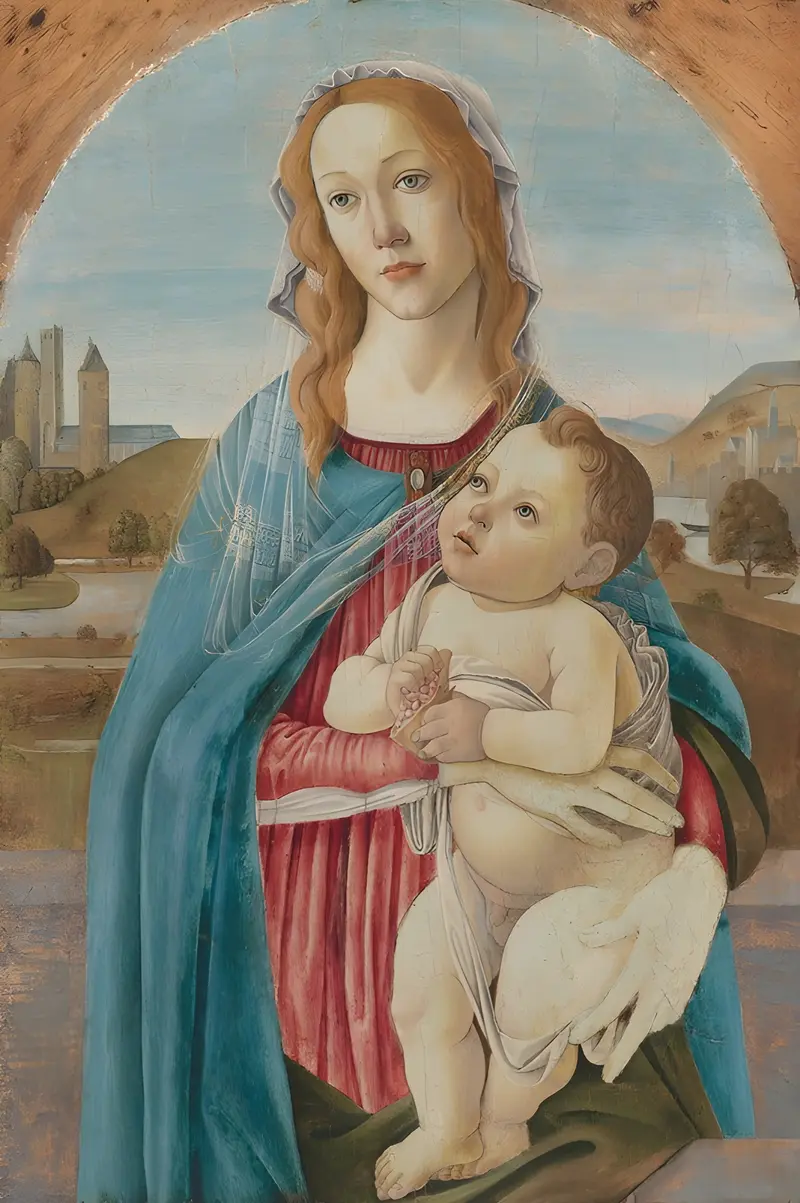
Virgin and Child
Sandro Botticelli
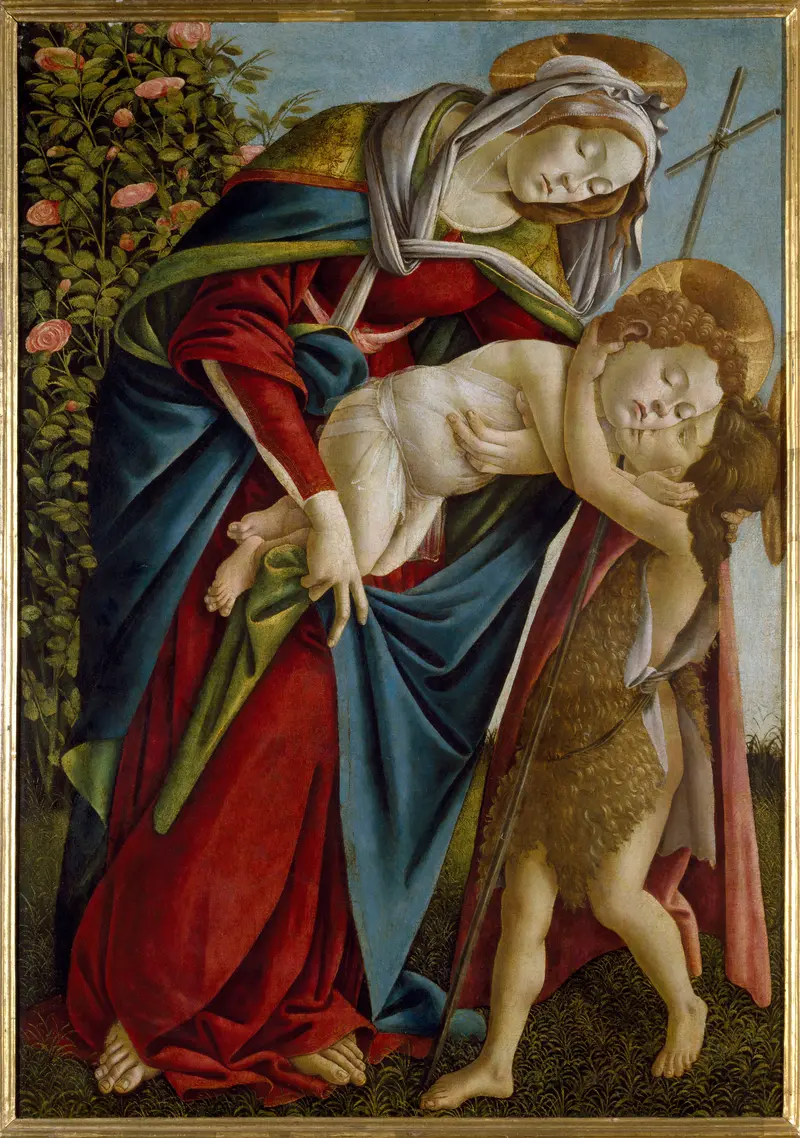
Madonna and Child and the Young St John the Baptist
Sandro Botticelli
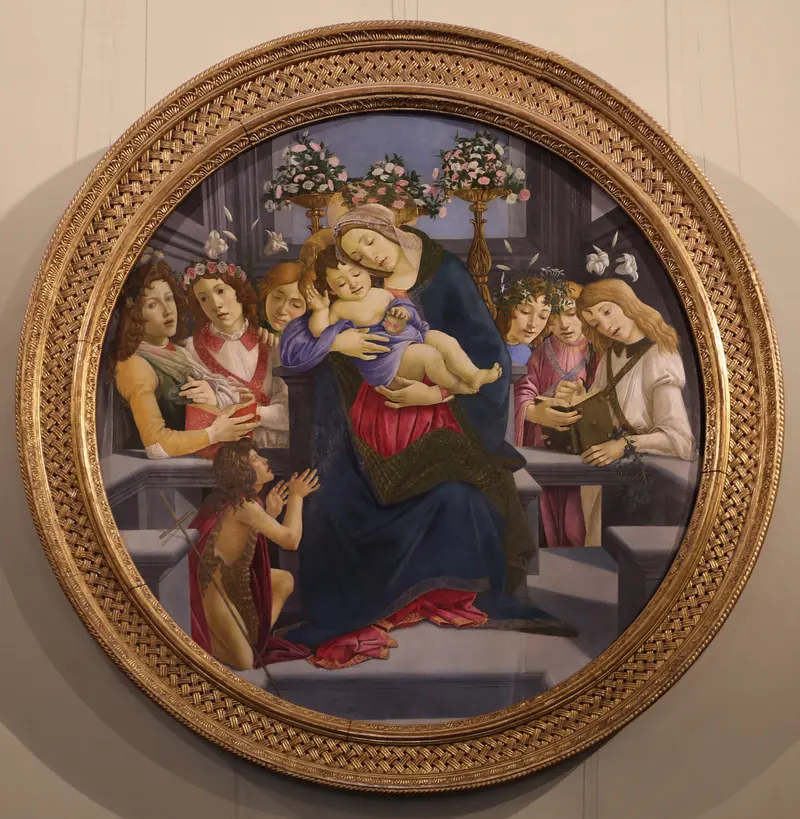
Madonna and Child with six angels and Saint John the Baptist as Child
Sandro Botticelli
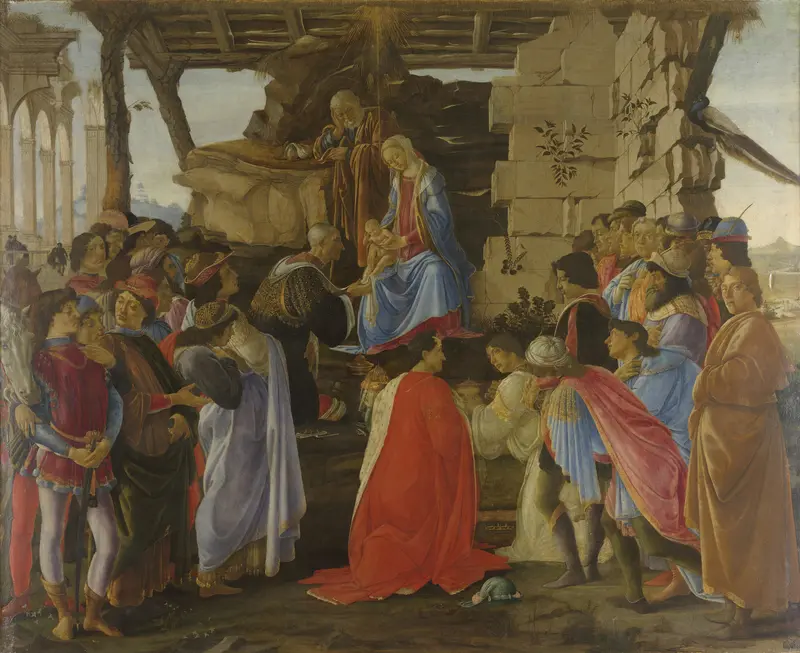
Adoration of the Magi
Sandro Botticelli

Virgin and Child with the Young Saint John the Baptist
Sandro Botticelli
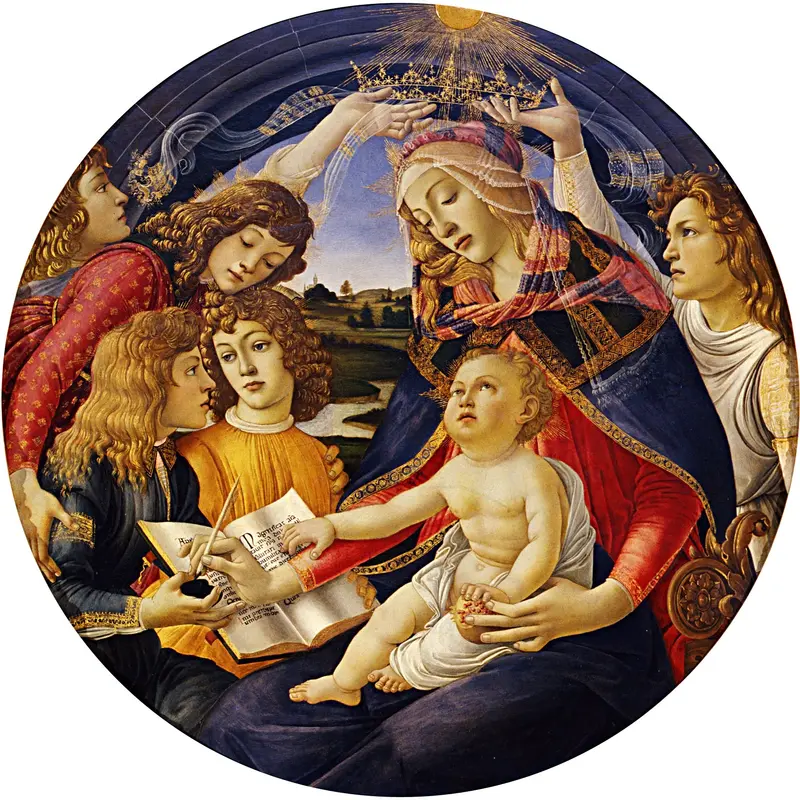
Madonna of the Magnificat
Sandro Botticelli
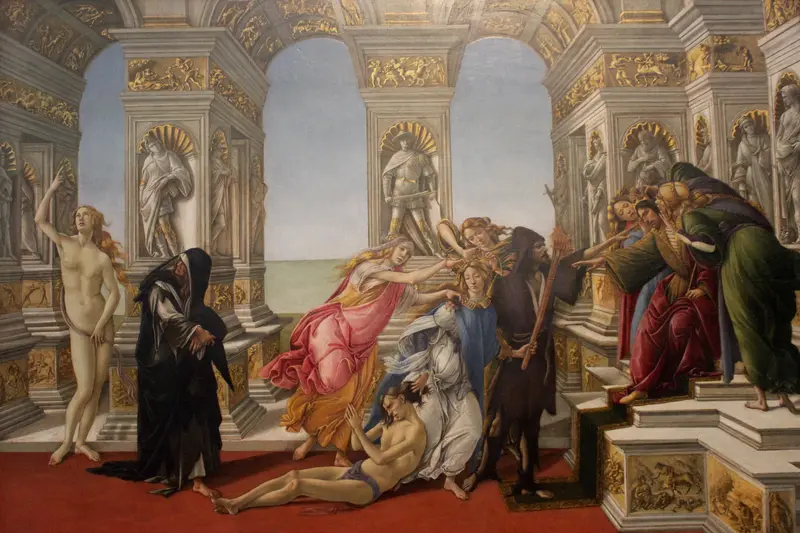
Calumny of Apelles
Sandro Botticelli
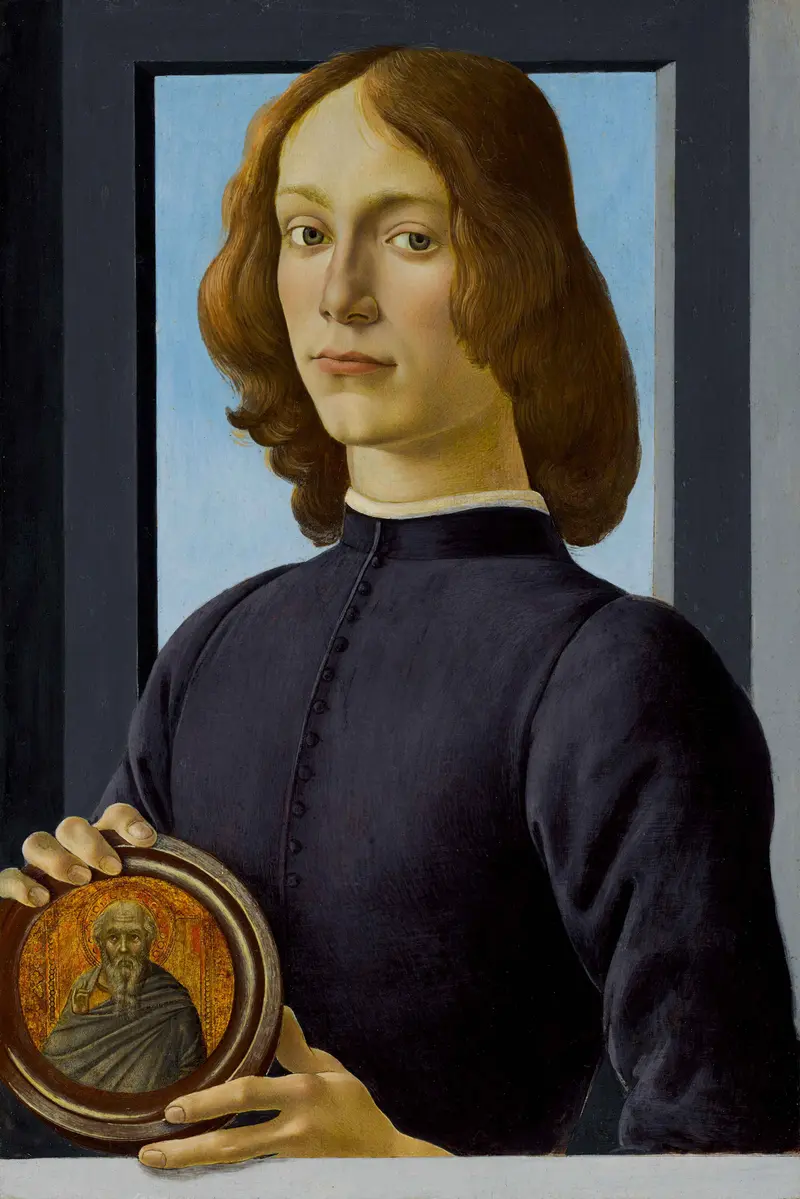
Portrait of a young man holding a roundel
Sandro Botticelli

The Trinity with Saint Mary Magdalene and Saint John the Baptist, the Archangel Raphael and Tobias
Sandro Botticelli
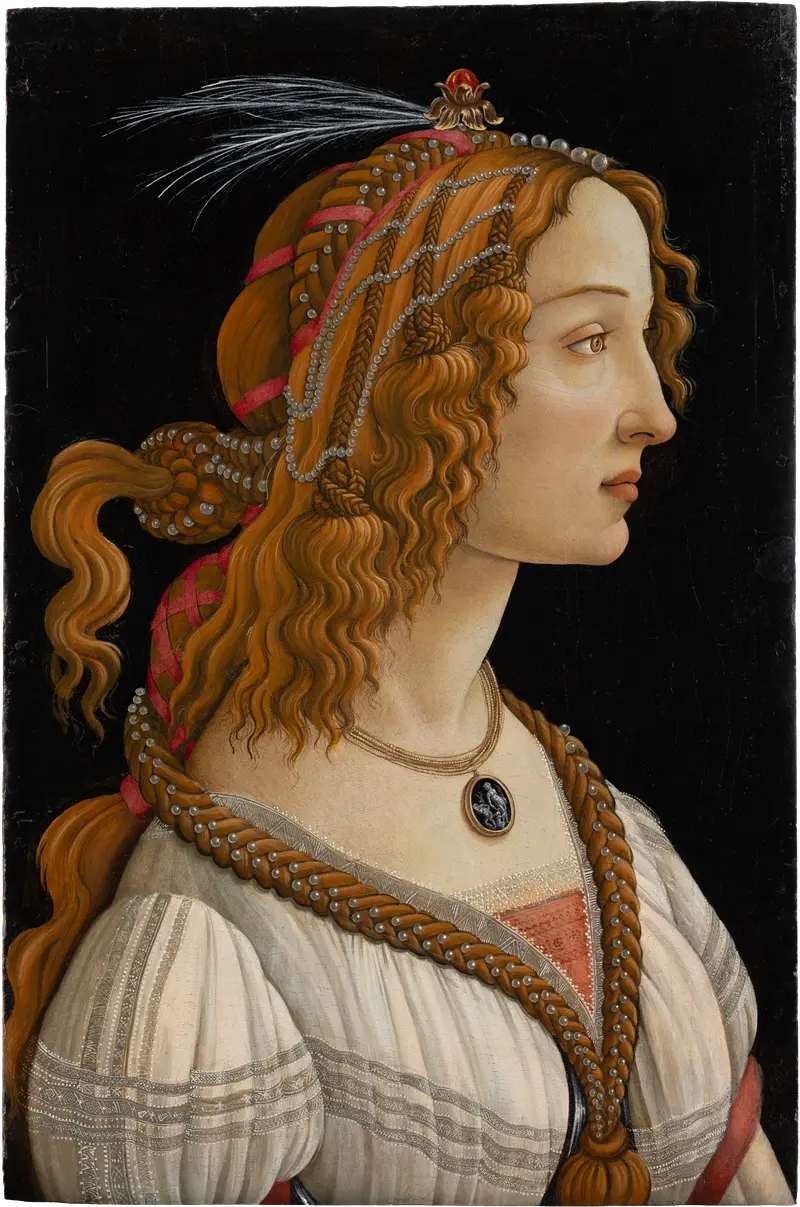
Idealized Portrait of a Lady (Portrait of Simonetta Vespucci as Nymph)
Sandro Botticelli





