
Vue de l’Escorial — History & Facts
In a world drowning in noise, the silence of a moment captured in paint can reverberate with profound clarity. As time folds upon itself, art stands as a testament to what remains, inviting us to listen. Focus on the sweeping expanse of the landscape, where the majestic silhouette of the Escorial rises against a soft, muted sky. Look to the left, where gentle strokes of green foliage cradle the structure, guiding the eye toward the formidable architecture at its center.
Notice how the warm hues blend seamlessly with cool shadows, creating an atmosphere that feels both intimate and vast, a testament to the artist’s deft hand. The balance of light and dark whispers of serenity, as if the world has paused to hold its breath. Delve deeper into the intricacies of this work, where the interplay of nature and man-made structures reveals a poignant contrast. The lively brushwork on the trees contrasts with the stillness of the Escorial, embodying the tension between vitality and permanence.
Each element, from the distant mountains to the soft clouds above, echoes the quietude of the scene, emphasizing how time and silence intertwine, preserving both memory and place. In 1899, while living in France, the artist found inspiration in the Spanish landscape, reflecting a period of personal growth and artistic exploration. This time was marked by a transition in the art world, where impressionistic influences began merging with more structured forms. As the world around him thrummed with change, this painting served not just as a representation of a place, but as a quiet meditation on existence itself.
More Artworks by Henri-Joseph Harpignies
Browse all →
La Loire à Bonny
Henri-Joseph Harpignies
A Landscape with Figures Walking along a Path
Henri-Joseph Harpignies
Le jardin du Luxembourg
Henri-Joseph Harpignies
A View of Moulins
Henri-Joseph Harpignies
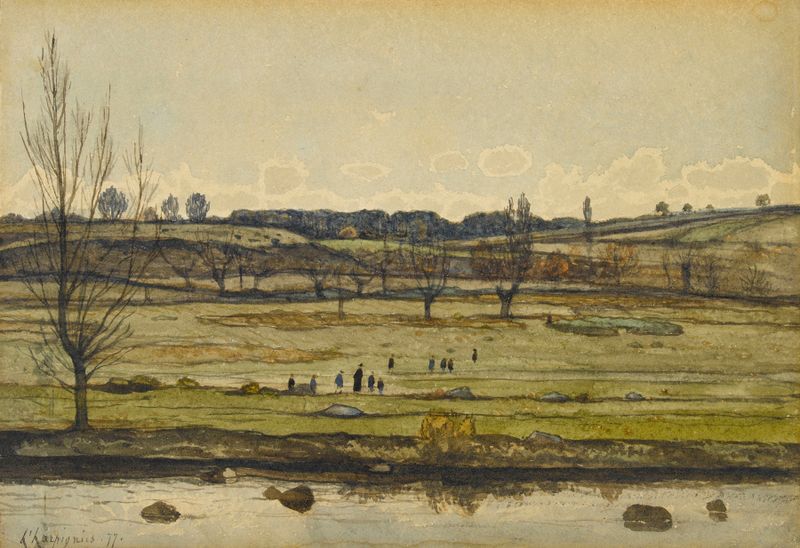
Paysage
Henri-Joseph Harpignies
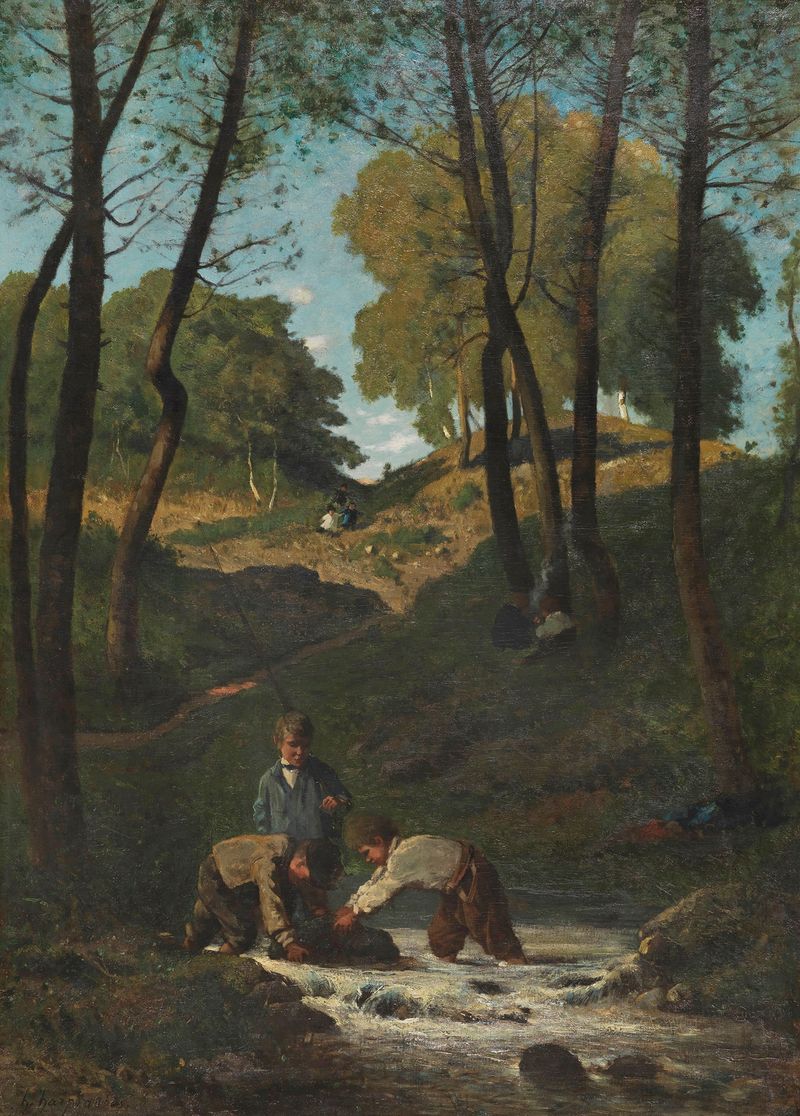
Chercheurs d’écrevisses
Henri-Joseph Harpignies
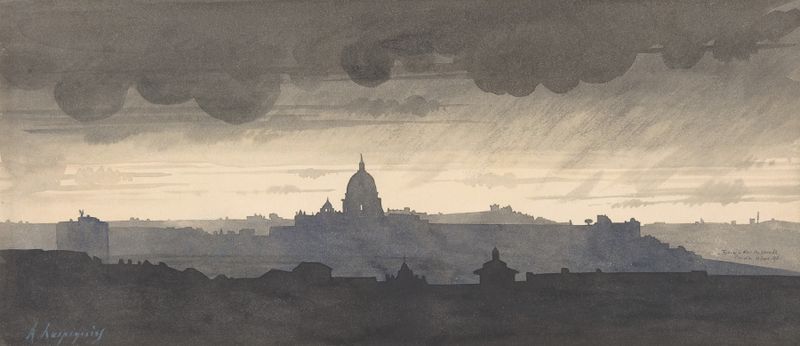
Saint Peter’s Seen From the Pincio, Rome
Henri-Joseph Harpignies
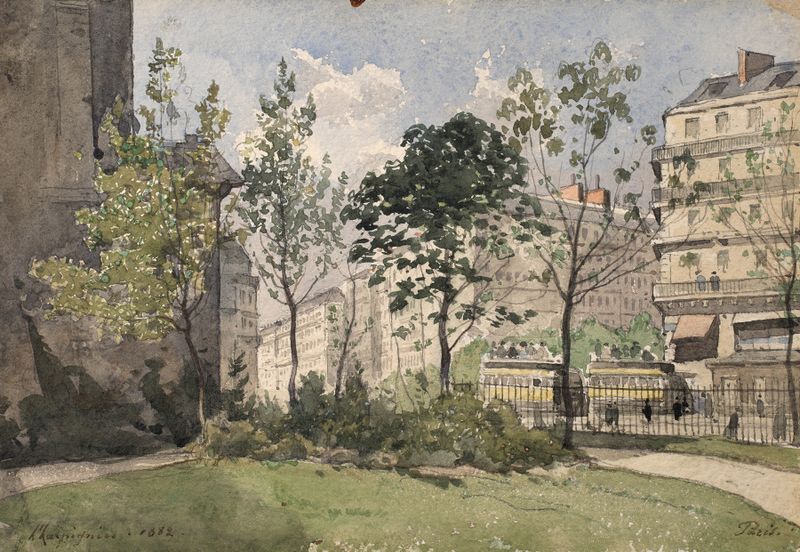
View of the forecourt of the Saint-Germain-des-Prés church
Henri-Joseph Harpignies
Le Colisée à Rome
Henri-Joseph Harpignies

Villefranche
Henri-Joseph Harpignies





