
Wall fragment and a boy — History & Facts
In this quiet moment, the layers of time and emotion converge, inviting contemplation on the fleeting nature of youth and the echoes of history that shape us. Look to the left, where the fragment of a once-vibrant wall speaks of stories long past. The boy stands in a soft wash of pale colors, his figure a delicate contrast to the rough texture of the wall. Notice how the muted earth tones cradle him, creating a sense of intimacy and isolation.
The light hits the wall unevenly, casting shadows that dance like whispers of the past, while the boy's gaze seems to search for connection in a world that is both familiar and estranged. Within this composition lies a tension between the innocence of youth and the weight of history. The wall fragment, chipped and worn, symbolizes the remnants of what once was, while the boy embodies the promise of renewal. There’s a subtle dialogue between the two — the fragility of childhood juxtaposed against the endurance of time.
The boy's expression hints at yearning, suggesting that while he stands on the threshold of life, he is acutely aware of the burdens inherited from those who came before. In 1909, Ślewiński was immersed in the burgeoning modernist movement, painting primarily in Paris. The artist sought to explore the relationship between subject and environment, reflecting broader themes of change and continuity in a rapidly transforming world. During this time, the echoes of tradition began to clash with the emerging avant-garde, and he used this artwork to capture that tension, illustrating how the past can linger in the present.
More Artworks by Władysław Ślewiński
Browse all →
Rough sea
Władysław Ślewiński
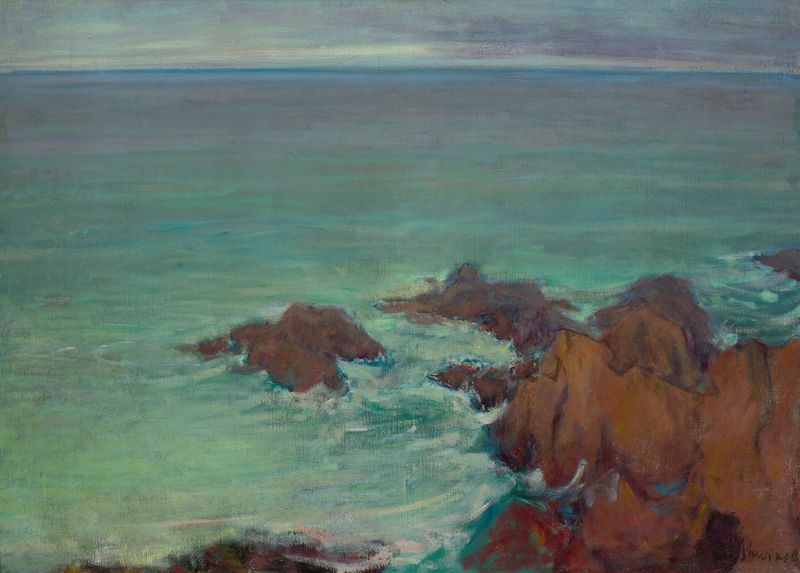
Sea in Brittany
Władysław Ślewiński
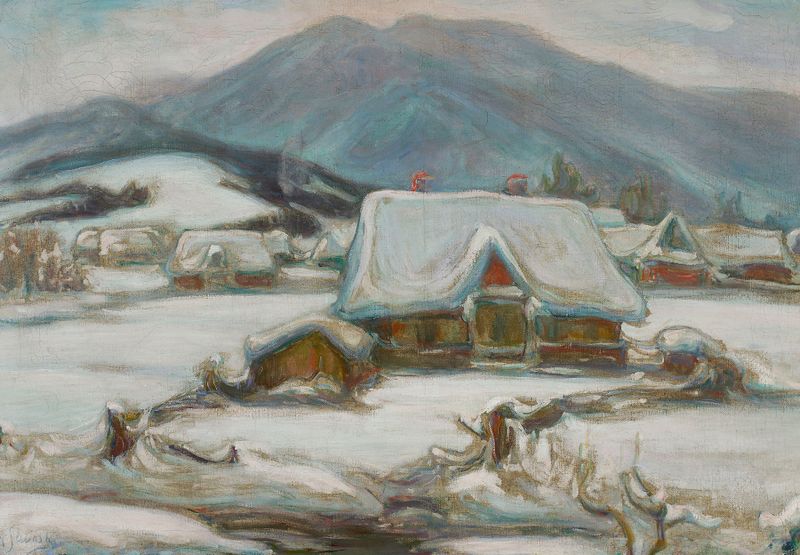
Cottages in the snow
Władysław Ślewiński

Sea
Władysław Ślewiński

Waves in a rocky bay
Władysław Ślewiński

Sea with white waves
Władysław Ślewiński
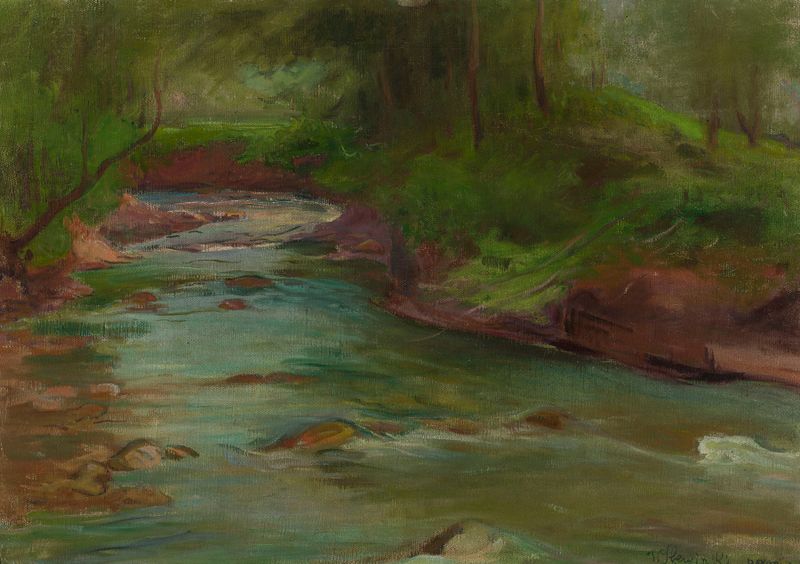
Mountain stream – in the Tatra Mountains below Mt Nosal
Władysław Ślewiński
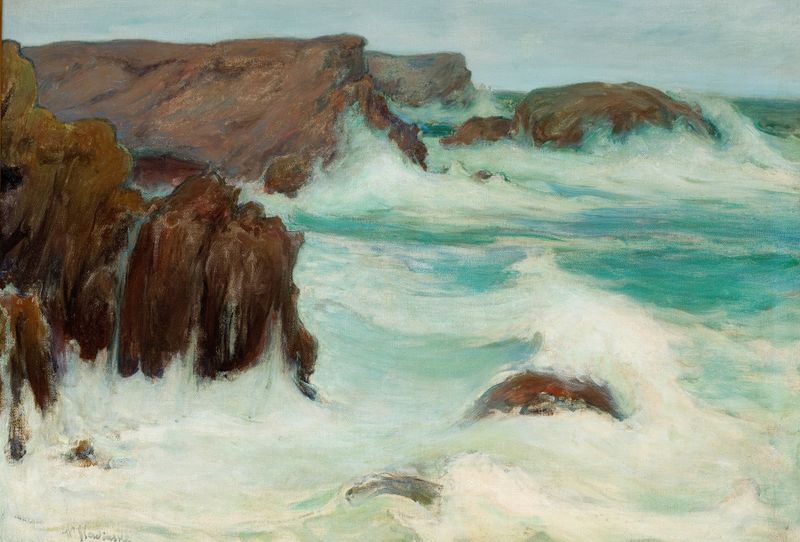
The Sea in Brittany
Władysław Ślewiński

A Coastal Landscape
Władysław Ślewiński

Sea at night
Władysław Ślewiński





