
Wellington, Thorndon Flat, Tararua — History & Facts
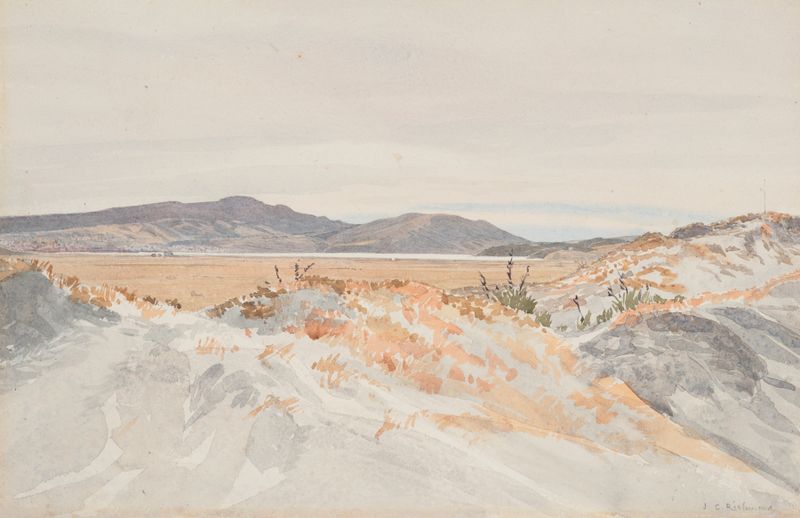
In a world so often consumed by the rush of progress, how do we capture the essence of fleeting moments? The stillness of a scene can echo the past, inviting us to pause and reflect. Look to the left, where the soft contours of rolling hills meet the horizon, gently brushed in hues of green and gold. The foreground reveals meandering paths, winding through thick foliage, while a serene body of water mirrors the sky’s pale blues and whites. Notice how the light dances across the landscape, lending a tranquil yet vivid quality to the scene, inviting an introspective gaze and a sense of harmony. As you delve deeper, consider the interplays of light and shade that convey both serenity and the passage of time.
The careful placement of trees hints at the presence of life, yet their stillness evokes a sense of solitude. There’s an underlying tension between the vibrant potential of nature and the quietude of memory, suggesting a bittersweet nostalgia for what has been or perhaps what might have been. Every stroke carries an emotional weight, a whisper from the artist suggesting that beauty is both enduring and ephemeral. In the 1850s, Richmond was situated in New Zealand, surrounded by a burgeoning landscape that was developing amid colonial aspirations.
Influenced by the Romantic movement, he sought to capture the breathtaking vistas of his new home, reflecting the dual landscape of discovery and loss. During this period, the art world was shifting, and Richmond’s works became pivotal in documenting the natural beauty of the region while grappling with themes of transience and belonging.
More Artworks by James Crowe Richmond
Browse all →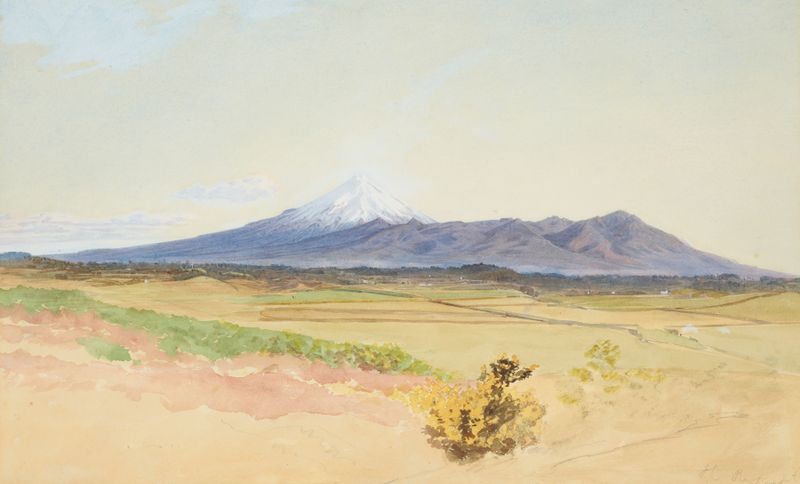
Mount Egmont and Pouakai, from New Plymouth
James Crowe Richmond
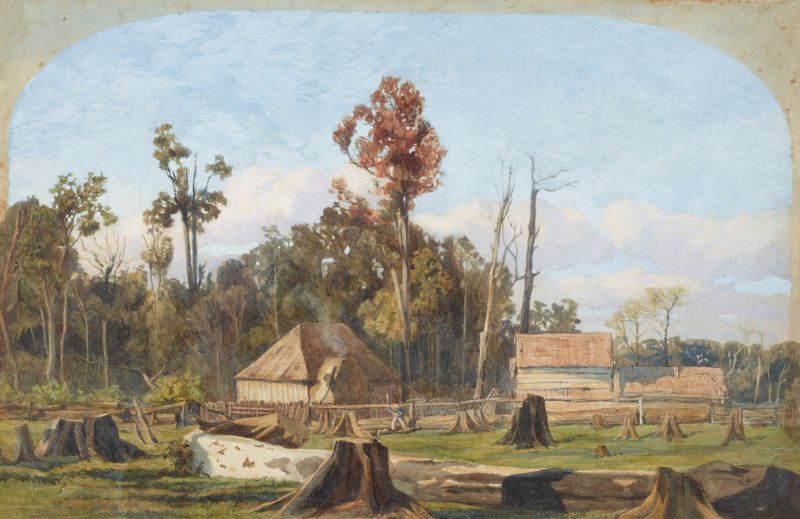
Settler’s home, Merton, near New Plymouth
James Crowe Richmond
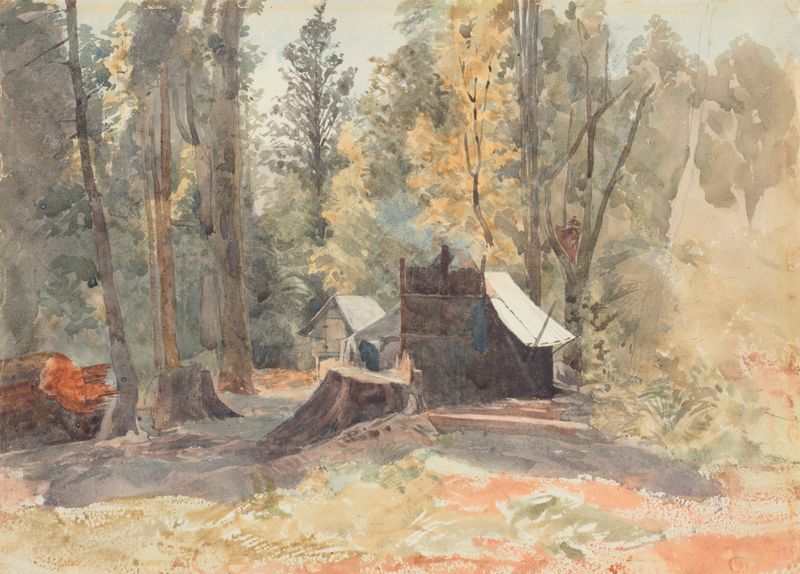
Hut of the ‘Italian party’, old diggings on Buller
James Crowe Richmond

Mosque at Tlemcen
James Crowe Richmond

Ngatapa, Te Kooti’s Pa
James Crowe Richmond

Dividing Range, Riwaka and Takaka
James Crowe Richmond
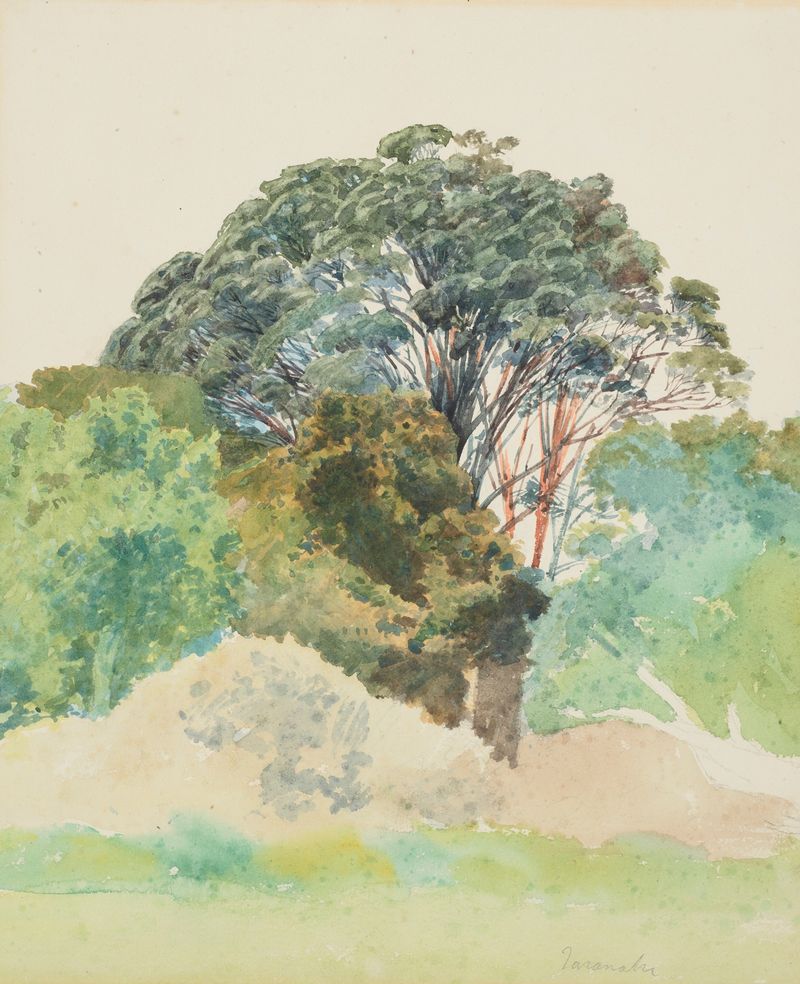
Rata, Taranaki
James Crowe Richmond

Grey River, on the beach
James Crowe Richmond
Dunedin from the Ocean Beach
James Crowe Richmond

On Collingwood Goldfields
James Crowe Richmond





