
West Wanganui from the South East — History & Facts
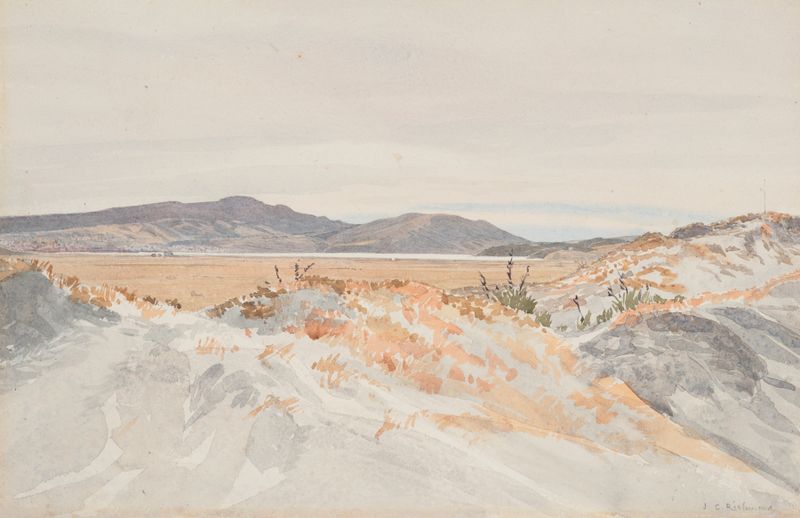
What secret hides in the quiet of the canvas? In the stillness of West Wanganui from the South East, a world unfolds, pregnant with the weight of unspoken stories. Each brushstroke invites the viewer to peer deeper, revealing an obsession with place that is both haunting and beautiful. Look to the foreground, where verdant hills gently cradle the sleepy town below. The muted greens and browns harmonize with the soft blues of the sky, creating an idyllic yet contemplative atmosphere.
Notice how the delicate interplay of light and shadow dances across the landscape, illuminating houses that seem almost shy, tucked away amidst nature’s embrace. This subtleness in Richmond’s palette reflects not just a physical space, but an emotional connection to the land itself. Deeper within the composition, the contrasts emerge—between the calm of the river and the undulating hills, the tranquility of the town and the looming mountains. Each element signifies a tension between human presence and the natural world, suggesting both harmony and isolation.
The quietude feels alive, as if the landscape breathes with the weight of history, urging the viewer to consider the lives that unfold within its borders. In 1862, Richmond painted this work during a time when he was deeply immersed in the New Zealand landscape after migrating there from England. He was seeking to establish his voice as an artist in an unfamiliar environment, exploring the connections between place and identity amidst a burgeoning colonial context. This canvas serves not only as a reflection of the land but also as a testament to the artist's personal journey of belonging and obsession with his new home.
More Artworks by James Crowe Richmond
Browse all →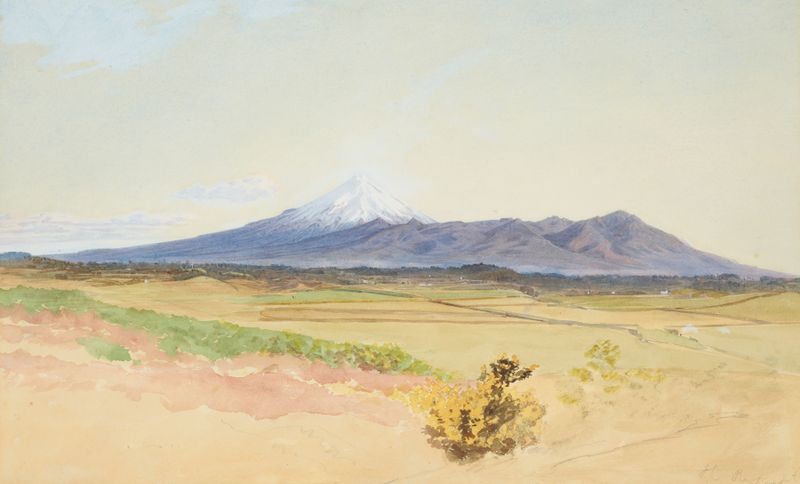
Mount Egmont and Pouakai, from New Plymouth
James Crowe Richmond
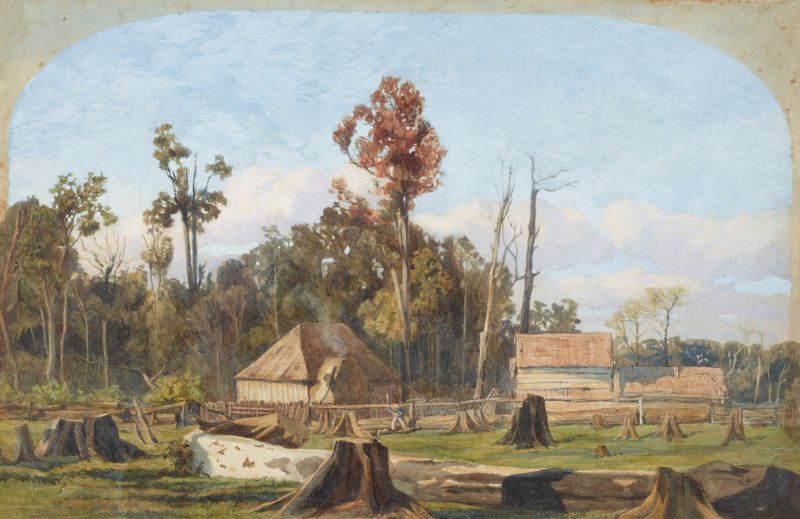
Settler’s home, Merton, near New Plymouth
James Crowe Richmond
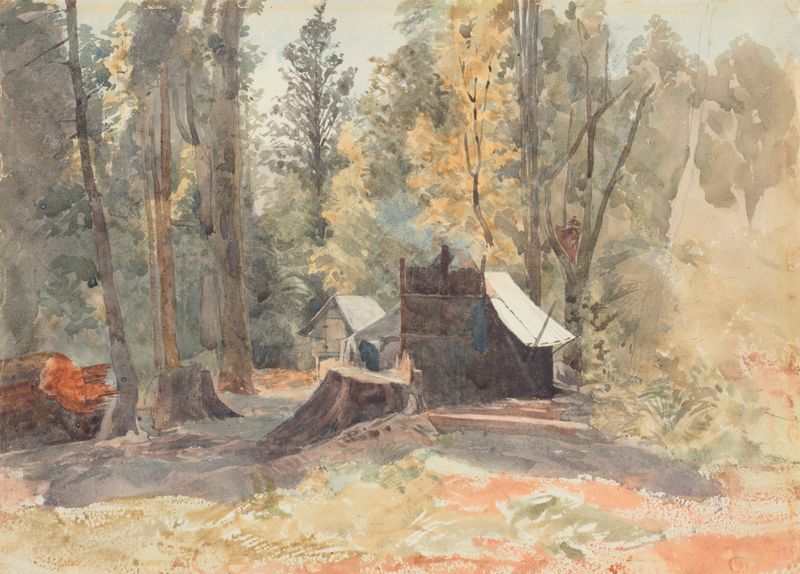
Hut of the ‘Italian party’, old diggings on Buller
James Crowe Richmond

Mosque at Tlemcen
James Crowe Richmond

Ngatapa, Te Kooti’s Pa
James Crowe Richmond

Dividing Range, Riwaka and Takaka
James Crowe Richmond
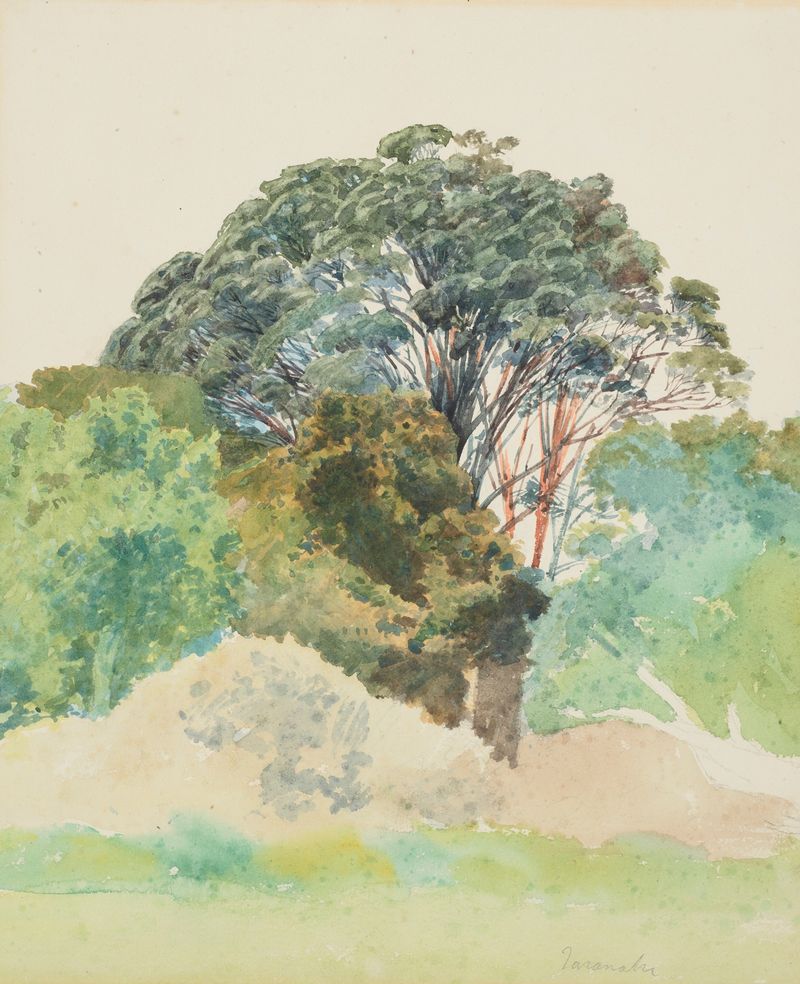
Rata, Taranaki
James Crowe Richmond

Grey River, on the beach
James Crowe Richmond
Dunedin from the Ocean Beach
James Crowe Richmond

On Collingwood Goldfields
James Crowe Richmond





