
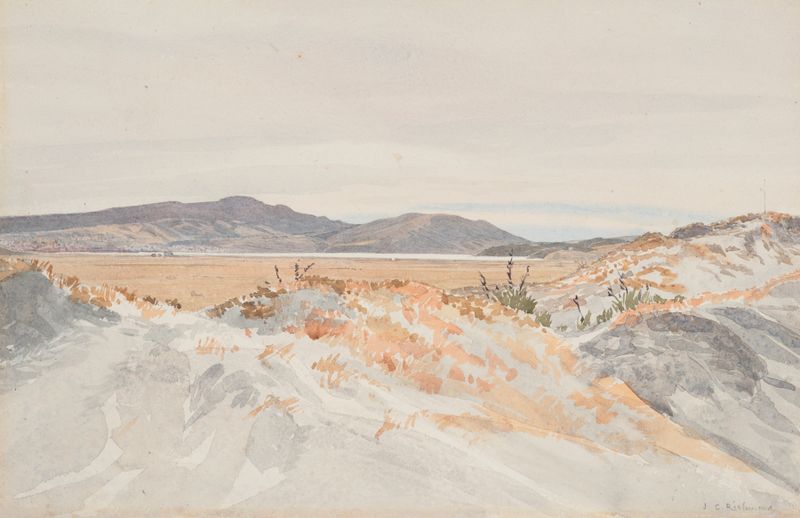
West Wanganui looking North East — History & Facts
Is this a mirror — or a memory? The landscape captures a fleeting moment, where reality and imagination entwine in delicate balance, inviting the viewer to ponder the fragility of time itself. Look to the left at the gentle curve of the river, shimmering under a soft, hazy light. The brushstrokes, light and fluid, evoke a sense of movement, as if the water whispers stories of the past. Notice how the trees stand tall, their shadows stretching languidly across the canvas, suggesting both strength and vulnerability.
The muted palette of greens and browns blends harmoniously, imbuing the scene with a wistful serenity that feels both nostalgic and ephemeral. The painting embodies a striking contrast between the enduring landscape and the ephemeral nature of human experience. The river, a continuous flow, carries with it remnants of memory, while the distant hills loom as steadfast sentinels against the passage of time. Richmond’s choice to depict the tranquil surroundings alongside a solitary, winding path hints at the journey of life, the tension between the comfort of familiarity and the uncertainty of what lies ahead. In 1862, Richmond was living in New Zealand, immersed in the picturesque beauty of its landscapes as he sought to capture the essence of his surroundings.
This era marked a significant moment in the artist's career, as he began to embrace a more naturalistic style, influenced by the romantic movement in art. His work during this period reflects both personal exploration and the broader transition in the artistic discourse of the time, as he grappled with the relationship between nature and human sentiment.
More Artworks by James Crowe Richmond
Browse all →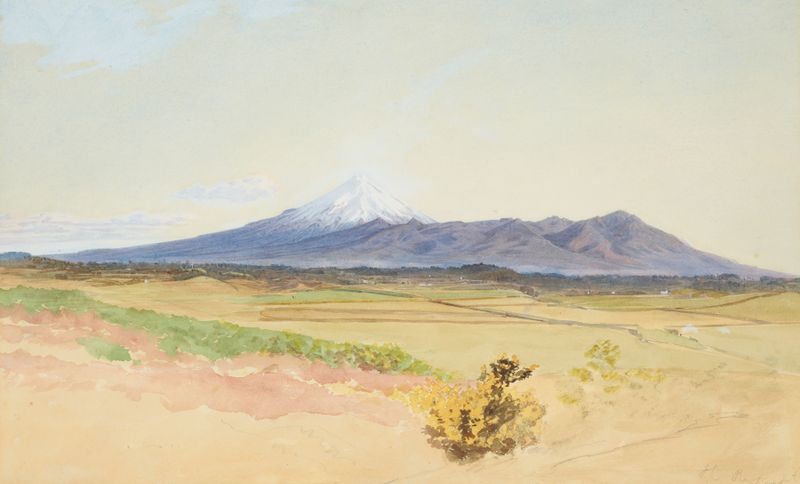
Mount Egmont and Pouakai, from New Plymouth
James Crowe Richmond
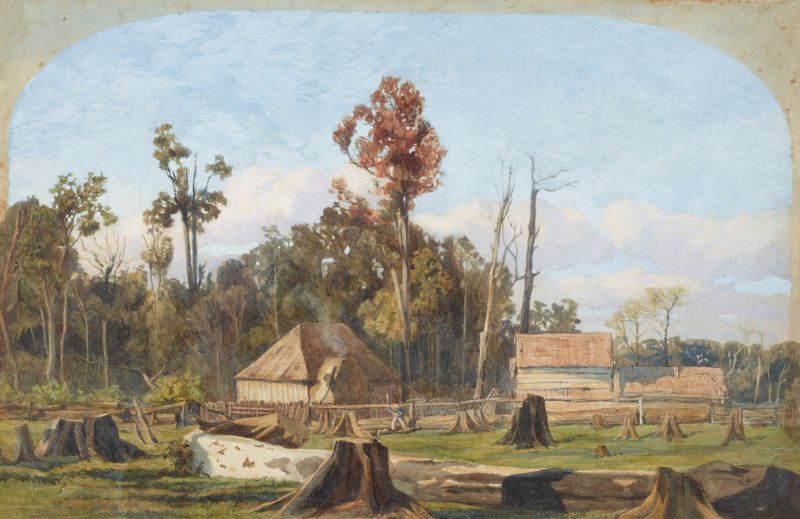
Settler’s home, Merton, near New Plymouth
James Crowe Richmond
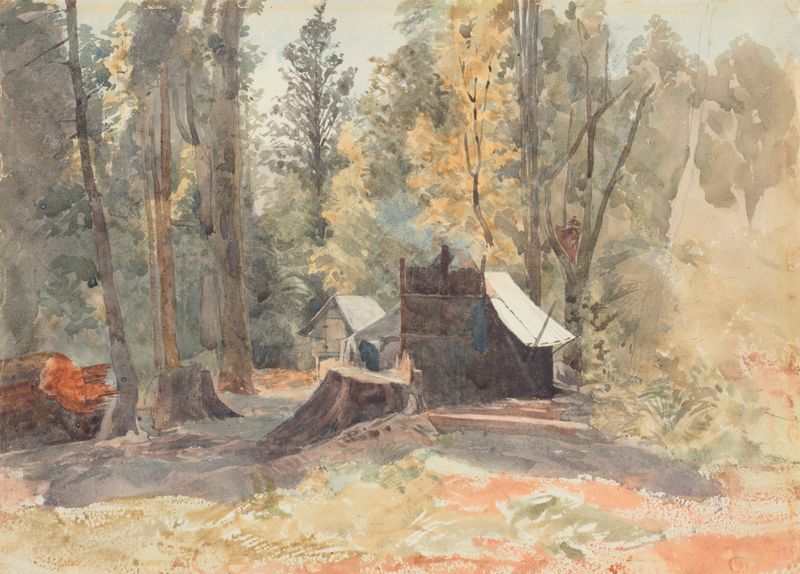
Hut of the ‘Italian party’, old diggings on Buller
James Crowe Richmond

Mosque at Tlemcen
James Crowe Richmond

Ngatapa, Te Kooti’s Pa
James Crowe Richmond

Dividing Range, Riwaka and Takaka
James Crowe Richmond
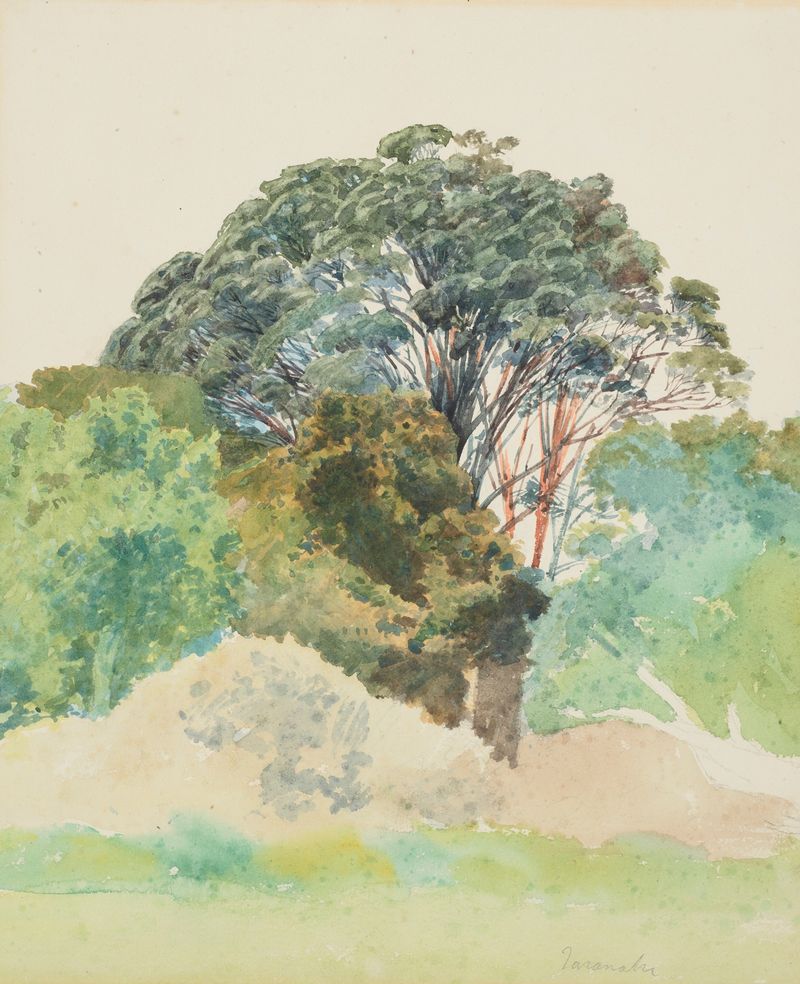
Rata, Taranaki
James Crowe Richmond

Grey River, on the beach
James Crowe Richmond
Dunedin from the Ocean Beach
James Crowe Richmond

On Collingwood Goldfields
James Crowe Richmond





