
Fishing on the Ice — History & Facts
The first thing that grips the eye in Fishing on the Ice is the dense knot of figures, pressed together in a moment of communal purpose beneath the towering sails of a windmill. The painter, Abraham Van Calraet, orchestrates the crowd with a storyteller’s instinct: every gesture and glance draws us into the heart of the action. The sweep of the ice and the pale, wintry sky serve as a stage for human activity, while the battered windmill anchors the scene in the Dutch landscape.
Notice how the light falls unevenly, catching the white horse and the faces of the fishermen, then slipping away into the shadows beneath the mill—this play of brightness and gloom heightens the sense of anticipation, as if something just beneath the surface is about to be revealed. Such winter scenes became a hallmark of Dutch painting in the late seventeenth and early eighteenth centuries, when artists captured the pleasures and labors of daily life with a new sense of intimacy. Works like this, painted before 1722, were often sought by prosperous burghers who wanted reminders of the familiar rhythms of their own world—scenes of ice skating, fishing, and market days that celebrated both the harshness and the joys of the season. While history has kept few traces of this particular painting’s journey, its survival in the IAFUi6ebDXirxg collection invites us to step into a moment when the frozen rivers of the Netherlands became gathering places, binding communities together in the cold.
Stand before it and let your eye wander from the faces to the glint of the ice, imagining the crunch of boots and the laughter that once echoed across the frozen water.
More Artworks by Abraham Van Calraet
A Riding School in the Open Air
Abraham Van Calraet
Cavalry Skirmish
Abraham Van Calraet
Choc de cavalerie
Abraham Van Calraet
Herder and Cattle under Trees
Abraham Van Calraet
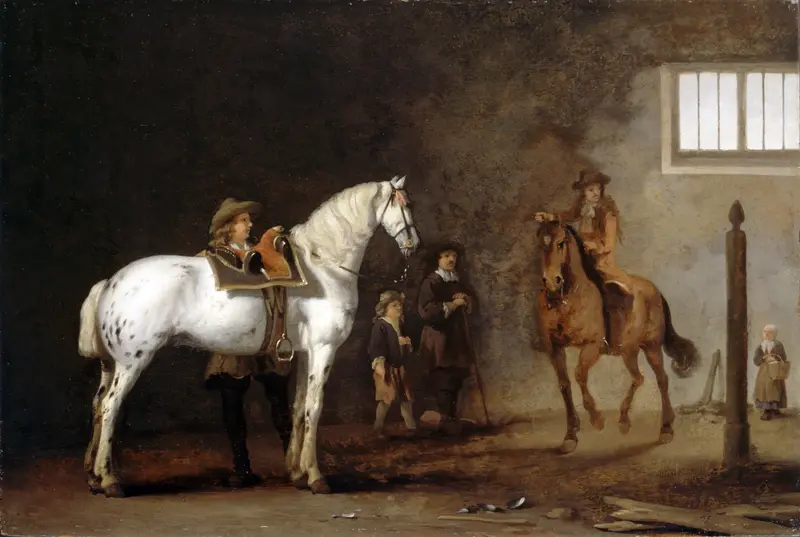
White Horse in a Riding School
Abraham Van Calraet
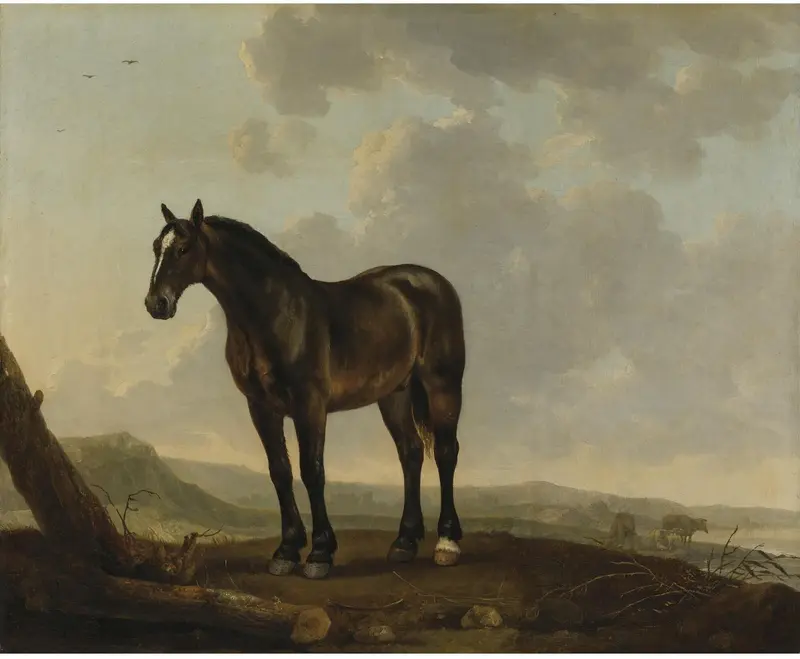
Landscape with a brown horse
Abraham Van Calraet
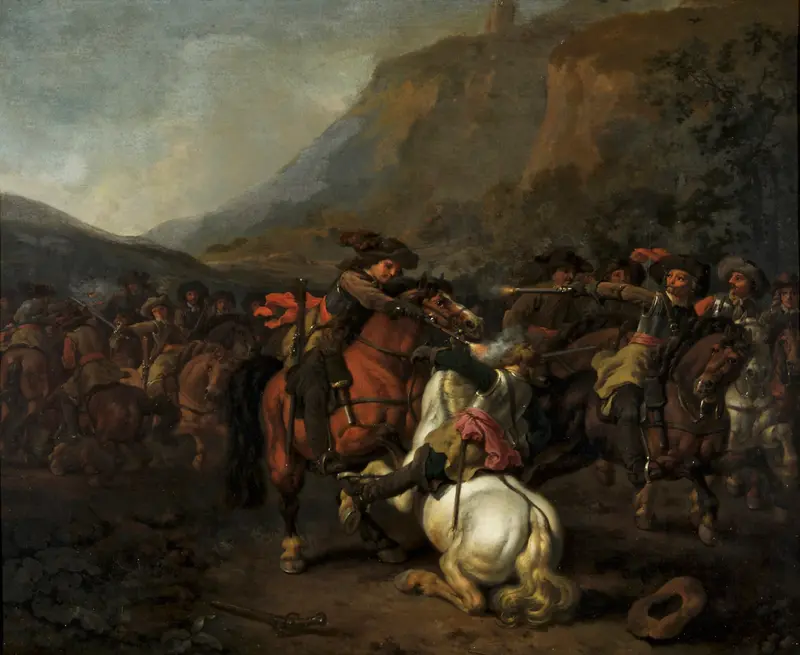
Ruitergevecht DM 016 1163 Dordrechts Museum
Abraham Van Calraet
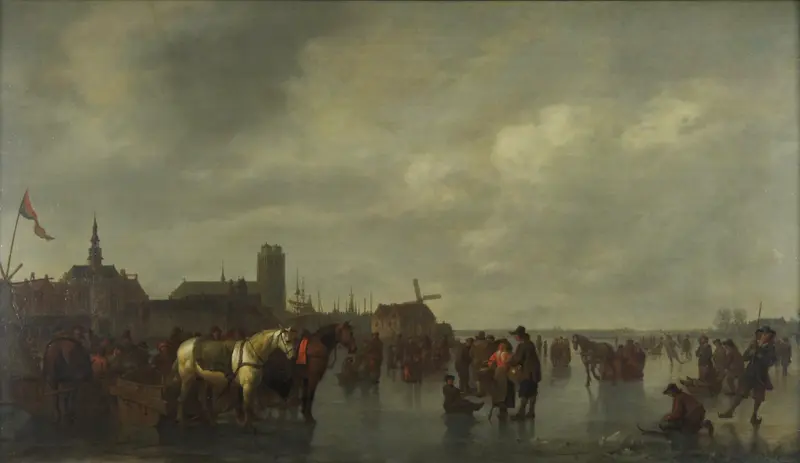
Scene on the Ice outside Dordrecht
Abraham Van Calraet
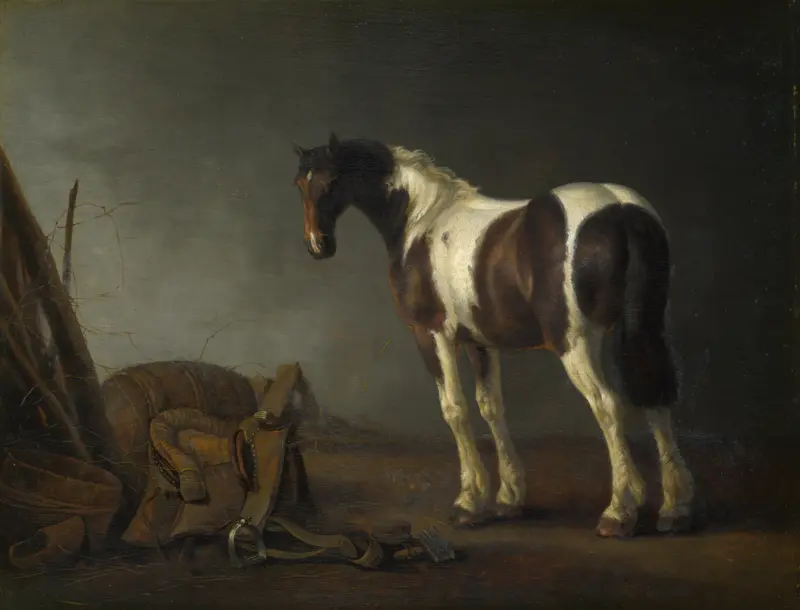
A Horse with a Saddle Beside it
Abraham Van Calraet
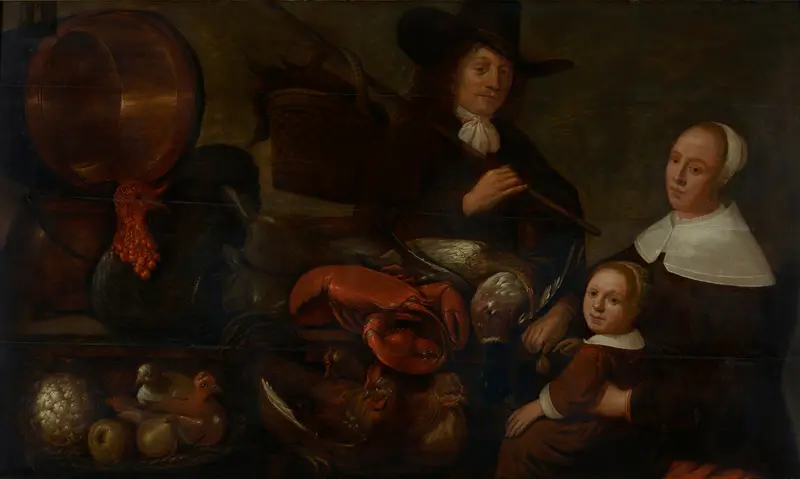
Portrait of a family
Abraham Van Calraet
More Genre Scene Art

Banquet of the Officers of the St George Civic Guard
Frans Hals

Rembrandt and Saskia in the Scene of the Prodigal Son
Rembrandt van Rijn

Bal du moulin de la Galette
Pierre-Auguste Renoir

Quadrille at the Moulin Rouge
Henri de Toulouse-Lautrec

A Burial at Ornans
Gustave Courbet

When Will You Marry?
Paul Gauguin