
Wiener Café: Auf der Terasse — History & Facts
What leaps out in Wiener Café: Auf der Terasse is the collision of worlds on a single terrace. A man in tattered clothes, wild-bearded and shoeless, throws back a glass with abandon, his posture loose and defiant. At the table beside him, two sharply dressed café-goers freeze mid-conversation, their faces stretched in a mixture of horror and fascination.
The artist, Moriz Jung, uses exaggerated lines and a palette of muddy browns and sharp blacks to heighten the sense of social distance—one figure nearly dissolves into rags, the others are all angles and stiff collars. The light falls flat and even, refusing to flatter either party, and the bare table with its empty glasses only sharpens the sense of awkward exposure. Every gesture here is a signal: the raised glass a challenge, the recoiling bodies a silent verdict. Created in 1911, this lithograph belongs to a world where Vienna’s cafés were more than places to drink—they were stages for the city’s social theater, where class, fashion, and eccentricity mingled under the eyes of caricaturists and satirists.
Lithographs like this, briskly drawn and widely circulated, were the postcards and punchlines of their day, poking fun at the city’s rituals and anxieties. Moriz Jung was part of the vibrant Viennese graphic tradition that flourished alongside the Secession movement, blending humor with sharp observation. While history has kept few traces of this particular print’s journey, its presence today in the Metropolitan Museum of Art’s collection—thanks to a Wikimedia Commons project—reminds us how much a single café terrace could reveal about an entire society.
Look again, and you may find yourself caught between laughter and discomfort, just like the men at the table.
More Artworks by Moriz Jung
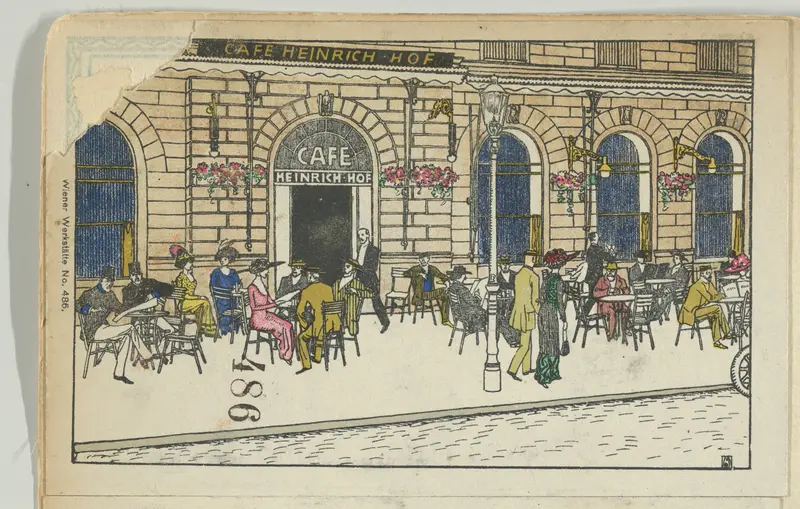
Café Heinrichhof
Moriz Jung

Moriz Jung Porträt
Moriz Jung
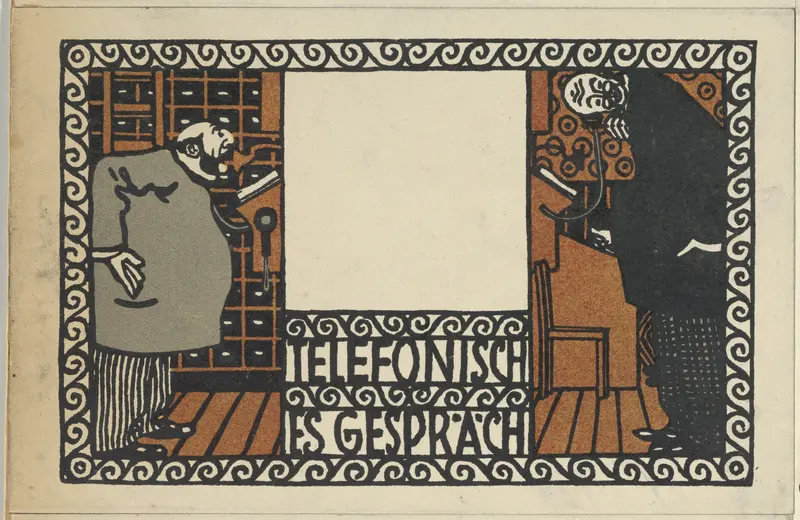
Telephone Conversation (Telefonisches Gespräch)
Moriz Jung
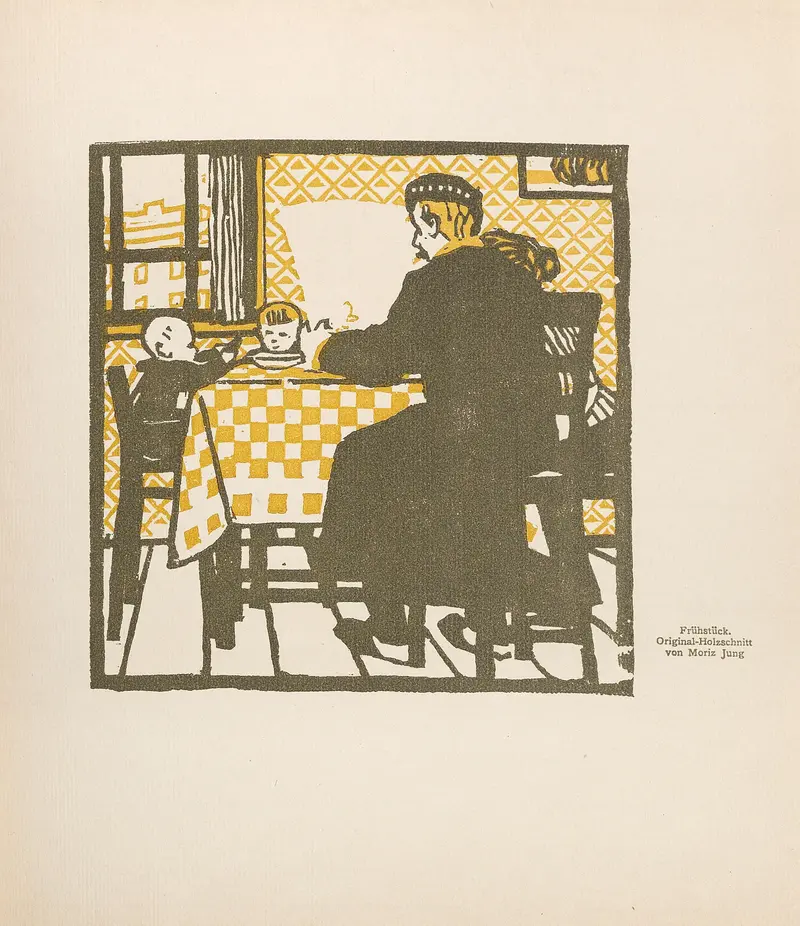
Moriz Jung Frühstück
Moriz Jung
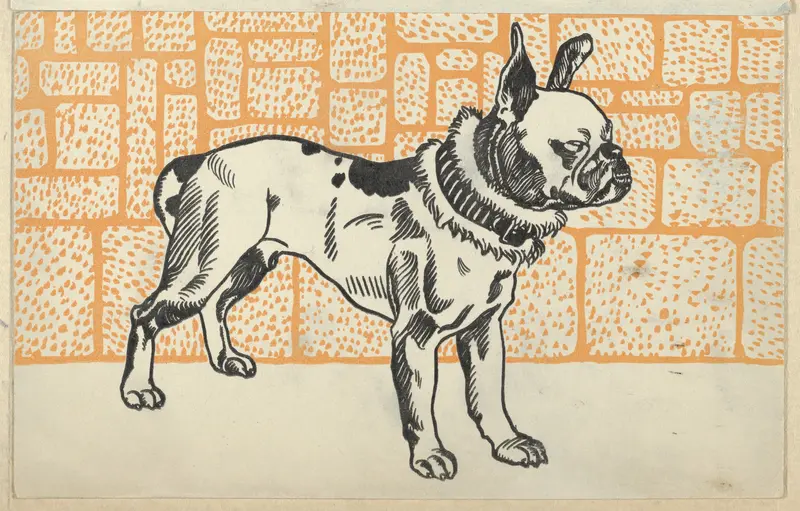
Pitbull Terrier
Moriz Jung
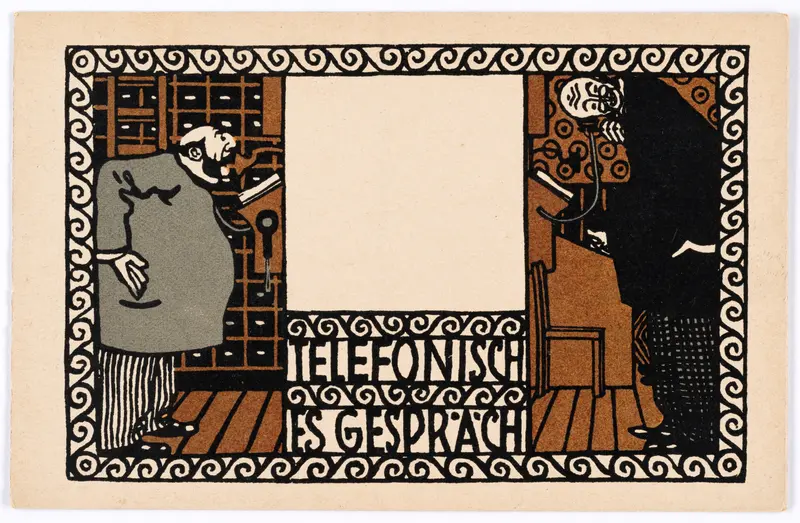
Postkarte der Wiener Werkstätte Nr. 58 - Telefonisches Gespräch
Moriz Jung
Postkarte der Wiener Werkstätte Nr. 58 - Telefonisches Gespräch - verso
Moriz Jung
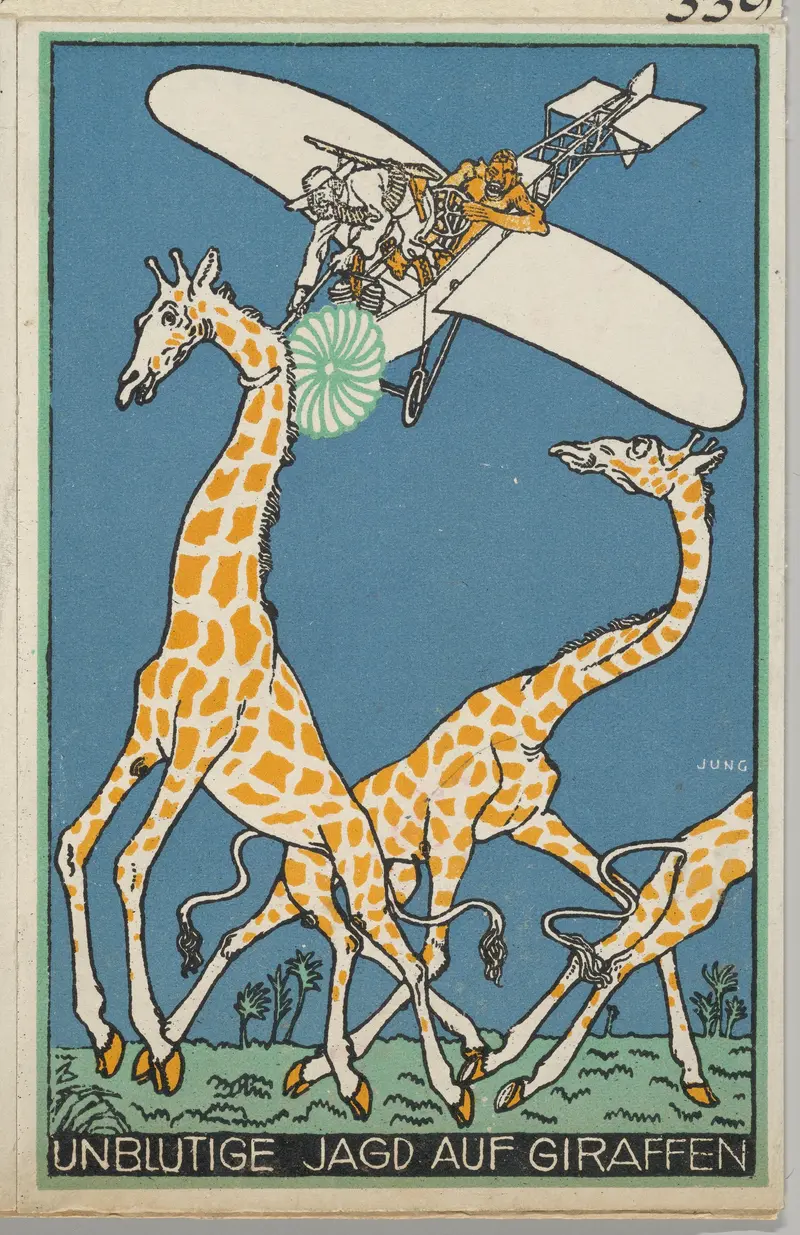
Bloodless Giraffe Hunt (Unblutige Jagd auf Giraffen)
Moriz Jung
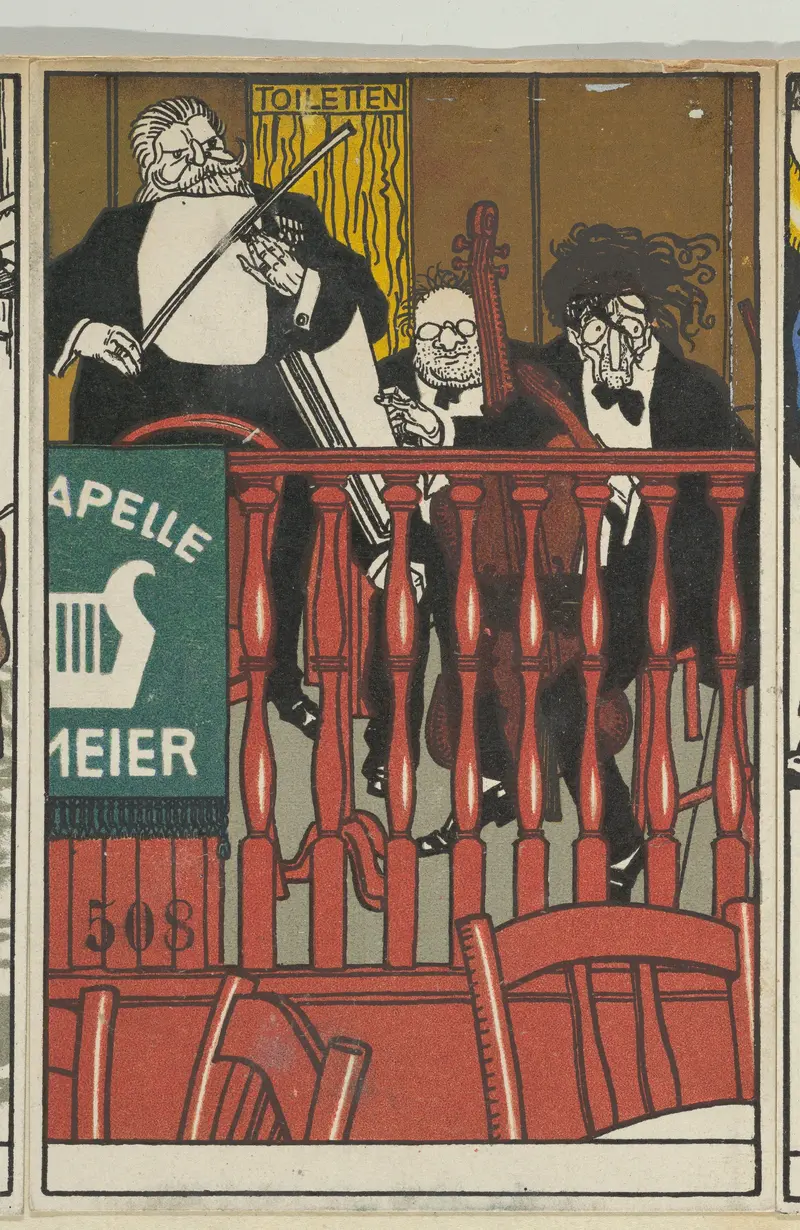
Salon Orchestra Meier
Moriz Jung
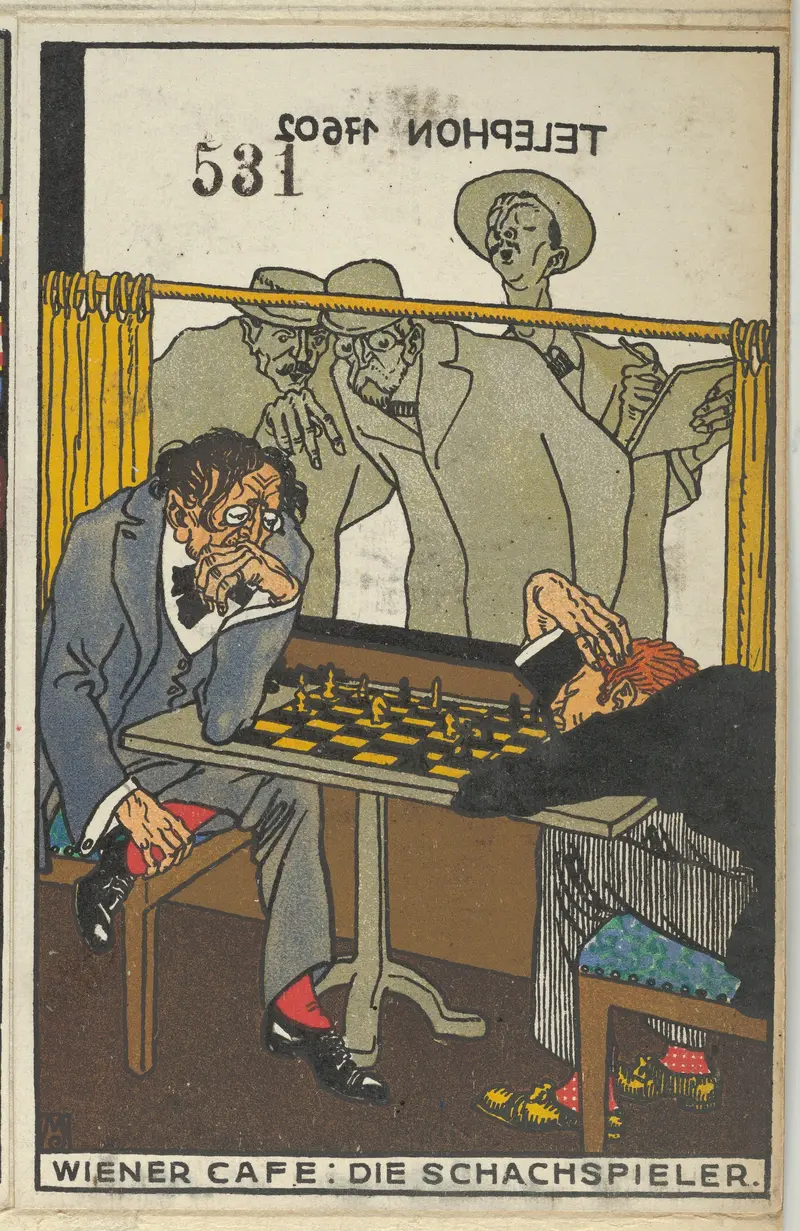
Wiener Café: Die Schachspieler
Moriz Jung
More Genre Scene Art

Banquet of the Officers of the St George Civic Guard
Frans Hals

Rembrandt and Saskia in the Scene of the Prodigal Son
Rembrandt van Rijn

Bal du moulin de la Galette
Pierre-Auguste Renoir

Quadrille at the Moulin Rouge
Henri de Toulouse-Lautrec

A Burial at Ornans
Gustave Courbet

When Will You Marry?
Paul Gauguin