Winter landscape with a Horse Drawn Carriage — History & Facts
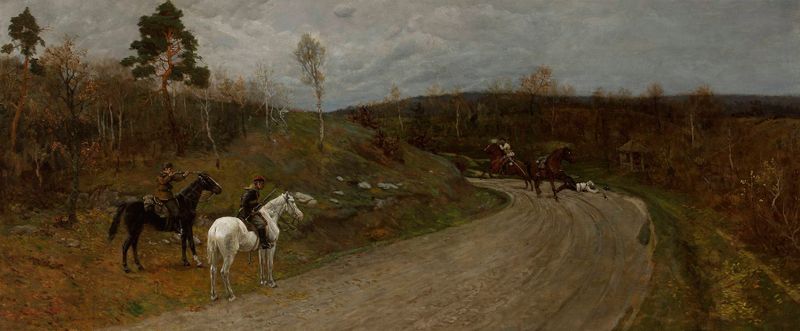
In the heart of a winter landscape, a haunting emptiness beckons. The crisp air seems to hang as the horse-drawn carriage, shrouded in stillness, navigates through the snow. Each hoofprint left in the soft white blanket speaks of a journey, yet also of an uncertainty, a void that lingers in the cold expanse. Look to the foreground, where the imposing white of the snow meets the dark silhouette of the carriage.
The gentle curves of the horses' bodies contrast sharply against the harsh lines of the trees in the background. Notice how the muted palette, punctuated by the earthy browns and deep greens, creates a somber yet serene atmosphere. The artist’s brushwork captures the stillness of the scene, with soft strokes that evoke the chill of winter air and an unspoken narrative waiting to unfold. Delve deeper into the emotional landscape within this canvas.
The contrast between the lively movement of the horses and the stillness of the surrounding trees symbolizes a fleeting connection to life and vitality amidst the quietude of winter. Each element, from the faint traces of footprints to the cold shadows, hints at stories untold — perhaps an emblem of solitude and reflection against the backdrop of nature's indifferent beauty. In 1883, Piotrowski crafted this piece during a period when realism was gaining prominence in Poland. As artistic movements shifted, capturing the essence of daily life and the environment became paramount.
He was influenced by the socio-political landscape of his time, striving to reflect both the beauty and the stark realities of nature. In this work, he encapsulates a moment that resonates with the silence of existence, inviting viewers to contemplate the void.