
Winter Woodcock — History & Facts
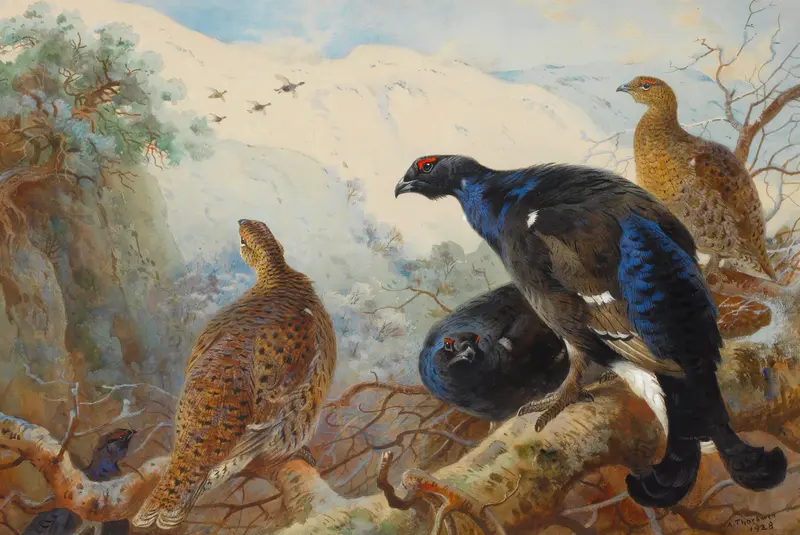
What first catches the eye in Winter Woodcock is the way the birds seem to materialize from their winter camouflage, their russet and ochre plumage echoing the brittle grasses and leaf litter that break through the snow. The leading woodcock stands alert, its long bill poised, while its companion nearly vanishes into the tangle of dried ferns behind. The artist’s sharp attention to the birds’ markings is not mere decoration—each feather’s pattern is a survival strategy, a visual puzzle that rewards close looking.
The blue-white sweep of the snowfield draws the gaze outward, but always the eye returns to the birds, whose stillness is full of tension, as if the next moment might send them darting away. Painted in 1916, this work belongs to a world where the British fascination with natural history and field sports shaped both art and science. Artists like Archibald Thorburn were celebrated for their ability to capture not only the likeness but the living presence of wildlife, often for collectors, sportsmen, and naturalists eager to bring the wild into the drawing room. Thorburn’s meticulous approach stands apart from the looser, more atmospheric style of French animal painters of the same era, grounding his birds in a clarity that feels almost scientific.
Today, Winter Woodcock is part of the Bonhams collection, a reminder of a time when observation and admiration of nature were closely intertwined, and when the quiet drama of a winter thicket could become a subject worthy of lasting attention.
More Artworks by Archibald Thorburn

The Watchful Hinds
Archibald Thorburn
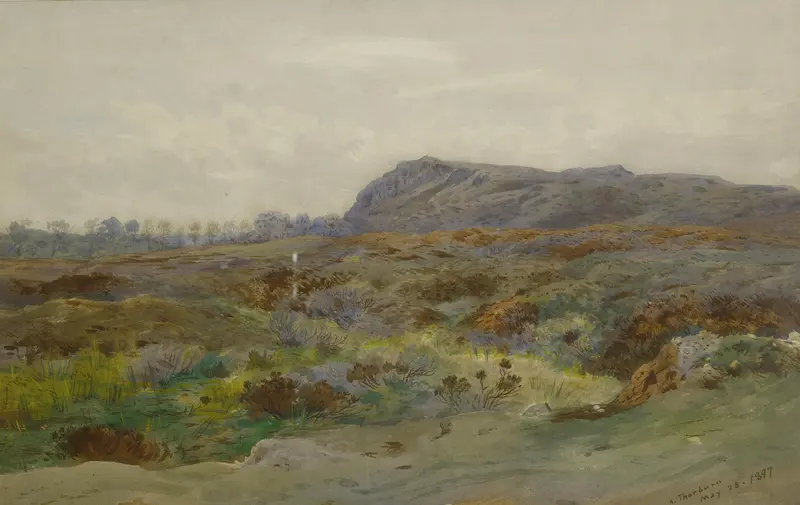
Moorland Landscape
Archibald Thorburn
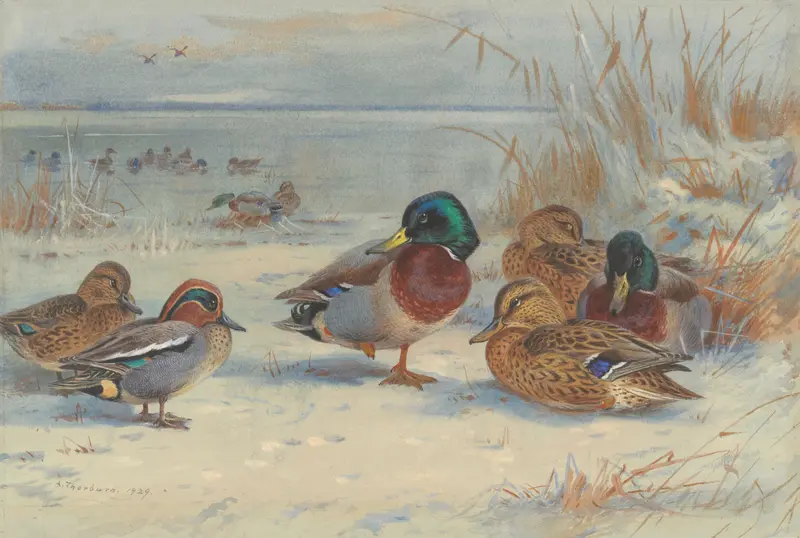
Mallard and teal in the snow
Archibald Thorburn
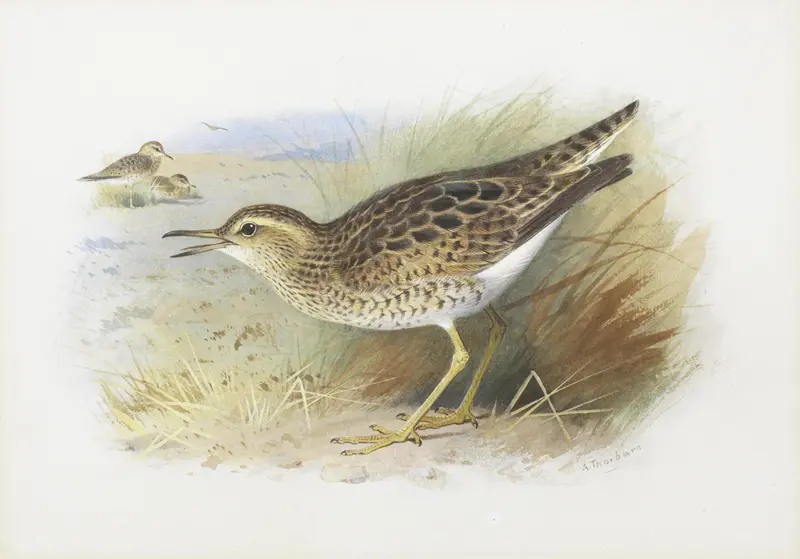
Bartram's Plover
Archibald Thorburn
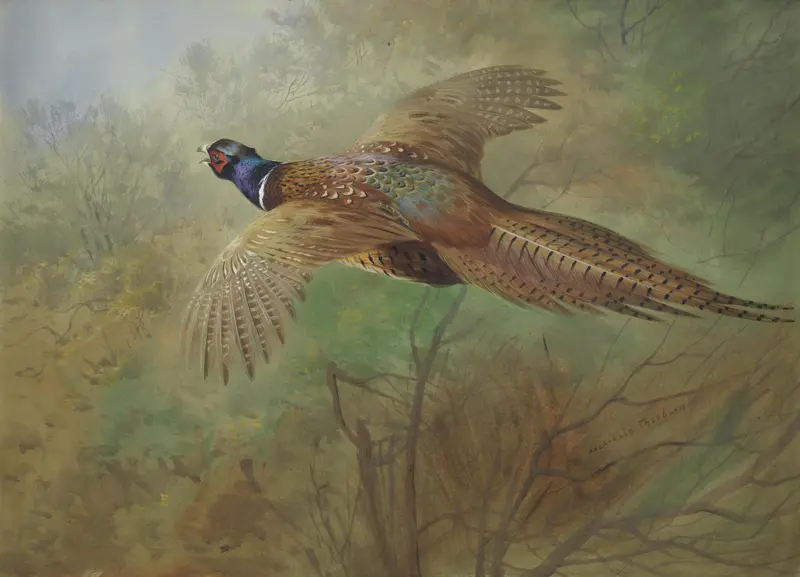
Pheasant in flight
Archibald Thorburn
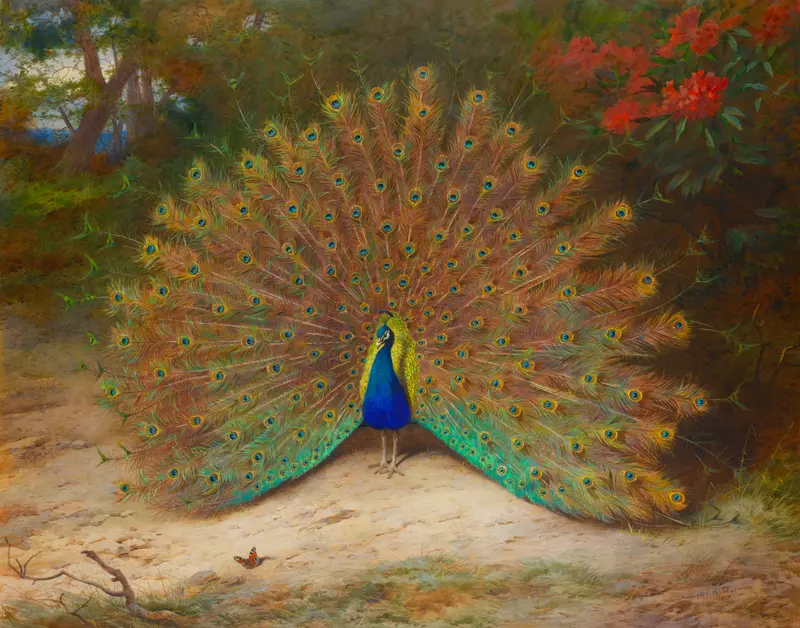
Peacock and Peacock Butterfly
Archibald Thorburn
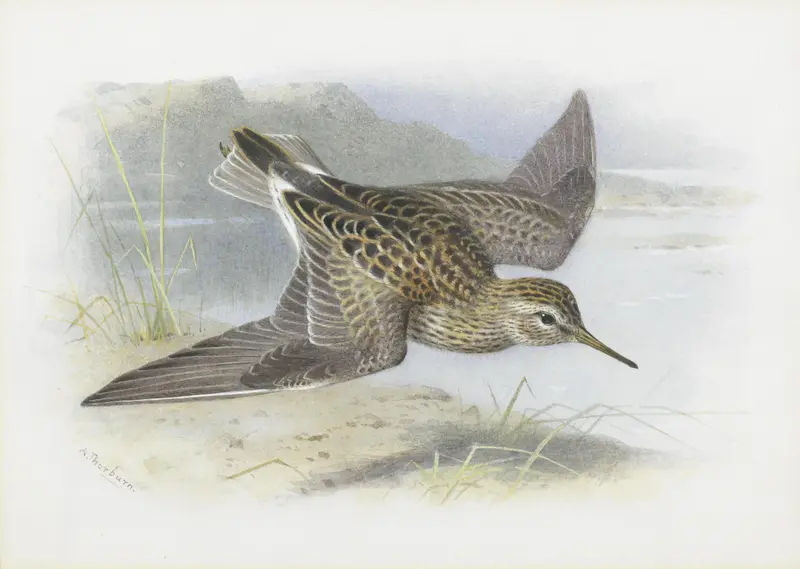
Pectoral Sandpiper
Archibald Thorburn
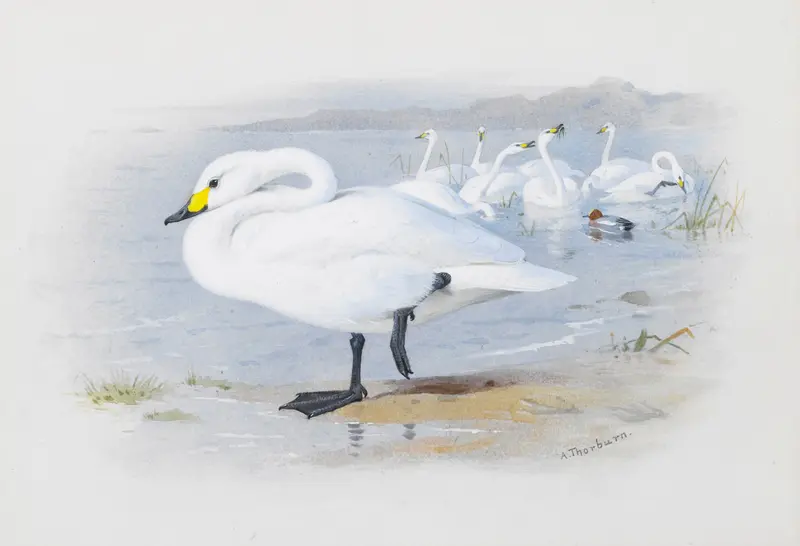
Bewick's swan.
Archibald Thorburn
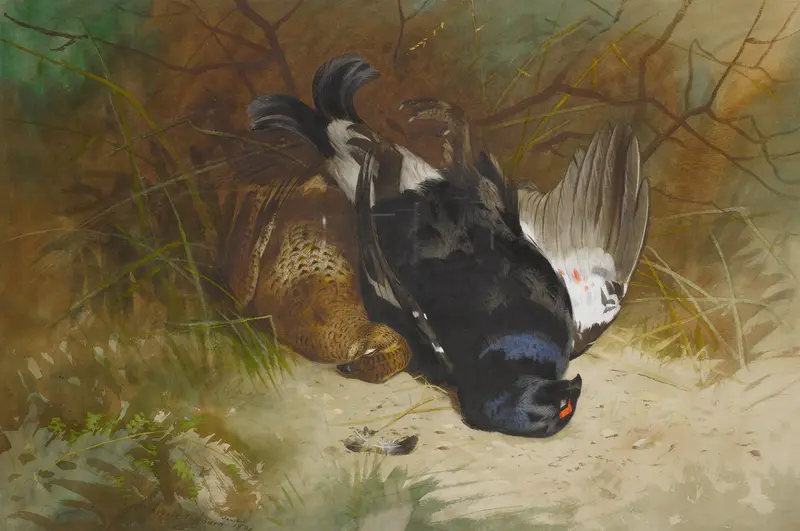
Still life of a pair of Blackgame.
Archibald Thorburn
Blackgame
Archibald Thorburn





