
Winterlandschap met kerkje in het verschiet — History & Facts
In the stillness of a winter landscape, time seems suspended, inviting contemplation far beyond the surface. Look at the serene expanse of white that blankets the ground, where the crispness of snow melds seamlessly with the muted tones of gray sky. The tiny church in the distance becomes a focal point, adorned with a steeple that pierces the tranquility, drawing the eye towards a sense of spiritual warmth amidst the chill. The artist employs soft brushwork, allowing the shadows to play gently across the snow, while subtle, almost ethereal light creates an interplay of warmth and coldness, invoking a sense of yearning. Beneath this peaceful exterior lies a profound emotional tension — a juxtaposition of solitude and the hope embodied by the church.
The viewer might feel the isolation of the landscape, yet the presence of the building signals community and sanctuary. The muted palette fosters a contemplative mood, suggesting a transcendence beyond mere physical existence, inviting questions about faith and resilience in life’s harshest seasons. Created between 1860 and 1921, this piece emerged during a transformative period for the artist, who experienced the shifting tides of modernism and the impact of World War I. While art was evolving around him, the artist's exploration of quiet introspection in Winterlandschap met kerkje in het verschiet reflects an enduring connection to nature and spirituality, offering a timeless glimpse into the human experience.
More Artworks by Adolf le Comte
Browse all →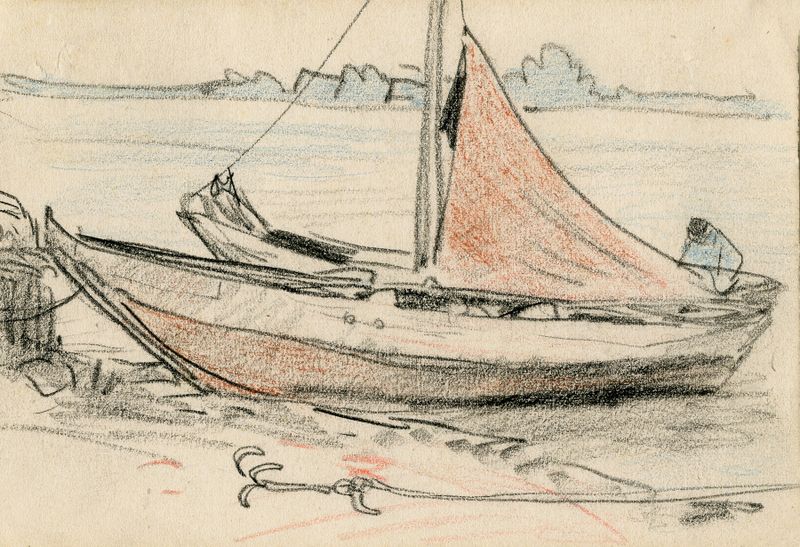
Op de oever getrokken schuit
Adolf le Comte
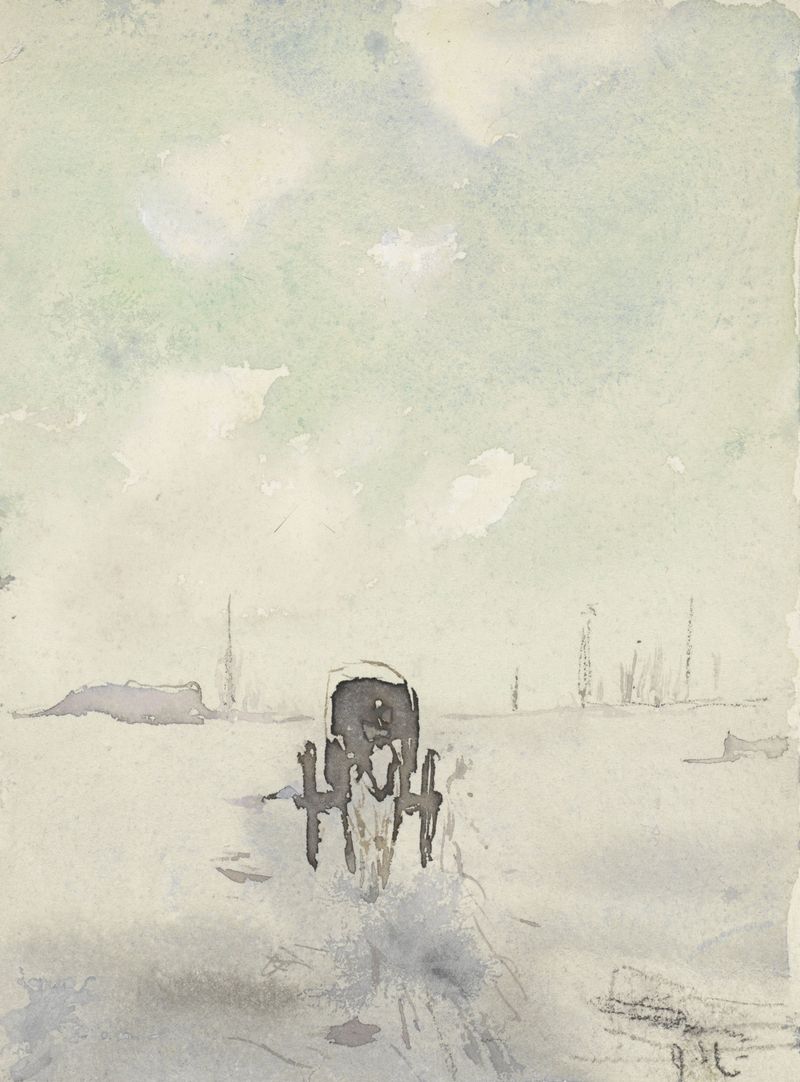
Winterlandschap met paard en wagen
Adolf le Comte
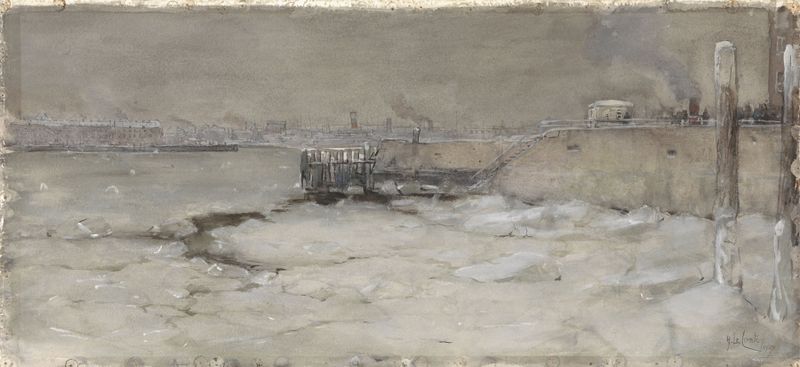
Het kruien van het ijs op de Maas te Rotterdam
Adolf le Comte
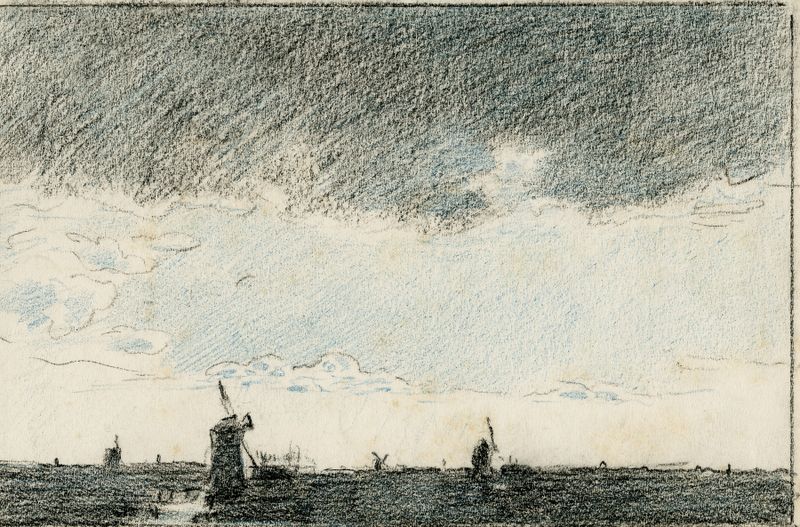
Molens in vlakte bij regen
Adolf le Comte
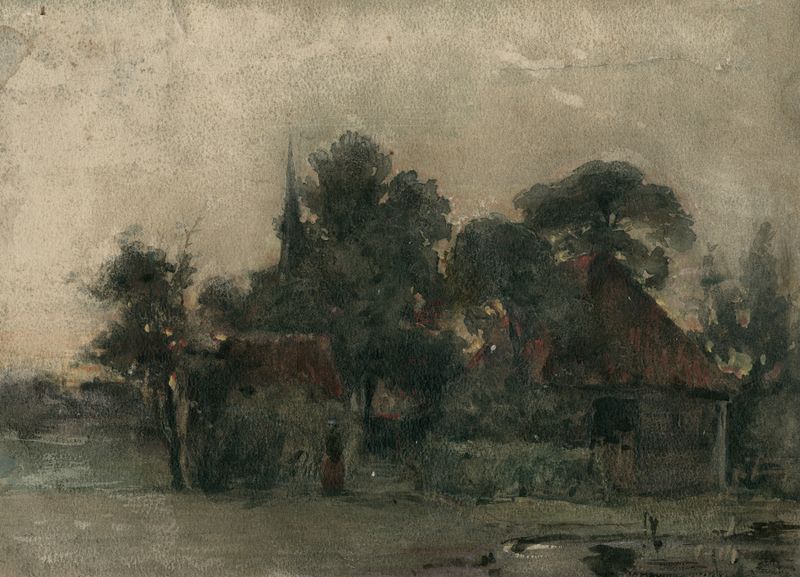
Dorpsgezicht bij avond
Adolf le Comte
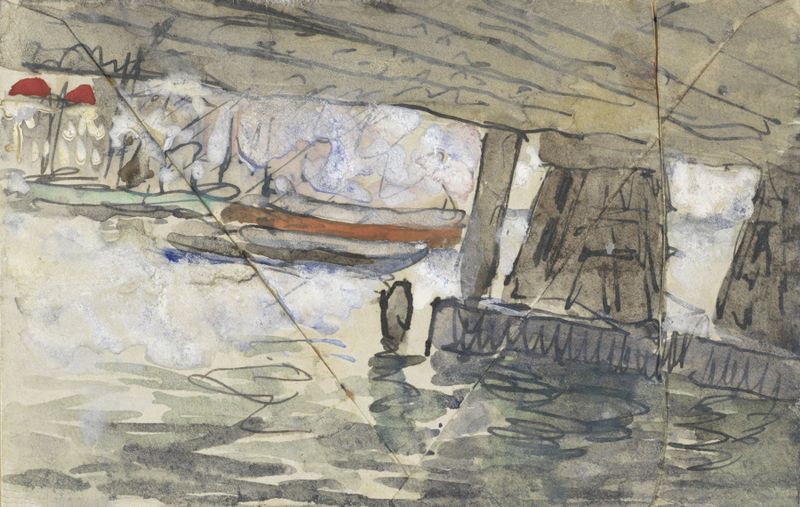
Gezicht onder een spoorviaduct te Amsterdam
Adolf le Comte
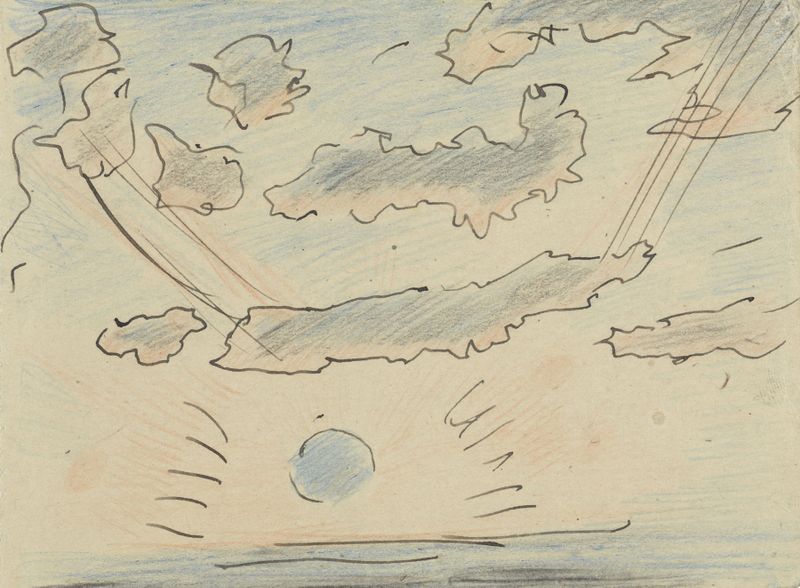
Wolkenstudie met zon
Adolf le Comte
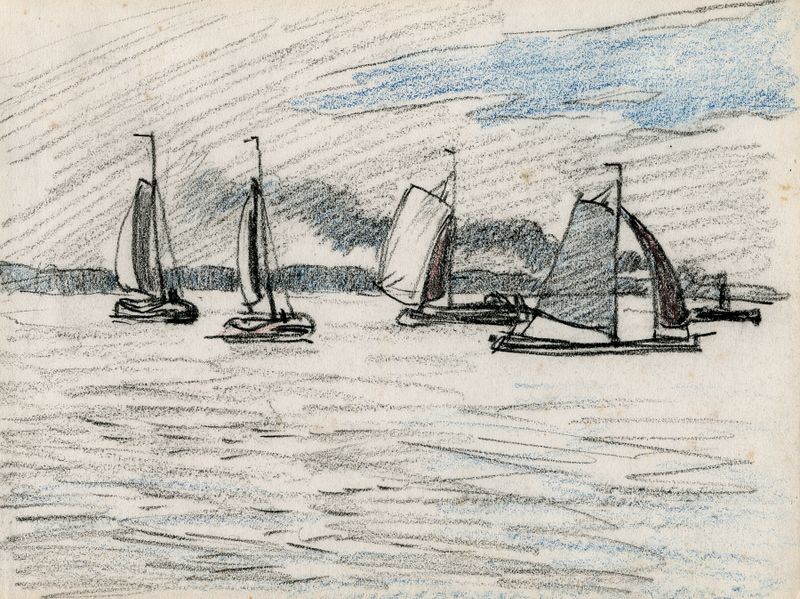
Zeilboten op watervlakte
Adolf le Comte





