
Woman and a jester — History & Facts
What catches the eye first is the sly exchange of glances—a woman, half-laughing and half-struggling, is caught in a tug-of-war with a jester who grasps her ankle with theatrical glee. The bed’s heavy drapery frames the scene as if it were a private stage, while the woman’s extravagant white ruff and billowing linens contrast with the jester’s riot of colors and bells. Every detail is set to amplify the sense of playful mischief: the jester’s exaggerated grin, the woman’s turned head, the carelessly discarded slippers on the floor.
The light pools around the bed, spotlighting the woman’s pale face and the jester’s mask-like features, leaving the corners of the room in shadow, as if the world outside this moment has faded away. Painted between 1604 and 1662 by Adriaen Pietersz van de Venne, this work belongs to a world where humor and moral lessons often mingled on canvas. In the Dutch Republic, artists delighted in scenes that teased the boundaries of decorum, using jesters and domestic interiors to comment on folly, desire, or the unpredictability of fortune. Such paintings were collected by a rising merchant class eager for wit and sophistication in their homes.
Now in the National Museum in Warsaw, this painting invites us to linger on its theatrical energy and to imagine the stories its original viewers might have whispered as they leaned in for a closer look.
More Artworks by Adriaen Pietersz van de Venne
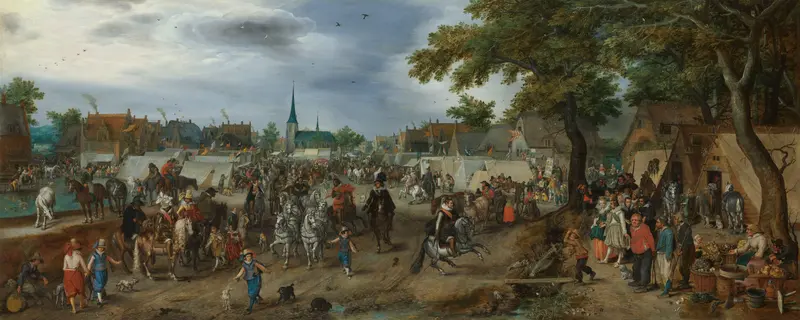
Princes Maurice and Frederick Henry at the Valkenburg Horse Fair
Adriaen Pietersz van de Venne
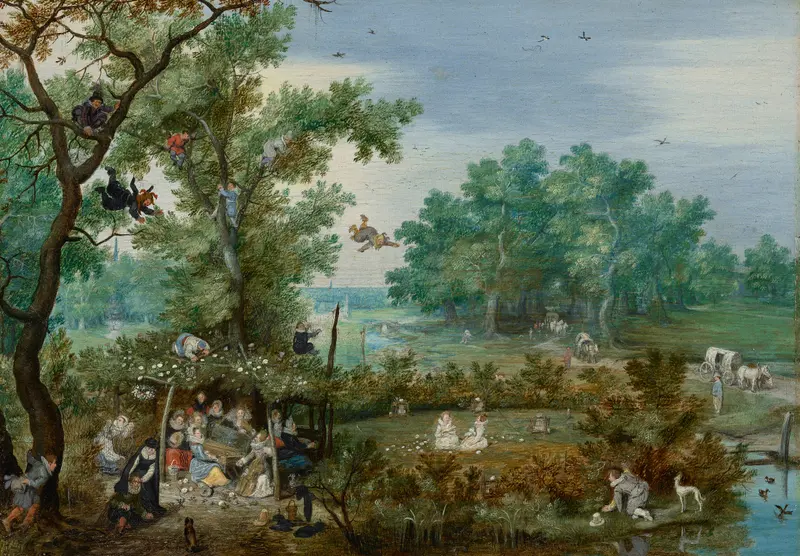
Merry Company in an Arbor
Adriaen Pietersz van de Venne
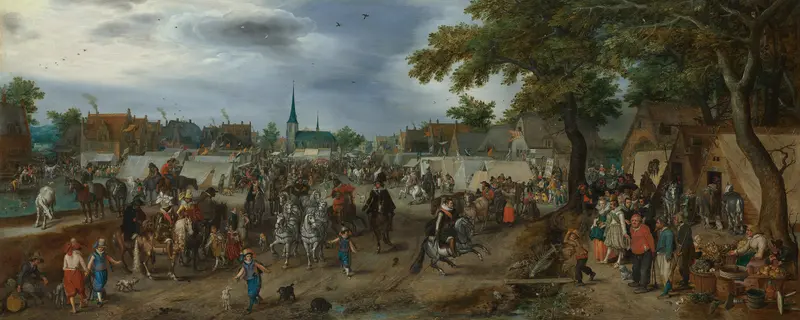
Princes Maurice and Frederick Henry at the Valkenburg Horse Fair
Adriaen Pietersz van de Venne
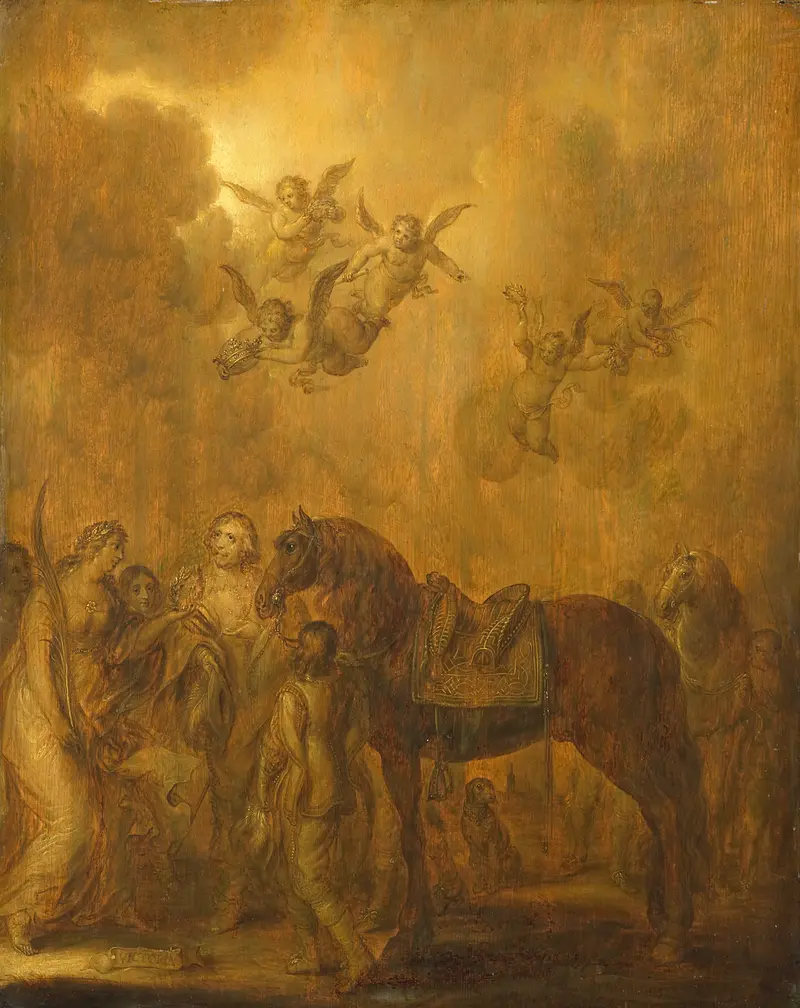
Allegory of the Stadtholdership of Prince Frederick Henry
Adriaen Pietersz van de Venne
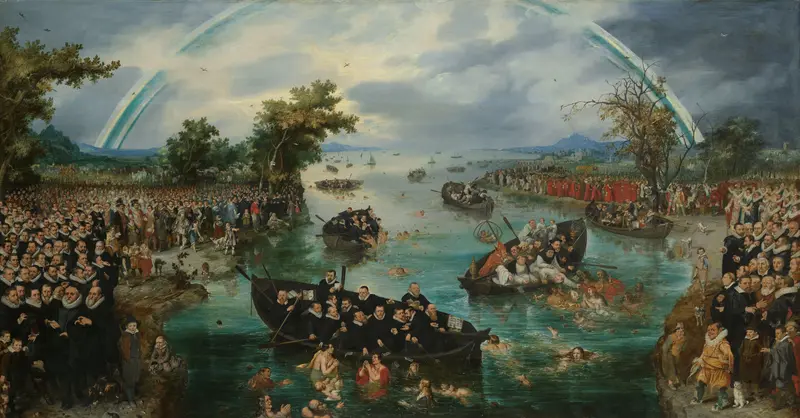
Fishing for Souls
Adriaen Pietersz van de Venne
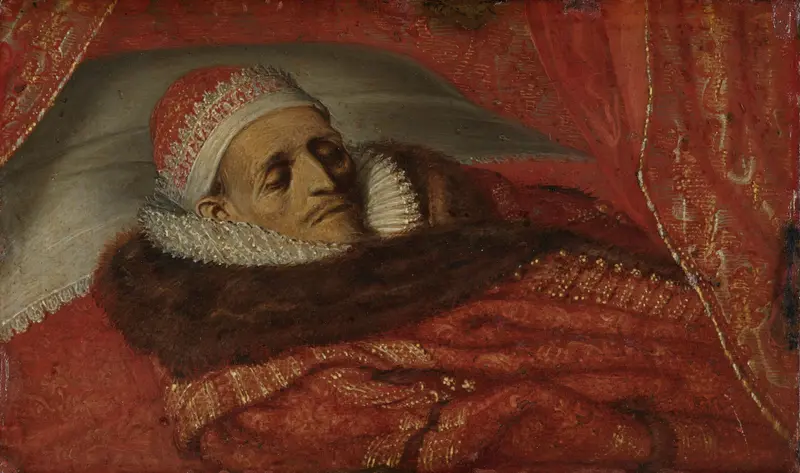
Stadtholder Prince Maurice Lying in State
Adriaen Pietersz van de Venne
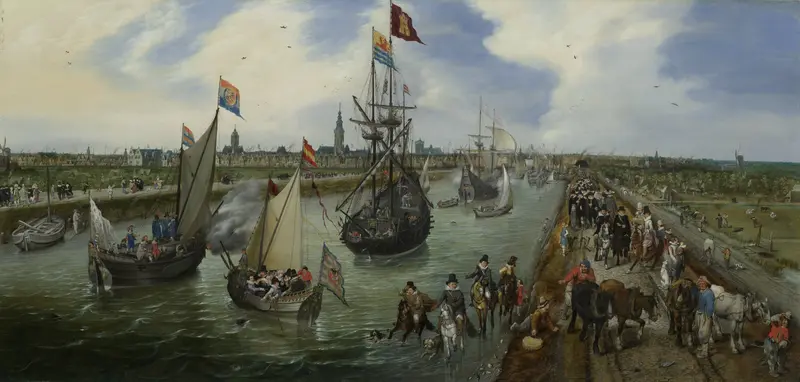
The Departure of a Dignitary from Middelburg
Adriaen Pietersz van de Venne
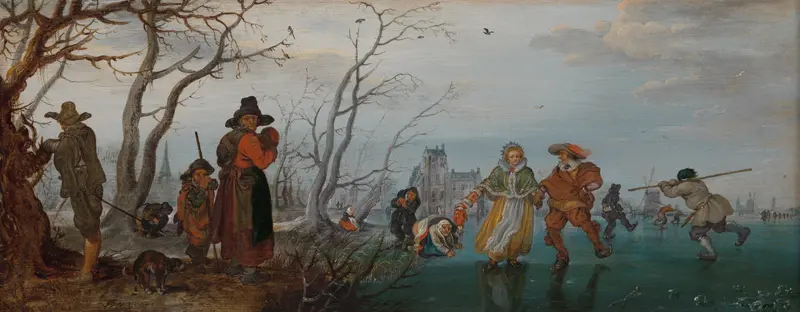
Winter
Adriaen Pietersz van de Venne

A Jeu de Paume Before a Country Palace
Adriaen Pietersz van de Venne
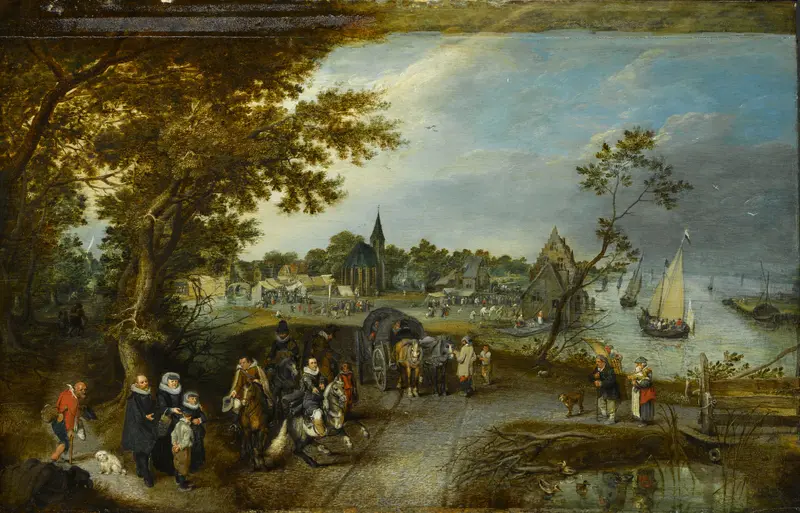
Landscape with Figures and a Village Fair (Village Kermesse)
Adriaen Pietersz van de Venne
More Genre Scene Art

Banquet of the Officers of the St George Civic Guard
Frans Hals

Rembrandt and Saskia in the Scene of the Prodigal Son
Rembrandt van Rijn

Bal du moulin de la Galette
Pierre-Auguste Renoir

Quadrille at the Moulin Rouge
Henri de Toulouse-Lautrec

A Burial at Ornans
Gustave Courbet

When Will You Marry?
Paul Gauguin