
Woman Spinning — History & Facts
What draws the eye first in Woman Spinning by Theodoros Ralli is the quiet concentration of the young woman, her gaze lowered to the thread she teases from the distaff. The sunlight, filtered through unseen leaves, falls gently across her yellow kerchief and the folds of her maroon and cream garments, picking out the textures of cloth and wood with the same care she gives to her spinning. The fence behind her, rough and irregular, frames her figure and hints at a rural world beyond, while the wild plants at her feet suggest a life lived close to the land.
Every detail—the tilt of her head, the careful placement of her hands—invites the viewer into a moment of absorbed, almost meditative labor. Painted in 1890, this work belongs to a period when artists across Europe were drawn to scenes of everyday life, often elevating humble tasks to the level of quiet dignity. Theodoros Ralli, known for his interest in Eastern Mediterranean subjects, here captures not just a genre scene but a sense of timeless ritual, as spinning was both a necessity and a tradition in rural communities. Such paintings were often collected by urban patrons who longed for an idealized vision of the countryside, even as industrialization was changing the world outside the frame.
History has kept few traces of this particular painting’s journey, but its presence in the source collection today allows us to linger over the calm persistence of work—and the beauty that can be found in a single, attentive moment.
More Artworks by Theodoros Ralli

The Sleeping Concubine
Theodoros Ralli
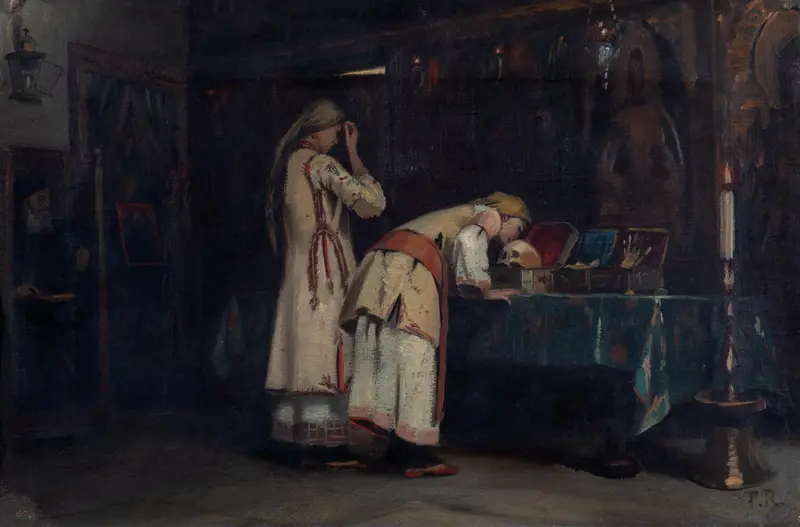
Holy Relics
Theodoros Ralli
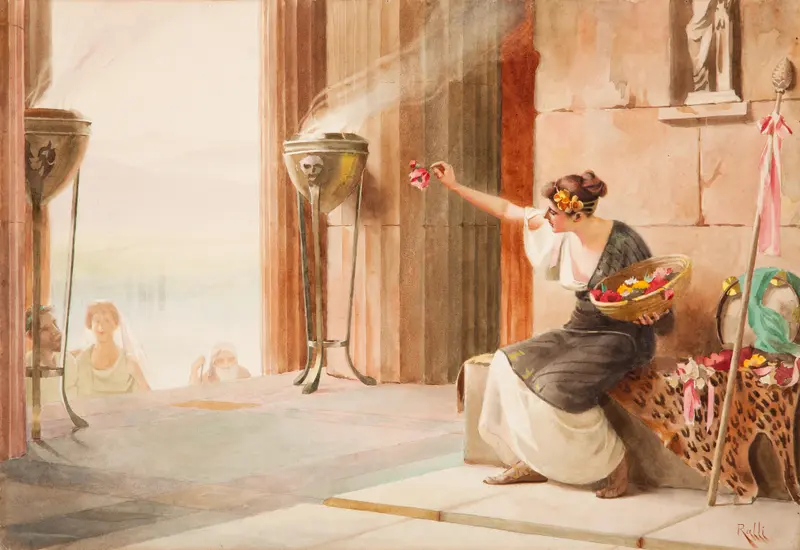
Flower Seller at the Parthenon
Theodoros Ralli
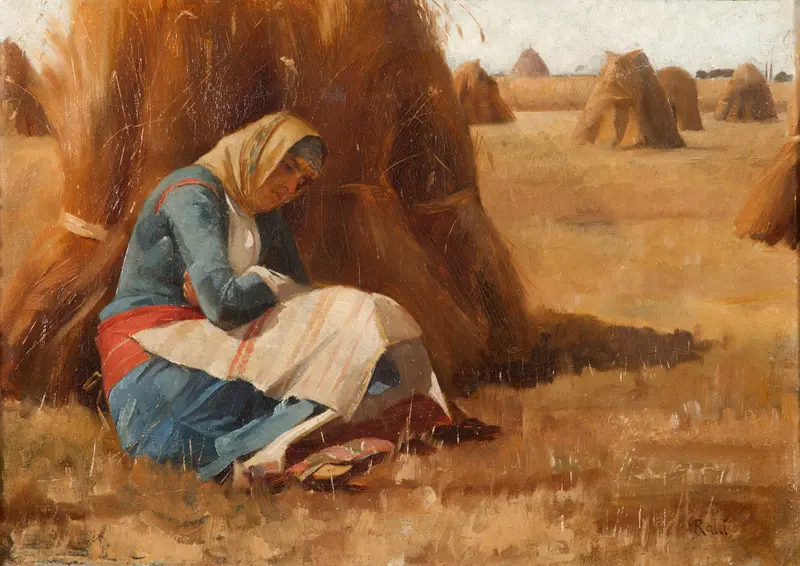
Resting by a Haystack
Theodoros Ralli
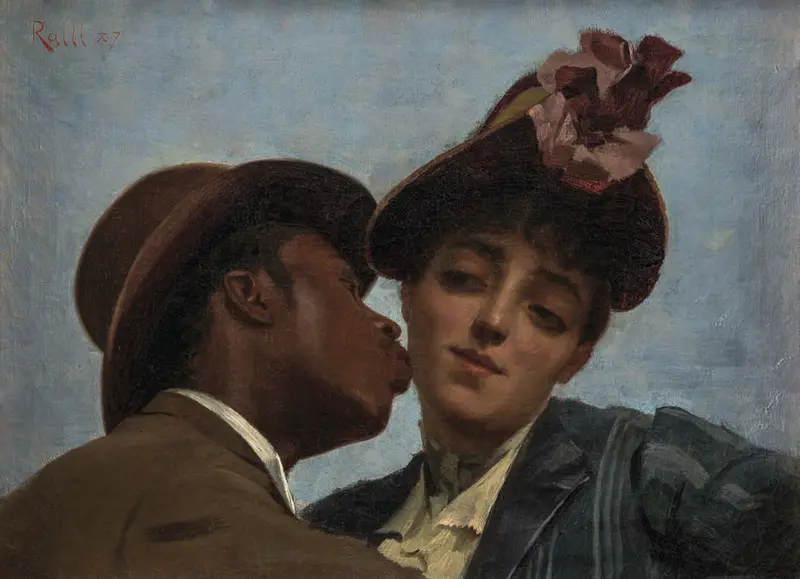
The Kiss (Ralli)
Theodoros Ralli
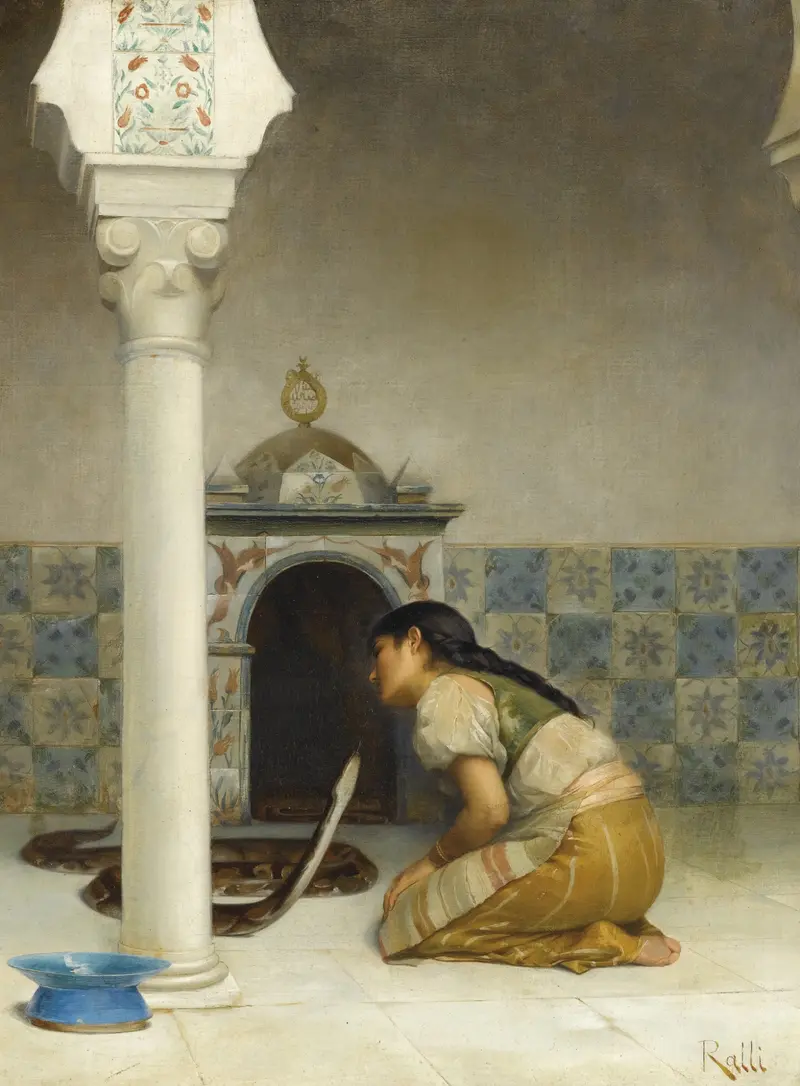
The Sacred Serpent
Theodoros Ralli
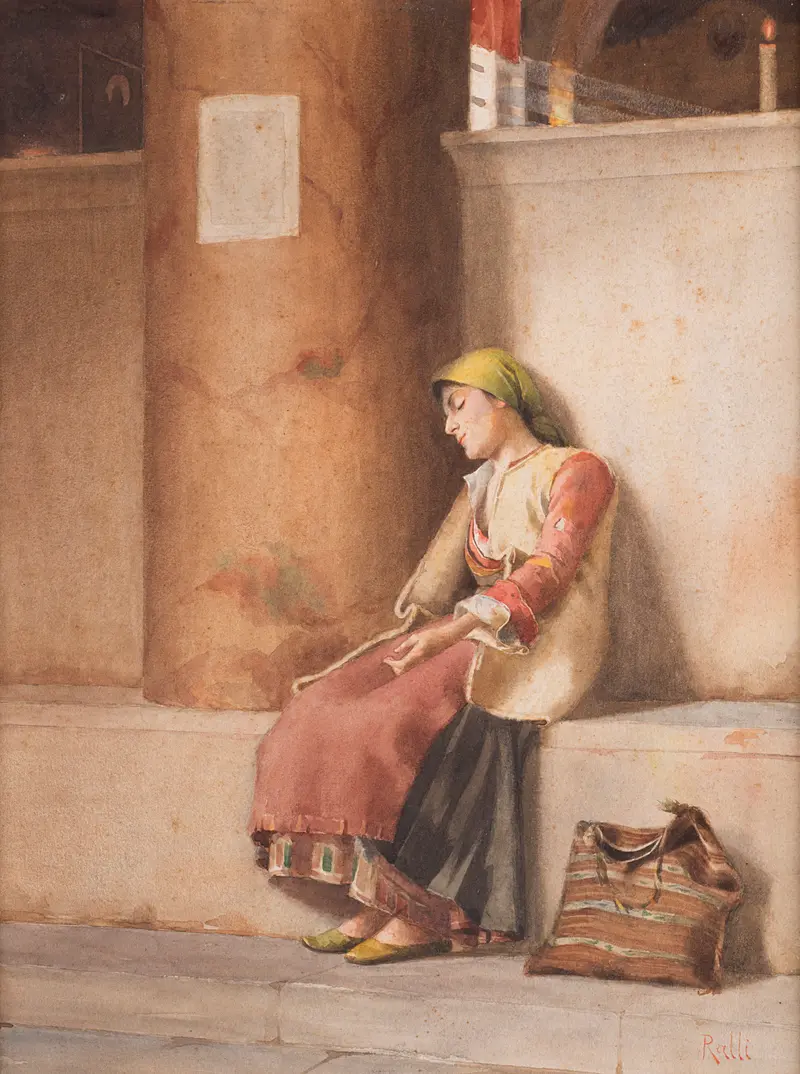
A Moment of Reflection
Theodoros Ralli
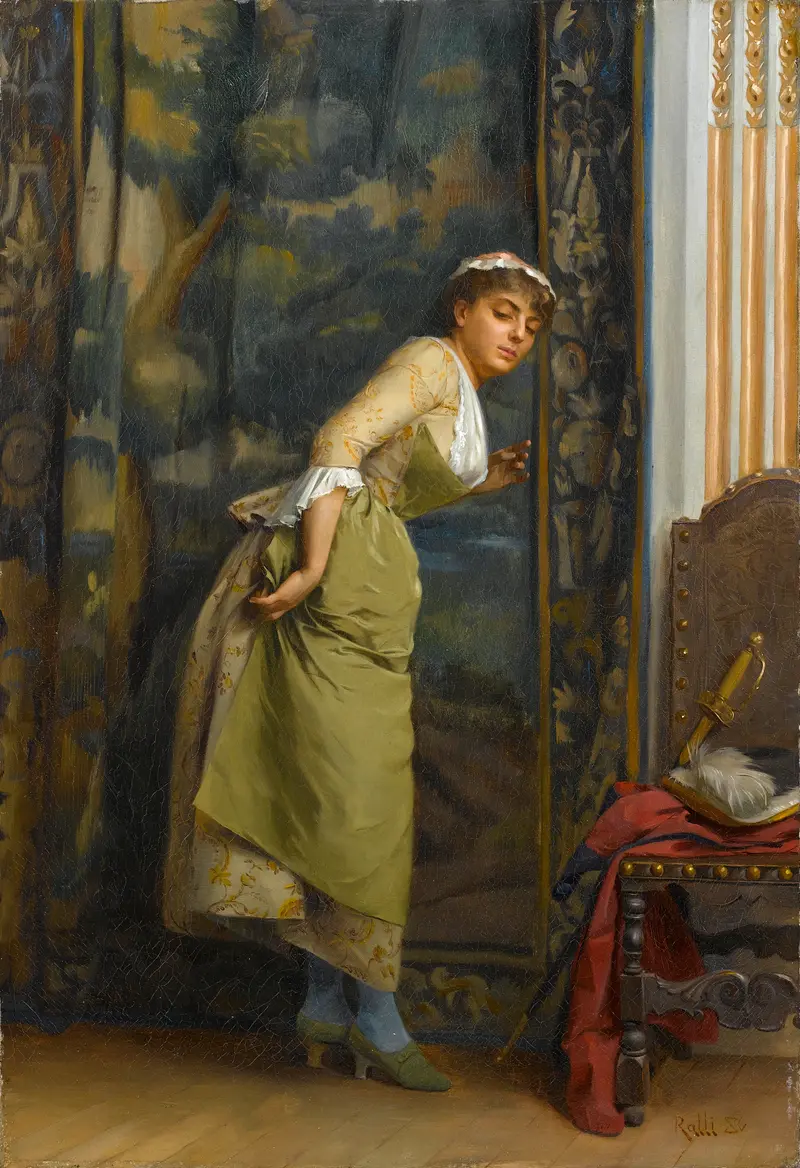
Eavesdropping (Ralli)
Theodoros Ralli
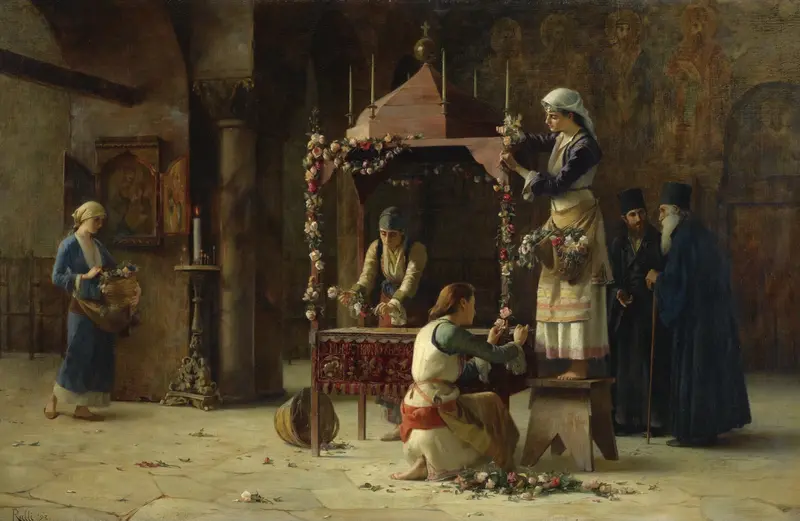
Holy Friday, Greece
Theodoros Ralli
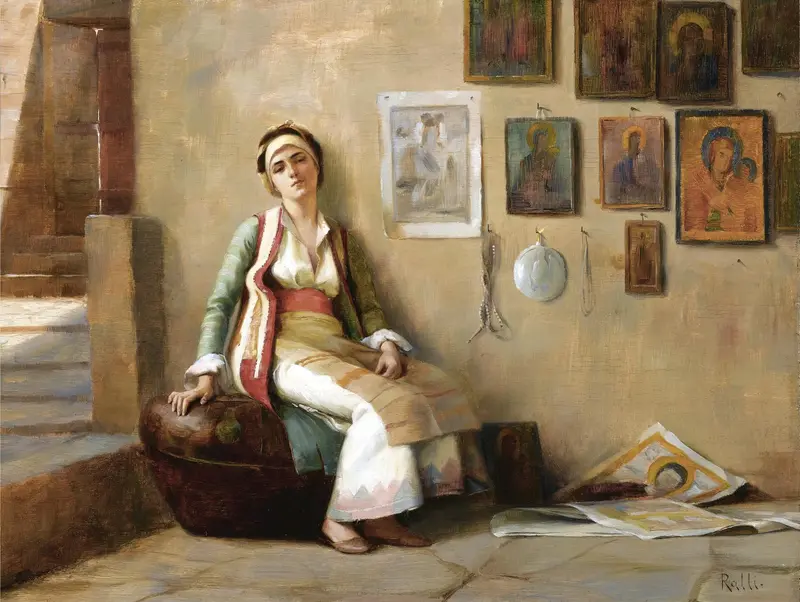
A Moment's Rest
Theodoros Ralli
More Genre Scene Art

Banquet of the Officers of the St George Civic Guard
Frans Hals

Rembrandt and Saskia in the Scene of the Prodigal Son
Rembrandt van Rijn

Bal du moulin de la Galette
Pierre-Auguste Renoir

Quadrille at the Moulin Rouge
Henri de Toulouse-Lautrec

A Burial at Ornans
Gustave Courbet

When Will You Marry?
Paul Gauguin