
Wooded Evening Landscape with a Hunter and His Dogs — History & Facts
What first catches the eye in Wooded Evening Landscape with a Hunter and His Dogs is not the hunter himself, but the way the land seems to breathe under the waning light. The old trees in the foreground—one split and scarred, the other arching protectively—frame the scene like silent witnesses, their branches reaching into a sky heavy with the last warmth of day. The hunter, poised at the edge of a sandy path, is almost an afterthought beside the lively, attentive dogs at his feet.
A gentle procession of people and animals winds along the riverbank, their figures receding into a landscape that feels both intimate and expansive, as if the world is pausing to listen. This is the world of late seventeenth-century Dutch landscape, where painters like Adriaen van de Velde found poetry in the ordinary. Such scenes were not mere records of nature, but carefully composed invitations to linger—each detail, from the wildflowers at the hunter’s feet to the distant manor, signals a world shaped by human presence yet ruled by the rhythms of the land. The low horizon gives the sky a commanding presence, while the play of light and shadow across the rutted path draws the viewer deeper into the painting’s quiet drama.
Works like this were prized by collectors who sought not only beauty, but a sense of order and harmony in a rapidly changing world. Dated 1670 and last seen at Sotheby’s New York, this painting survives as a window into an age when the landscape itself was a story waiting to be read.
More Artworks by Adriaen van de Velde

Staande stier
Adriaen van de Velde
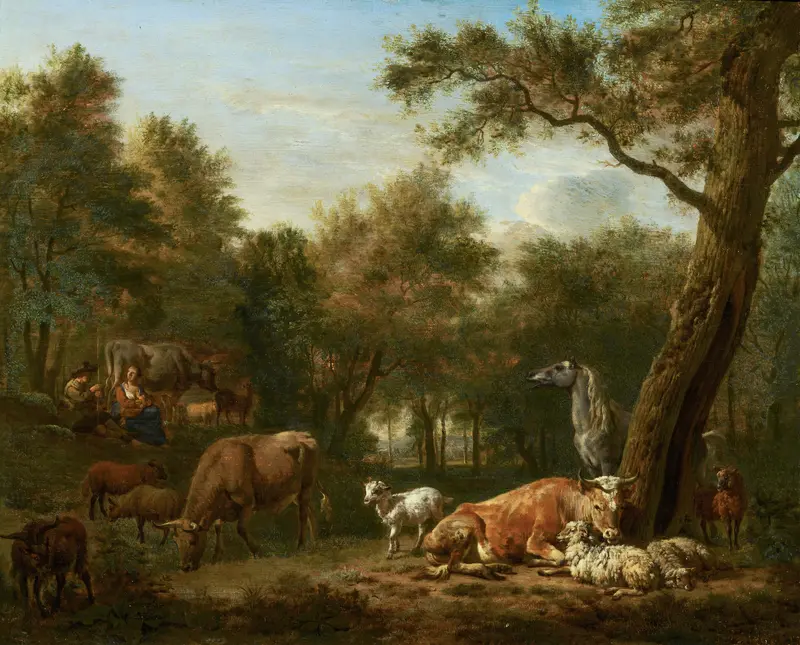
Wooded Landscape with Cattle
Adriaen van de Velde
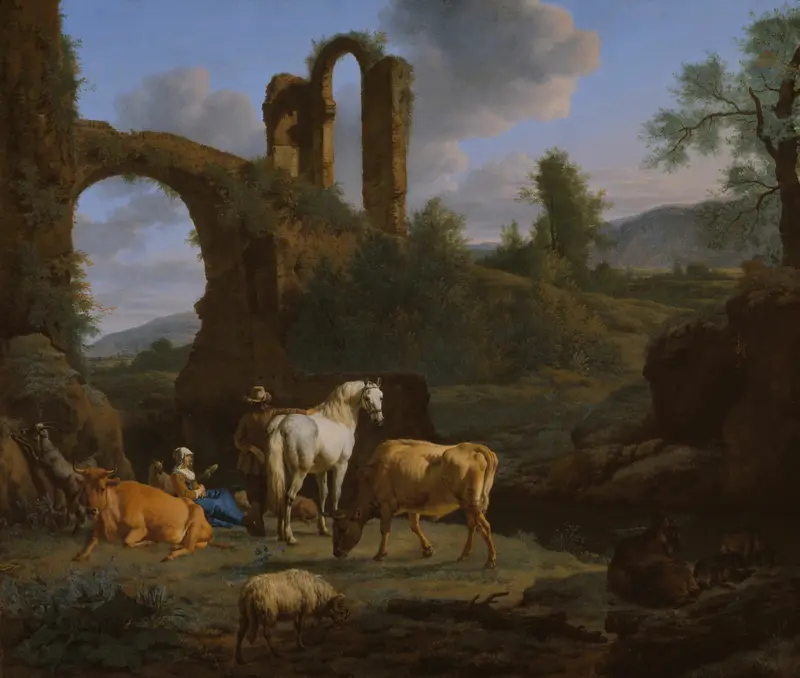
Pastoral Landscape with Ruins
Adriaen van de Velde
Pastoral Landscape with Ruins
Adriaen van de Velde
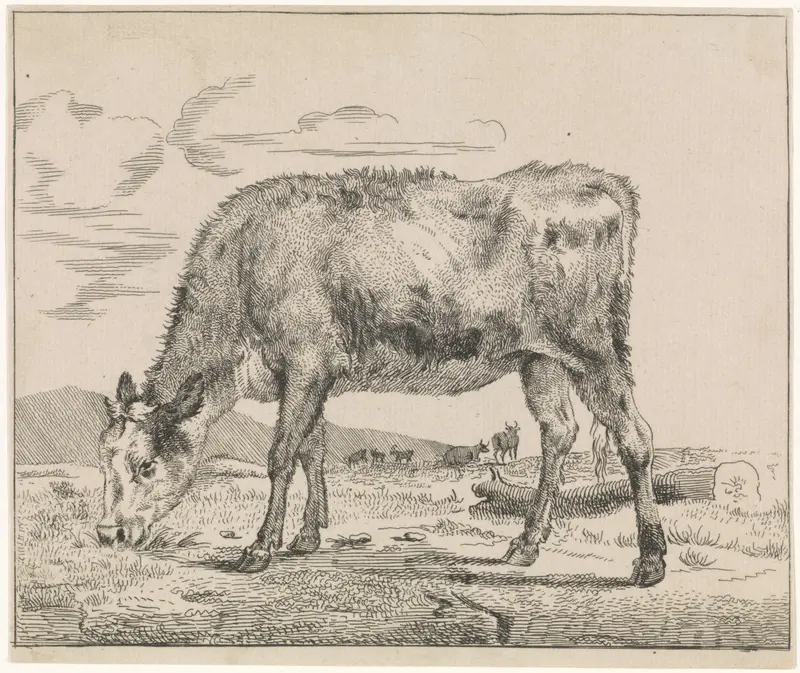
Grazend kalf
Adriaen van de Velde
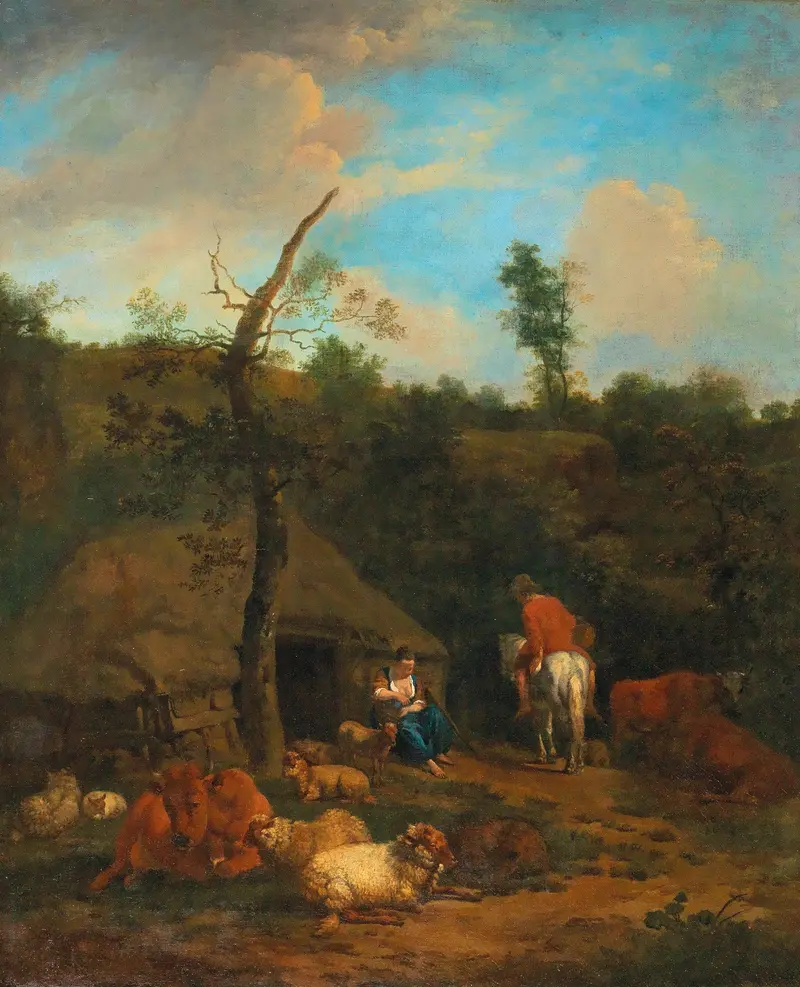
A herdsman and a shepherdess in front of a wooden farmhouse
Adriaen van de Velde
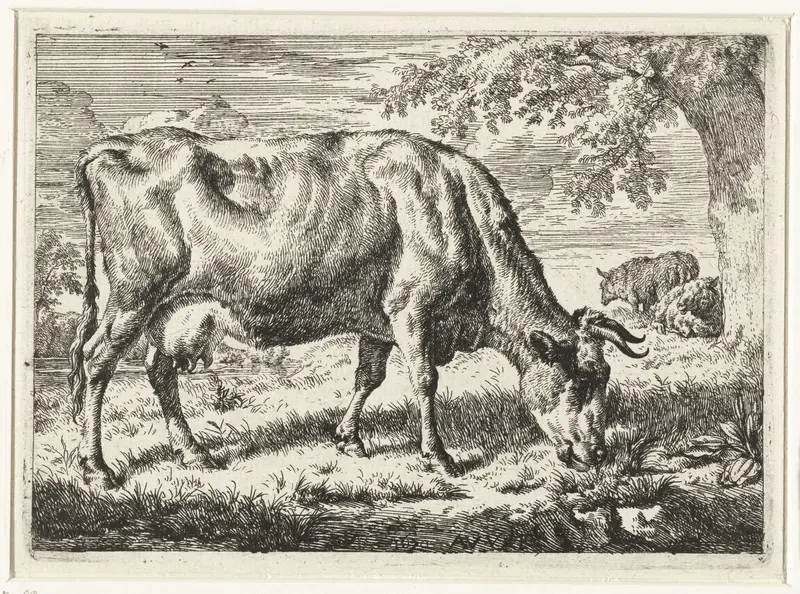
Grazende koe en twee schapen
Adriaen van de Velde
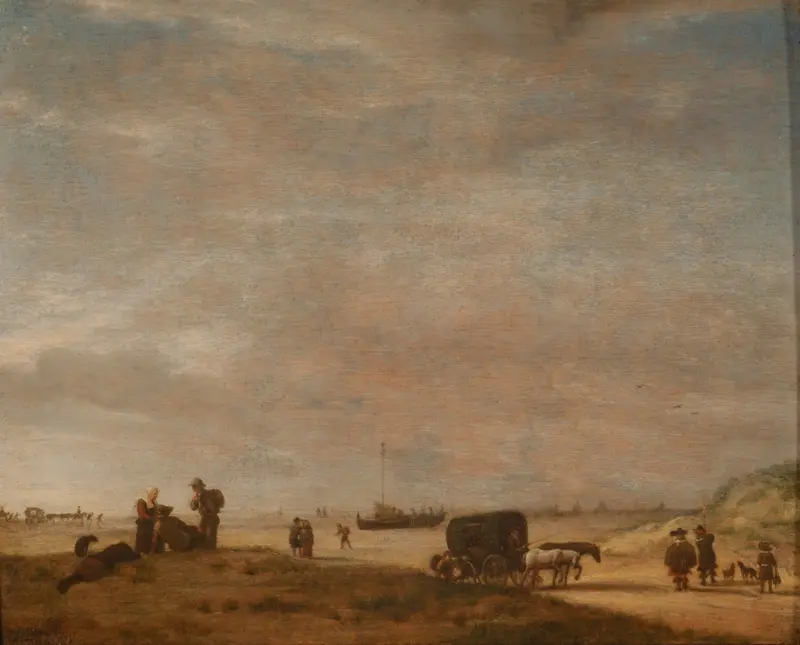
Scheveningen Beach
Adriaen van de Velde
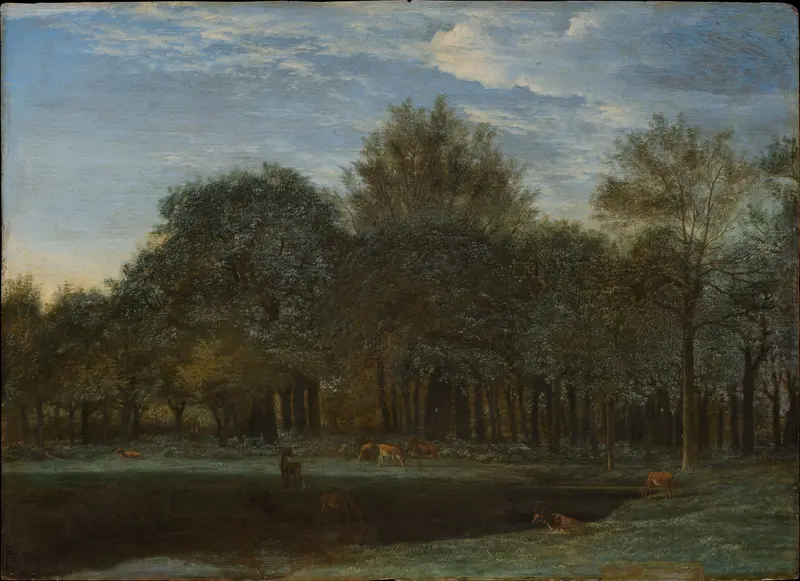
Forest Clearing with Grazing Deer
Adriaen van de Velde
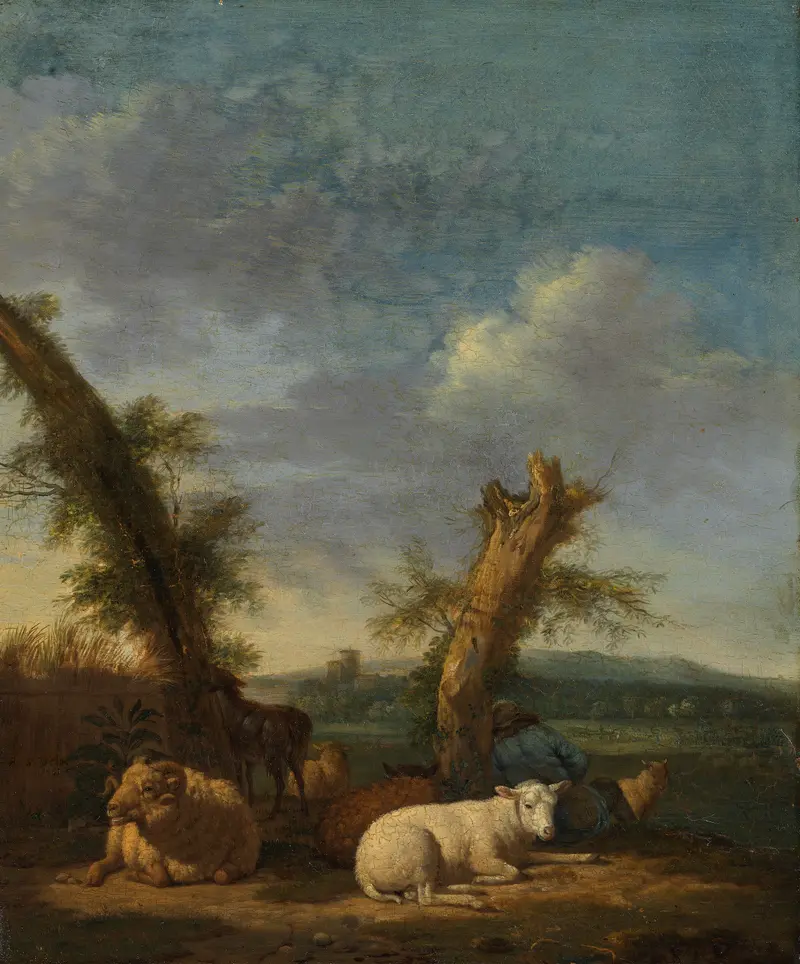
Landscape with Sheep and a Sleeping Shepherd
Adriaen van de Velde
More Landscape Art

The Starry Night
Vincent van Gogh

View of Delft
Johannes Vermeer

Water Lilies
Claude Monet

The Grand Canal, Venice, looking north-west from the Ca' Corner to the Ca' Contarini degli Scrigni, with the campanile of Santa Maria della Carità
Canaletto

Windsor Castle
Canaletto

The Grand Canal looking North-East from the Palazzo Dolfin-Manin to the Rialto Bridge
Canaletto