
Yellow-Red-Blue — History & Facts
Three zones sit on a pale ground that shifts from yellow to blue-violet at the edges. On the left, a tall yellow rectangle glows inside an orange halo, with fine black lines, a red-ringed dark circle and a gray disk with a yellow halo around it. On the right, overlapping planes of pink, magenta and purple carry tiny checkerboard patches, beside a deep blue oval and a thick black wavy line.
Between them a black diagonal bar cuts across, and a dark disk sits near the lower right. The Centre Pompidou says the three primary colors organize the picture in succession from left to right, with geometric lines and luminous color on the left and more complex forms and darker shades on the right. Wassily Kandinsky began teaching at the Bauhaus in 1922 and set out his ideas in the book Point and Line to Plane, of which the museum says this painting might be called a visual illustration. The record states it was made in Weimar between March and May 1925.
A teaching dossier suggests the red at the center is a "birth of red" from yellow and blue, a reading the dossier words with caution. His widow, Nina Kandinsky, gave it to the museum in 1976. It is in the Centre Pompidou in Paris.
More Artworks by Wassily Kandinsky

Improvisation 35
Wassily Kandinsky
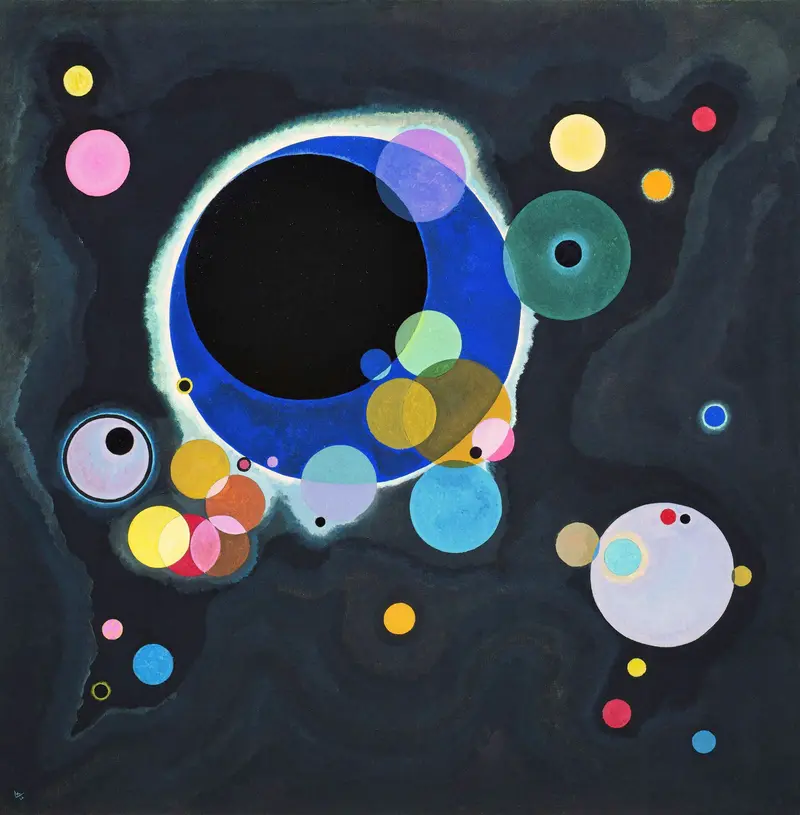
Several Circles
Wassily Kandinsky
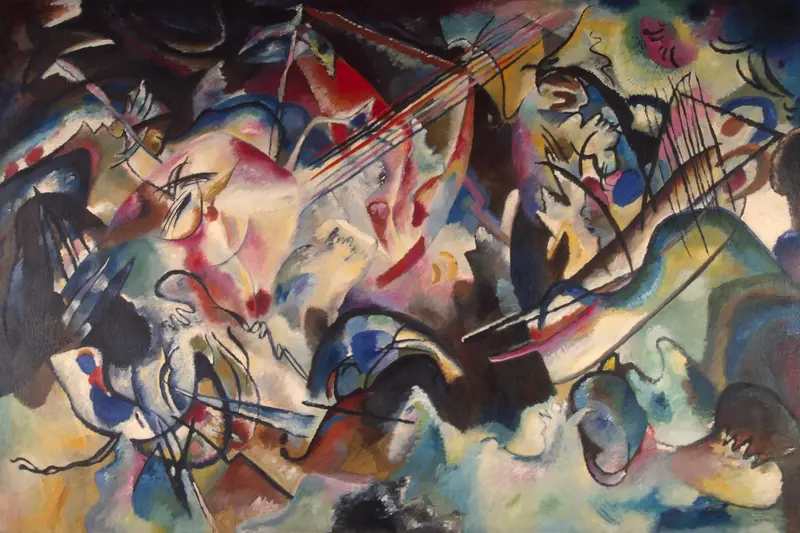
Composition VI
Wassily Kandinsky
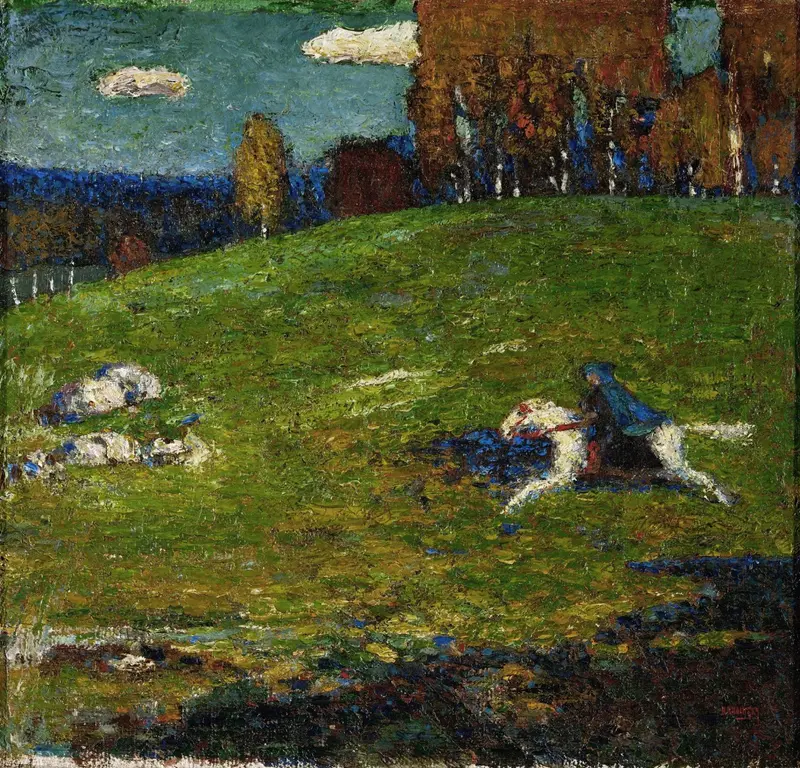
The Blue Rider
Wassily Kandinsky

Murnau
Wassily Kandinsky
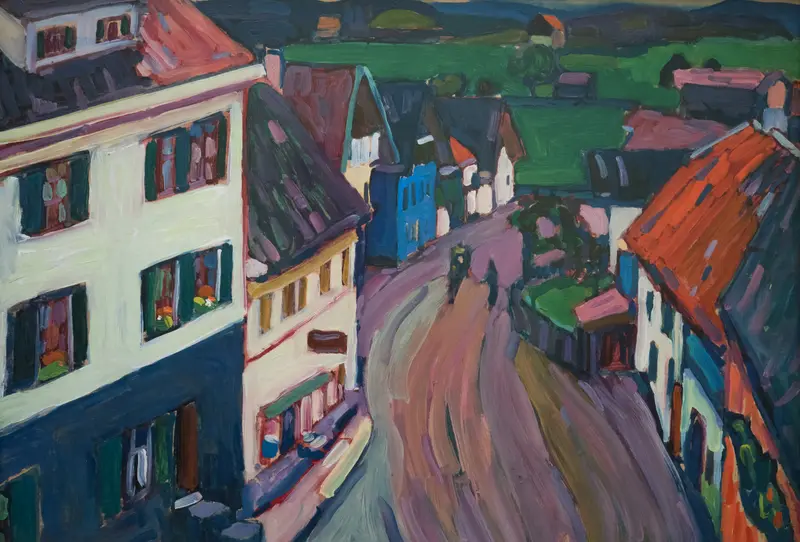
Murnau – View from the window of the Griesbräu
Wassily Kandinsky
Green Lane in Murnau
Wassily Kandinsky
Jocular Sounds
Wassily Kandinsky

Zubovsky Platz
Wassily Kandinsky

Landscape with a yellow field
Wassily Kandinsky




